



Gold Velvet Couch
These gold velvet couch pieces combine rich textiles with carved timber frames, bringing centuries of period seating directly into a room.
Gold Velvet Couch
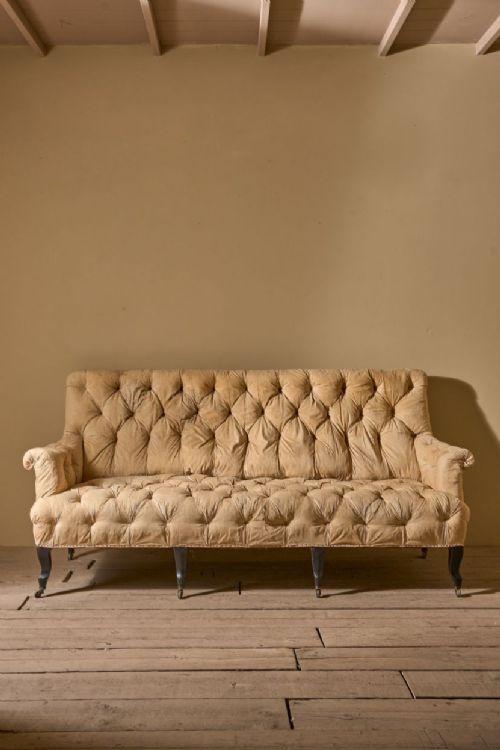
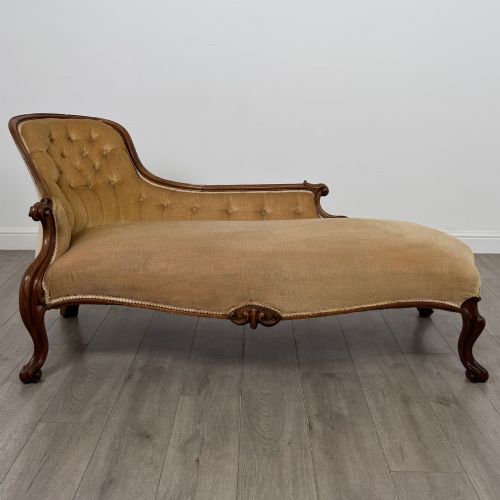
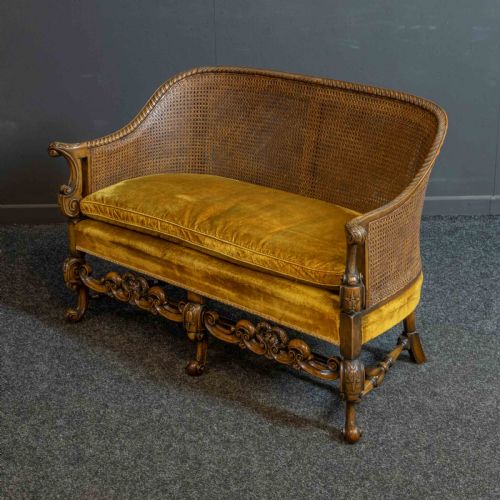
A gold velvet couch encompasses various historical seating forms, ranging from Victorian chaises and settees to French Napoleon III buttoned sofas and grand Regency double scroll-ended designs. These pieces span multiple centuries and stylistic origins, including Austro-Hungarian and Ottoman influences, alongside framed antique textiles.
Buyers browsing for a gold velvet couch will most frequently encounter 19th-century Victorian examples, often featuring carved mahogany, walnut, or giltwood frames paired with plush velvet upholstery. Alongside traditional sofas and settees, related textile fragments and embroidered garments also appear within this category.
Materials and construction methods
The structural frames rely on dense timbers such as mahogany, walnut, and timber, frequently shaped through traditional carving techniques into scroll ends, exposed giltwood, or elaborate show-wood surrounds. Brass elements and detailed wood carving complete the support structures.
Upholstery centres on velvet and silk velvet, occasionally enhanced with gold embroidery or traditional buttoned back and seat configurations. These textile surfaces sit atop robust timber frames dating from the seventeenth century onwards.
A late nineteenth-century Turkish or Kurdish gold embroidered jacket hides quietly among the furniture, proving that velvet comes in wearable forms too.
Assessing the range of quality
Quality rests upon the depth and precision of the timber carving, distinguishing simpler frames from elaborately sculpted walnut, mahogany, or giltwood structures with refined details like double scroll ends or shell-shaped profiles. The integrity of the original wood framing dictates the fundamental character of each piece.
The distinction between standard examples and exceptional work lies in the preservation of the textile finish, whether through buttoned upholstery execution or fine gold embroidery. Period authenticity in the pairing of frame styles with appropriate velvet textiles defines the upper tier.
The Gold Velvet Couch Glossary
- Chaise Longue
- An elongated upholstered chair designed for reclining, typically featuring a single raised armrest or back support. These items combine the comfort of a sofa with the relaxed posture of a daybed.
- Giltwood
- Timber coated with a thin layer of gold leaf or gilt preparation, widely utilised in decorative furniture frames. This finish catches the light and highlights intricate carved details.
- Scroll-ended
- A furniture design feature where the wooden arms or ends curve outward and inward in a spiral scroll form. This architectural detail is particularly prominent in Regency period seating.
- Buttoned back
- An upholstery technique where buttons are pulled deep into the padding to create a secure, diamond-patterned tufted surface. This method provides both structural tension and a tailored aesthetic.
- Silk velvet
- A luxurious textile woven with a dense, short pile using silk fibres, offering a distinctively soft drape and luminous sheen. It appears frequently on high-status period seating.
Gold Velvet Couch: Frequently Asked Questions
What periods do these couches represent?
The available inventory spans several centuries, starting from seventeenth-century textiles and extending through Regency, Victorian, and Napoleon III eras up to the early twentieth century.
Each period brings distinct stylistic traits, from baroque elements to nineteenth-century revival designs and Austro-Hungarian forms.
How do I identify a Victorian sofa?
Victorian pieces often utilise solid mahogany, walnut, or giltwood, frequently displaying deep buttoning, elaborate carving, or distinct forms like chaises longues and settees.
These items reflect the robust craftsmanship and decorative exuberance characteristic of nineteenth-century production.
Are all these items standard sofas?
The category includes a wide variety of seating forms and textile objects, encompassing traditional sofas, settees, and chaise longues alongside framed antique silk velvet and embroidered garments.
This variety reflects different domestic functions and decorative arts traditions across Europe.
What woods are used in the frames?
Makers utilised hard timbers such as mahogany, walnut, and general timber for the structural frames, often finishing them with exposed carved details or giltwood.
These durable woods provided the necessary strength to support heavy upholstered seating and intricate decorative flourishes.