
Gold Twin Arm Lights
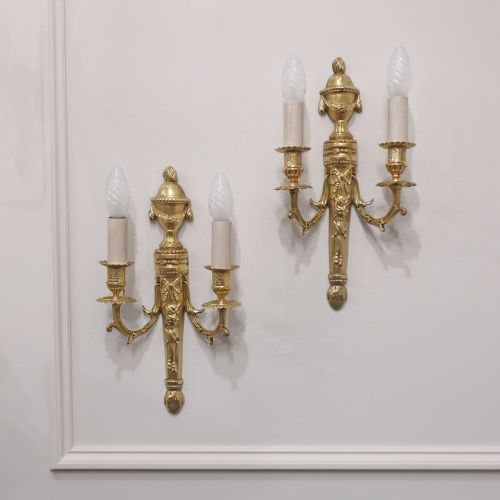
Gold twin arm lights deliver functional wall illumination through historical metalwork, bringing period French and Italian design into modern rooms.
Gold Twin Arm Lights
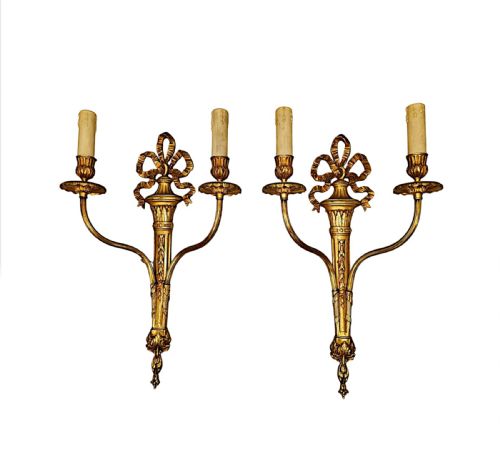
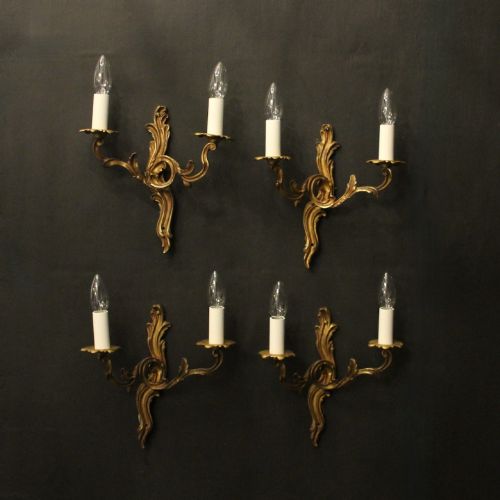
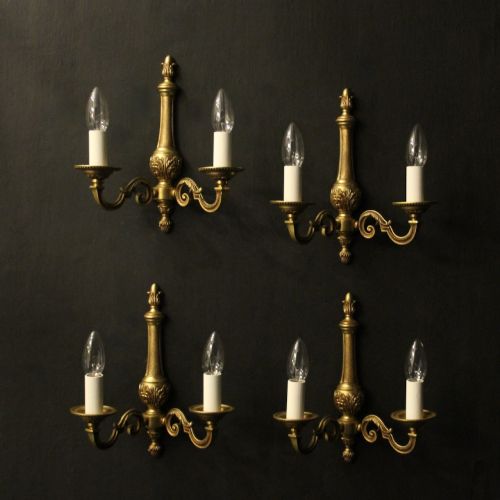
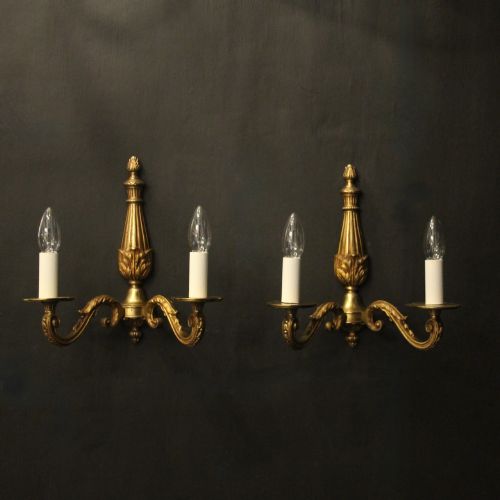
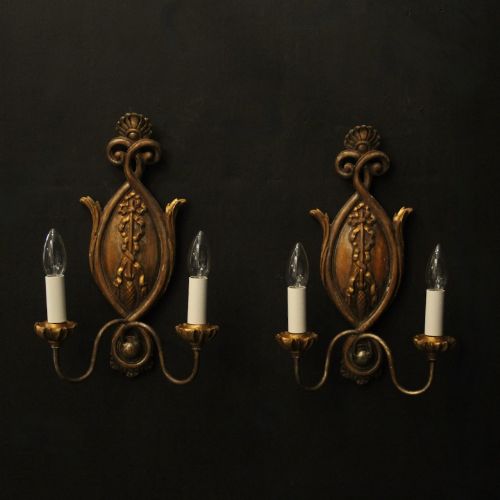
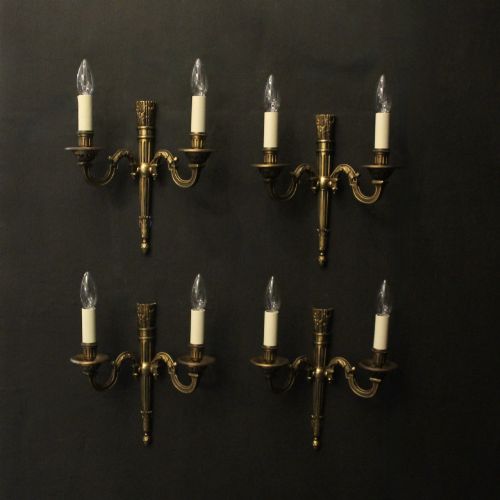
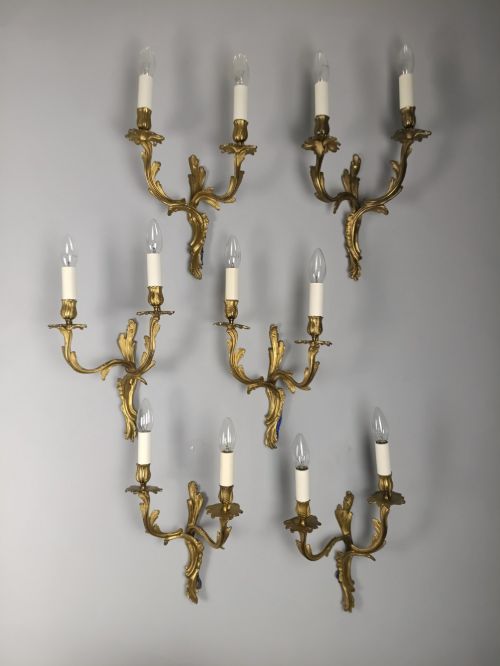
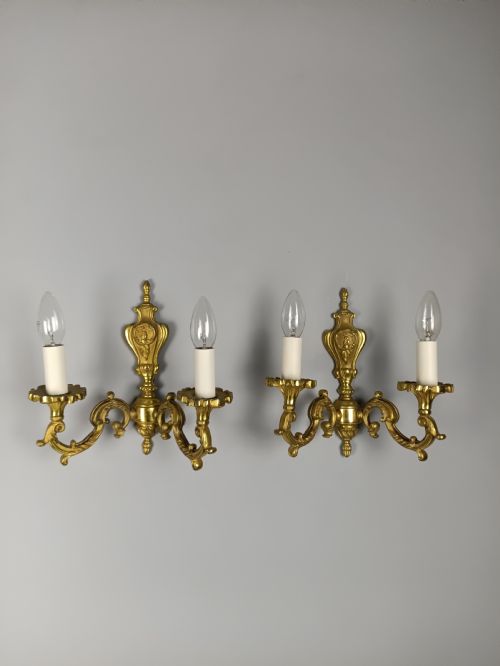
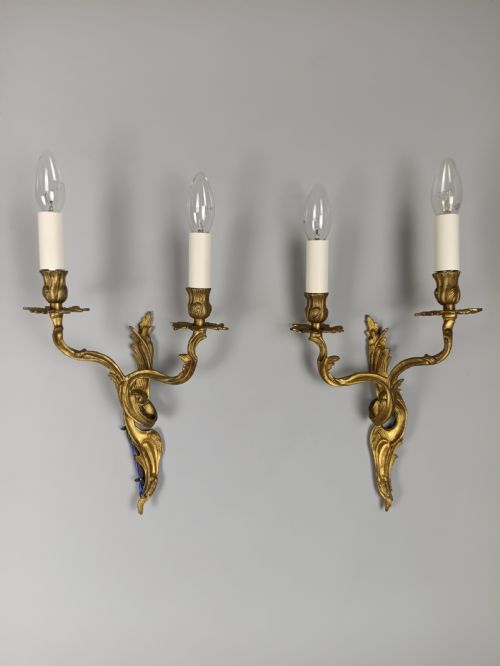
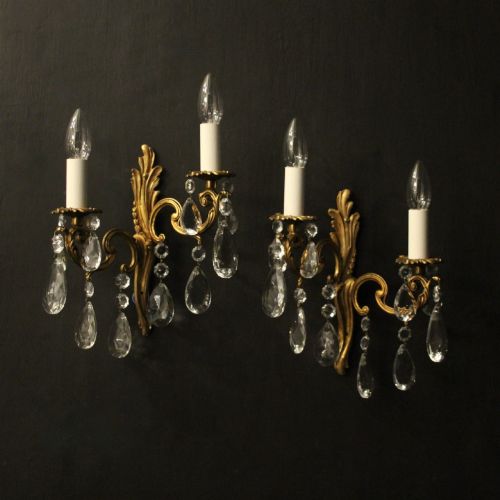
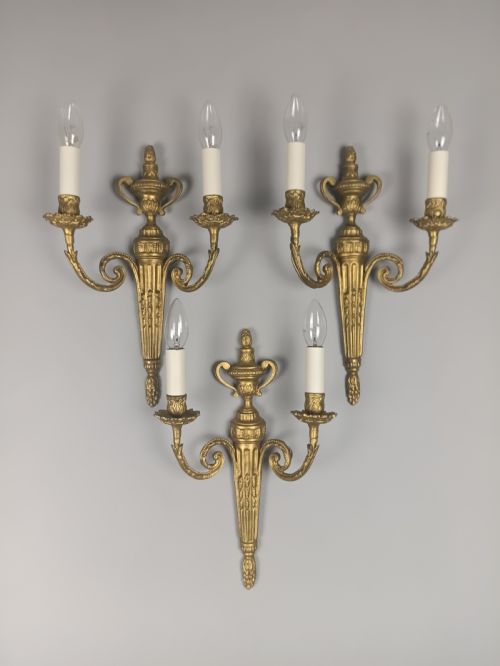
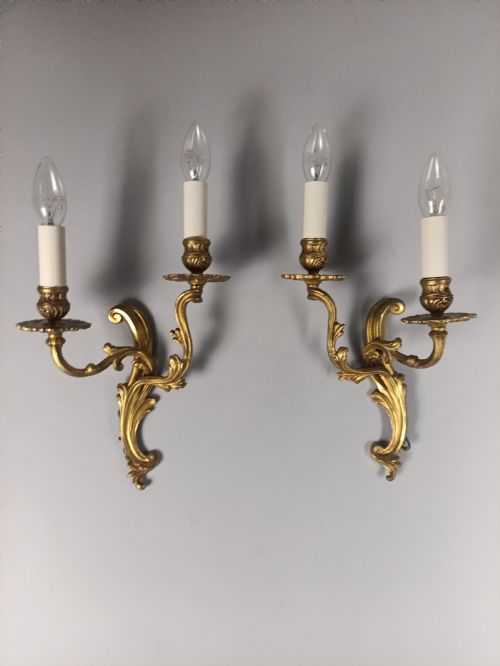
Gold twin arm lights comprise wall sconces, girandoles, and candelabra designed to mount directly onto vertical surfaces. These fixtures provide balanced dual-branch illumination originating from domestic interiors spanning the nineteenth century through the early twentieth century.
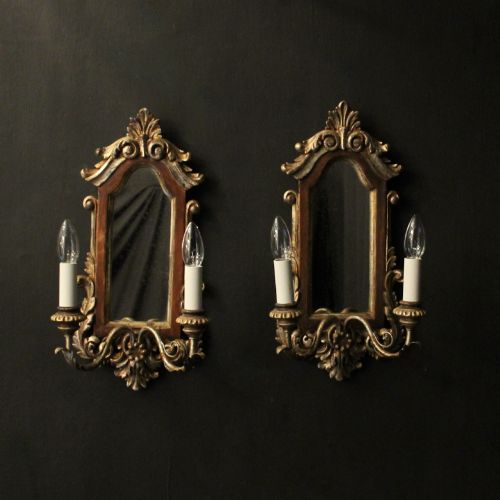
Italian examples appear alongside French counterparts, often utilising carved giltwood or incorporating Murano elements. The form consistently relies on twin candle branches projecting forward from a decorative backplate.
How gold twin arm lights were made
Metalwork forms the primary structural basis, utilising cast bronze, brass, and ormolu subjected to manual chasing and gilding processes. These metallic components provide the rigid support required for dual branch arms and decorative backplates.
Giltwood alternatives employ carved wooden bases finished with applied gold leaf or surface gilding techniques. This method provides an alternative to cast metal while maintaining the required reflective metallic aesthetic.
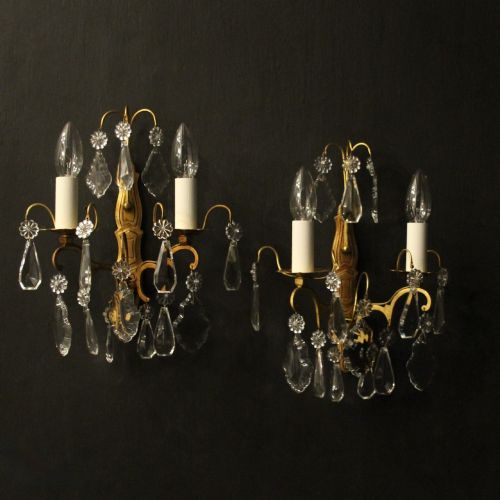
Crystal and glass elements occasionally supplement the metal frameworks, adding hanging prisms or decorative droplets that interact with the illumination. Assembly typically involves mechanical fastening of distinct cast or carved components.
Listings feature items dated from 1860 to 1930, demonstrating sustained production of twin arm lighting across seven decades.
What varies in quality
Surface finish durability separates standard production from finer examples, particularly regarding the adherence and depth of the gilding. Original fire gilding or well-preserved gold leaf exhibits greater warmth than flat modern coatings.
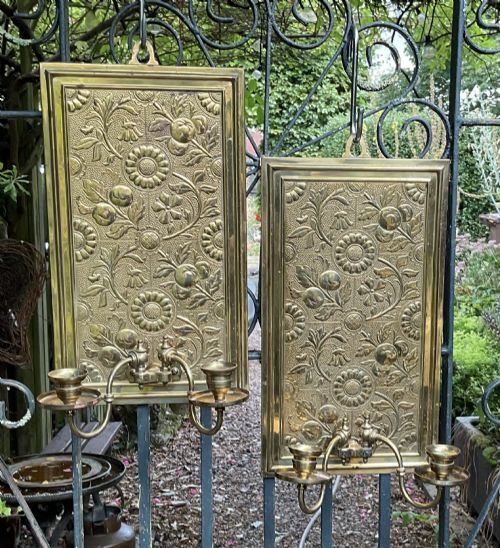
Bruce Talbert·Casier
The Gold Twin Arm Lights Glossary
- Ormolu
- Gilded bronze produced through mercury amalgamation or modern electroplating techniques. This finish gives metal fixtures a warm, reflective golden appearance.
- Girandole
- A branched wall light or sconce designed with reflective surfaces to amplify illumination. These fixtures frequently incorporate carved giltwood frames.
- Sconce
- A wall-mounted lighting fixture secured directly to vertical surfaces. The form supports one or more candle branches projecting into the room.
- Rococo
- An ornate design style characterised by asymmetrical scrolls, shell motifs, and naturalistic curves. This aesthetic appears frequently on French bronze wall lights.
- Neoclassical
- A decorative movement drawing inspiration from classical antiquity, featuring symmetry, urns, and geometric precision. Pieces in this style often display restrained proportions.
Gold Twin Arm Lights: Frequently Asked Questions
How do I install antique wall lights?
Professional electricians handle the mounting and wiring of antique fixtures to ensure compliance with current safety standards. Many twentieth-century pieces arrive rewired for modern domestic circuits.
Backplates attach directly to wall anchors or junction boxes, requiring careful alignment to support the weight of cast bronze or wooden bodies safely.
Where should I place twin arm lights?
Pairs work effectively flanking mirrors, fireplaces, or larger artworks to create balanced horizontal illumination. Placing them at eye level ensures proper distribution across living spaces.
Dining rooms, hallways, and drawing rooms suit the scale of these dual-branch fixtures, providing functional light without dominating the wall.
How do I clean gilded brass and bronze?
Dusting with a soft, dry cloth prevents particulate accumulation without damaging delicate gold surfaces. Avoid abrasive cleaners or chemical polishes that strip historical finishes.
Preserving the underlying metal requires gentle handling, particularly around recessed areas where original gilding remains fragile.
How do I distinguish French and Italian styles?
French pieces often utilise cast bronze and brass featuring strict Rococo or Empire symmetry, alongside ribbon motifs. Italian variants frequently employ carved giltwood and incorporate figurative elements like cherubs.
Examining the backplate materials and casting texture reveals regional manufacturing traditions from the nineteenth and early twentieth centuries.