



Gold Star Set Ring
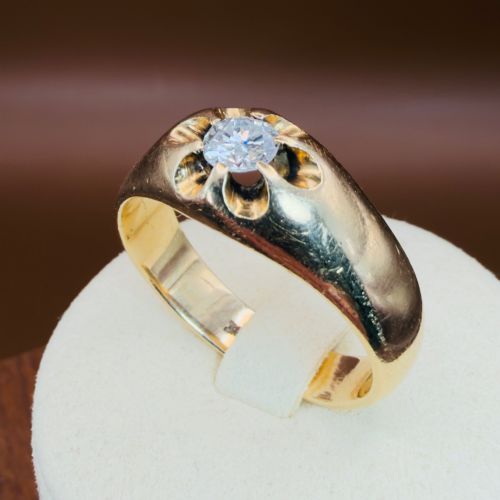
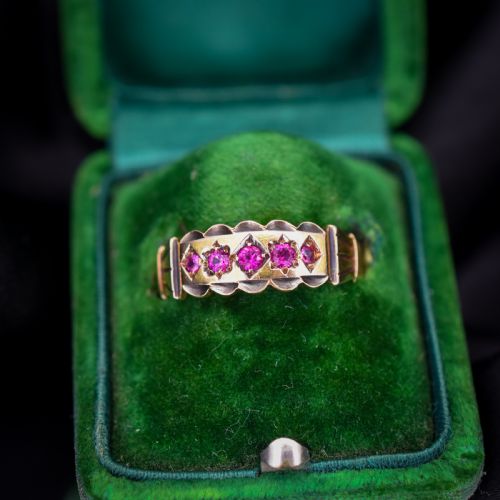
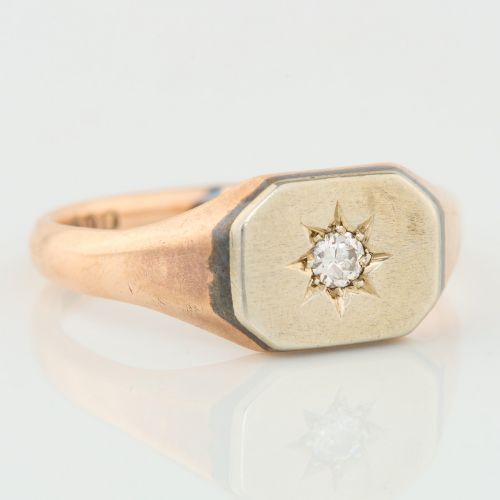
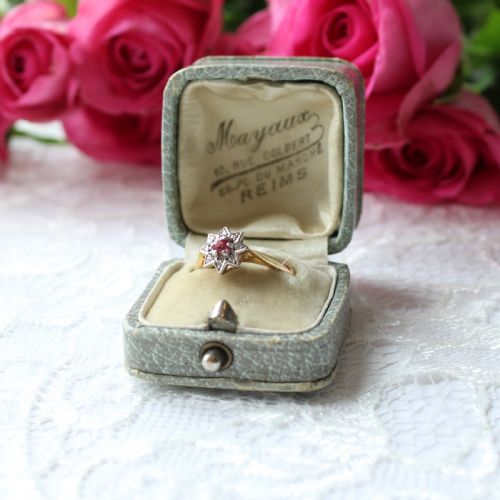
A gold star set ring centres on a flush-mounted stone secured by radiating engraved points, capturing celestial motifs from the Victorian and Edwardian eras.
Identifying your gold star set ring
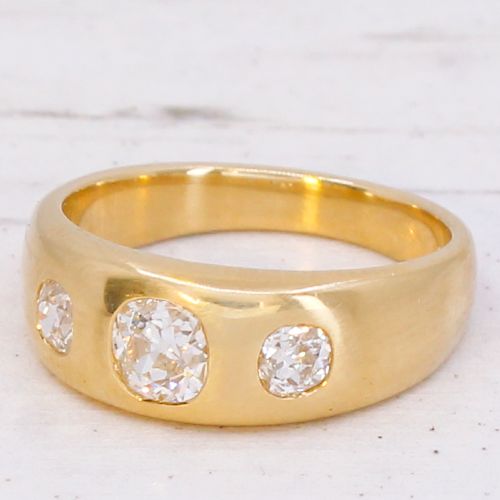
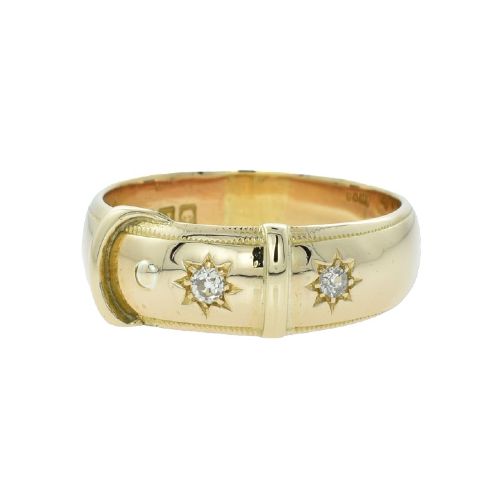
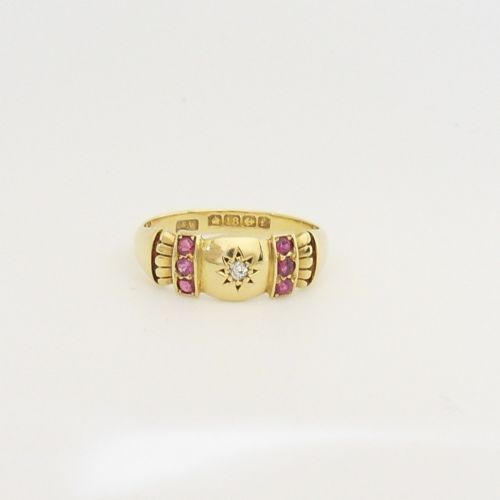
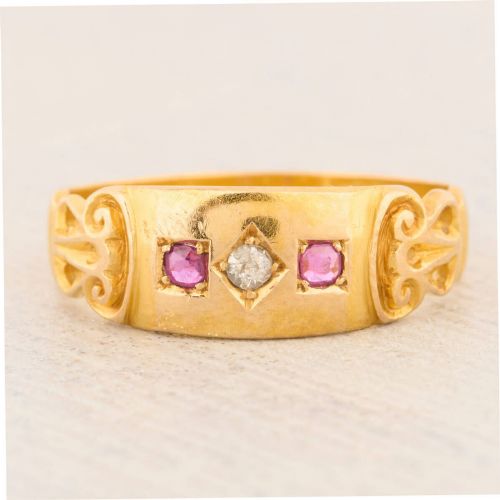
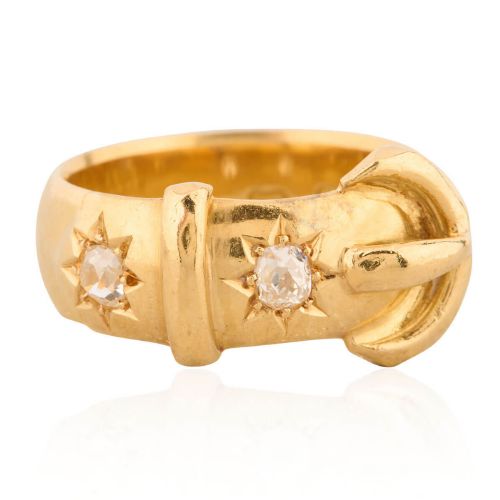
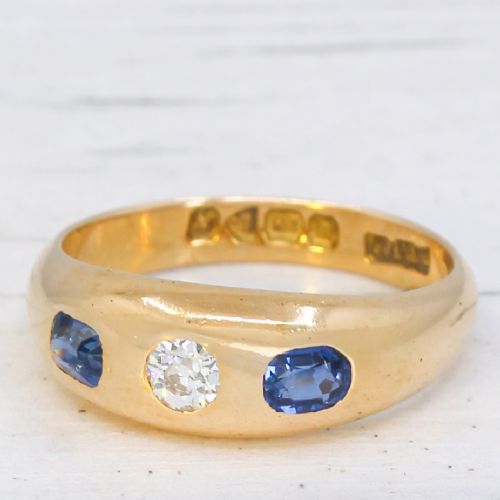
A gold star set ring brings together low-profile bands and flush-mounted gems embedded directly into the metal surface. These pieces range from substantial 18ct yellow gold gypsy and buckle bands to ornate Edwardian designs and delicate single stone rings.
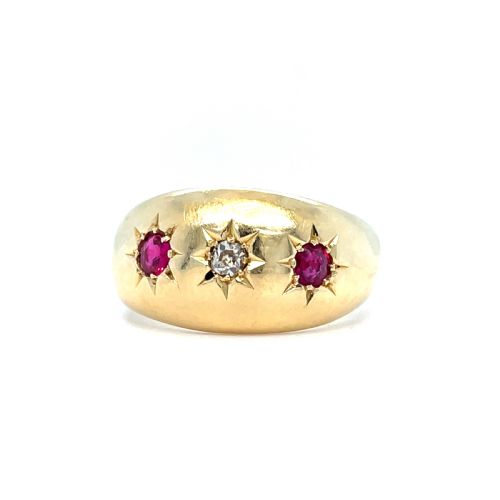
The aesthetic relies on hand-engraved star facets that radiate from a central diamond, ruby, or emerald. Such pieces span from the 19th century into the early twentieth century, carrying the hallmarks and distinctive weights of their respective periods.
Materials and construction methods
Craftsmen utilised 18ct gold and 18ct yellow gold as the primary foundation for these mountings, frequently combining rich yellow metal with old cut diamonds. Gemstones including rubies and emeralds were firmly secured flush with the band before the surrounding metal was chased with star-shaped ray patterns.
Workshop practices of the Victorian and Edwardian periods involved meticulous hand engraving to create the illusion of larger, brighter stones. Individual makers applied hallmarks to confirm metal purity, while stone weights and gem combinations varied across regional workshops.
Retail Price Guide 2026
Typical UK retail prices for gold star set ring, calculated from the Sellingantiques database of over a million retail prices indexed since 2003. This retail price guide relies exclusively on Sellingantiques data; no external sources or auction records are used, so the figures do not describe the wider market.
Listings feature 18ct gold, diamonds, rubies, and emeralds across Victorian and Edwardian periods.
Distinguishing quality across examples
The standard of a star setting rests on the crispness of the engraved rays and the precision of the flush metal burnished around the gem. Finer examples maintain symmetrical star points that frame the diamond or coloured stone without ragged tool marks or uneven wear.
Material selection and gemstone cut further differentiate the range, as old cut diamonds and matched rubies or emeralds elevate the visual depth of the band. Heavier 18ct gold weights and legible hallmarks provide structural integrity and historical clarity.
S Blanckensee & Son Ltd
The Gold Star Set Ring Glossary
- Gypsy ring
- A style of ring where the band is wide in the middle and tapers towards the back, featuring flush-mounted stones. This form became popular in the Victorian era for daily wear.
- Star setting
- A mounting technique where small triangular facets are hand-engraved into the metal around a gem to resemble a twinkling star. It protects the girdle of the stone.
- Old cut diamond
- A hand-faceted diamond cut before modern machine precision, characterised by a smaller table, higher crown, and open culet. These stones catch candlelight warmly.
- Hallmark
- An official stamp struck into precious metal to indicate purity, origin, and sometimes the year of manufacture. Chester and other assay offices recorded these details.
- Buckle ring
- A band shaped to resemble a buckled belt, symbolising loyalty and attachment in Victorian jewellery. They often incorporate flush or star-set gems.
Frequently Asked Questions
How do I date an antique ring?
Dating relies on examining hallmarks, shank shape, gemstone cut, and overall manufacturing style. Victorian and Edwardian examples often display specific regional assay marks and hand-cut stones.
Comparing the mounting style and gold purity against known period pieces helps narrow the decade of creation.
Can I wear these rings daily?
Many of these pieces were built for everyday wear during the Victorian and Edwardian periods, utilising robust 18ct yellow gold bands. The flush star setting itself keeps stones secure against snagging.
Gentle care and periodic checks by a jeweller ensure the ancient metal and flush-set gems remain secure over time.
What stones are used in them?
Old cut diamonds are the most common gems found in these antique bands, prized for their soft, hand-faceted sparkle. Rubies and emeralds also appear as single stones or part of multi-gem layouts.
The coloured gems provide vibrant contrast against the warm 18ct yellow gold settings.