


Gold Seed Pearl Ring
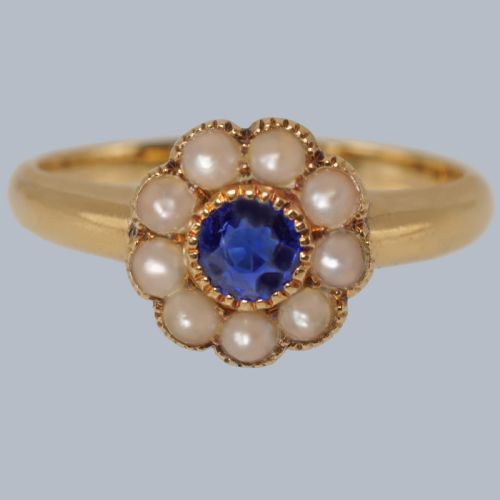
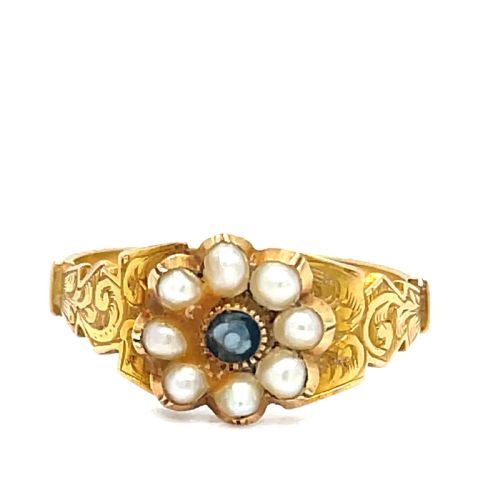
When you search for a gold seed pearl ring, you are looking at delicate antique jewels set with tiny, perfectly matched pearls.
Gold Seed Pearl Ring
The most common examples on this page are Victorian and Edwardian cluster rings, often combining seed pearls with amethyst, turquoise, garnet, or peridot. They frequently utilise yellow or rose gold in nine, fifteen, or eighteen carat weights.
Alongside standard ring designs, the selection includes mourning pieces incorporating hair behind glass, alongside occasional variations such as navette shapes and halo settings. Each item reflects the prevalent ornamental styles of the nineteenth and early twentieth centuries.
How they were made
The construction relies on fine gold wire and small claw or bezel settings designed to secure diminutive pearls without damaging their delicate nacre. Metals range from nine to eighteen carat gold, shaped into slender bands, cluster heads, and decorative shoulders.
Goldsmiths during the Georgian and Victorian periods frequently paired seed pearls with coloured gemstones like almandine garnet, tourmaline, and sapphire, often incorporating enamel work or rose-cut diamonds to enhance the central design.
Tiny seed pearls were once gathered by specialist divers, creating miniature treasures that outlasted the empires that wore them.
What varies in quality
Quality in these rings is defined by the uniformity and matching of the seed pearls themselves, where consistent lustre, size, and minimal surface blemishes distinguish superior examples. Secure, even setting work that leaves no pearls loose or sunken into the metal indicates skilled bench work.
The choice of secondary stones and the complexity of the gold mount also influence the piece, with well-preserved enamel, crisp hallmarks, and substantial gold weight marking the upper tier of survivals.
The Gold Seed Pearl Ring Glossary
- Seed pearl
- A very small natural pearl, typically under two grains, often drilled and threaded onto fine wire or glued into delicate cluster arrangements. They form the primary decorative element across Victorian and Edwardian jewellery.
- Cluster ring
- A ring featuring a central gemstone surrounded by a ring of smaller stones, frequently seed pearls or diamonds. This style maximises visual impact and was exceptionally popular throughout the nineteenth century.
- Navette
- A boat-shaped gemstone setting that tapers to points at either end, also known as a marquise shape. It creates an elongated silhouette on the finger.
- Mourning ring
- A commemorative piece of jewellery worn to remember a deceased person, often incorporating woven hair, enamel, and seed pearls. These items date predominantly from the Georgian and Victorian eras.
- Rose-cut
- An antique gemstone cutting style featuring a flat base and a domed crown faceted into triangles, resembling an unopened rosebud. This cut was favoured before the development of modern brilliant faceting.
Gold Seed Pearl Ring: Frequently Asked Questions
Can I wear my ring every day?
Because seed pearls have a softer nacre than mined gemstones and are often held by delicate historical settings, daily wear requires caution. Rings from the Georgian and Victorian periods benefit from being removed before manual tasks, swimming, or sleeping.
Occasional wear allows you to enjoy the jewellery safely while preserving the fragile seed pearls and fine gold work for the future.
What is a split pearl?
A split pearl is a natural pearl that has been sawn in half, usually to be mounted flat against a gold backing or setting. This technique was widely utilised in Victorian jewellery to create cluster and halo designs without excess bulk.
Split pearls share the same natural lustre and iridescent quality as whole seed pearls but sit flush within the metal framework of the ring.
How do I date an antique ring?
Dating relies on a combination of gemstone choices, metal characteristics, setting styles, and official hallmarks stamped inside the band. Georgian pieces often feature closed-back settings and rose-cut diamonds, while Victorian and Edwardian examples introduce brighter coloured stones and lighter gold weights.
Comparing the overall design against documented styles from specific eras helps narrow down the period of manufacture.