
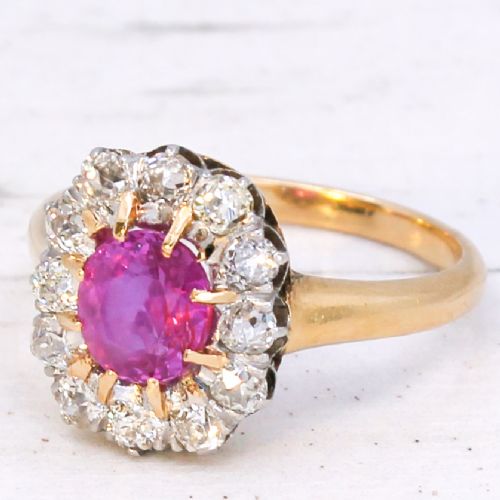
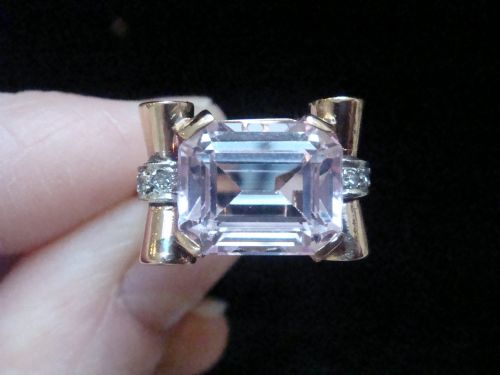


Pink Gemstone Gold Ring
These pink gemstone gold ring examples combine precious metals with coloured stones, offering a distinctive piece of jewellery history.
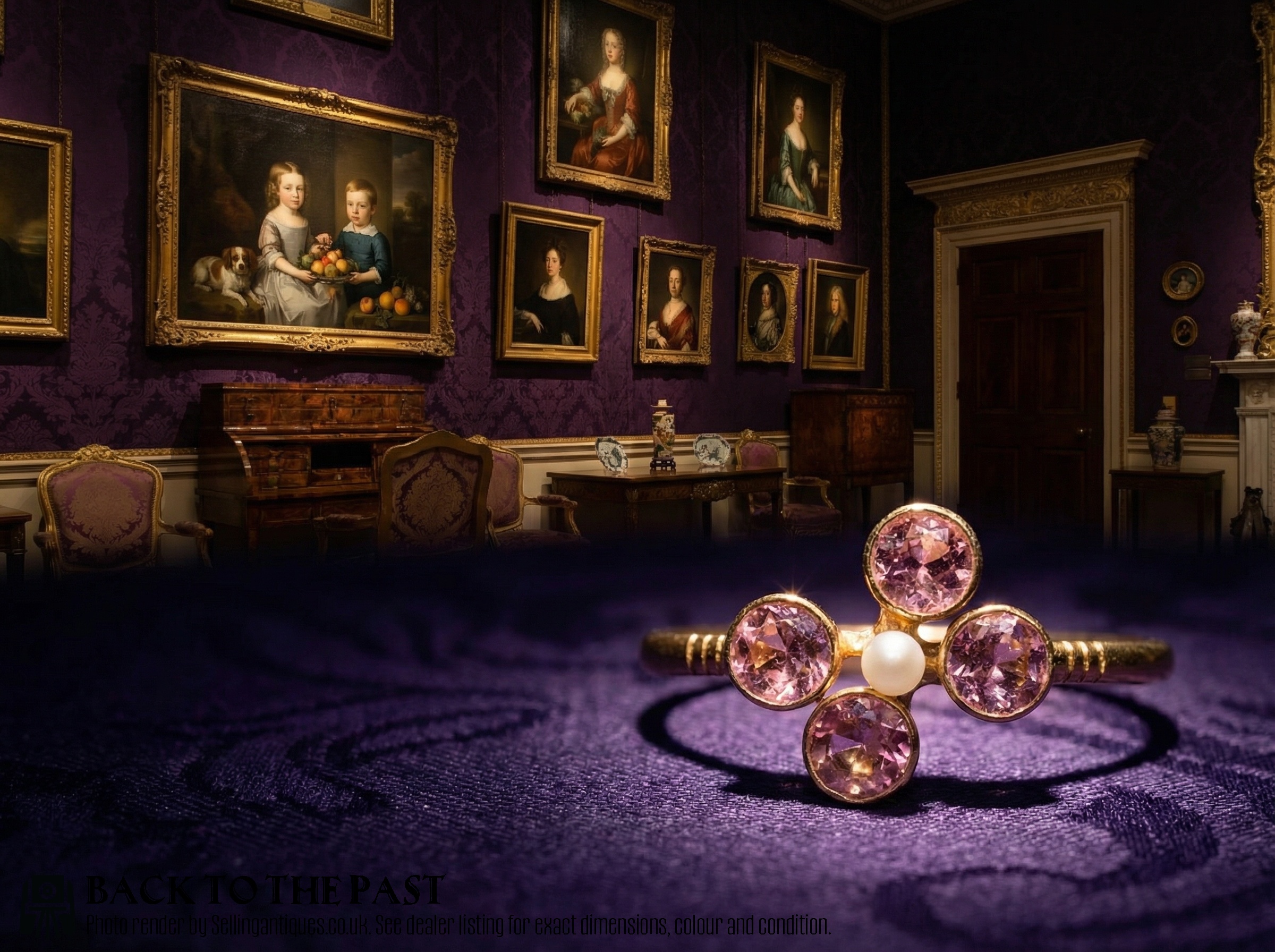
Pink Gemstone Gold Ring
A pink gemstone gold ring centres on a pink stone mounted in gold, ranging from delicate Victorian cluster designs to bold mid-century cocktail styles. The selection spans periods from the late nineteenth century through the Edwardian era and the art deco years into the mid-century modern period.
Buyers encounter various gemstone types set into these bands, including pink sapphire, tourmaline, kunzite, spinel, ruby, coral, and pearl. Alongside the primary pink stones, diamonds frequently appear as accent stones in cluster and triple cluster formations.
The gold used in these rings varies in carat weight and colour, incorporating yellow gold, white gold, fifteen carat gold, and eighteen carat gold, occasionally alongside platinum settings. Forms include solitaire rings, elongated fancy oval cuts, and intricate multi-stone arrangements.
What varies in quality
The distinction between tiers of a pink gemstone gold ring rests upon the natural origin and heat treatment status of the central gemstone, with unheated Burmese or Ceylon stones commanding higher regard. Furthermore, the presence of certified natural colour alongside fine diamond encrustation elevates the overall standard.
Craftsmanship execution defines the finer examples, visible in the precision of the cluster arrangement, the integrity of the gold or platinum claw work, and the harmonious balance of proportion between the central pink stone and its surrounding elements.
Listings for a pink gemstone gold ring incorporate materials such as fifteen carat gold, platinum, and unheated pink sapphires.
The Pink Gemstone Gold Ring Glossary
- Cluster ring
- A ring design featuring a central gemstone surrounded by a cluster of smaller stones, typically diamonds or pearls. This layout was particularly favoured during the Victorian and Edwardian periods.
- Unheated sapphire
- A sapphire that has undergone no thermal enhancement to improve its natural colour or clarity. Such stones are documented in various antique and vintage pieces.
- Rose cut
- An antique gemstone cutting style featuring a flat base and a domed crown composed of triangular facets arranged in a symmetrical pattern. It creates a subtle, understated shimmer compared to modern brilliant cuts.
- Tank ring
- A bold, volumetric style of jewellery originating in the retro period of the mid twentieth century, often characterised by heavy geometric gold work inspired by military machinery.
- Spinel
- A durable natural gemstone frequently found in historical jewellery, often mistaken for ruby or sapphire due to its similar range of vibrant pink and red hues.
Pink Gemstone Gold Ring: Frequently Asked Questions
What periods do these rings come from?
The pieces span multiple historical eras, beginning with late nineteenth-century Victorian and 1880 examples, progressing through the Edwardian and Art Deco periods, and extending into retro modern and mid-century designs.
Each era brings distinct aesthetic choices, from delicate pearl and coral clusters to bold geometric cocktail rings.
Which gemstones are used in these rings?
The pink stones include natural sapphires from sources like Burma and Ceylon, alongside pink tourmaline, kunzite, spinel, ruby, coral, and seed pearls.
Diamonds frequently accompany these primary stones as accent elements in cluster settings.
What gold types appear in the mountings?
Mountings utilise various metal formulations, including yellow gold, eighteen carat gold, fourteen carat gold, fifteen carat gold, and eighteen carat white gold.
Platinum also appears in specific settings, particularly to secure diamonds in white metal.
Are the sapphires heat treated?
Several listings specifically note unheated sapphires originating from specific regions such as Burma or Ceylon.
Such documentation highlights the natural properties of the gemstone without artificial thermal enhancement.