
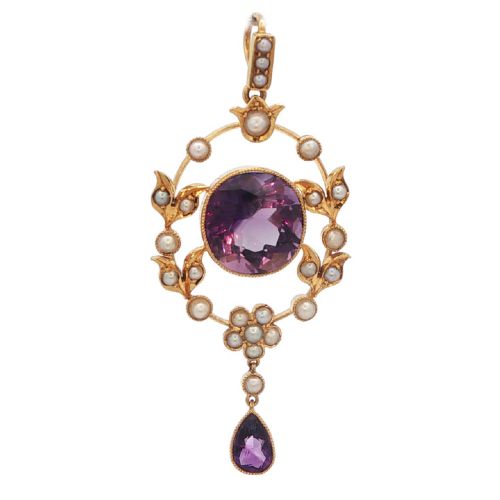
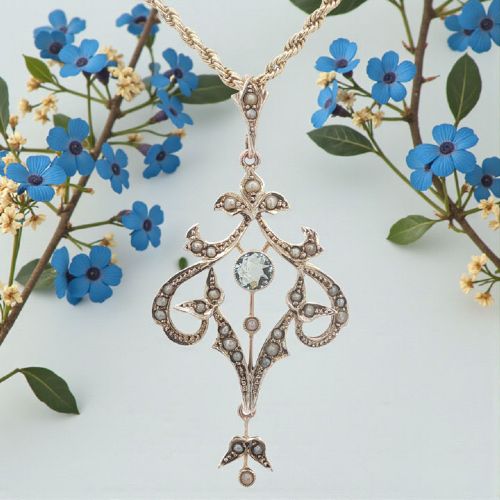
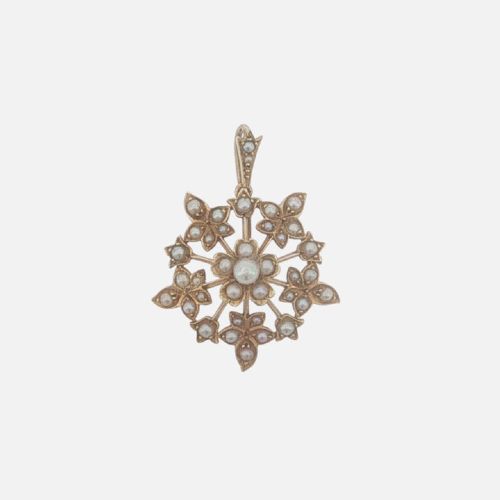
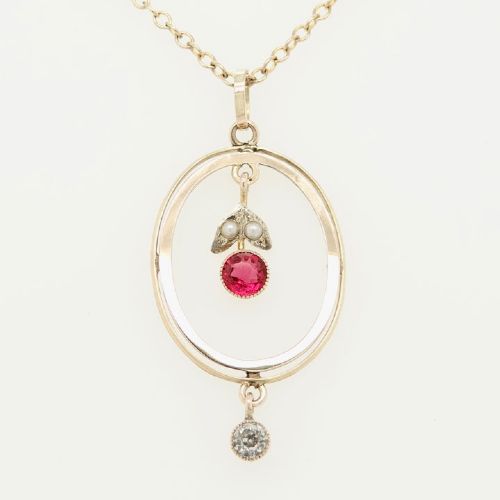
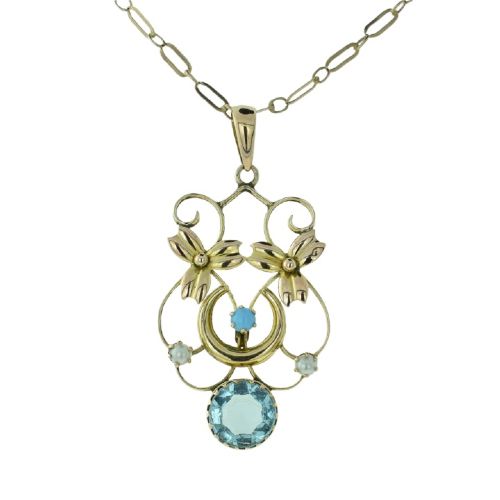
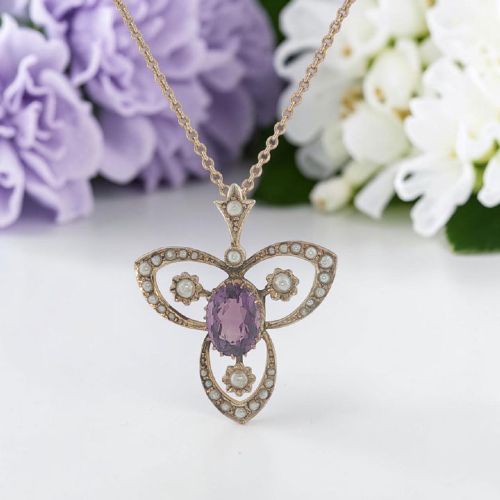
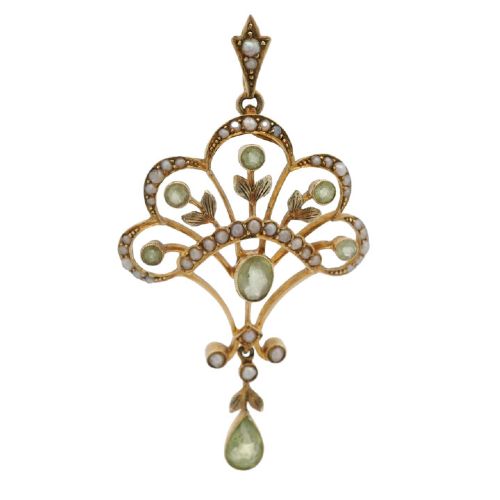
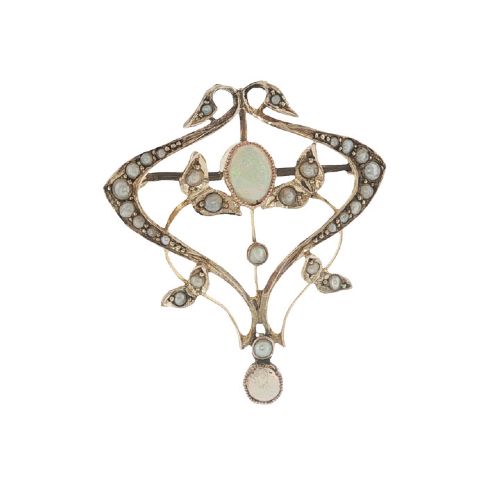
Gold Seed Pearl Necklace
Choosing a gold seed pearl necklace means acquiring delicate, historically rich jewellery defined by minute pearls set in yellow or rose gold.
Gold Seed Pearl Necklace
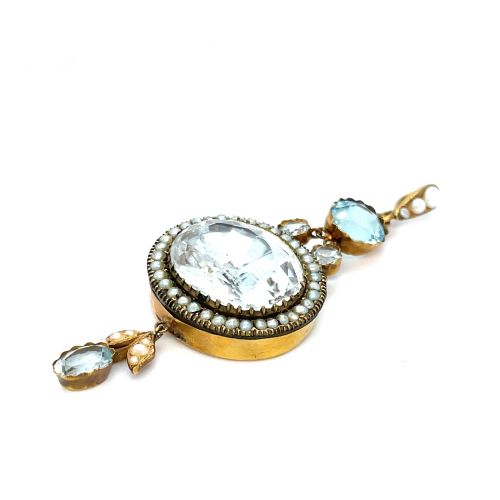
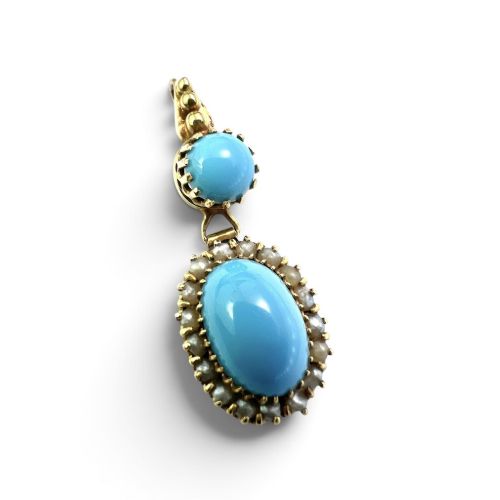
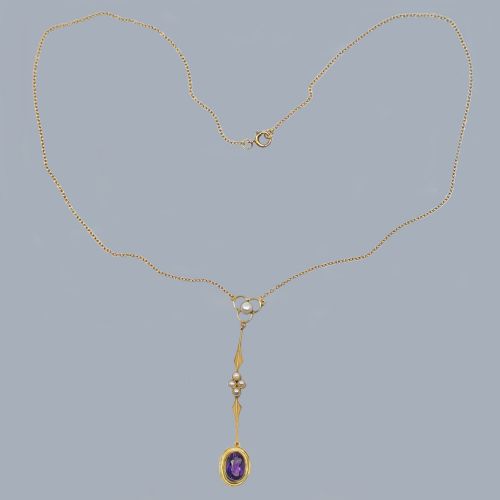
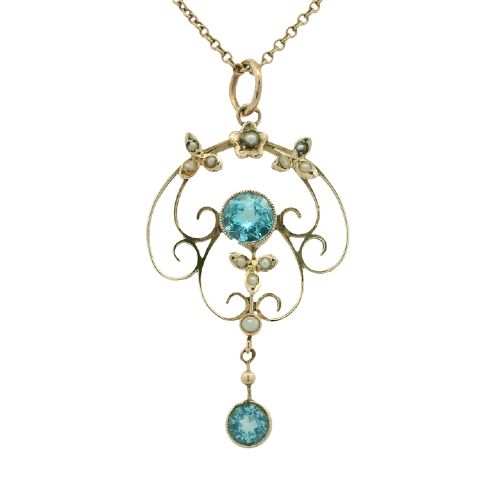
A gold seed pearl necklace typically comprises fine gold chains holding pendants, drops, or multi-strand arrangements adorned with tiny, natural saltwater or freshwater pearls. These pieces frequently incorporate periods such as the Georgian, Victorian, and Edwardian eras, displaying stylistic movements including Art Nouveau and early twentieth-century design.
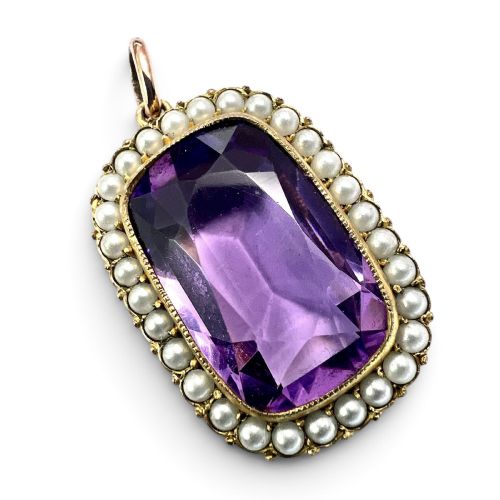
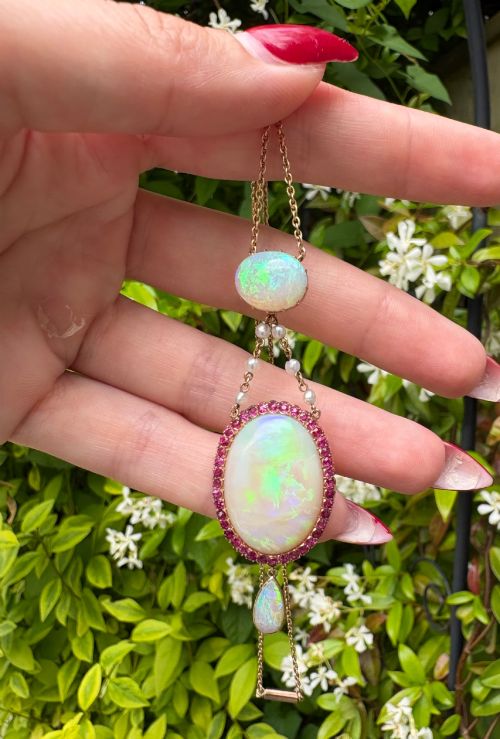
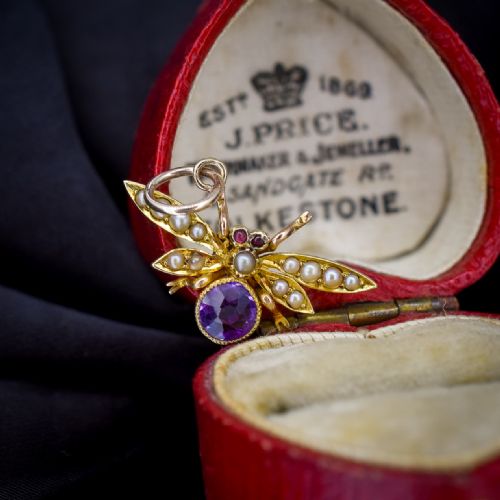
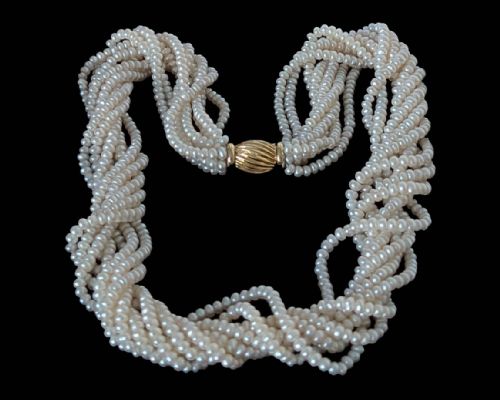
The most common formats met here are drop pendants and lavalier necklaces where central gems like amethyst, peridot, and aquamarine are encircled by or suspended from clusters of minuscule pearls. Surviving examples range from late nineteenth-century floral and star motifs to mid-century multi-strand freshwater configurations fitted with gold clasps.
How They Were Made
Goldsmiths constructed these mountings predominantly in nine-carat and fifteen-carat yellow or rose gold, frequently utilising hollow stampings, wirework, and delicate collet settings to secure small stones without adding excessive weight. Seed pearls were individually drilled and threaded onto fine silk or held delicately by tiny, hand-formed gold prongs and closed-back foils.
Artisans applied specialist techniques such as plique-à-jour enamel, where translucent coloured glass sits within open gold wire cells, and filigree wire twisting to create intricate floral, bow, and fan silhouettes. Clasps and linkages were handcrafted to integrate seamlessly into the overarching design, often featuring integrated security chains or safety pins.
Gold qualities span nine-carat and fifteen-carat variants, frequently accompanied by platinum accents in later Edwardian designs.
What Varies In Quality
Quality depends heavily on the precision of the goldsmith's handwork, visible in the uniformity, lustre, and tight setting of the seed pearls alongside the clarity and depth of any central coloured gems. Pieces originating from named workshops or featuring complex enameling techniques and balanced proportions demonstrate superior craftsmanship compared to simpler, mass-produced variations.
The structural integrity of the delicate gold chains and the original preservation of fragile components, such as open enamel cells or fine dangling drops, dictate the overall standard. Original boxes, well-matched natural pearls, and unaltered gold hallmarks provide further distinction between standard commercial output and exceptional surviving examples.
S. Blanckensee & Son·Chaumet·Sellier·Marius Hammer·Murrle Bennett·BIRKS·Cropp and Farr
The Gold Seed Pearl Necklace Glossary
- Seed pearl
- A very small, naturally occurring pearl, typically under two millimeters in diameter, drilled and utilised in dense clusters or linear rows.
- Lavalier
- A necklace design featuring a central pendant suspended lower than the main chain, popular during the Edwardian and Art Nouveau periods.
- Plique-a-jour
- An enamel technique resembling miniature stained glass, where enamel is applied without a backing, allowing light to shine directly through the translucent coloured glass.
- Collet setting
- A low collar of gold wrapped tightly around the girdle of a gemstone to secure it firmly within the metal framework of the pendant.
- Fringe necklace
- A necklace style featuring a series of short, dangling gemstone or pearl drops suspended uniformly across the front portion of the chain.
Gold Seed Pearl Necklace: Frequently Asked Questions
How do I wear a delicate antique seed pearl necklace safely?
Wear these items with care, avoiding contact with cosmetics, perfumes, and water, which can degrade the natural organic material of the pearls and weaken historical silk threading.
Store them flat in a lined jewellery box away from harder metallic pieces to prevent scratching the soft pearls and kinking the delicate gold chainwork.
Were these necklaces worn daily in the Victorian era?
In the nineteenth and early twentieth centuries, seed pearl jewellery was generally reserved for evening wear, formal daytime visits, or significant life events such as weddings.
Because natural seed pearls and their fine gold settings are inherently fragile, they were treated as special occasion pieces rather than rugged everyday adornments.
How can I tell an Edwardian piece from a Victorian one?
Victorian pieces often display heavier gold weights, darker central stones like garnet or foil-backed aquamarine, and robust structural designs such as crosses and horseshoe motifs.
Edwardian items typically favor lighter fifteen-carat gold, flowing Art Nouveau floral lines, pastel gemstones like peridot and pink tourmaline, and airier openwork frames.