

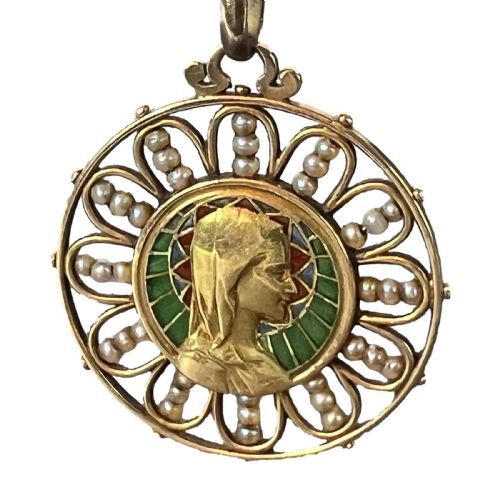


Gold Religious Charm Necklace
A gold religious charm necklace brings together devotional medals, crosses and pendants from periods spanning the Georgian era to the mid-century.
Gold Religious Charm Necklace
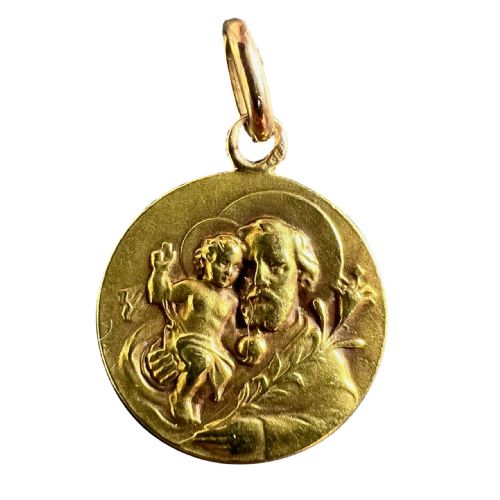
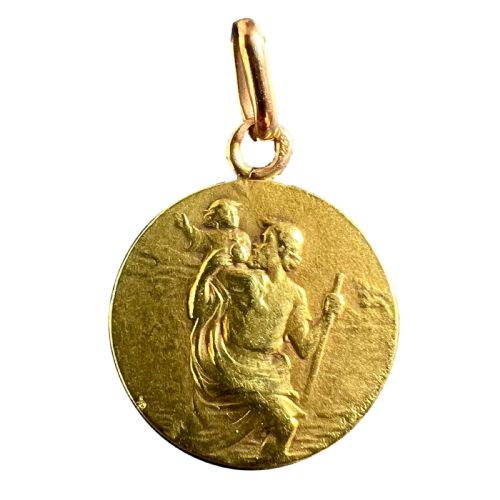
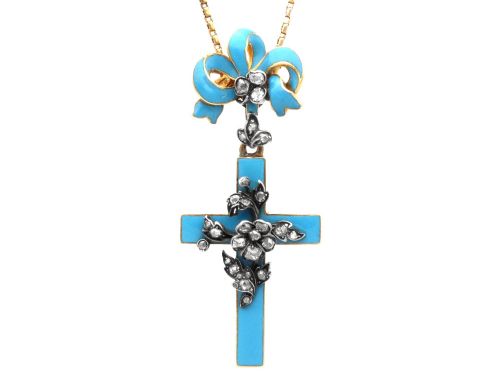
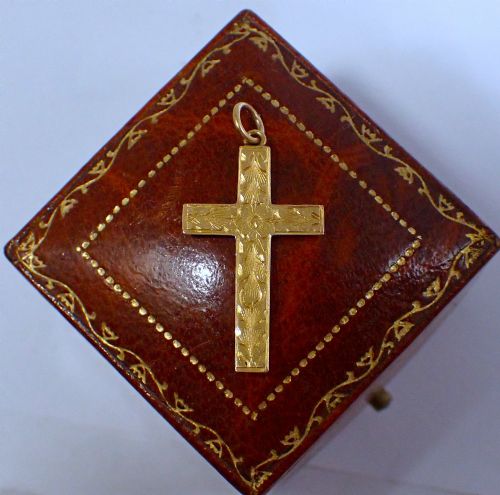
A gold religious charm necklace relies on pendants, medals and crosses collected over generations, most frequently featuring French devotional pieces and crosses from the Victorian and Edwardian periods. These items include depictions of the Virgin Mary, Saint Christopher and Jesus Christ, alongside floral motifs and radiating sunbursts. Buyers encounter everything from simple engraved crosses to intricate devotional medals meant to be worn daily.
The objects span multiple decades, incorporating Georgian coral designs, Art Nouveau curves, Art Deco symmetry and mid-century diamond-set pieces. Many items originate from France, stamped with maker marks and regional characteristics, while others represent British or Italian craftsmanship. Each component functions as an individual charm or pendant before joining a necklace composition.
How they were made
Makers shaped these items primarily in yellow gold, rose gold and white gold, utilising varying purities including 9ct, 15ct, 18ct and 24ct standards. Artisans incorporated seed pearls, mother of pearl, coral, diamonds, rubies and sapphires to accent the metallic structures. These stones were set by hand into crosses and circular medal frames.
Enamel work appears frequently, particularly plique-à-jour techniques that allow light to pass through translucent coloured glass sections on French pendants. Engraving and piercing define the metal surfaces, creating textured borders, floral details and raised figures of saints against sunburst backgrounds.
Gold Religious Charm Necklace Retail Price Guide 2026
Typical asking prices for gold religious charm necklace among the pieces listed under this phrase on Sellingantiques today, from the lower quarter to the upper quarter. They describe what is for sale here now, not the wider market.
Travellers once relied on Saint Christopher medals for safe journeys long before dashboard plastic saints existed.
What varies in quality
The preservation of delicate materials like plique-à-jour enamel and the presence of legible maker marks and gold hallmarks influence the integrity of the piece. Clean, undamaged enamel panels and sharply struck atelier stamps indicate a higher tier of original craftsmanship and careful survival.
Paul Brandt·Monier·Pageli Perriat·Sellier·Dropsy·Tairac·Mazzoni·Monnaie De Paris·Monet·Serraz·Augis and Mazzoni
The Gold Religious Charm Necklace Glossary
- Plique-a-jour
- An enamelling technique where enamel is applied to open cells without a backing, resembling miniature stained glass. This method allows light to illuminate the translucent coloured portions of a pendant.
- Medal
- A flat or slightly domed metal disk struck or cast with devotional imagery, text or iconography. These items were often awarded for first communions or worn for protection.
- Seed pearl
- A very small, natural or saltwater pearl used in historic jewellery for delicate border work or floral patterns. They are typically half-drilled and secured with tiny pegs.
- Rosette
- A decorative circular motif resembling a rose, frequently utilised in the centring of crosses or surrounding devotional figures. This design appears across various periods from the Victorian era onward.
- Hallmark
- An official stamp applied to precious metals indicating purity, origin and responsibility. French pieces often utilise specific guarantee marks on the external surface or suspension loop.
Gold Religious Charm Necklace: Frequently Asked Questions
How do I wear a religious charm necklace?
These pendants and medals suspend from chains of varying lengths, allowing single focal pieces or multiple charms to hang together. Collectors often combine different periods, such as pairing a Victorian cross with mid-century medals.
Ensure the suspension rings and bails match the gauge and security of the chain you choose for daily wear. Many pieces retain their original jump rings, which help them sit correctly against the collarbone.
Are these pieces French in origin?
A significant portion of devotional medals and charms originates from France, reflecting strong religious jewellery traditions from the late nineteenth and early twentieth centuries. These items frequently feature French hallmarks and maker signatures.
Other examples include British and Italian crosses from similar periods, constructed with distinct regional gold standards and gemstone settings.
What does plique-a-jour enamel look like?
Plique-a-jour resembles miniature stained glass, lacking a solid metal backing so that light shines directly through the coloured enamel. It appears on wings, robes and floral elements in early twentieth-century devotional pendants.
This technique requires considerable skill to execute without trapping air bubbles or cracking the translucent glass panels during firing.
How can I tell the age of a gold cross?
Dating relies on stylistic clues, gold purity standards, engraving techniques and accompanying hallmarks or maker stamps. Georgian and Victorian crosses often feature hand-engraved scrollwork and lower or higher non-standard gold purities, while later twentieth-century pieces display standardised hallmarks.
Examining the construction of the jump rings and the back of the medal provides further context regarding the workshop era.