
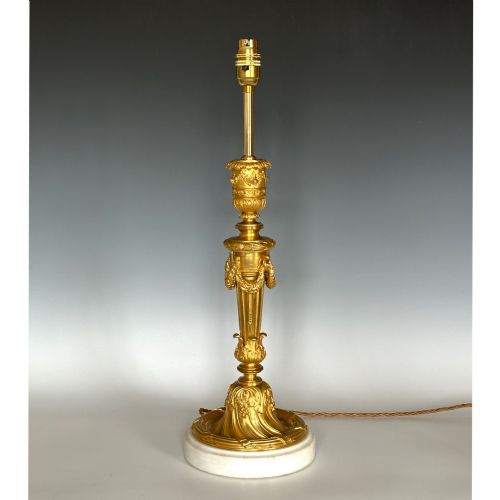
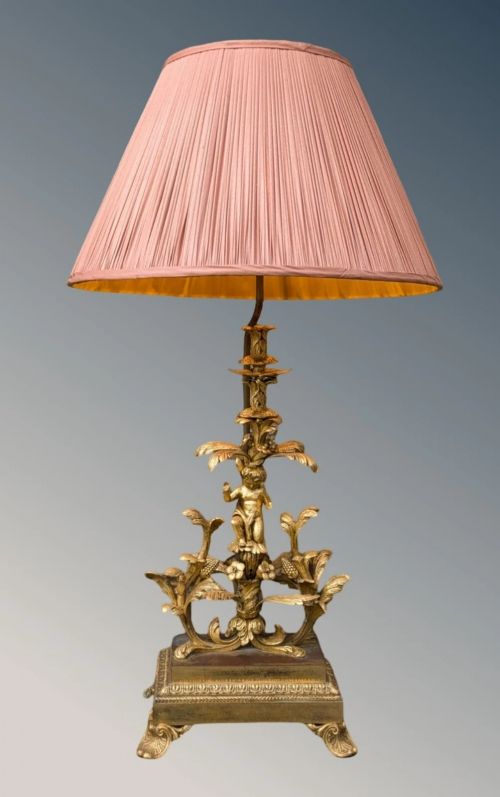
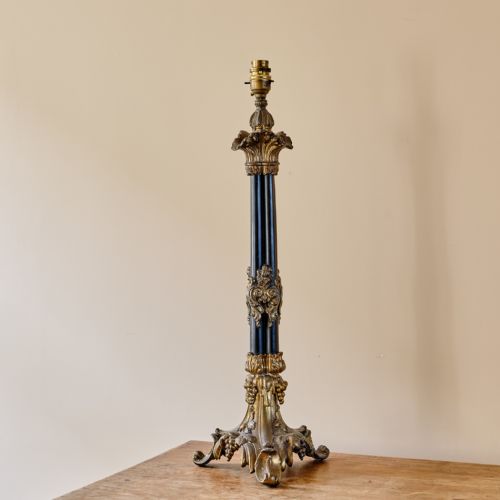


Gold Ormolu Side Table
A gold ormolu side table brings tactile warmth and French decorative flair to a room through heavy gilt mounts.
Gold Ormolu Side Table
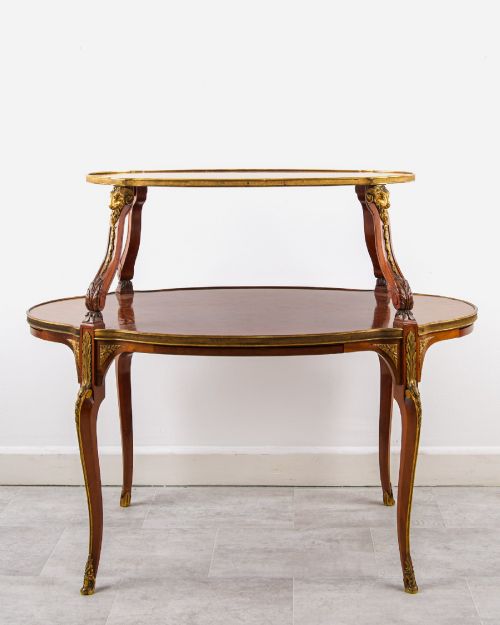
A gold ormolu side table typically combines polished timber structures with cast metal decorative mounts. When you explore this selection, you encounter forms ranging from compact bedside cabinets to elaborate two-tier étagère centre tables.
The objects listed on this page span the nineteenth century, drawing heavily on revival aesthetics. Pieces echo French Louis XV and Empire styles through curved lines and classical ornamentation.
Alongside conventional small tables, the selections frequently include guéridons and kidney-shaped surfaces. These smaller formats suit placement beside seating or against hallway walls.
Distinctions in craftsmanship and finish
Quality rests heavily on the crispness and depth of the metal chasing on the mounts. Superior examples display sharp relief in foliage, cherubs, and scrolling motifs rather than soft, rounded edges.
Timber selection and joinery precision further separate standard production from exceptional pieces. Finely figured mahogany veneers and robust internal framing indicate workshop standards of the highest order.
Maison Millet
The Gold Ormolu Side Table Glossary
- Ormolu
- Gilt bronze ornamentation applied to furniture, clock cases, and lighting. The technique involves applying a gold amalgam to bronze before heating to vaporise the mercury.
- Guéridon
- A small French table supported by one or more columns or caryatids. These pieces frequently feature circular tops and decorative mounts.
- Étagère
- A set of open shelves or a tiered side table designed for displaying small decorative objects. They often incorporate brass galleries and ormolu mounts.
- Boulle
- Marquetry technique utilising tortoiseshell and brass inlaid into a dark ground such as ebonised wood. Developed in France and revived during the nineteenth century.
- Louis XV Style
- Decorative style characterised by asymmetrical scrollwork, floral motifs, and curved cabriole lines. It heavily influenced nineteenth-century revival furniture.
Gold Ormolu Side Table: Frequently Asked Questions
What defines a gold ormolu side table?
These pieces combine wooden furniture forms with cast and gilded bronze mounts. They draw heavily on French design vocabulary from periods like the reign of Louis XV and the Empire.
Craftsmen integrated metal feet, handles, and borders to accent the underlying timber. This creates a distinct visual contrast between the polished wood and the bright gold metalwork.
How do I date a nineteenth-century piece?
Dating relies on examining the timber construction, assembly methods, and the style of the cast mounts. Nineteenth-century pieces often interpret earlier French aesthetics with specific technological markers of the Victorian era.
Looking closely at the screw threads, backplates, and secondary woods helps confirm the exact period. Revival pieces from this era frequently utilise denser hardwoods and machine-finished internal components.
Where should I place a side table?
These tables suit placement in drawing rooms, hallways, or beside seating where the detailed metalwork catches the light. Their compact footprints make them versatile additions to various interior schemes.
Keeping them away from direct sunlight protects vulnerable timber finishes and delicate silk or fabric elements if present. A stable surface ensures that marble tops and decorative mounts remain secure.
How do I care for ormolu mounts?
Ormolu requires gentle dusting with a soft, dry brush to prevent dirt accumulation in the recessed chased details. Avoid abrasive cleaners or metal polishes that strip the delicate gold layer.
Stable indoor humidity levels prevent the underlying bronze from oxidising and the timber frames from warping. Professional conservation ensures the gilt surface retains its original lustre.