
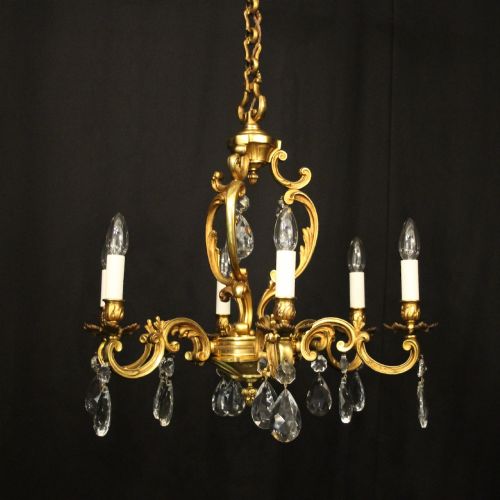
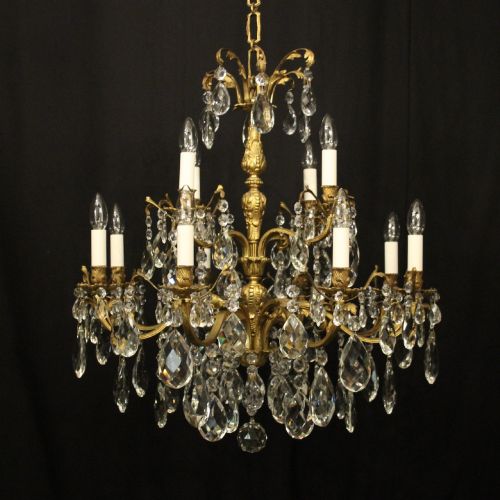
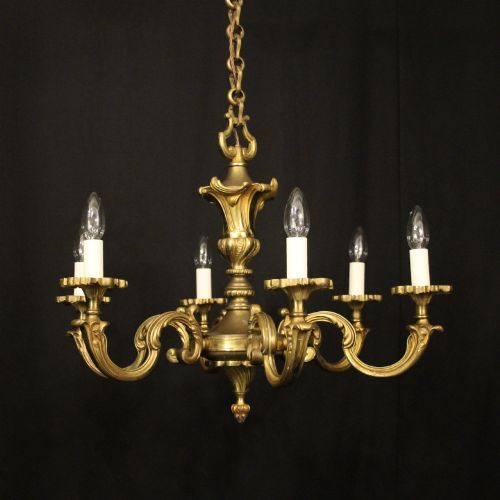
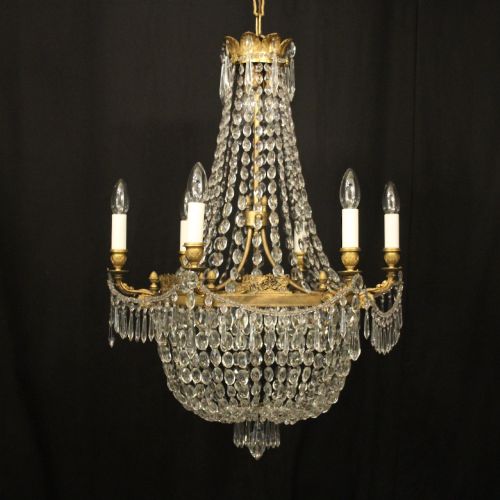


Gold Ormolu Chandelier
A gold ormolu chandelier brings unmistakable French weight and metallic warmth to a high ceiling.
Gold Ormolu Chandelier
A gold ormolu chandelier is a grand overhead light fitting designed to dominate a room through scale and ornamentation. When searching this phrase, a buyer encounters heavy metal frameworks built to suspend multiple candles or bulbs above a formal space.
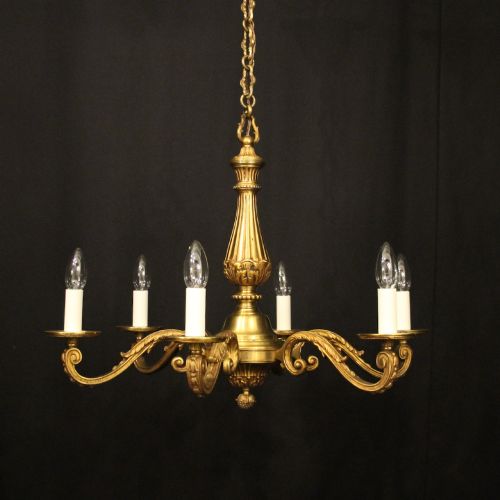
The pieces listed on this page originate predominantly from France, spanning the nineteenth century through the interwar years of the nineteen thirties. Common variations include multi-armed light fixtures, tall lanterns, and tiered structures carrying numerous lights.
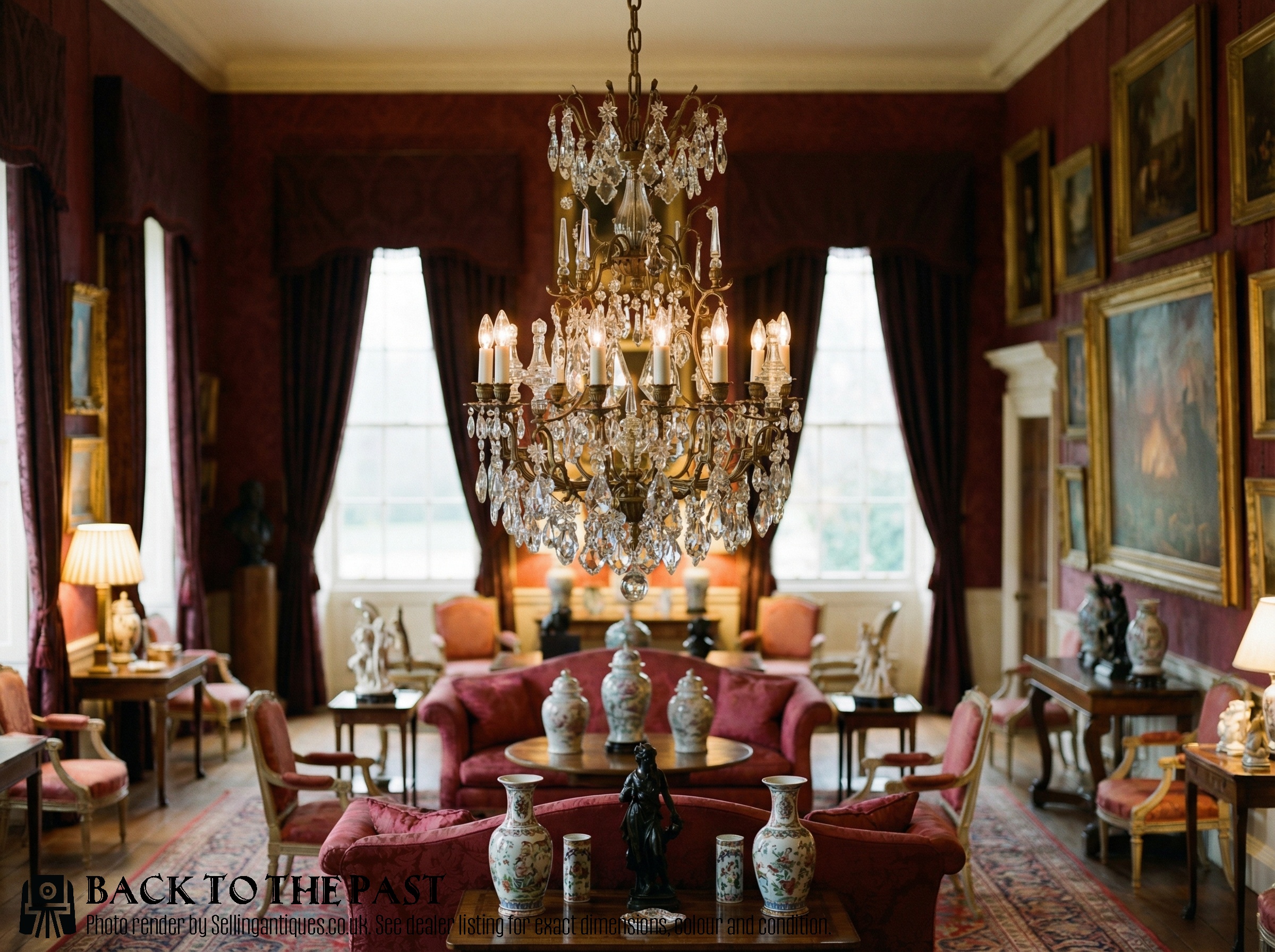
Many examples incorporate glass or crystal drops alongside gilded bronze, adding reflective elements to the heavy metal body. Buyers find forms ranging from simple six-arm configurations to massive sixteen-light double-tiered centrepieces.
Materials and Construction
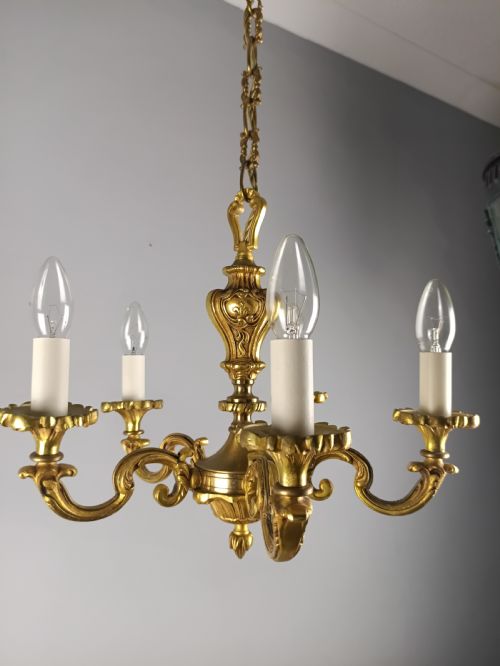
These light fixtures rely heavily on bronze, brass, and applied gold surface treatments such as ormolu and gilding. Metal components are cast and chased to create intricate decorative details before receiving their golden finish.
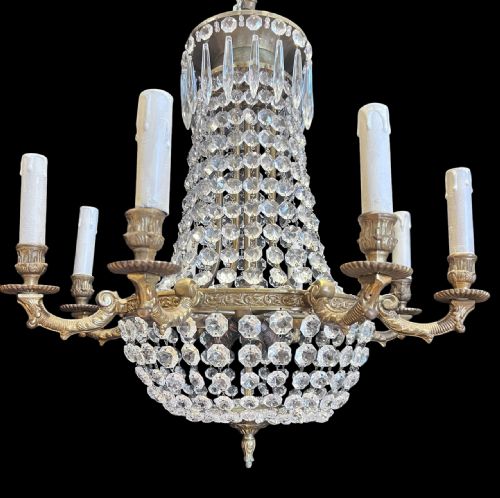
Crystal and cut glass elements are suspended from the main metal frames using wire or pins, particularly in tent and waterfall configurations. The combination of heavy metal armature and delicate glass requires precise engineering to maintain structural balance.
Materials recorded across the inventory include gilt bronze, crystal, brass, and cut glass configured into single and double tiers.
Defining Quality
Quality rests in the crispness of the metal chasing and the depth of the gilding across the bronze or brass surface. Superior examples display sharp relief in their decorative motifs, whereas lesser pieces show softer, worn casting details.
The integration of crystal also dictates the standard of the piece, with high-end examples featuring hand-cut drops that refract light cleanly. Structural complexity, such as double-tiered frames or intricate birdcage designs, separates standard production from exceptional execution.
The Gold Ormolu Chandelier Glossary
- Ormolu
- A technique of applying finely ground high-carat gold to a bronze object using mercury amalgam. This historic process creates a durable, warm metallic lustre.
- Gilt Bronze
- Bronze metal treated with a gold leaf or wash finish to resemble solid gold. It forms the primary structural material for most French chandeliers.
- Tent and Waterfall
- A lighting configuration where strings of crystal beads form an upper cone above a lower cascade of glass drops. This design maximises light reflection.
- Lyre Chandelier
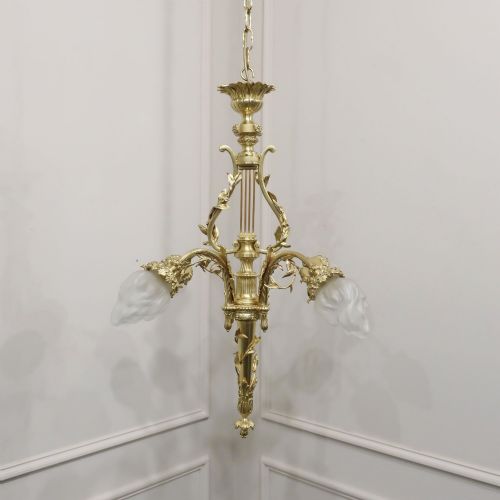
- A light fitting shaped in the symmetrical outline of a classic stringed musical instrument. This neoclassical motif appears frequently in nineteenth-century metalwork.
Gold Ormolu Chandelier: Frequently Asked Questions
What periods do these chandeliers come from?
The pieces available span from the nineteenth century through the early twentieth century, including Edwardian examples and designs from the nineteen twenties and thirties.
French aesthetics dominate the selection, referencing historical periods such as the Empire and Louis styles alongside specific revival movements.
How are crystal elements integrated into the metal frames?
Crystal drops and beads hang directly from the gilded bronze or brass armature using small metal pins or wire attachments. These elements catch and multiply the illumination from the arms.
Larger configurations often combine tent structures at the top with cascading drops below the central tier.
What is the difference between a chandelier and a hall lantern?
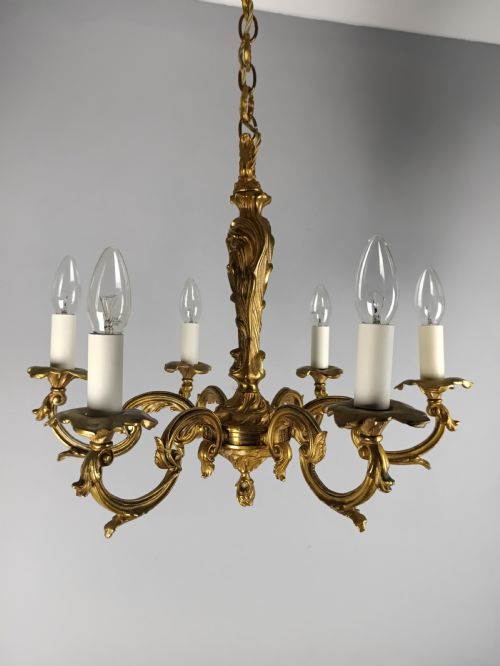
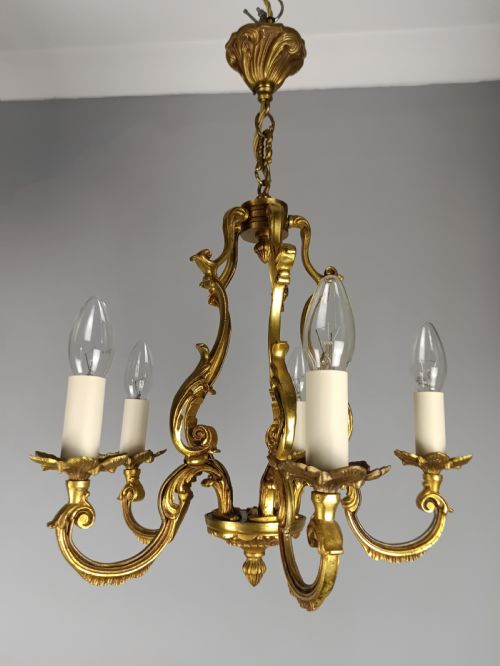
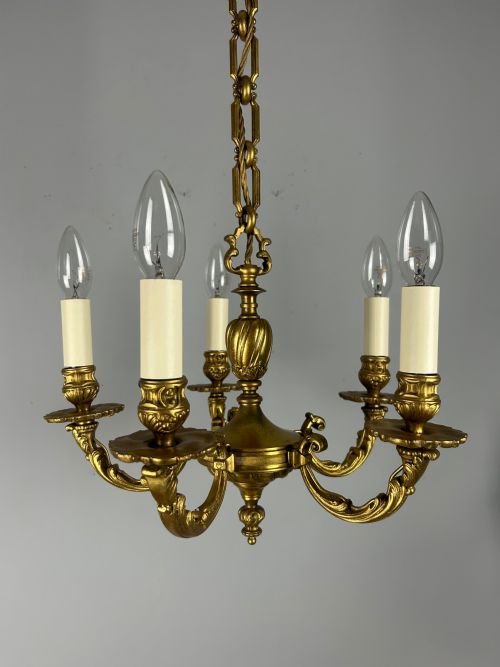
Chandeliers typically feature branching arms designed to hold multiple exposed lights radiating outwards from a central axis. They hang in open spaces like drawing rooms and dining halls.
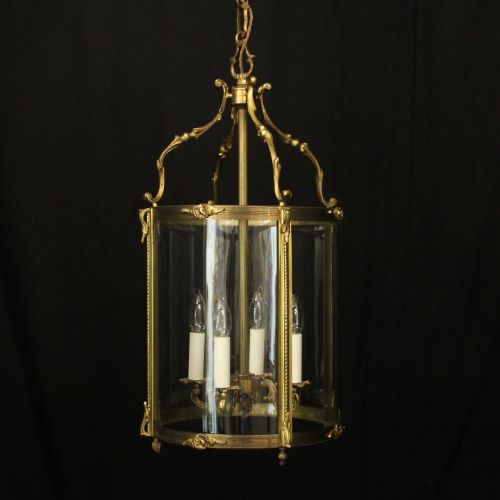
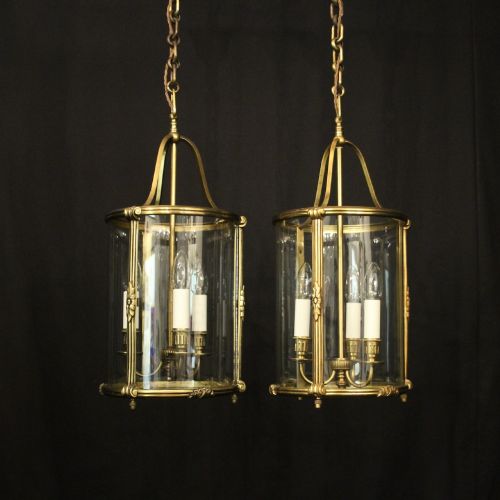
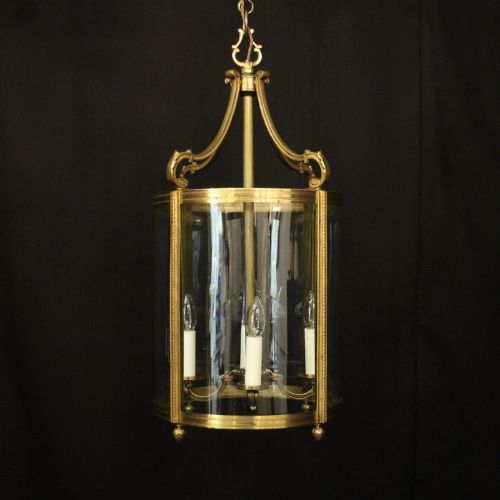
Lanterns enclose the light source within a glazed metal cage, often shaped hexagonally or with convex glass panels, suited for entranceways.
Which design styles are most common?
French Neoclassical and Empire styles appear regularly, characterised by symmetrical geometry, classical motifs, and restrained ornamentation. Rococo revival pieces also feature prominently, offering more asymmetrical and flowery forms.
Many fittings draw direct inspiration from historical interiors like the Palace of Versailles.