


Gold Opal Cocktail Ring
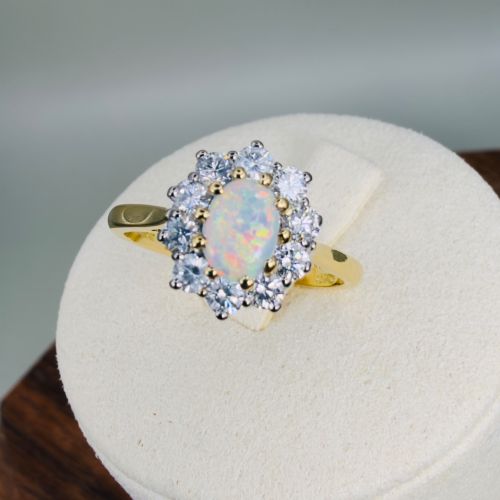
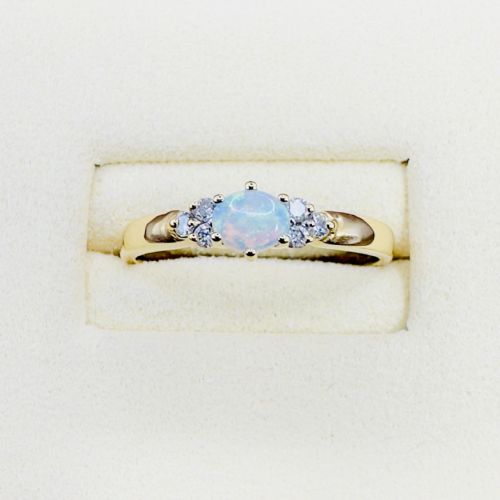
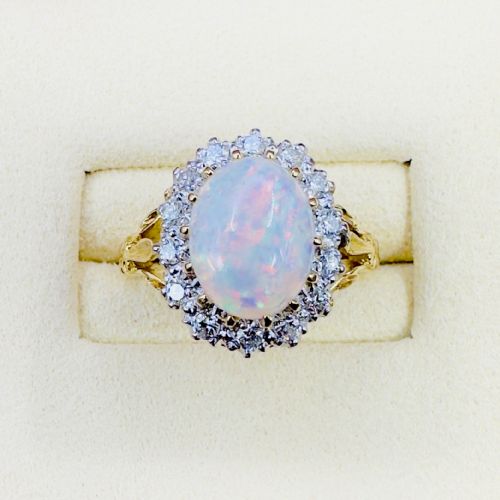
A gold opal cocktail ring commands attention with its play of colour, and these pieces bring together cabochon stones and precious metals from multiple eras.
Gold Opal Cocktail Ring
A gold opal cocktail ring stands out for its bold presence, designed to catch the eye across a room during evening wear. The selections here span from Victorian designs to mid-century examples from the 1950s and 1960s.
Buyers most frequently encounter cluster configurations where a central opal is surrounded by diamonds or sapphires. These pieces utilise various gold standards, including 18ct yellow gold, 18ct white gold, and 9ct gold.
Earlier periods are represented by antique Victorian and Art Deco pieces alongside vintage dress rings. The scale of the stones varies from delicate accents to substantial carat weights set in raised mountings.
Materials and construction
Goldsmiths constructed these rings using cast and fabricated mountings in yellow and white gold, securing central stones via traditional settings. Diamonds and occasionally emeralds or sapphires accent the main opals in cluster arrangements.
Opals are predominantly cut as cabochons to display their internal play of colour, whilst accent diamonds frequently appear in cluster surrounds and feature rose or brilliant facets.
A sixteenth-century survival slips quietly into the selection, carrying a Glasgow band straight from history.
Assessing quality and character
Quality rests in the optical performance of the opal and the balance of its setting. Stones that exhibit a vibrant, active play of colour across the surface elevate the piece significantly.
The integration of supporting diamonds and the structural integrity of the gold mount determine the overall standard. Heavier gold weight and meticulous stone setting separate standard dress rings from exceptional examples.
The Gold Opal Cocktail Ring Glossary
- Cabochon
- A gemstone cut with a smooth, rounded surface rather than facets. This style highlights the internal optical phenomena characteristic of opals.
- Cluster ring
- A ring featuring a central stone encircled by a group of smaller gems, typically diamonds. This arrangement maximises visual impact on the hand.
- Water opal
- A transparent or translucent type of opal displaying subtle play of colour within a clear body. It offers a distinct visual lightness compared to solid white or black opals.
- Rose cut
- An antique diamond cut featuring a flat base and a dome composed of triangular facets that resemble an unopened rosebud. It creates a soft, glittering reflection.
Gold Opal Cocktail Ring: Frequently Asked Questions
How do I care for my opal ring?
Opals contain natural water content and possess a moderate hardness, making them sensitive to sudden temperature changes and harsh chemicals. Remove the ring before swimming, cleaning, or undertaking physical work to protect the stone from scratches.
Clean the metal and stone gently using a soft cloth and warm soapy water, avoiding ultrasonic cleaners or harsh solvents. Store the ring separately in a lined box to prevent friction with harder gemstones.
Can I wear an opal cocktail ring daily?
While these rings were built for social wear, everyday use requires mindfulness due to the softer nature of opals compared to diamonds. Selecting a secure setting, such as a bezel or a well-protected cluster, helps safeguard the central stone during regular activities.
Rotating the ring with other pieces and inspecting the prongs periodically ensures the stones remain securely anchored in the gold mount over years of enjoyment.
How do I identify a Victorian opal ring?
Victorian pieces often feature distinctive hand-finished goldwork, closed-back settings in early examples, and specific gemstone cuts typical of the nineteenth century. The integration of high-carat yellow gold and organic floral or cluster motifs points strongly toward this era.
Examining the wear patterns on the metal and consulting the structural characteristics of the band provides further clues to its period of origin.
What defines an Art Deco opal ring?
Art Deco designs favour geometric precision, symmetry, and the use of white metals like 18ct white gold or platinum alongside yellow gold. Settings often incorporate calibrated accent stones and linear arrangements that reflect 1920s and 1930s aesthetics.
The clean architectural lines and stylised mounts distinguish these rings from the softer, more organic curves of earlier Victorian jewellery.