
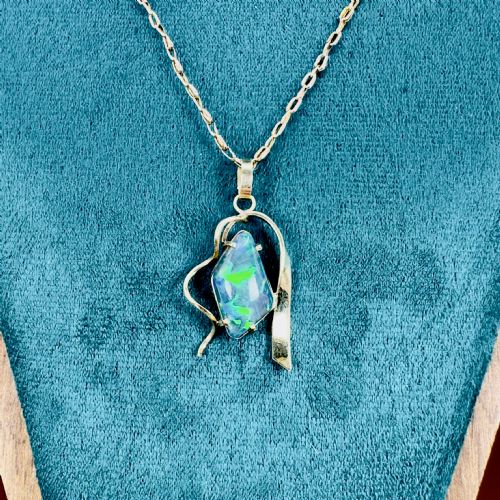


9ct Gold Opal Jewellery
These 9ct gold opal jewellery pieces bring together warm alloys and shifting play-of-colour stones, spanning Victorian designs to mid-century modernism.
9ct Gold Opal Jewellery
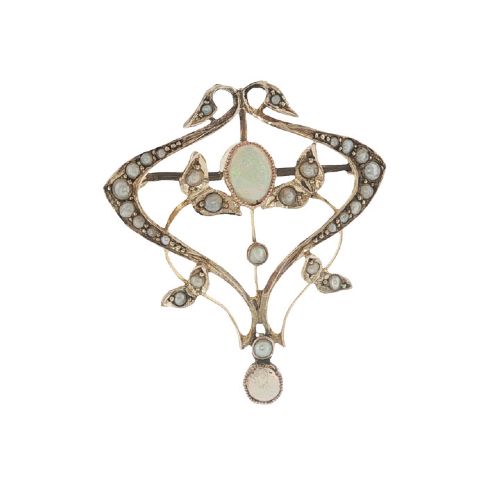
When you search for 9ct gold opal jewellery, you encounter wearable items formed from precious metal alloys paired with opals, spanning rings, pendants, brooches, earrings, and bracelets. The inventory stretches from Victorian and Edwardian examples to vintage pieces from the mid-twentieth century and later.
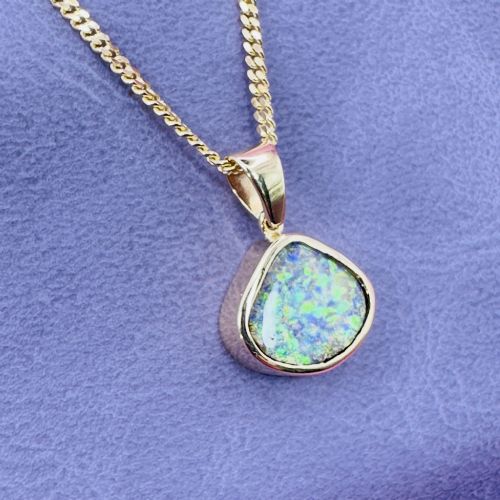
The most common forms on this page are rings and pendant necklaces, frequently styled as solitaires or framed by diamond and seed pearl clusters. You also meet drop earrings, bar brooches, and bracelets showing traditional, Art Deco, and modernist aesthetics.
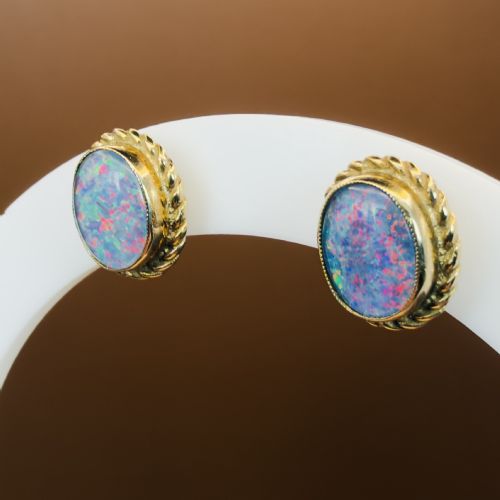
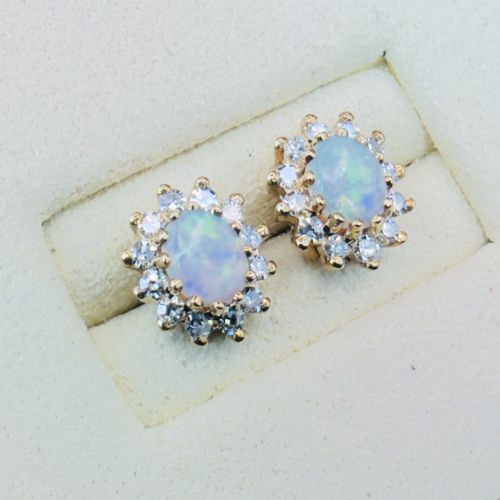
The materials combine 9ct yellow, rose, or standard gold with natural opals, black opal doublets, boulder black opals, water opals, and fire opals. Accompanying stones such as diamonds, sapphires, garnets, and seed pearls appear across the selection.
How They Were Made
The fabrication relies on 9ct gold shaped into settings such as claws, bezels, and filigreed mountings to secure the gems. Workers set cabochon-cut opals, water opals, and black opal doublets alongside accent stones like diamonds and seed pearls.
The listings span from the Victorian era through Edwardian styles, 1920s Art Deco, and mid-century 1950s production.
What Varies in Quality
Quality rests in the optical character of the opal and the structural integrity of the mounting. Stones displaying a vibrant, multi-coloured play-of-colour across the surface elevate a piece above those with muted or flat appearance.
The fineness of the metalwork also distinguishes items, contrasting simple cast settings with intricate filigree, balanced cluster arrangements, and secure stone settings involving diamonds or seed pearls.
The 9ct Gold Opal Jewellery Glossary
- Cabochon
- A gem cut with a smooth, rounded, convex top and a flat or curved base rather than faceted faces. This style highlights the internal colour play of opals.
- Doublet
- A composite stone made of a thin slice of natural opal glued to a darker backing material such as ironstone or onyx to enhance the apparent body colour. It gives the visual depth of a solid black opal.
- Seed pearl
- A very small, natural or cultured pearl, often drilled and used in clusters or floral motifs during the Victorian and Edwardian eras. They add delicate white accents to gold and opal mountings.
- Filigree
- Ornamental work of fine wire formed into openwork patterns, common in vintage and Edwardian metal jewellery. It creates an intricate, lace-like frame around central stones.
9ct Gold Opal Jewellery: Frequently Asked Questions
How do I care for 9ct gold opal jewellery?
Opals contain water and require gentle handling to prevent drying out or cracking. Avoid harsh chemicals, ultrasonic cleaners, and sudden temperature changes when wearing or storing your pieces.
Clean them with a soft, damp cloth and store them separately from harder gemstones that might scratch the gold or the opal surface.
What is the difference between a solid opal and a doublet?
A solid opal consists of a single piece of natural opal material cut and polished to shape. It displays the gem's natural body colour and play-of-colour throughout the stone.
A doublet uses a thin slice of natural opal cemented onto a dark backing layer. This construction deepens the perceived play-of-colour while providing structural support.
How can I tell a Victorian piece from a mid-century one?
Victorian items frequently incorporate closed-back settings, seed pearls, rose gold alloys, and motifs like lovers knots or clover designs. Construction often involves hand-assembly and distinct clasp types.
Mid-century pieces tend to feature bright yellow gold, distinct cluster layouts with brilliant-cut diamonds, and cleaner lines reflecting post-war design trends.
Are all 9ct gold items hallmarked?
Many pieces carry official hallmarks indicating the metal standard and assay office, such as Chester marks on antique items. Stamping practices varied across decades and workshops.
Unmarked pieces still test as 9ct gold through standard testing methods, though stamped hallmarks provide clearer historical context.