



Gold Novelty Pendant
These gold novelty pendant selections offer miniature subjects rendered in precious metals, bringing character and wit to personal adornment.
Gold Novelty Pendant
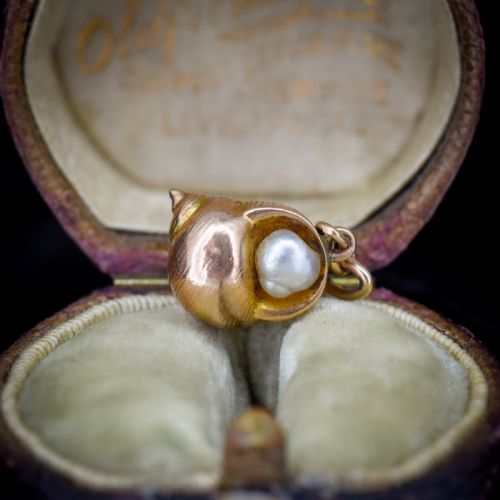
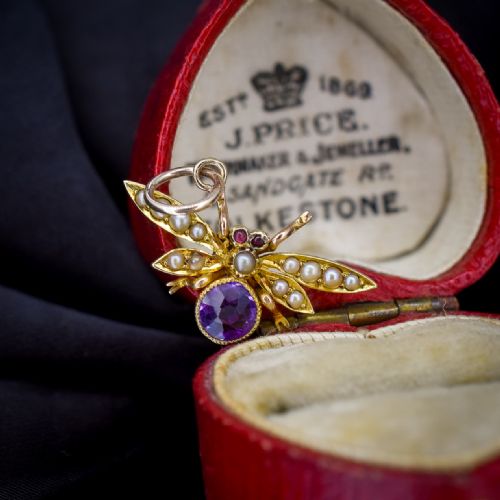
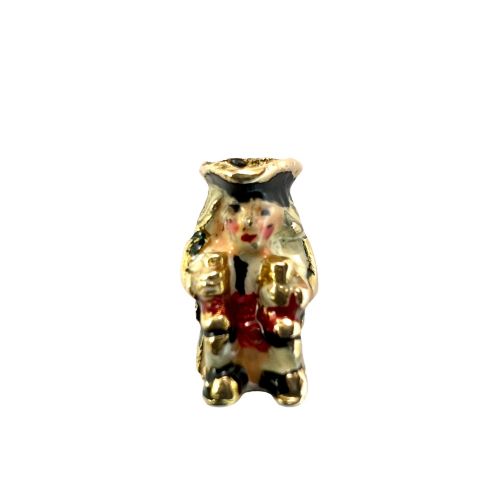
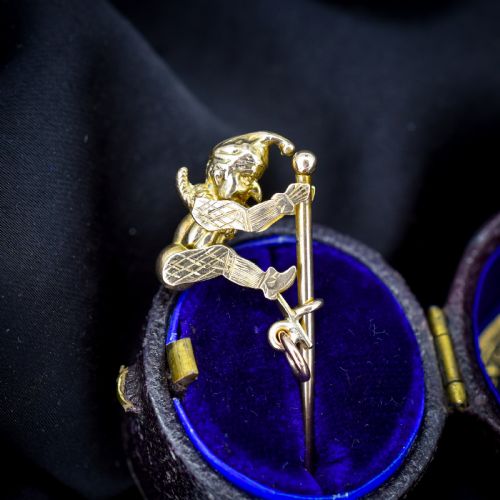
A gold novelty pendant captures whimsical subjects in miniature, ranging from animals and insects to mechanical objects and architectural forms. When you search for a gold novelty pendant, you encounter pieces designed to amuse, commemorate, or function as small curiosities.
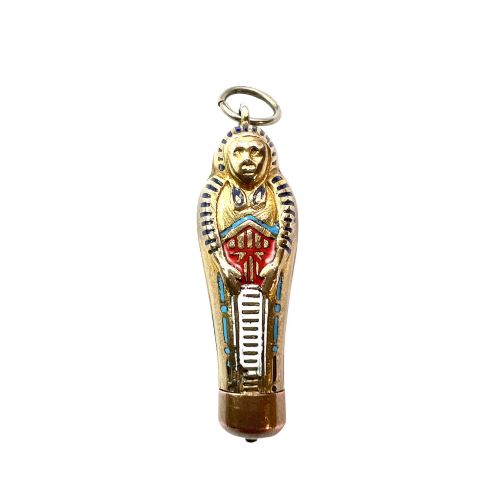
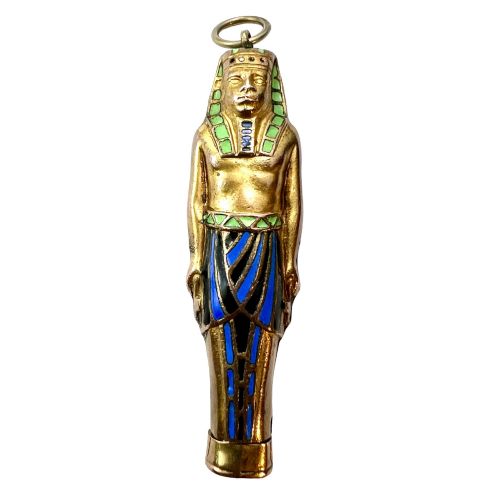
The selections span various eras from the nineteenth century through the mid-century period, with many examples originating from Victorian and twentieth-century workshops. Common forms include articulated fish, opening sarcophagi, sliding figures, and sculptural animals.
Most items double as charms and pendants, often fitted with loops or rings to suspend from chains or bracelets. You frequently find pieces rendered in nine carat gold, yellow gold, or silver gilt, frequently accented with enamel, pearls, or gemstones.
How they were made
Goldsmiths utilised casting, stamping, and hand fabrication to shape gold and silver into detailed three-dimensional forms. Articulated components and sliding mechanisms required precise metalworking so that individual parts moved smoothly without separating.
Enamelling added colour to surfaces through the application of vitreous paste fired onto metal bases. Gemstones such as diamonds, amethysts, pearls, and emeralds were flush-set or claw-set into specific areas to highlight eyes, shells, or decorative motifs.
Materials across the selection include nine carat gold, silver, enamel, and diamonds, spanning periods from the nineteenth century to the mid-century era.
What varies in quality
The standard of a gold novelty pendant depends on the crispness of the casting and the delicacy of hand-chased details. Superior examples display clean articulation in moving parts and secure, flush stone settings rather than superficial surface engraving.
The preservation of applied enamel work significantly influences the character of a piece, as intact vitreous decoration requires careful firing and durable application. Heavier gauge gold construction provides structural integrity, ensuring that hollow or hinged elements withstand regular movement.
The Gold Novelty Pendant Glossary
- Articulated
- Having sections joined by hinges or pins to allow movement. This technique appears in fish vinaigrettes and mechanical charms where jaws or limbs articulate.
- Vinaigrette
- A small container holding a perforated grille beneath a lid, originally used for aromatic vinegar. These are often formed as novelty animals or silver gilt fish.
- Propelling pencil
- A pencil containing a mechanism to advance the lead via a twist or slide. Several novelty pendants combine this function with miniature Egyptian sarcophagi.
- Enamel
- A glassy substance fused to metal through heat to provide colour and decoration. It frequently highlights details on animal and cottage charms.
- Charm
- A small trinket hung from a bracelet or chain. Many items listed serve as both charms and pendants.
Gold Novelty Pendant: Frequently Asked Questions
What subjects do these pendants feature?
The pieces depict a wide range of subjects, including animals, insects, theatrical figures, and everyday objects.
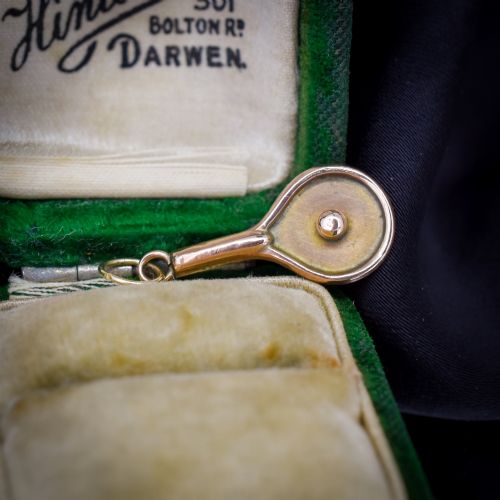
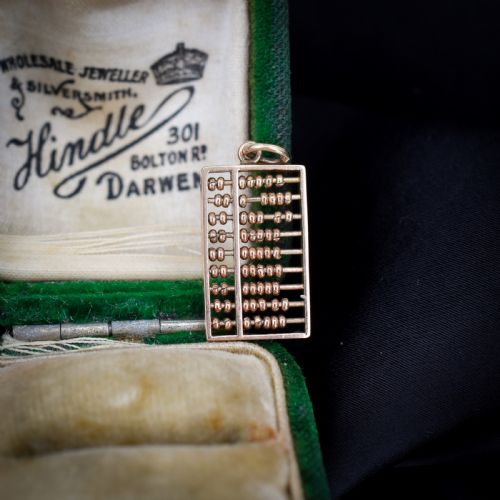
You will find bears, monkeys, cats, pigs, tennis rackets, abacuses, and Egyptian pharaohs rendered in precious metals.
How do I wear a novelty pendant?
These items typically arrive with loops, rings, or bails designed to suspend them from chains, necklaces, or charm bracelets.
Their miniature scale makes them suitable for daily wear either singly or grouped together with other trinkets.
Are these pieces marked with metal standards?
Many examples feature stamps or hallmarks indicating the purity of the metal, such as nine carat gold or silver.
Some items rely on period characteristics and specific construction methods when hallmarks are absent or worn.
How do I care for enamelled gold charms?
Enamelled surfaces require gentle handling to prevent chipping or scratching against hard objects.
Avoid using harsh chemical dips or ultrasonic cleaners, relying instead on a soft cloth for maintenance.