
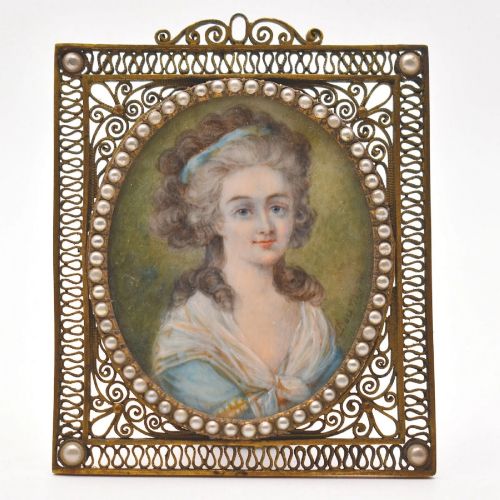


Gold Metal Framed Portrait
These gold metal framed portrait pieces bring miniature painting and cast metalwork together in domestic interiors.
Gold Metal Framed Portrait
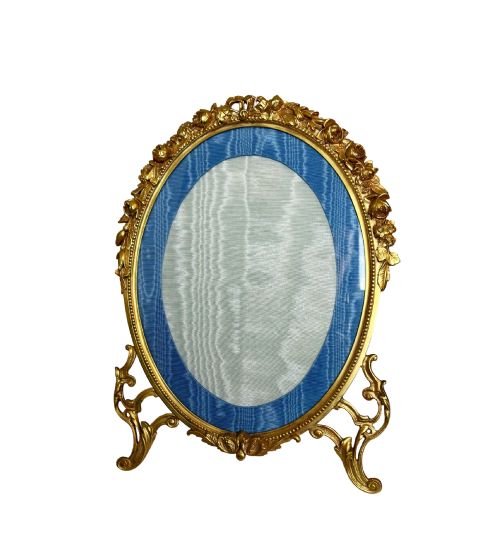
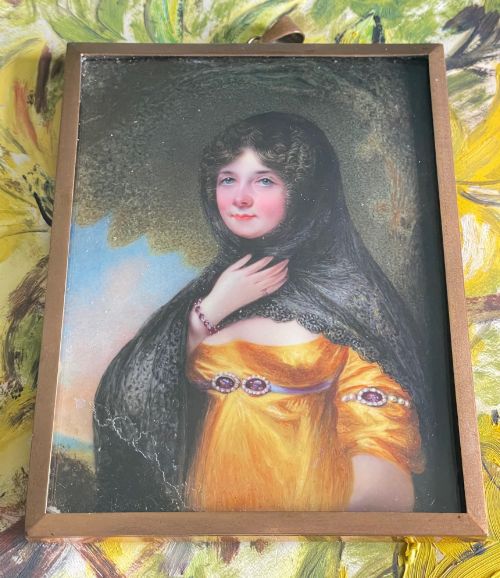
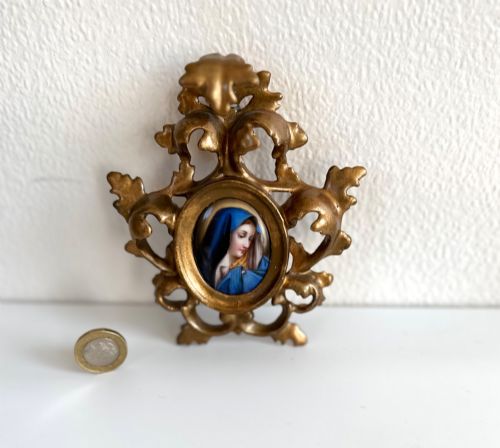
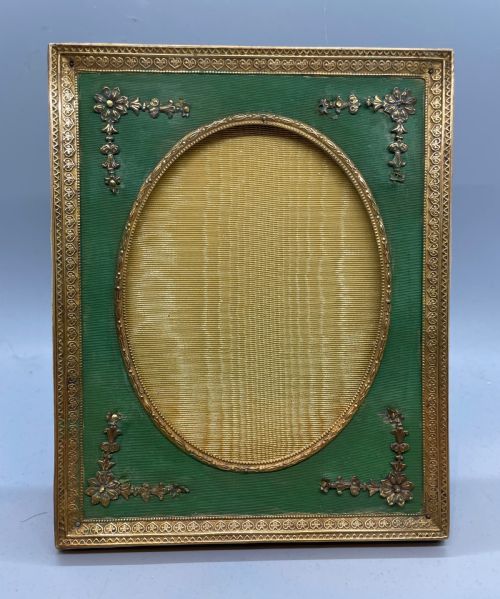
A gold metal framed portrait search brings together miniature paintings, prints, and photographs set within ornate metal surrounds. These objects range from eighteenth-century watercolour studies to late Victorian and Edwardian photo frames.
The most common examples on this page combine portrait miniatures on paper, ivory, or enamel with heavy cast frames in brass, ormolu, or gilt bronze. Many incorporate stands or hanging loops intended for tabletop display or intimate wall placement.
Makers from the Georgian and Victorian eras utilised various metals, framing subjects from naval officers to nobility within decorative borders of seed pearls, paste stones, and silk linings.
Materials and construction methods
The metal surrounds are typically cast in brass, bronze, or ormolu, often finished with fire gilding or lacquered coats to maintain a bright appearance. Frames frequently feature intricate chased detailing, paste stone embellishments, or mounted silk damask backings.
Portraits themselves employ diverse media including watercolour, gouache, enamel, and oil paint applied to paper or card. Protective glass covers the delicate painted surfaces, held securely within hinged or screwed backplates.
Listings feature periods from the 18th century through to the Edwardian era, incorporating materials such as enamel, silk, and ormolu.
Distinctions in craftsmanship
Quality rests upon the crispness of the metal casting and the fineness of the portrait work. Superior frames display sharp relief in chased ornamentation and secure stone settings, while lesser examples show softer edges from worn moulds.
Painted miniatures achieve distinction through precision of brushwork and facial expression, executed by recognised artists rather than anonymous studio hands. The integration between the portrait and its specific frame also indicates whether the piece was conceived as a unified work.
Horace Hone·Dumont·William Naish·Emma Kendrick·Henry Jacob Burch·Diana Hill
The Gold Metal Framed Portrait Glossary
- Ormolu
- Gilded bronze produced through a mercury amalgamation process on a copper-zinc alloy. This technique yields a warm, deep lustre distinct from modern electroplating.
- Miniature portrait
- A small-scale painting executed with meticulous detail on materials such as ivory, vellum, or card. These works demand extreme precision from the artist working under magnification.
- Brumagem
- A historical term for cheap metal goods manufactured in Birmingham. It often describes stamped brass items produced in imitation of finer cast bronze.
- Paste stone
- Faceted glass cut and polished to resemble precious gemstones. It is frequently set into nineteenth-century frames to add colour and sparkle.
Gold Metal Framed Portrait: Frequently Asked Questions
How do I hang a framed miniature?
Many of these pieces include built-in suspension rings or small easel stands for tabletop placement. Consider weight distribution and wall strength before hanging heavier cast bronze frames.
Keep frames away from direct sunlight to protect both the metal gilding and the delicate watercolours or pigments underneath the glass.
Are these portraits painted on ivory?
Some eighteenth and nineteenth-century miniatures use thin slices of ivory as a reflective ground for watercolour. Others utilise prepared paper, card, or enamel fired on copper.
Examining the surface under magnification helps determine the substrate without removing the painting from its protective brass or ormolu housing.
How should I clean the metal frame?
Dust gently with a soft, dry brush to remove surface particles from chased crevices and decorative mounts. Avoid chemical dips, abrasive polishes, or moisture, which can strip historic gilding or seep into the portrait.
If the glass requires cleaning, apply a tiny amount of glass cleaner to a cloth rather than spraying directly onto the frame.
What periods do these pieces span?
The selection includes Georgian works from the late eighteenth century through to Regency, Victorian, and Edwardian pieces up to nineteen ten. Each era brought distinct casting styles, from French Rococo revival curves to simpler neoclassical frames.
Examining backings, fasteners, and stylistic motifs helps assign pieces to these specific decades.