


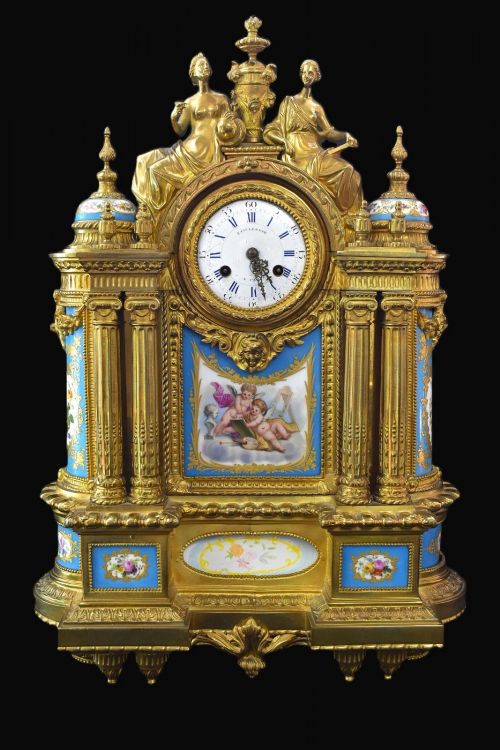

Gold Mantle Clock
A gold mantle clock brings nineteenth-century presence to a room, combining architectural brass or ormolu cases with precise mechanical movement.
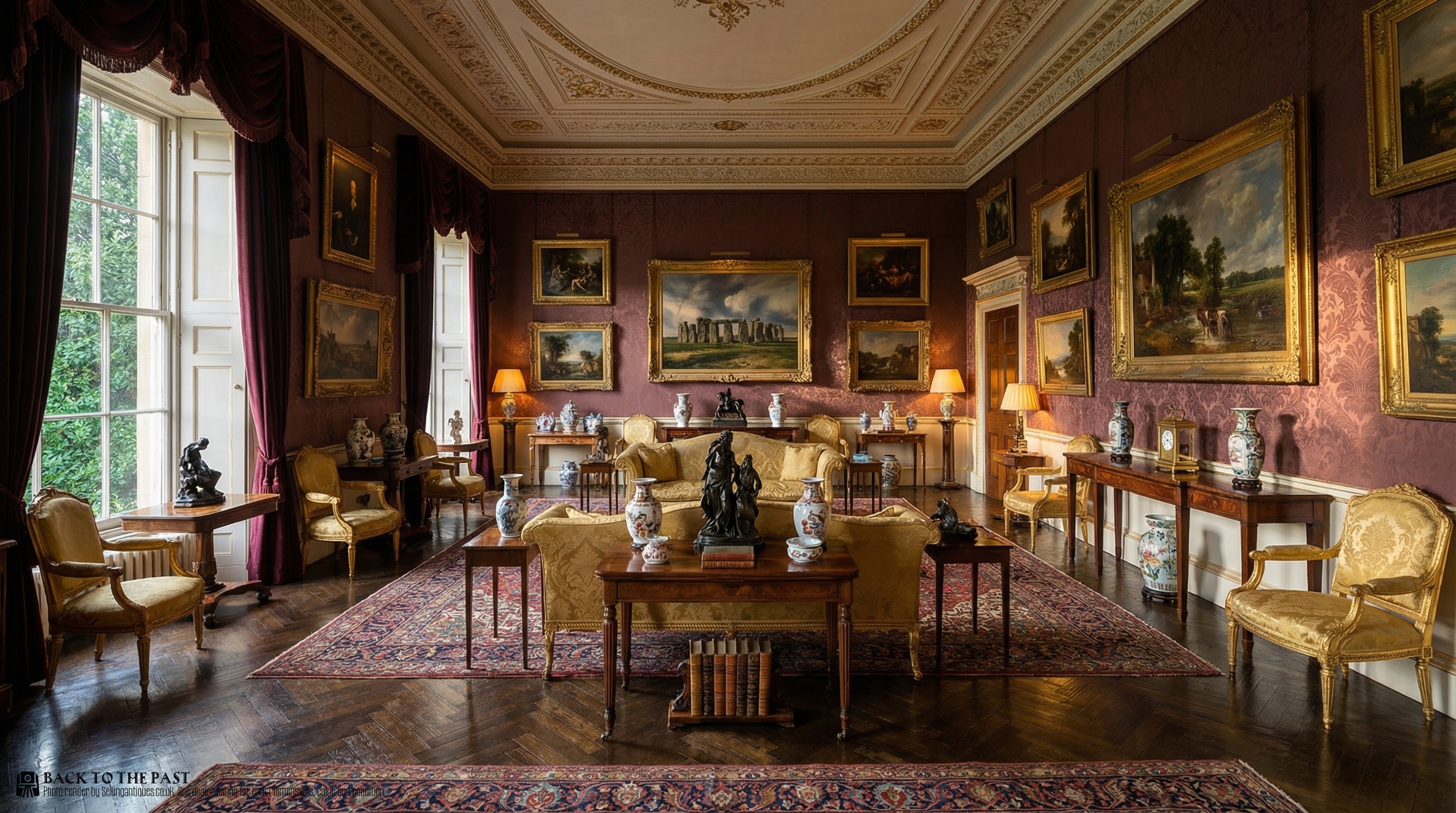
Gold Mantle Clock
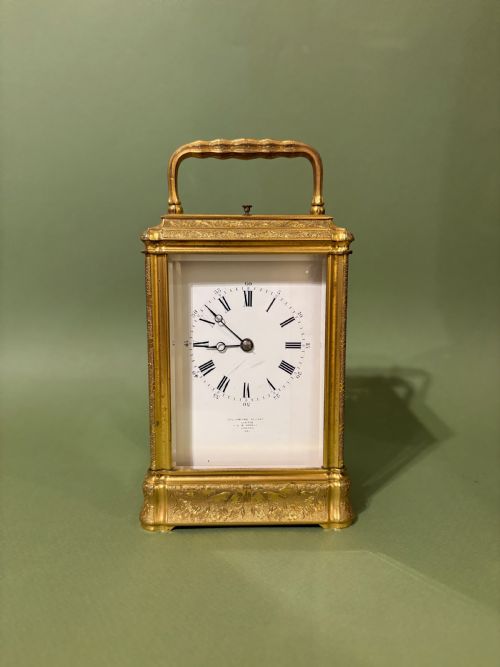
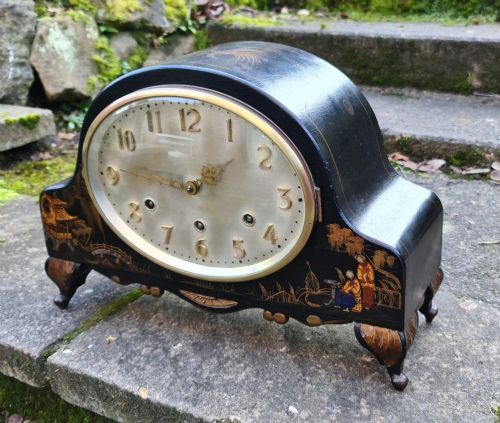
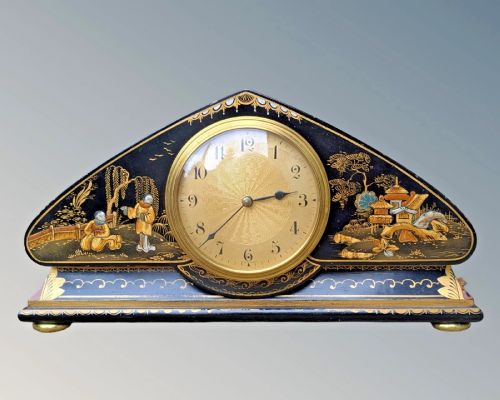
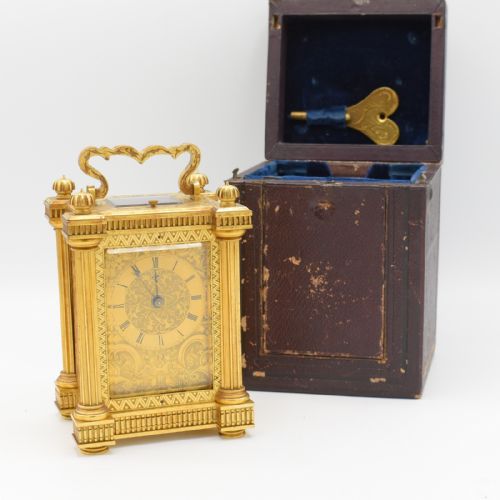
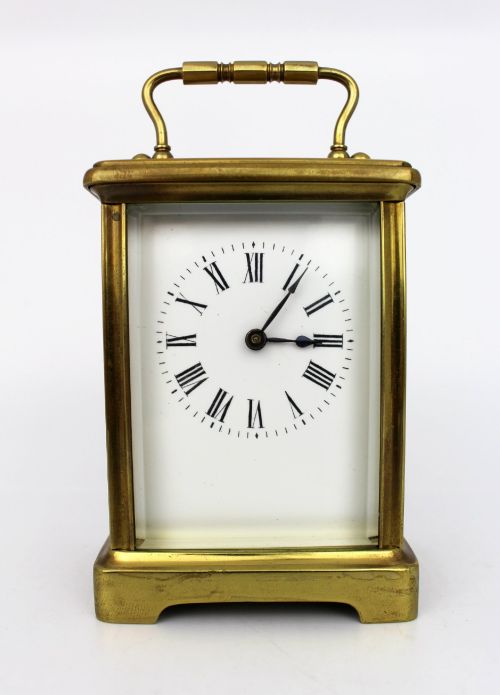
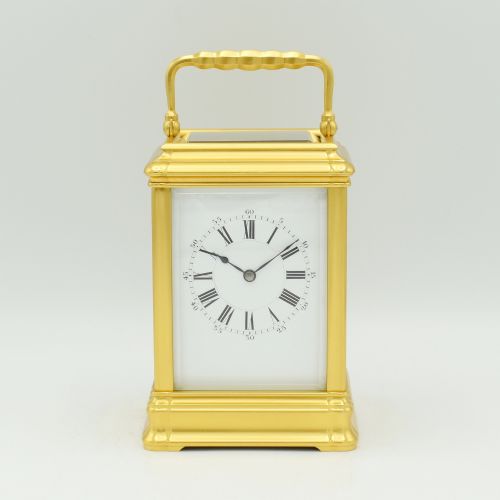
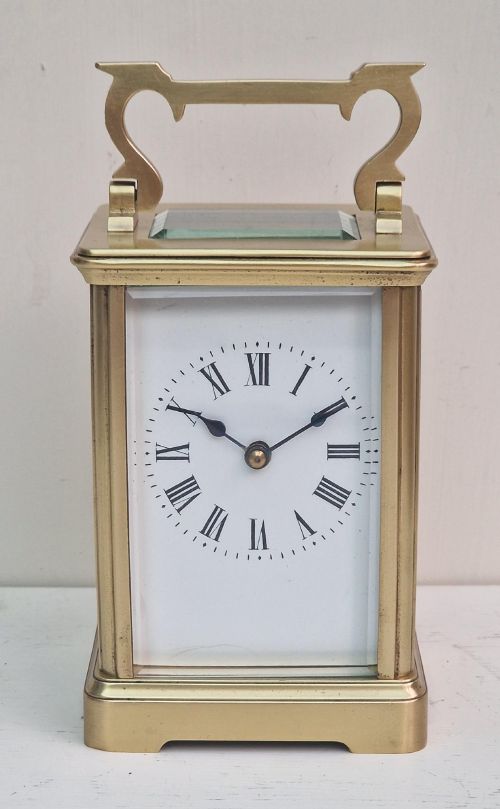
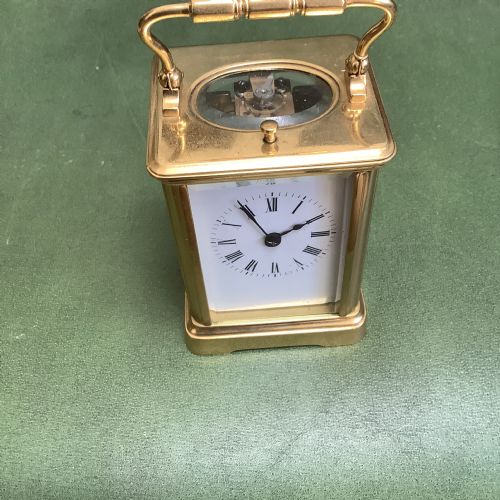
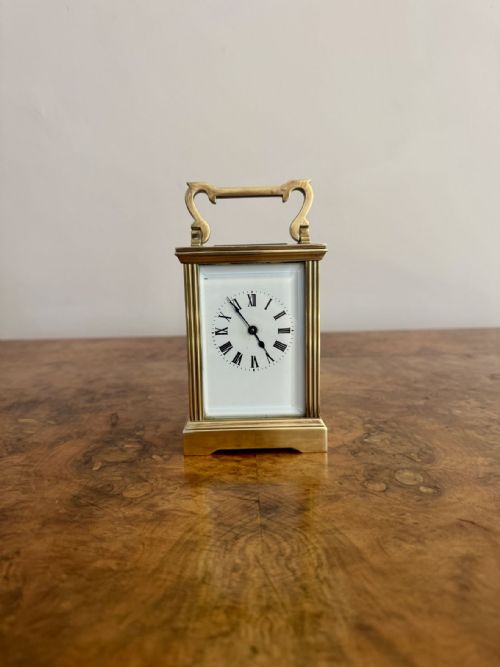
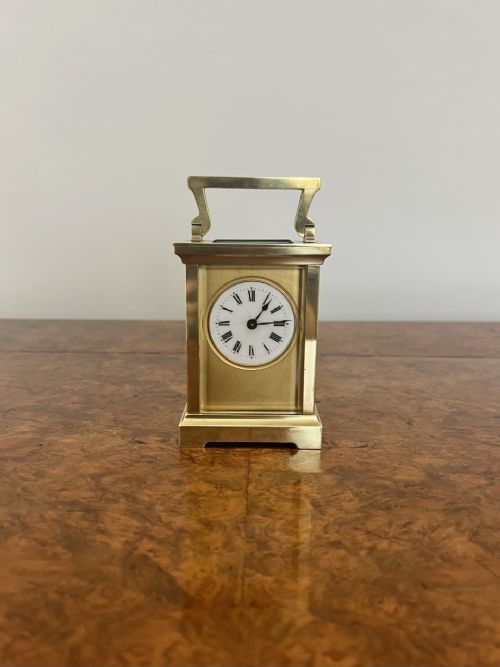
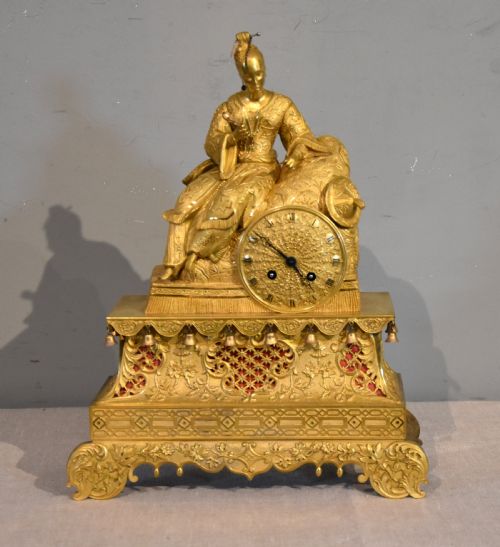
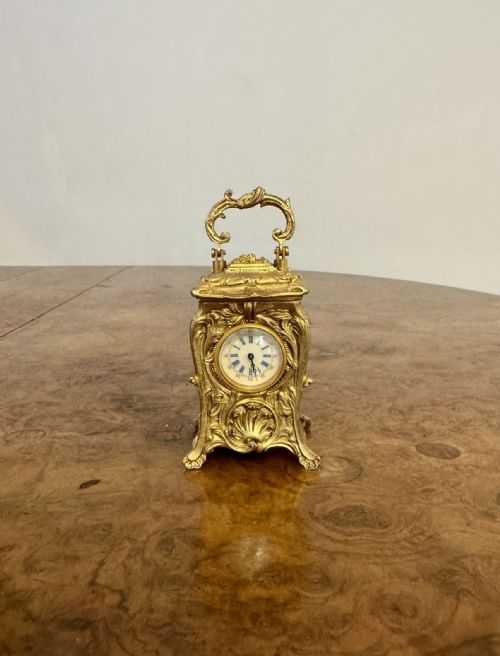
When buyers search for a gold mantle clock, they encounter an array of nineteenth-century French and English timepieces, with portable carriage clocks and substantial mantel clock garnitures appearing most frequently on this page. The selection spans the Victorian, Edwardian, and late nineteenth-century periods, capturing styles from Louis XVI revival to Chinoiserie.
Mantel clocks in this grouping frequently utilise architectural or figural forms, rendered in gilt bronze, ormolu, and solid brass. Many pieces incorporate glass panels or delicate enamel dials, reflecting the dominant decorative tastes of the eighteen-seventies and eighteen-eighties.

How they were made
Maker workshops relied on heavy brass foundations, fire-gilded bronze, and cast ormolu to construct robust cases capable of housing intricate mechanical movements. Enamel dials, often painted with Roman numerals, were mounted behind bevelled glass panes or within brass bezels.
Specialised clockmakers combined forged brass gear trains with striking or repeating mechanisms, occasionally integrating porcelain panels from factories like Sevres into the main body of the clock.
Gold Mantle Clock Retail Price Guide 2026
Typical asking prices for gold mantle clock among the pieces listed under this phrase on Sellingantiques today, from the lower quarter to the upper quarter. They describe what is for sale here now, not the wider market.
Listings feature brass, gilt bronze, ormolu, porcelain, and enamel materials across Victorian, Edwardian, and nineteenth-century periods.
What varies in quality
Distinction between pieces rests upon the crispness of the gilt bronze or ormolu casting, where finely chased foliage and figures command greater attention than flat, machine-stamped housings. The presence of signed movements from recognised makers alters the standing of a clock considerably.
The integrity of the enamel dial, the complexity of the striking or repeating mechanism, and the retention of original glass panels define the upper tier of surviving examples.
HENRI JACOT·Howell & James London·C. Detouche Paris·Etienne Lenoir·Duverdrey & Bloquel·Japy Freres·Breguet
The Gold Mantle Clock Glossary
- Ormolu
- A technique of applying finely ground high-carat gold to a bronze object using mercury. This mercury gilding produces a warm, durable finish seen on many nineteenth-century French cases.
- Carriage clock
- A small, portable spring-driven timepiece designed for travel during the nineteenth century. These clocks typically feature a rectangular brass case with glass sides.
- Champleve
- An enamelling technique where troughs are dug into a metal surface and filled with vitreous enamel powder before firing. It appears frequently on decorative nineteenth-century clock bezels.
- Repeating mechanism
- A complication in a mechanical clock that allows the wearer to sound the last elapsed hour and quarter-hour upon pressing a button. This feature required sophisticated internal gear work.
- Garniture
- A set consisting of a central clock flanked by matching decorative objects such as urns or candelabra. These sets were designed to sit symmetrically upon a fireplace mantel.
Gold Mantle Clock: Frequently Asked Questions
What is a carriage clock?
A carriage clock is a portable spring-driven timepiece developed in the nineteenth century for travellers. They typically feature brass and glass cases with folding handles.
Most examples sit on small feet and house precision Swiss or French movements designed to run reliably while away from home.
How do I wind a mantel clock?
Winding requires a matching key inserted into the winding holes on the enamel dial. Turn the key gently until resistance signals the spring is fully tensioned.
Care must be taken not to overwind the mainspring, as excessive force damages the internal brass teeth.
Are these clocks striking?
Many nineteenth-century mantel and carriage clocks include striking mechanisms that ring on the hour or half-hour. Some feature gongs, while others utilise small bells.
Repeating versions can strike the time on demand when a lever or button on the case is activated.
How do I identify a French clock?
French pieces often display foundry stamps, signature engravings on the backplate, or distinctive ormolu and porcelain mounts. The use of Sevres plaques points directly to French provenance.
Stylistic cues such as Louis XVI revival framing and intricate Champleve enamel work further distinguish continental manufacturing.