


Gold Leaf Teacup Saucer
These gold leaf teacup saucer sets are refined porcelain drinking vessels ornamented with gilt highlights, bringing historic European craftsmanship to the table.
Gold Leaf Teacup Saucer
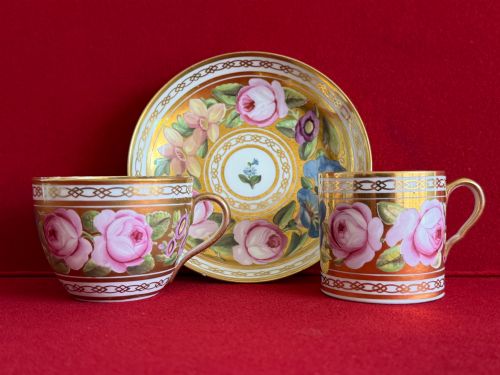
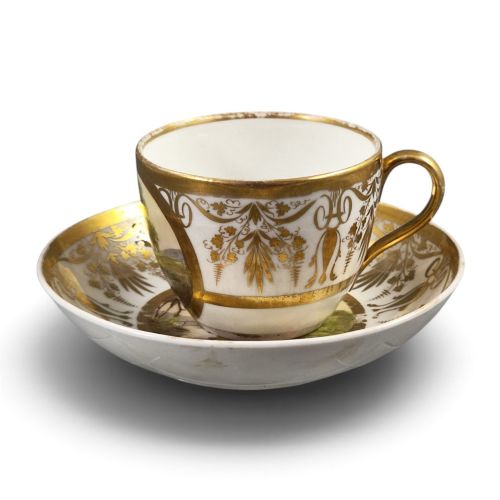
When searching for a gold leaf teacup saucer, you encounter delicate porcelain drinking vessels and matching saucers enhanced with metallic gilding. These items span various historic periods including Georgian, Regency, and the nineteenth century.
The selections available here range from cabinet cups and demitasse sets to larger porcelain trios. Many examples originate from esteemed European porcelain houses and feature detailed hand-painted elements.
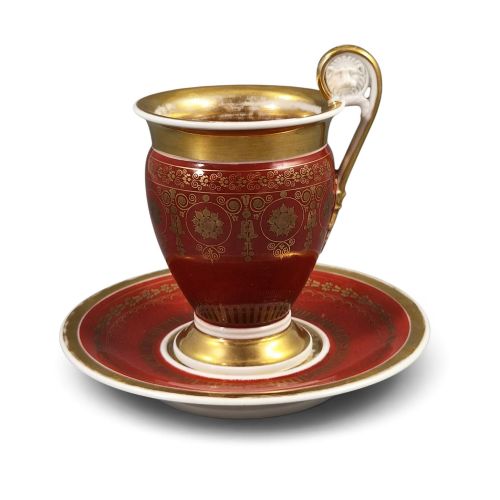
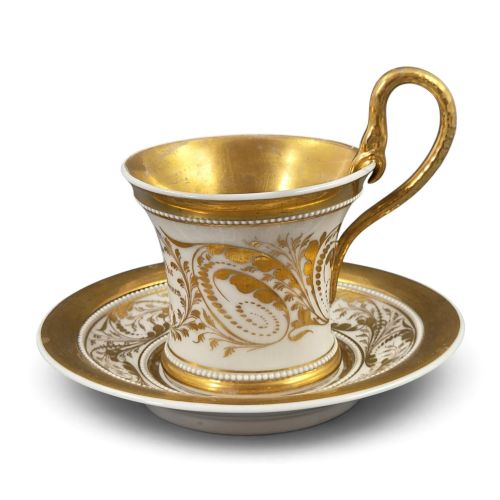
Forms vary from neoclassical silhouettes to Biedermeier designs and French Empire styles with distinctive handles. Buyers find both intimate demitasse formats and larger cabinet pieces intended for display or refined service.
Materials and Manufacture
These pieces are constructed from hard-paste porcelain and standard porcelain, providing a smooth white ceramic base for decoration. Artisans applied genuine gold leaf and rich gilding to accent the rims, handles, and painted scenes.
Decoration often involved meticulous hand-painting, incorporating detailed landscapes, enamel work, and specialised motifs like lion mask handles. Kiln firing fixed the pigments and metallic layers permanently to the ceramic body.
Listings feature hard-paste porcelain and standard porcelain decorated with gold leaf, enamel, and hand-painted landscapes from the Georgian era through the 1930s.
Assessing Quality and Execution
Quality in these porcelain sets is determined by the crispness of the porcelain moulding and the delicacy of the hand-painted details. Finer examples display intricate miniature landscapes and precise brushwork that require advanced artistic skill.
The application of gold leaf and gilding also distinguishes the work, with superior pieces retaining thick, burnished metal layers. The prestige of the manufacturing house, such as KPM Berlin or Old Paris workshops, heavily influences the standing of each piece.
KPM Berlin·Vieux Paris·Derby·Hutschenreuther·Royal Worcester
The Gold Leaf Teacup Saucer Glossary
- Hard-paste porcelain
- A durable ceramic material composed of kaolin and petuntse, fired at very high temperatures. It forms the robust white body of many antique European cups.
- Cabinet cup and saucer
- A decorative ceramic set typically produced for display in a glass-fronted cabinet rather than everyday use. These pieces often feature elaborate painted scenes and heavy gilding.
- Demitasse
- A small cup used for serving strong black coffee or espresso, usually accompanied by a matching saucer. The format became popular during the nineteenth and early twentieth centuries.
- Gilding
- The decorative application of gold leaf or gold powder onto the surface of porcelain. It provides the bright metallic highlights seen across these historic vessels.
- Neoclassical
- An artistic style drawing inspiration from the classical art and culture of ancient Greece and Rome. It appears on porcelain through symmetrical forms and restrained, elegant ornamentation.
Gold Leaf Teacup Saucer: Frequently Asked Questions
What is a cabinet cup and saucer?
A cabinet cup and saucer is an ornate porcelain set intended primarily for display in a collector's cabinet rather than for daily dining. These pieces often exhibit superior artistic detail and extensive gilding.
They represent the pinnacle of a porcelain manufactory's output from periods such as the Regency and the nineteenth century.
How do I identify a demitasse set?
Demitasse sets are immediately recognisable by their smaller scale, designed specifically for serving espresso or strong coffee. They include a compact cup paired with a small matching saucer.
Such vessels frequently date from later periods including the early twentieth century and feature concentrated decorative gilding.
Are these cups meant for daily use?
Most antique porcelain items with delicate gold leaf and hand-painted scenes are best reserved for gentle handling or display. The fragile nature of nineteenth-century enamel and gilding requires careful maintenance.
Hand washing in warm water without harsh abrasives helps preserve the historic surfaces of these fragile ceramics.
What distinguishes Old Paris porcelain?
Old Paris or Vieux Paris porcelain originates from various independent workshops operating in and around Paris during the nineteenth and early nineteenth centuries. These pieces are noted for bright enamel palettes and rich gold leaf highlights.
Distinctive sculptural elements, such as lion mask handles, frequently characterise French Empire examples from this tradition.