







Gold Leaf Display Stand
These gold leaf display stand pieces bring architectural presence and classical shine to a room, offering elevated stages for treasured objects.
Gold Leaf Display Stand
A gold leaf display stand encompasses an array of gilded furnishings designed to elevate and showcase objects, from towering torcheres to compact wall shelves. When exploring this selection, buyers encounter everything from grand nineteenth-century pedestals and urn stands to intricate eighteenth-century style frames and tabernacles.
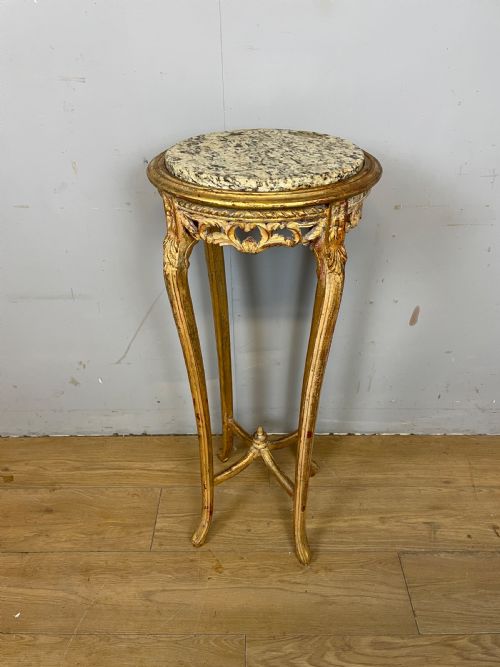
The objects appearing most frequently on this page combine carved wooden structures with radiant gilded surfaces. Pieces range from slender Italian pedestals with marble tops to glazed continental display cabinets and architectural miniatures housed in elaborate surrounds.
Materials and Technique
Craftsmen built these items primarily using wood, gesso, and gold leaf, applying thin metallic sheets over carefully prepared carved surfaces. Giltwood and gilt metal form the structural backbone of these pieces, providing a sturdy foundation for the brilliant decorative finishes.
Makers incorporated supplementary materials such as marble for durable table tops and pigment to enhance depth and shadow within the carved details. The application of gold leaf required meticulous hand skill to ensure the precious metal adhered smoothly to the intricate contours of styles like Rococo Revival and Italian Baroque.
Gold Leaf Display Stand Retail Price Guide 2026
Typical asking prices for gold leaf display stand among the pieces listed under this phrase on Sellingantiques today, from the lower quarter to the upper quarter. They describe what is for sale here now, not the wider market.
One Earl of Thanet found immortality compressed inside a gilt metal frame, staring out across the centuries from a miniature portrait.
Assessing Quality
Quality reveals itself in the crispness of the hand-carved wooden details beneath the gilding and the depth of the gold leaf application. Finer pieces display deep, confident chisel work and subtle variations in the gilded surface that catch the light naturally, whereas lesser examples show softer, less defined ornamentation.
The structural integrity of the underlying wood and the harmonious integration of secondary materials like marble tops distinguish superior examples. Pieces that maintain their original gilded surfaces without heavy modern intervention hold greater integrity and visual coherence.
The Gold Leaf Display Stand Glossary
- Giltwood
- Wood that has been coated with gold leaf or gold paint. This technique creates a luminous surface that defines much of antique gilded furniture.
- Gesso
- A plaster-like mixture applied to wood as a smooth base for gilding. It allows craftsmen to carve intricate relief details before laying the gold leaf.
- Torchere
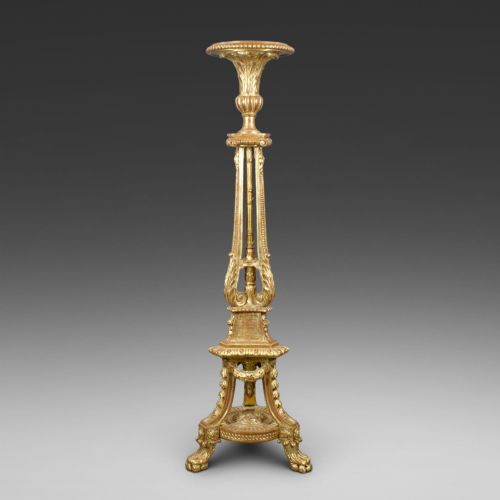
- A tall stand or pedestal originally designed to hold a candle or torch. These pieces now serve primarily to elevate urns, plants, or decorative objects.
- Tabernacle
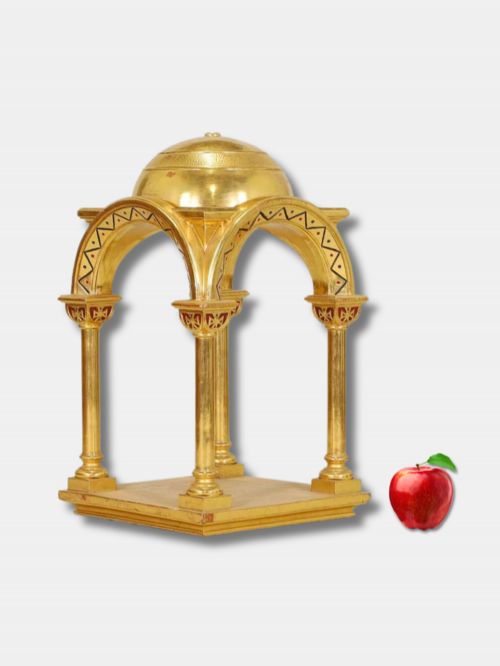
- An ornate, usually architectural enclosure with a domed or pitched top. In decorative arts, these items function as miniature shrines or dramatic display housings.
Gold Leaf Display Stand: Frequently Asked Questions
What is a gold leaf display stand used for?
These stands provide an elevated platform to showcase urns, sculptures, plants, or fine decorative objects within a room. By lifting items off the floor or furniture surfaces, they draw the eye and give prominence to special pieces.
Beyond simple pedestals, the category includes torcheres, wall shelves, and display cabinets that serve both functional storage and decorative staging roles in period interiors.
How do I care for antique gilded furniture?
Gilded surfaces require gentle handling because gold leaf is extremely thin and susceptible to abrasion. Dusting should be done very lightly with a soft, dry brush rather than a rough cloth.
Keep these pieces away from direct sunlight, excessive heat, and high humidity to prevent the underlying wood from expanding and the gesso from cracking.
How can I tell the period of a gilded stand?
Dating relies on examining the carving style, the preparation layers visible beneath losses in the gold, and the wood species used in construction. For instance, nineteenth-century pieces often reflect revivals of Baroque or Rococo styles with machine-prepared or heavier gesso layers.
Comparing the decorative motifs, such as the specific scrollwork or architectural elements, against known historical periods helps narrow down the manufacturing era.
Are marble tops original to these stands?
Marble tops frequently appear on nineteenth-century torcheres and pedestals to provide a sturdy, heat-resistant, and luxurious surface for displayed items. Many are original to the piece, cut specifically to fit the recessed wooden frame.
Inspecting the fit between the marble and the giltwood helps determine whether the top belongs to the original construction period.