



Gold Leaf Crystal Chandelier
A gold leaf crystal chandelier brings warmth and historic craftsmanship to a room, offering the shimmer of cut glass paired with rich, gilded surfaces.
Gold Leaf Crystal Chandelier
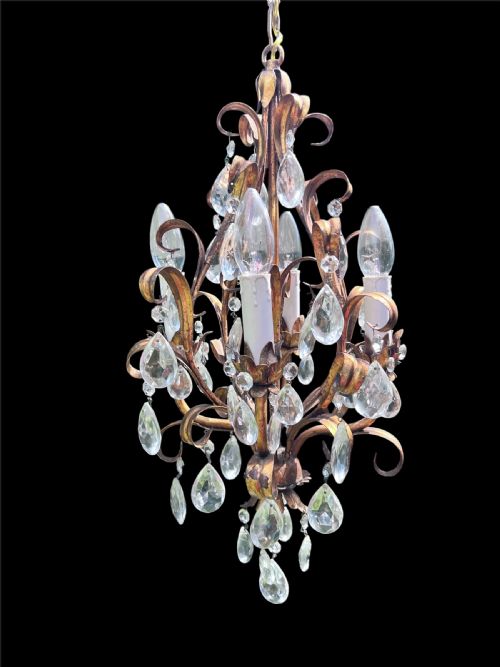
A gold leaf crystal chandelier combines gilded metalwork with hanging glass drops to create a striking overhead focal point. When searching for a gold leaf crystal chandelier, collectors encounter pieces primarily originating from the early decades of the twentieth century, specifically between nineteen-ten and nineteen-thirty.
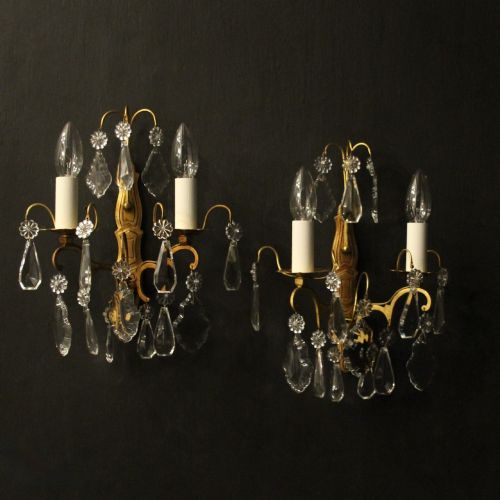
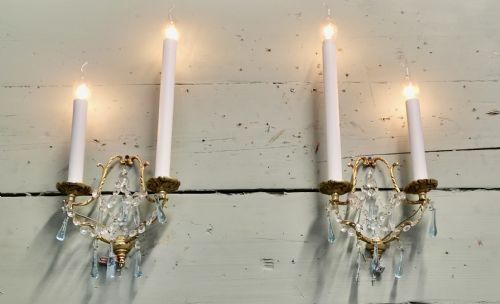
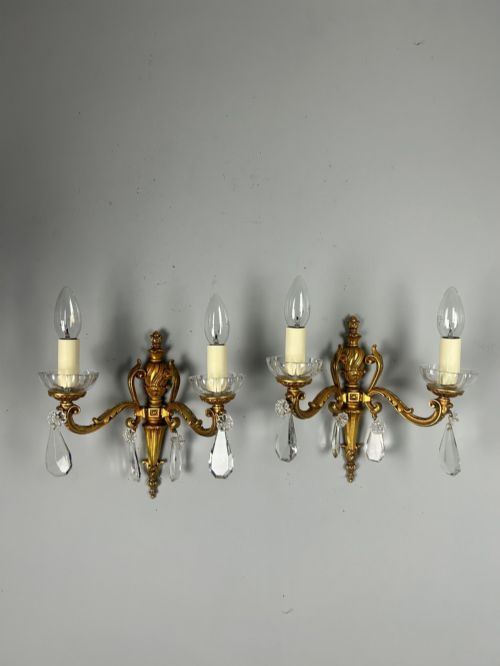
Beyond standard chandeliers, the category includes wall sconces and tall wall lights sharing the same gilded finish and crystal ornamentation. These pieces originate from distinct European decorative traditions, spanning Italian baroque influences and French provincial forms.
Materials and construction
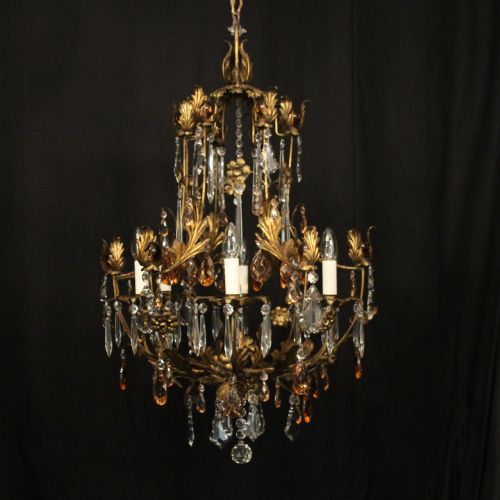
These fixtures rely on a foundation of brass, iron, or wood, treated with gold leaf or silver gilt to achieve a lustrous metallic sheen. Artisans shaped these metals into leafy decorations, ornate arms, and structural frames that support the weight of the glass components.
Crystal and glass drops hang from the arms and crown, catching and refracting light throughout the space. The combination of gilded metalwork with delicate glass beads and pendants defines the physical construction of these historic lighting pieces.
The listings span three distinct decades from the early twentieth century, incorporating materials such as gilt brass, iron, and gilded wood.
Assessing quality and execution
The distinction between standard examples and exceptional pieces lies in the delicacy of the metalwork and the complexity of the glass components. Finer examples display intricate leaf decoration and substantial crystal drops rather than simple pressed glass.
The application of the gilding and the structural integrity of the multi-armed frame determine the overall calibre of the fixture. Heavier arm counts, such as eighteen-light arrangements, demand superior engineering in the central core and mountings.
The Gold Leaf Crystal Chandelier Glossary
- Gilt
- Covered with a thin layer of gold or gold-like material. This surface treatment provides the characteristic metallic warmth seen on the frames and arms.
- Tent chandelier
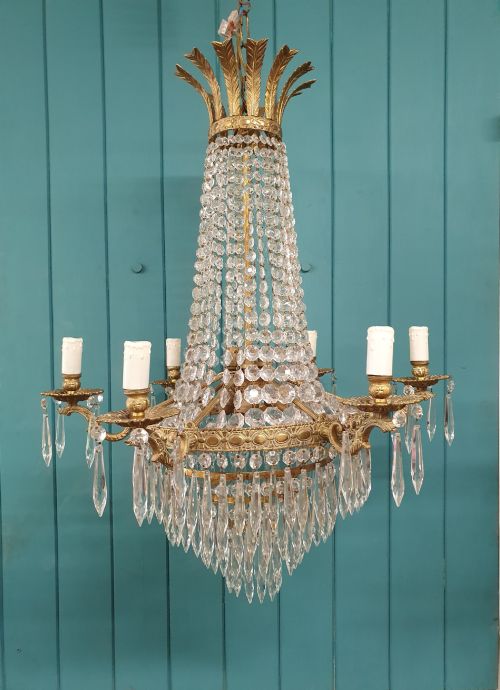
- A lighting fixture featuring an upper canopy connected to the main body by strings of small beads, forming a distinctive conical silhouette.
- Florentine
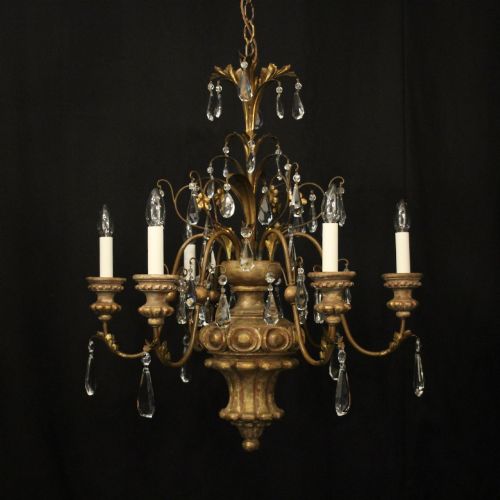
- A decorative style originating in Italy, often incorporating naturalistic leaf motifs and ornate gilded carving. It is frequently seen in twentieth-century Italian lighting.
- Sconce
- A wall-mounted lighting fixture designed to hold candles or electric bulbs. Pairs of these often accompany larger central chandeliers in period interiors.
- Drop
- A pendant piece of cut glass or crystal suspended from the arms or crown of the fixture. These elements enhance light dispersion.
Gold Leaf Crystal Chandelier: Frequently Asked Questions
How do I clean a crystal chandelier?
Cleaning requires a gentle hand and a specialised glass cleaning solution applied with a soft cloth. Each crystal drop should be wiped individually while supporting it from beneath to avoid straining the delicate wire attachments.
Harsh chemical sprays can damage the surrounding gold leaf or silver gilt finish on the metal frame. Regular dusting with a feather duster prevents heavy grime buildup and maintains the sparkle of the glass.
Are these chandeliers wired for modern electricity?
Many vintage fixtures retain older wiring systems that require inspection or replacement by a qualified electrician before installation. Modern safety standards often necessitate rewiring to ensure the internal components meet current domestic regulations.
An electrician can safely adapt the original lamp holders to accept contemporary bulbs while preserving the exterior historic appearance. Professional installation also guarantees that the ceiling mount can support the combined weight of the metal and glass.
What is the difference between glass and crystal?
Crystal contains lead oxide, which increases its refractive index and weight compared to standard glass. This high lead content allows crystal drops to scatter light into distinct spectral colours when illuminated.
Standard glass appears lighter and lacks the same prismatic sparkle. Historical pieces often utilise a combination of both materials across different parts of the frame.
How do I date an antique chandelier?
Dating relies on examining the manufacturing techniques, mounting hardware, and wiring methods used in the construction. Hand-cut crystals, specific metal alloys, and stylistic indicators such as Florentine leaf motifs point towards particular decades.
Comparing the decorative vocabulary with documented pieces from periods like the nineteen-twenties or thirties helps establish an approximate origin. Consulting with a specialist provides further clarity on regional workshop practices.