


Gold Lacquer Trinket Box
A gold lacquer trinket box brings quiet artistry to a dressing table, combining rich painted surfaces with practical storage.
Gold Lacquer Trinket Box
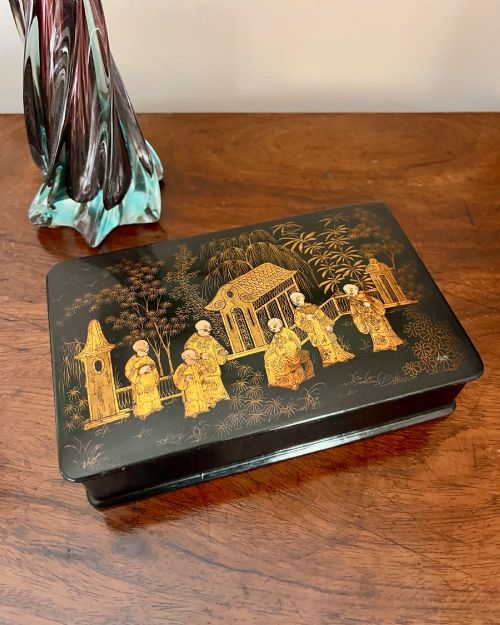
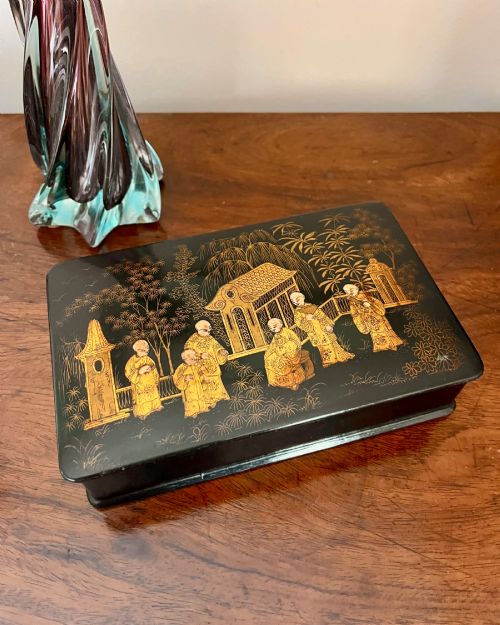
When you search for a gold lacquer trinket box, you encounter a variety of small lidded receptacles intended for keepsakes, jewellery, or cigarettes. These pieces bridge several distinct decorative traditions, from Japanese Meiji period work to European Chinoiserie and Kashmiri craftsmanship.
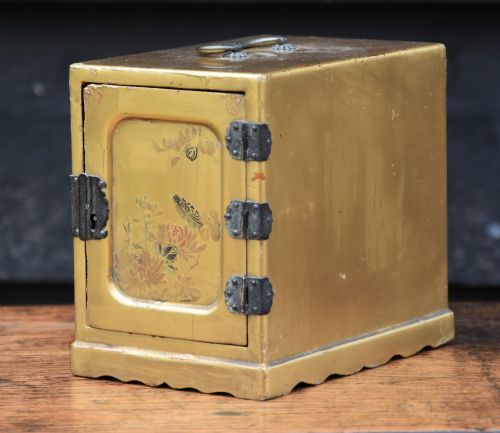
The most common versions met on this page date from the nineteenth century, including Victorian adaptations and Georgian interpretations. Forms range from compact jewellery boxes and table cabinets to lidded pots and document cases.
Origins vary widely across the inventory, reflecting global trade and local imitation during the nineteenth century. Buyers find both Eastern export wares and Western interpretations utilising similar decorative motifs.
Materials and construction
The foundation of these pieces relies on wood, papier-mache, or metal, providing a stable core for the decorative surface. Artisans applied layers of lacquer to seal and smooth the substrate before adding ornament.
Gold leaf and gold paint create the characteristic metallic highlights against dark or coloured backgrounds. Brass fittings, hinges, and mounts occasionally supplement the main structure to secure lids and compartments.
Materials span traditional wood and lacquer to papier-mache, brass, and gold leaf.
Assessing quality and execution
Quality rests in the precision of the surface decoration and the depth of the lacquer finish. Superior examples display meticulous hand-painted details and secure joinery that withstands handling.
Lesser pieces show simpler application techniques and coarser base materials, whereas finer items integrate complex pictorial designs and harmonious colour palettes across every surface.
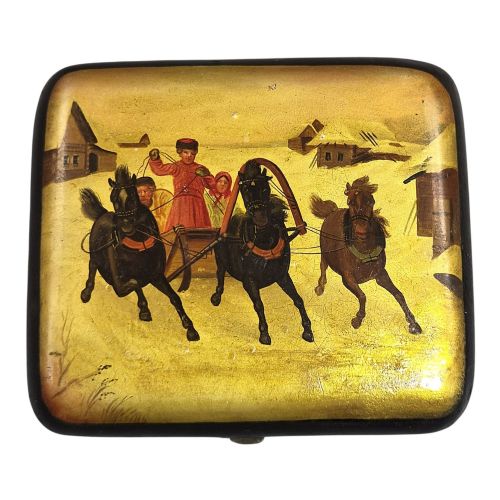
Vishnyakov Workshop
The Gold Lacquer Trinket Box Glossary
- Lacquer
- A durable resin finish applied in multiple layers to create a smooth, glossy surface. It protects the underlying wood or papier-mache while providing a canvas for gold decoration.
- Chinoiserie
- European decorative style imitating Chinese and East Asian artistic traditions. It appears frequently on eighteenth and nineteenth-century boxes.
- Papier-mache
- A composite material made from paper pulp or reinforced paper sheets, pressed and varnished. It offers a lightweight alternative to wood for small boxes and cigarette cases.
- Meiji
- A period in Japanese history spanning the late nineteenth and early twentieth centuries. Pieces from this era often feature intricate gold lacquer work.
- Penwork
- A technique using fine ink or paint application to mimic the appearance of delicate engraving. It appears on Regency items in this category.
Gold Lacquer Trinket Box: Frequently Asked Questions
What is a gold lacquer trinket box used for?
These boxes served historically to hold small personal valuables, documents, or smoking accessories. Today they function as decorative accents and secure receptacles for modern keepsakes.
Their compact scale allows them to sit comfortably on desks, dressing tables, or mantelpieces without dominating a room.
How do I identify a Japanese Meiji period box?
Meiji period pieces typically display specific motifs like cranes, birds of prey, or natural landscapes rendered in fine gold techniques. The lacquer work on these Japanese exports is often exceptionally detailed.
Examining the interior fittings and the depth of the lacquer layers helps distinguish them from European Chinoiserie interpretations.
Are papier-mache boxes as durable as wooden ones?
Papier-mache provides a surprisingly resilient and stable base when coated in multiple layers of hard varnish and lacquer. Nineteenth-century makers utilised this material extensively for cigarette cases and small portable boxes.
Care should be taken to keep them away from excessive moisture, much like their wooden counterparts.
What distinguishes Georgian Chinoiserie from Victorian pieces?
Georgian Chinoiserie items often feature lighter background colours, such as yellow lacquer, paired with whimsical oriental figures and flora. Victorian pieces tend towards darker black grounds or distinct regional styles like Kashmiri work.
Comparing the palette and the style of the painted motifs usually clarifies the period of origin.