

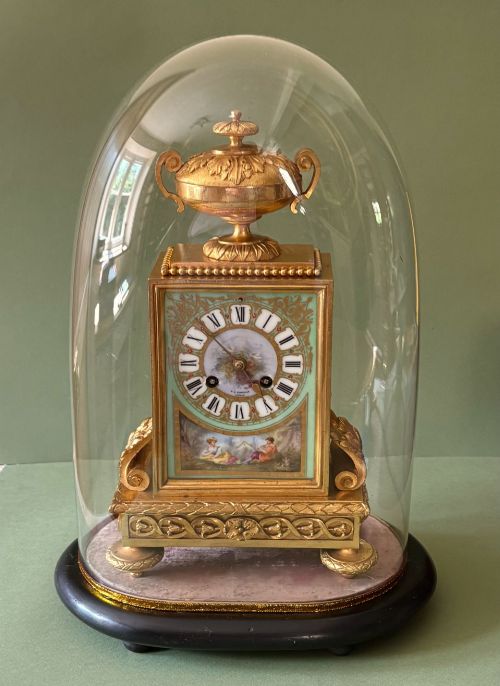
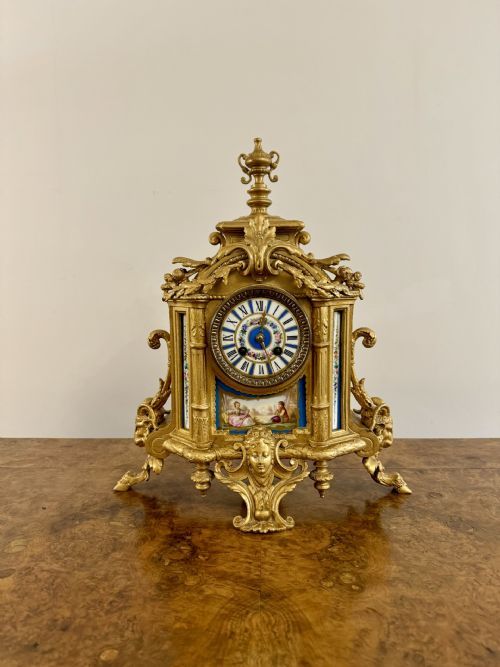


Gold Hand Painted Clock
A gold hand painted clock brings decorative brilliance and fine mechanical artistry into a room, uniting painted porcelain and gleaming metal.
Gold Hand Painted Clock
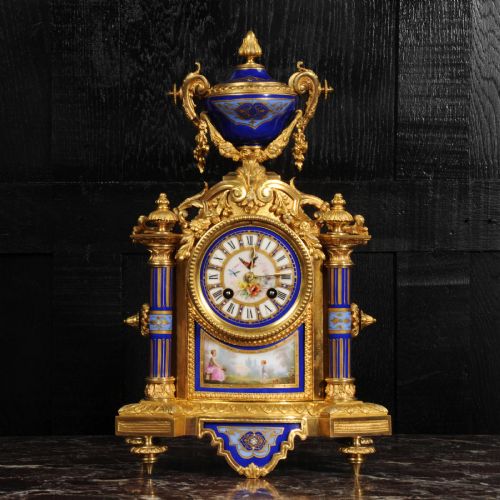
A gold hand painted clock is typically a mantel or table clock drawing on French Rococo Revival and Louis XVI styles from the nineteenth century. These pieces combine sculptural metalwork with delicate painted ceramic components to create striking centrepieces.
The version most commonly met on this page is the French porcelain mounted mantel clock in ormolu, gilt bronze, or brass. Examples range from compact timepieces on bronze plinths to substantial drum head and longcase clocks.
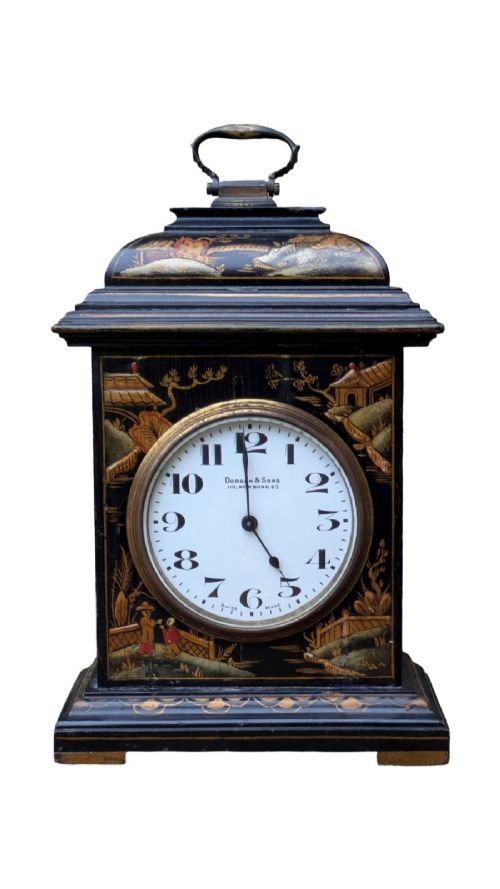
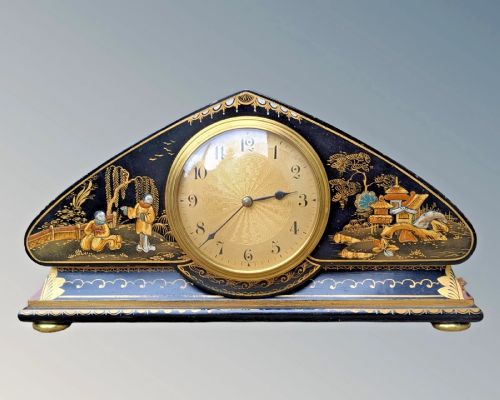
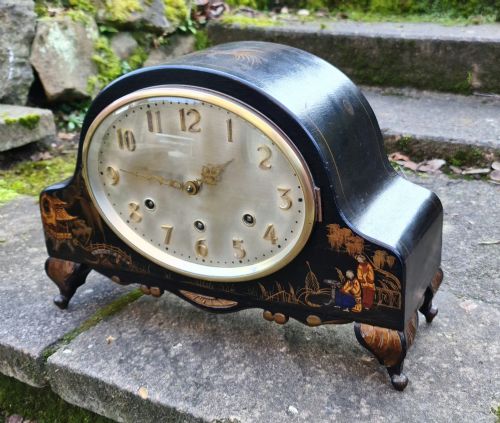
Makers such as Japy Freres and Le Roy & Fils appear among these selections, often featuring Sevres style porcelain dials or panels alongside chimes and hand-painted details. Chinoiserie lacquer variations also emerge in twentieth-century iterations.
How they were made
Craftsmen utilised cast metals including ormolu, gilt bronze, and brass to form the structural cases and decorative mounts of these clocks. These metallic elements were frequently combined with alabaster, glass, and wood to build substantial frames.
Clock dials and decorative plaques relied on porcelain and enamel, painted by hand with floral motifs or pastoral scenes. Lacquer techniques were similarly applied to wood surfaces for specific Chinoiserie models.
Gold Hand Painted Clock Retail Price Guide 2026
Typical asking prices for gold hand painted clock among the pieces listed under this phrase on Sellingantiques today, from the lower quarter to the upper quarter. They describe what is for sale here now, not the wider market.
Periods represented span the Victorian era, the nineteenth century, and the early twentieth century up to the nineteen-thirties.
What varies in quality
The standard of a gold hand painted clock depends heavily on the crispness of the metal casting and the precision of the hand-painted details on the porcelain or enamel. Finer examples display deeply chased gilt bronze mounts and intricate brushwork on dials.
Case construction and movement integration also separate masterworks from simpler items. Superior pieces exhibit harmonious proportions between the heavy metal housing, the porcelain elements, and the reliability of the internal mechanism.
Japy Freres·Le Roy & Fils
The Gold Hand Painted Clock Glossary
- Ormolu
- A gilded bronze or brass finish achieved by applying a mixture of mercury and gold to metal. This technique creates a rich golden lustre on antique clock mounts.
- Sevres
- A type of porcelain originating from the famous French factory, known for fine hand-painted panels. These often feature in decorative frames on nineteenth-century mantel clocks.
- Chinoiserie
- A European artistic style reflecting Chinese motifs and lacquer techniques. It appears frequently on twentieth-century mantel and grandmother clocks.
- Timepiece
- A clock that tells the time without striking mechanisms or chiming trains. These simpler movements often feature on smaller desk or table clocks.
Gold Hand Painted Clock: Frequently Asked Questions
Where should I place a mantel clock?
These clocks suit prominent flat surfaces such as fireplace mantelpieces, sideboards, or large consoles where their gilt and painted details can be seen.
Ensure the surface is stable and level to protect the mechanical movement and pendulum balance inside.
How do I wind a French clock?
Winding requires a matching key inserted gently into the designated winding holes on the dial or movement backplate. Turn the key steadily until resistance indicates the mainspring is fully tensioned.
Take care not to overwind older springs, as this can strain the internal brass gears.
How do I identify Louis XVI style?
Louis XVI style is marked by classical symmetry, straight architectural lines, and refined neoclassical ornamentation. Look for urns, ribbons, and symmetrical floral swags in the metalwork.
This aesthetic contrasts with the more asymmetrical curves of earlier Rococo Revival designs.