
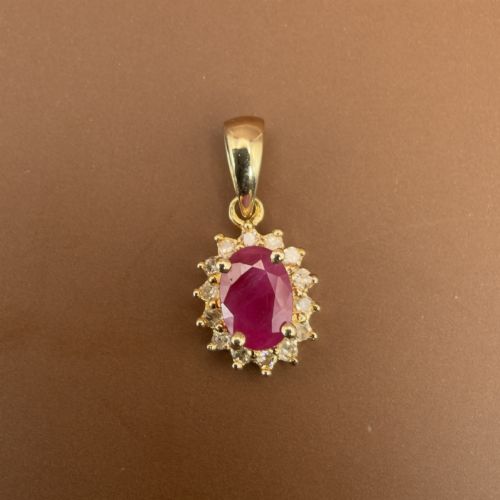


Gold Halo Pendant
These gold halo pendant pieces combine central stones with surrounding gem borders, offering historical character from Victorian to mid century periods.
Gold Halo Pendant
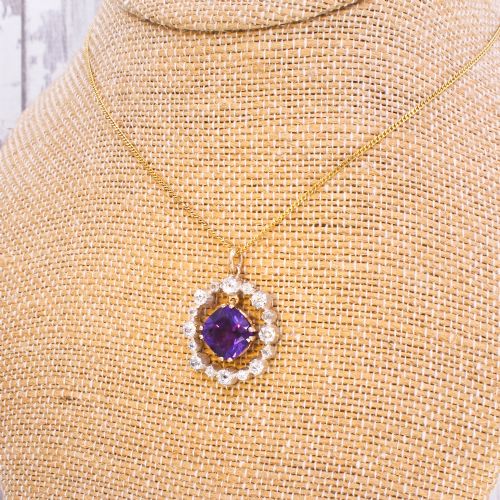
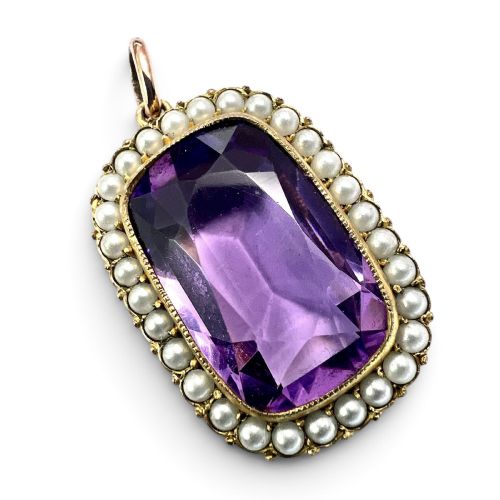
A gold halo pendant centres on a primary gemstone enclosed by a ring of smaller stones, typically diamonds or pearls. These pieces appear across Victorian, Edwardian, Art Deco, and mid century periods.
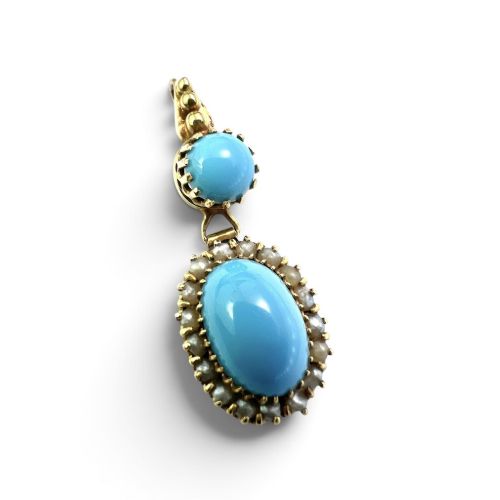
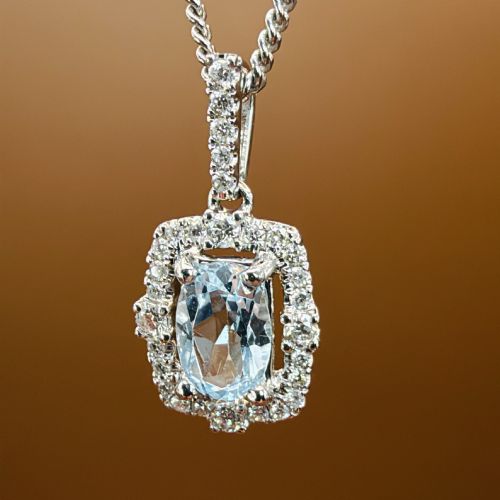
The selections on this page range from antique Victorian turquoise and pearl clusters to 1950s aquamarine and ruby designs. Alongside pendants, the forms include necklaces, lockets, and drop earrings sharing the halo arrangement.
Originating in classic fine jewellery traditions, these items utilise yellow gold, white gold, 14ct gold, and 18ct gold settings. Buyers encounter both traditional floral cluster layouts and geometric Art Deco styling.
Materials and Construction
Goldsmiths constructed these pieces using yellow gold, white gold, and platinum, often pairing gold bases with silver settings for older stones. Gemstones such as amethyst, aquamarine, emerald, opal, ruby, sapphire, and turquoise form the focal points.
Makers surrounded these central gems with borders of old cut diamonds, pearls, or white zircons. Techniques include claw settings and cluster arrangements that secure multiple small stones closely around the main gemstone.
Listings feature yellow gold, white gold, 9ct, 14ct, 15ct, 18ct gold, and platinum across Victorian, Edwardian, Art Deco, and mid century periods.
Factors of Quality
The calibre of a gold halo pendant rests on the integration and symmetry of the surrounding stone border. Superior examples display precisely matched border gems that enhance rather than overpower the central stone.
Material selection and period execution dictate the standing of each piece, from robust Victorian goldwork to refined Art Deco platinum details. The weight of the gold and the clarity of stones such as aquamarine or diamond distinguish finer workshops.
Chaumet
The Gold Halo Pendant Glossary
- Halo
- A setting style featuring a central gemstone encircled by a ring of smaller stones, usually diamonds or pearls. This arrangement accentuates the size and brilliance of the middle gem.
- Cluster
- An arrangement of multiple gemstones set closely together in a single mounting. It frequently defines the face of a pendant or ring.
- Old Cut
- A precursor to the modern brilliant cut diamond, characterised by a small table, higher crown, and open culet. These cuts appear commonly in antique and Victorian pieces.
- Paste
- Hand cut glass utilised historically as a gemstone substitute in antique jewellery. It demonstrates craftsmanship through its precise faceting and secure settings.
Gold Halo Pendant: Frequently Asked Questions
How do I date a pendant?
Dating relies on material combinations, gemstone cuts, and stylistic clues inherent to the piece. Victorian examples often incorporate turquoise, paste, and pearls in yellow gold settings.
Later pieces from the Art Deco period utilise white gold and platinum with geometric lines, while mid century items frequently feature aquamarines, amethysts, or blue zircons.
Are these pendants sold with chains?
The listings include items described as pendants, pendant necklaces, and necklace combinations. Descriptions specify whether the item includes a chain or is offered as an individual drop.
Buyers should examine the specific title and details to determine if a matching gold chain accompanies the central pendant.
What stones are used in halos?
Diamonds and seed pearls serve as the most common border stones encircling the central gem. They provide a high contrast that highlights the focal gemstone.
Centre stones vary widely across the inventory, encompassing aquamarine, amethyst, emerald, opal, ruby, sapphire, turquoise, and topaz.