
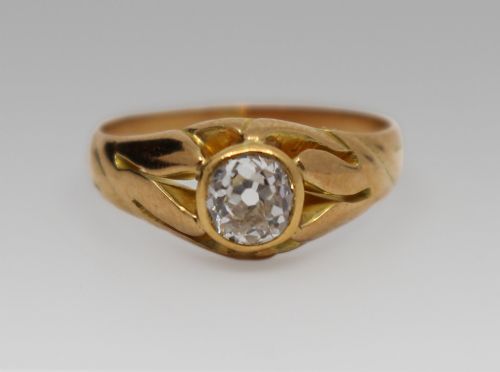
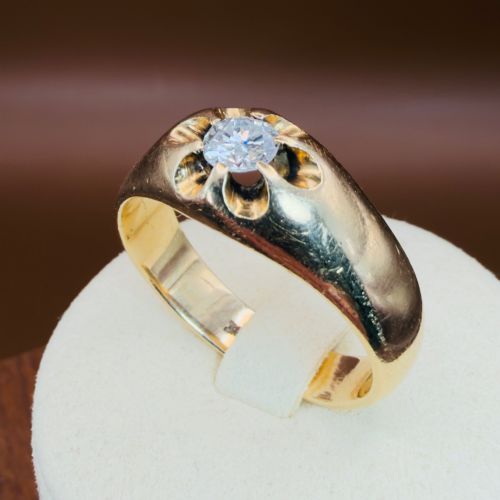

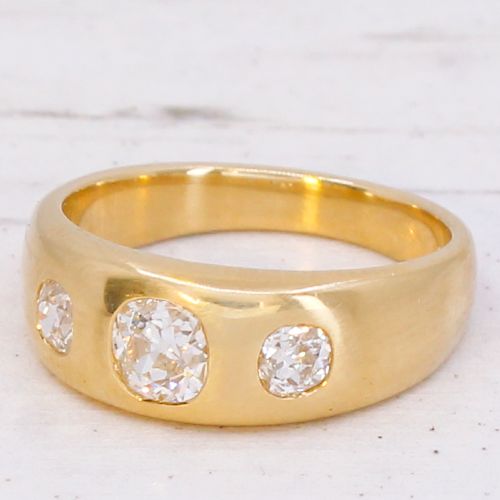
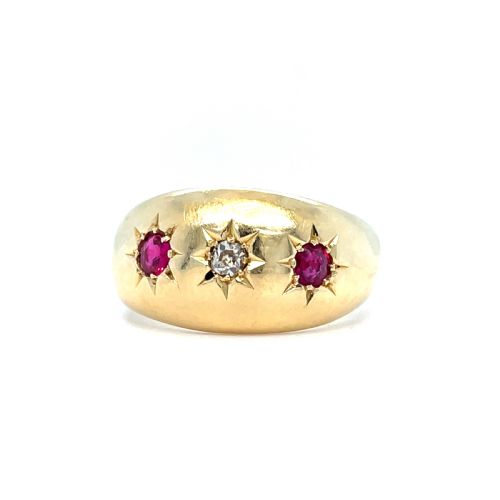


Gold Gypsy Set Ring
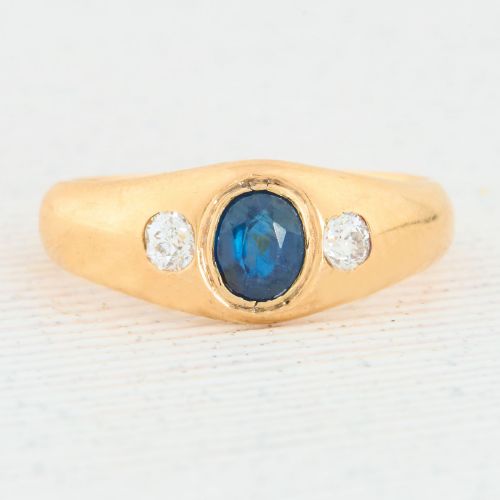
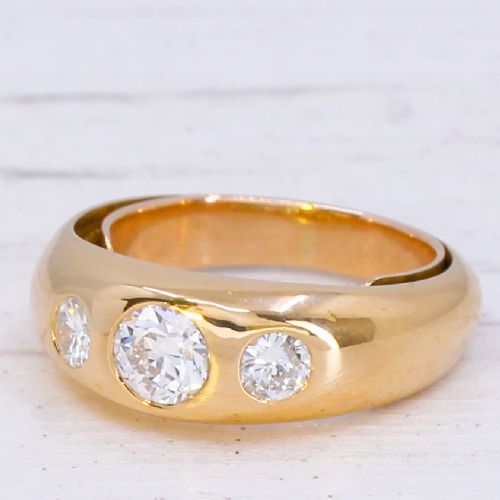
A gold gypsy set ring sits flush against the skin, holding its stones securely within a smooth, tapered band.
Gold Gypsy Set Ring
A gold gypsy set ring is defined by gemstones set flush into the metal band rather than held in raised claws, creating a smooth, snag-free profile. This specific mounting style protects the stones and gives the hoop a seamless, continuous appearance along the finger.
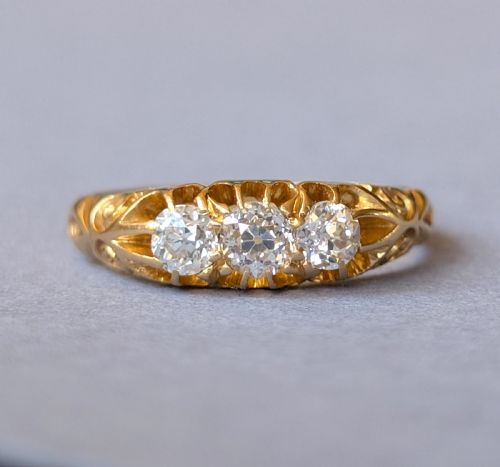
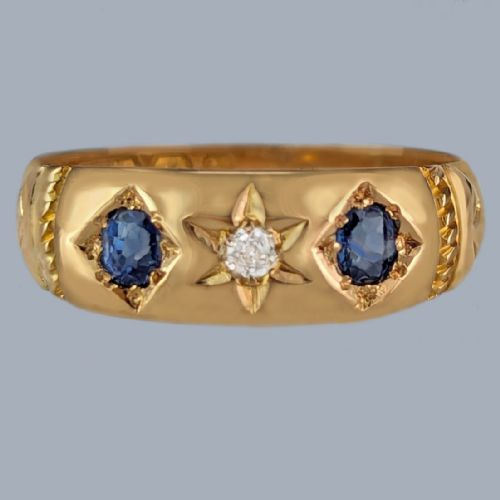
The versions most frequently met on this page date from the Victorian and Edwardian eras, spanning the late nineteenth and early twentieth centuries. These period examples combine yellow gold, rose gold, or occasionally higher carat gold with old cut diamonds, rubies, sapphires, or turquoise.
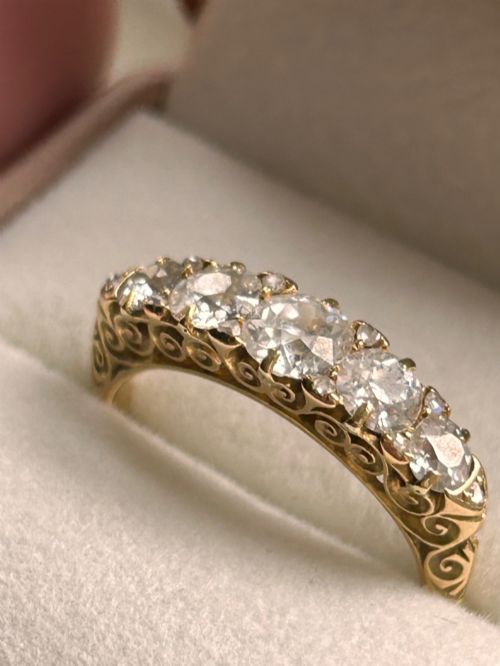
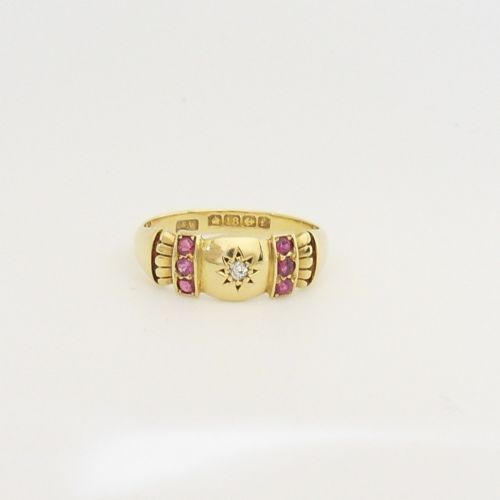
Many designs incorporate starburst or celestial engravings around the flush-set stones, adding decorative detail to the otherwise streamlined band. These rings range from simple single stone solitaires to multi-stone arrangements including trilogy and five-stone layouts.
Materials and Construction
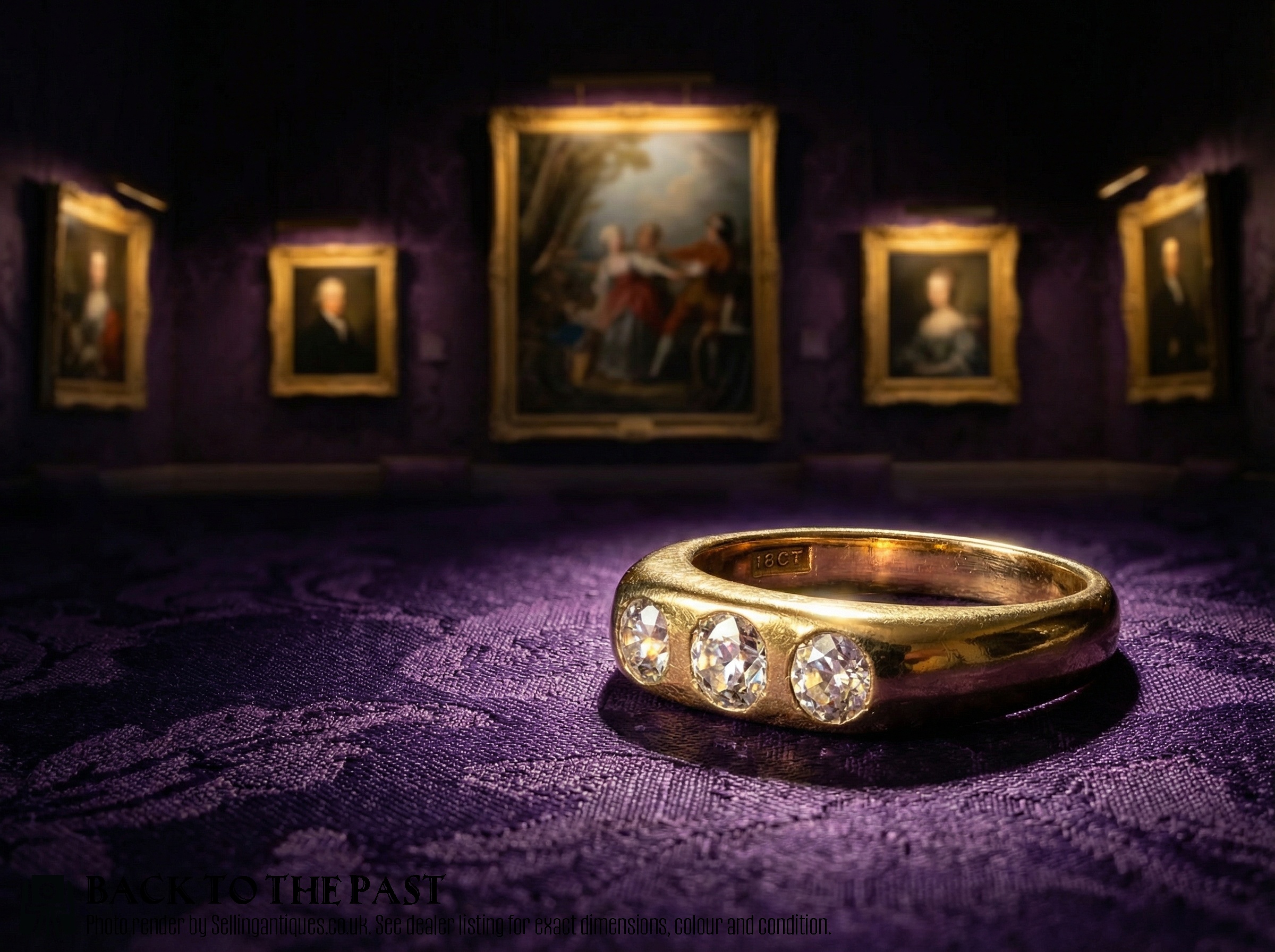
Goldsmiths constructed these rings primarily in 18ct yellow gold, alongside variations in 9ct and 15ct gold and occasional rose gold hues. The metal was cast or forged into a heavy, tapered band designed to support flush-mounted gems safely.
Stones such as old cut diamonds, rubies, and sapphires were pushed directly into seatings drilled into the thick gold band, after which the surrounding metal was burnished over the girdle to lock the stone in place.
Judging Quality and Finish
Quality rests in the precision of the flush setting and the weight of the gold band itself. Superior examples maintain thick, substantial shanks that show minimal wear around the flush-mounted stones, ensuring structural integrity over decades of daily wear.
The quality of the stones dictates the character of the piece, with well-matched old cut diamonds or vivid natural rubies and sapphires elevating the design. Hand-engraved starbursts and crisp hallmarks from assay offices add notable distinction to finer specimens.
The Gold Gypsy Set Ring Glossary
- Gypsy setting
- A mounting style where gemstones are embedded flush into the surface of the metal band. This technique creates a smooth profile that prevents the ring from catching on clothing.
- Old cut diamond
- A hand-faceted diamond cut before the standardisation of modern brilliant cuts, typically featuring a smaller table, higher crown, and open culet. These stones display a softer, chunkier scintillation under candlelight.
- Trilogy ring
- A ring featuring three stones set side by side in a row. In antique pieces, these often represent the past, present, and future.
- Belcher setting
- A type of mounting where the metal surrounding the stone rises slightly in rounded, individual prongs or shoulders from the band. It shares similarities with flush settings in its rounded profile.
- Hallmark
- An official stamp or marks struck into precious metals indicating the purity of the gold, the assay office, and the year of manufacture.
Gold Gypsy Set Ring: Frequently Asked Questions
How do I care for my antique ring?
Care involves storing the piece safely away from harder jewellery that might scratch the gold band. Regular cleaning with warm soapy water and a soft brush helps remove oils from beneath the flush-set stones.
Because the gold around the settings can wear thin over long periods, checking the security of the stones periodically with a professional jeweller is recommended.
How can I tell a Victorian ring from an Edwardian one?
Victorian examples often feature heavier, warmer yellow or rose gold bands with rich gemstone combinations like rubies, sapphires, and old cut diamonds. They frequently carry hallmarks from regional assay offices such as Birmingham or Chester.
Edwardian pieces tend to lean towards lighter, delicate yellow gold or incorporate platinum accents, often favouring diamond solitaires or intricate starburst engravings along the band.
Were these rings worn by men or women?
These rings were worn by both men and women, with heavier, wider bands typically produced for men and more slender profiles created for women. Many surviving examples feature robust shanks suitable for either gender.
The practical, snag-free profile made them an enduring choice for daily wear across the nineteenth and twentieth centuries.