





Gold Gypsy Band Ring
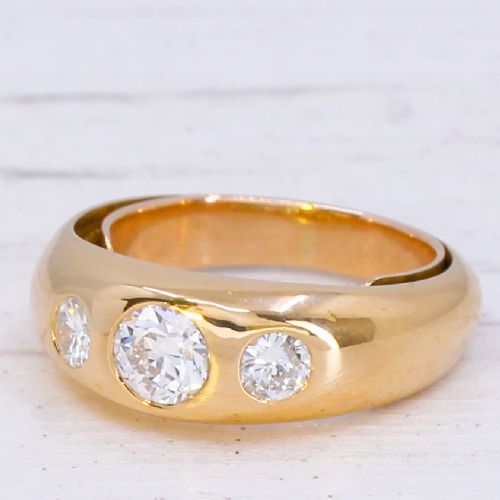
A gold gypsy band ring sits flush against the finger, uniting low-profile comfort with the enduring sparkle of old-cut stones.
Gold Gypsy Band Ring
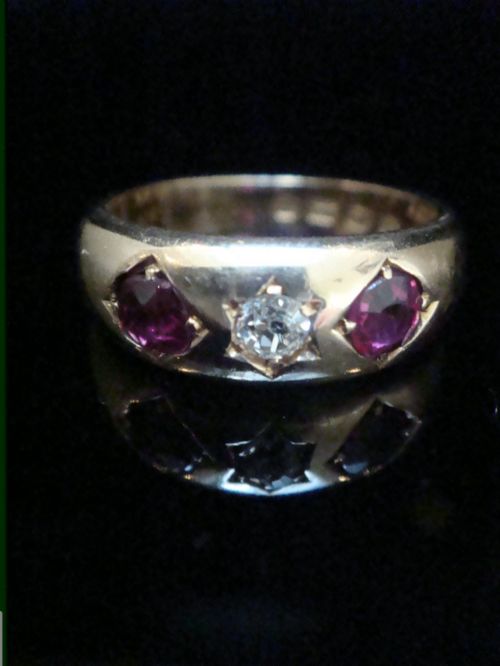
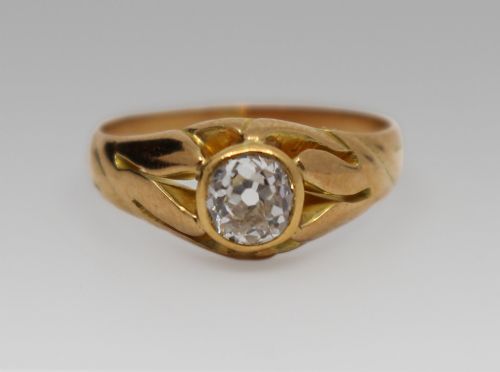
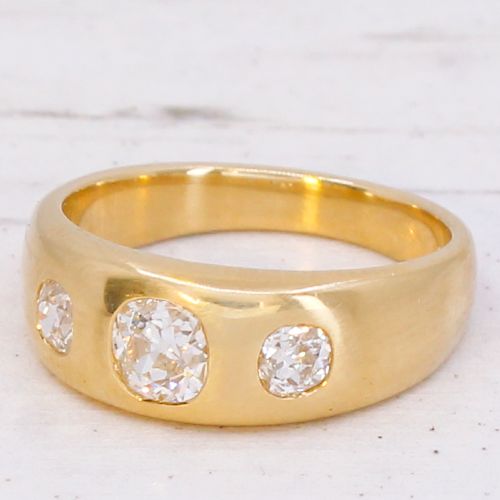
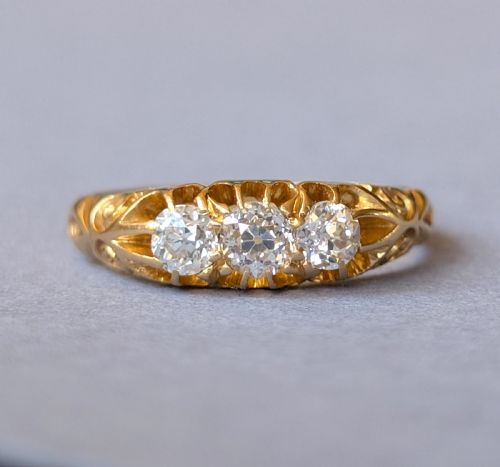
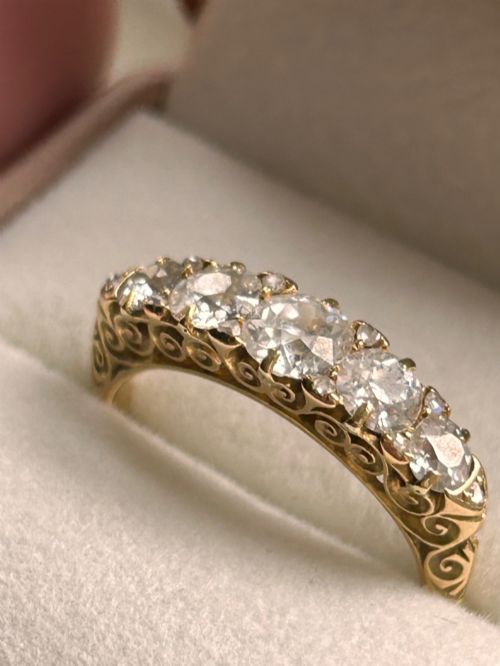
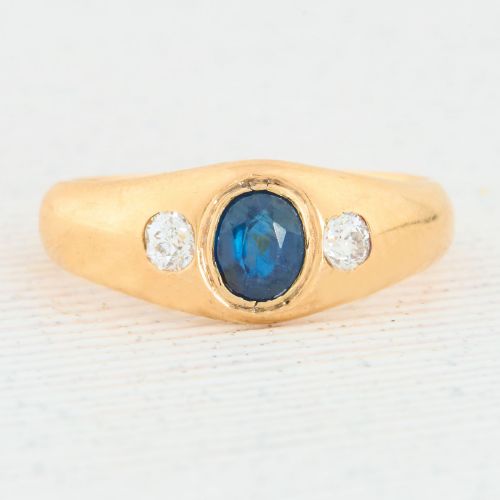
A gold gypsy band ring presents a smooth, continuous hoop where stones sit flush within the heavy metal walls rather than standing in high claws. This distinctive setting style emerged strongly during the Victorian and Edwardian periods, offering a practical yet elegant solution for daily wear.
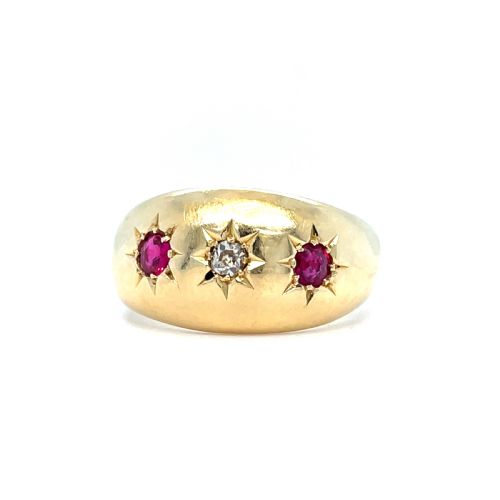
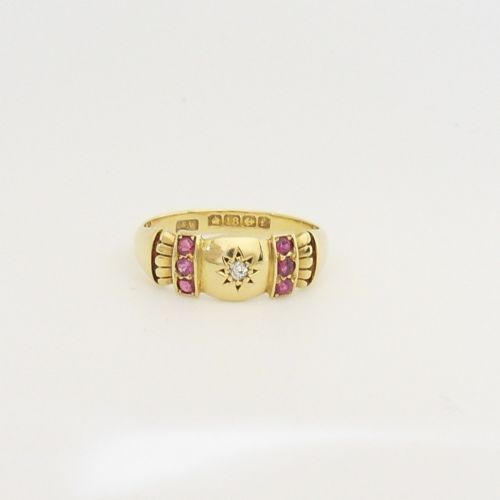
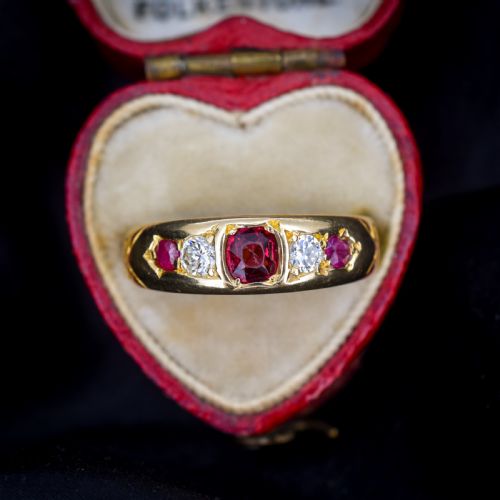
The pieces on this page span from the late nineteenth century through to the mid-twentieth century, encompassing Victorian, Edwardian, George V, and mid-century iterations. Buyers most frequently encounter 18ct yellow gold varieties set with old-cut diamonds, rubies, or sapphires, often arranged in single, three-stone, or starburst configurations.
Materials and construction methods
Goldsmiths utilised substantial amounts of 18ct yellow gold, along with occasional 15ct and 9ct variants, casting or forging sturdy bands capable of securing inset gems. The metal surrounding each stone was pushed or burnished tightly over the girdle, creating a smooth, protective rim.
Stones were typically old-cut diamonds, rubies, and sapphires, shaped by hand to fit snugly into the tapered channels or starburst recesses carved directly into the gold band.
Current listings feature pieces spanning from the Victorian and Edwardian eras through to the mid-twentieth century, fashioned primarily in 18ct yellow gold.
Judging quality and preservation
Quality rests upon the crispness of the flush settings and the thickness of the remaining gold band, as heavy everyday wear over generations can thin the metal surrounding the stones. Superior examples retain sharp engraving, well-defined starburst motifs, and securely seated gems without loose bezels.
The calibre of the hand-cut diamonds or vibrant natural rubies and sapphires dictates the distinction between standard workshop output and exceptional pieces. Hallmarks stamped into the interior of the shank offer reliable confirmation of date and assay office origin, adding historical weight to the piece.
The Gold Gypsy Band Ring Glossary
- Gypsy setting
- A mounting style where the gemstone is set flush into the metal band, with the surrounding gold burnished over the edges. This keeps the stone secure and prevents snagging on clothing.
- Old-cut diamond
- A hand-faceted diamond cut before the standardisation of modern brilliants, typically featuring a smaller table, higher crown, and open culet. These stones display a softer, warmer candlelit twinkle.
- Starburst
- An engraved pattern radiating outward from a flush-set stone, resembling twinkling rays of light. This decoration is frequently found on Victorian and Edwardian bands.
- Trilogy ring
- A ring featuring three stones set side by side, often representing the past, present, and future. In this selection, trilogy designs commonly combine diamonds with rubies or sapphires.
Gold Gypsy Band Ring: Frequently Asked Questions
How do I wear a gold gypsy band ring daily?
The flush setting makes these bands exceptionally practical for everyday wear because the stones do not catch on fabrics or pockets. Their low profile sits comfortably alongside other bands.
However, it remains wise to remove them during heavy manual tasks to protect the gold band and keep the flush-set stones secure over time.
How can I tell a Victorian gypsy ring from an Edwardian one?
Victorian examples tend to feature heavier, warmer yellow gold bands, sometimes incorporating starburst engravings around the stones or featuring rich rubies and sapphires. They often carry hallmarks dating from the late nineteenth century.
Edwardian pieces often showcase finer millegrain detailing or focus primarily on old-cut diamonds mounted in bright, ornate yellow gold bands reflecting early twentieth-century tastes.
Are these rings suitable for modern engagement rings?
Many buyers choose these antique bands for modern engagements because their robust construction handles daily wear remarkably well. The smooth profile appeals to those who dislike high-set solitaire claws.
Checking the thickness of the gold shank and the security of the stone settings ensures the piece remains ready for a lifetime of continued use.
What gold purities should I expect to find?
The listings predominantly feature 18ct yellow gold, which provided the ideal balance of durability and rich colour for Victorian and Edwardian jewellers. You will also encounter occasional 15ct and 9ct gold variations.
Assay office stamps and purity marks inside the band frequently help verify the exact metal standard and origin of the piece.