

Gold Gilt Wall Lights
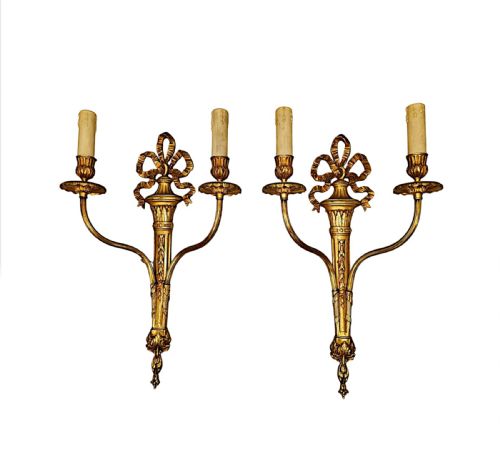
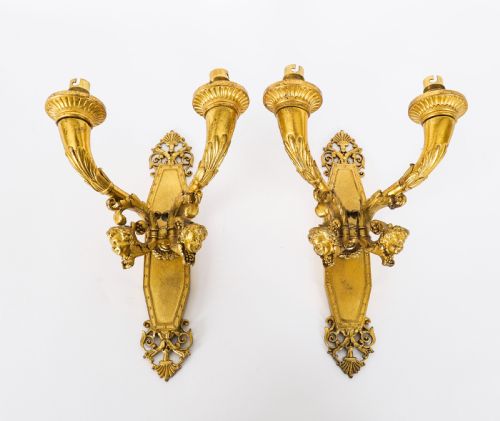
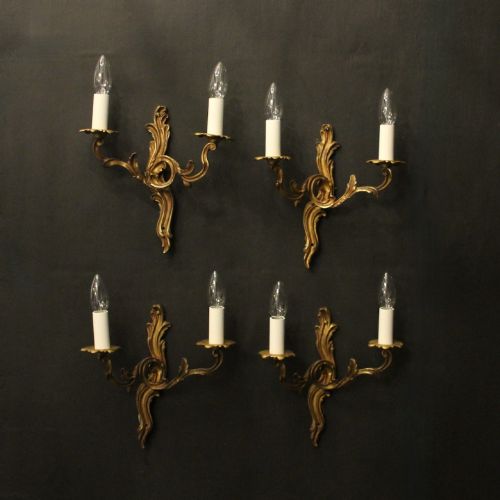
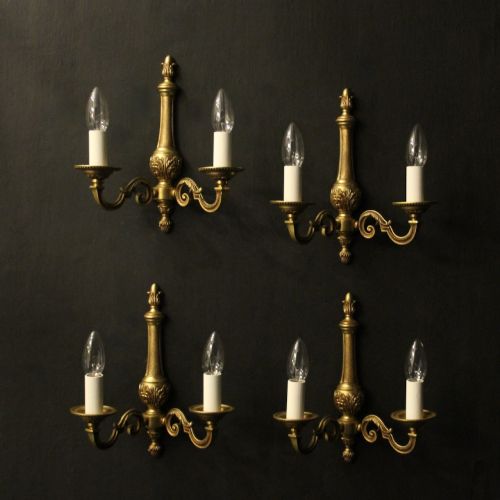
Gold gilt wall lights bring warmth and reflection to a room, offering functional illumination through shaped arms and ornate backplates.
Gold Gilt Wall Lights
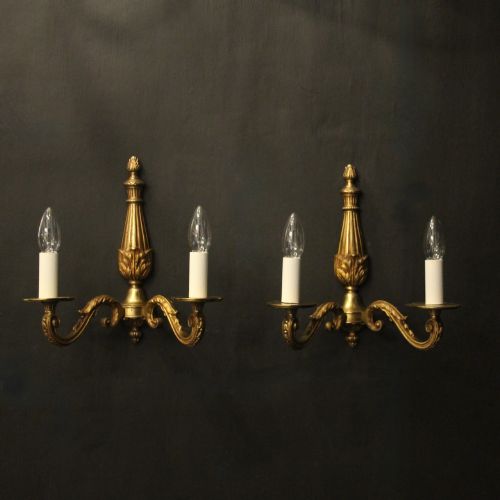
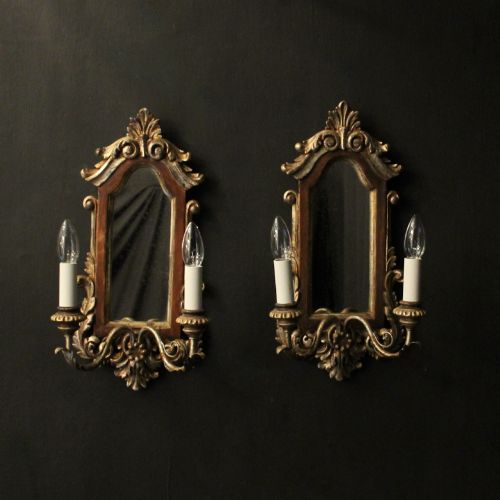
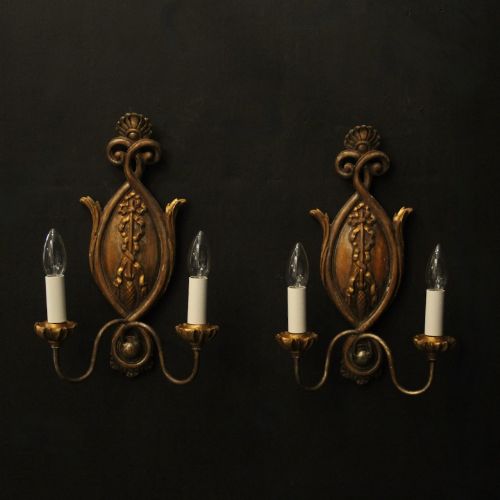
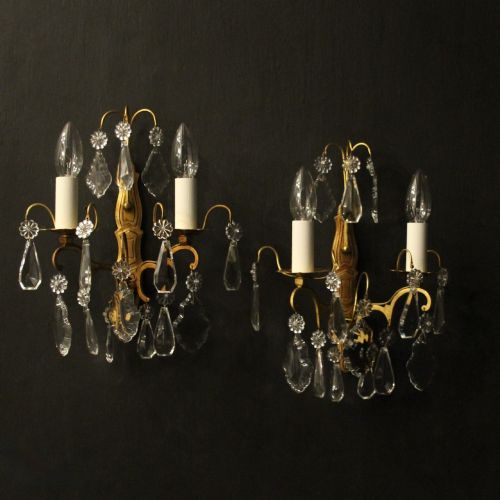
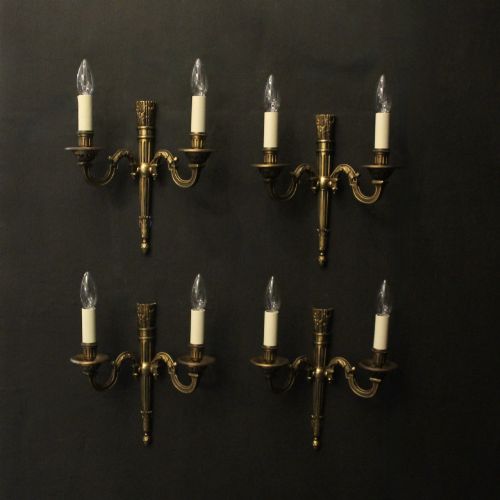
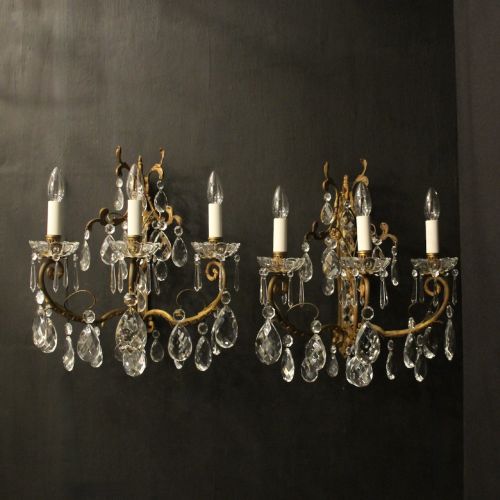
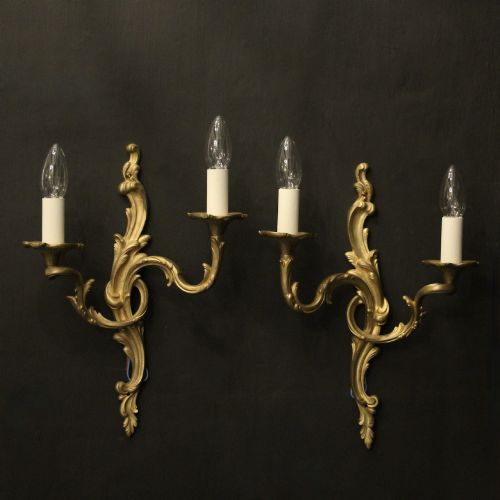
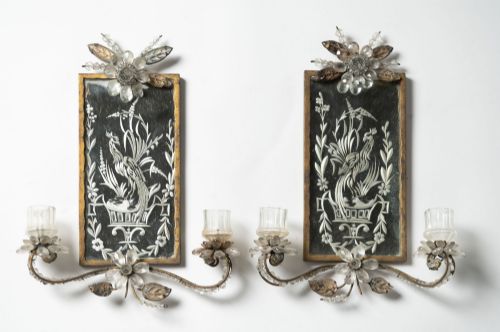
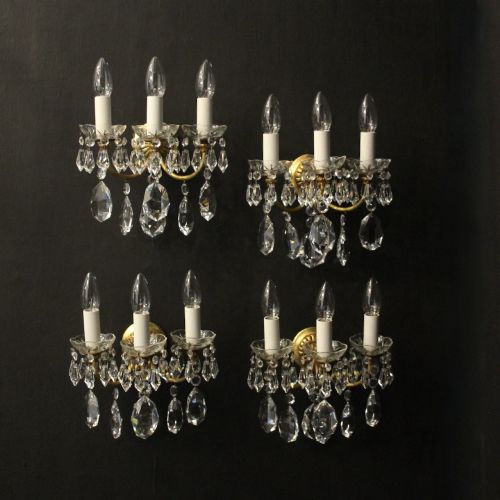
Gold gilt wall lights encompass sconces, girandoles, and multi-branched appliques designed to mount directly onto interior walls. These fixtures emerge in forms ranging from simple twin-arm setups to elaborate arrangements with crystal drops and mirror backs.
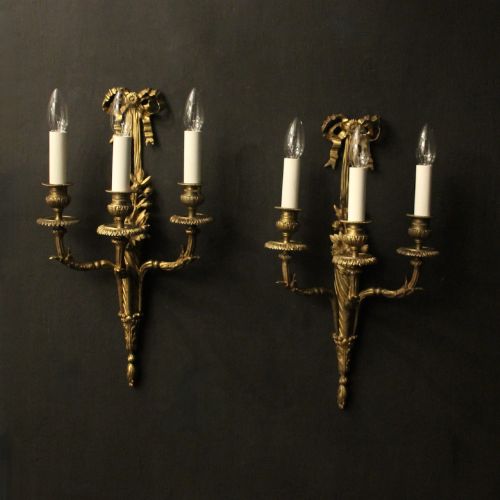
The selections span distinct periods, including pieces from the nineteenth century alongside early twentieth-century examples. French and Italian designs dominate the selection, showing stylistic roots in Louis XIV revival, Empire, and Baroque traditions.
Materials and Construction
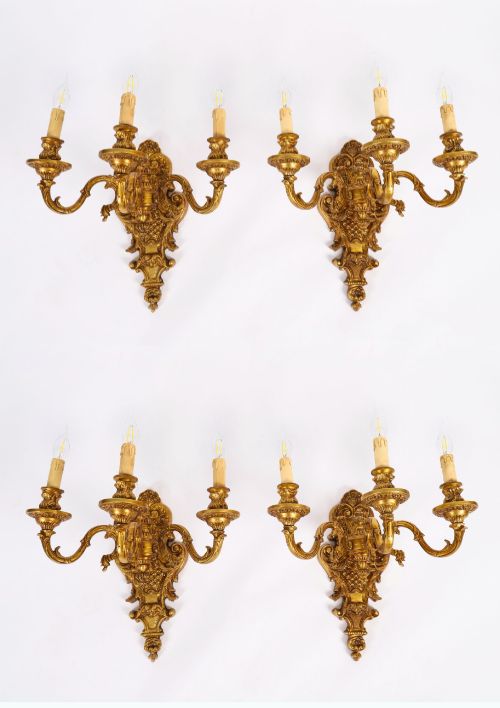
The construction relies heavily on metalwork, utilising cast bronze, ormolu, brass, and gilt metal shaped into intricate arms and backplates. Artisans also employed carved wood for giltwood girandoles, applying thin layers of gold leaf over the prepared surfaces.
Many examples incorporate glass elements, such as crystal drops or convex half-lantern structures, which interact with the metallic surfaces to distribute light across a space.
Listings feature materials spanning gilt bronze, ormolu, brass, and carved giltwood across multiple continental European traditions.
Assessing Quality and Craftsmanship
Quality rests in the crispness of the casting and the depth of the hand-chased detail on bronze and ormolu mounts. Finer examples display deliberate proportions and carefully articulated motifs, such as ribbons or scrolling foliage, rather than soft or generalized edges.
The preservation of the original gilt surface dictates much of the visual success of a piece. Older items retain layers of genuine gold leaf or fire gilding that age with a warm patina, distinguishing them from later, uniform coatings.
Maison Baguès·Casier
The Gold Gilt Wall Lights Glossary
- Ormolu
- Gilded bronze produced through a mercury amalgamation process common in French decorative arts. This technique yields a deep, lasting metallic lustre on cast mounts.
- Girandole
- A branched wall light, often featuring a mirror backplate to reflect and amplify the illumination. These pieces combine wood carving or metal framing with candle arms.
- Applique
- A wall-mounted light fixture designed to hold candles or electric lamps. The term frequently applies to continental metal sconces with decorative backplates.
- Giltwood
- Timber, typically carved gesso over wood, coated in thin gold leaf. This material appears frequently in Italian and French decorative wall fixtures.
Gold Gilt Wall Lights: Frequently Asked Questions
How do I install antique wall lights?
Most period wall fixtures require professional wiring and mounting to ensure stability against plaster walls. Electric conversions are standard for modern use while preserving the original metal body.
Installers should secure the backplate directly to wall studs or use appropriate heavy-duty anchors to support the weight of bronze and brass assemblies.
How should I clean gilded metal fittings?
Dust surfaces gently using a soft, dry brush to prevent accumulation in recessed carved details. Avoid chemical polishes that strip gold leaf or damage historic fire gilding.
Professional conservation cleaning remains necessary if tarnishing obscures the underlying metallic finish or if structural stabilisation is required.
What is the difference between a sconce and a girandole?
A wall sconce is a general term for any bracket fixture attached to a wall for holding candles or bulbs. These range from simple metal arms to elaborate multi-branch creations.
A girandole specifically incorporates a reflective surface, such as a mirror or glass backplate, behind the candle branches to multiply the light within the room.
How do I date a gilded wall light?
Dating relies on examining the casting techniques, fastener types, and stylistic indicators such as Louis XVI revival motifs or Empire proportions. Hand-cut screws and heavy cast bronze point to nineteenth-century production.
Twentieth-century iterations often show lighter brass construction and standardised threading, reflecting shifts in manufacturing methods during the interwar period.