


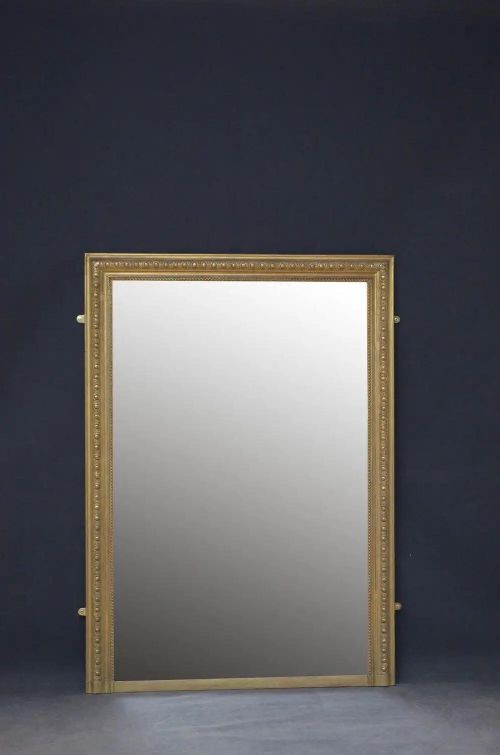
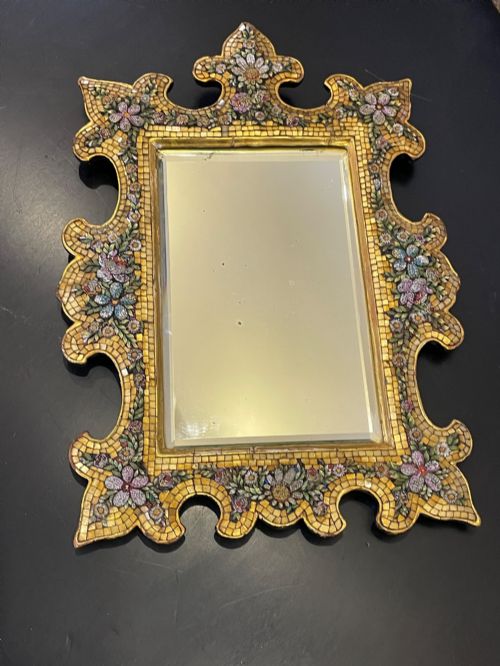


Gold Gilt Vanity Mirror
A gold gilt vanity mirror brings a warm metallic sheen and practical reflection to a dressing table.
Gold Gilt Vanity Mirror
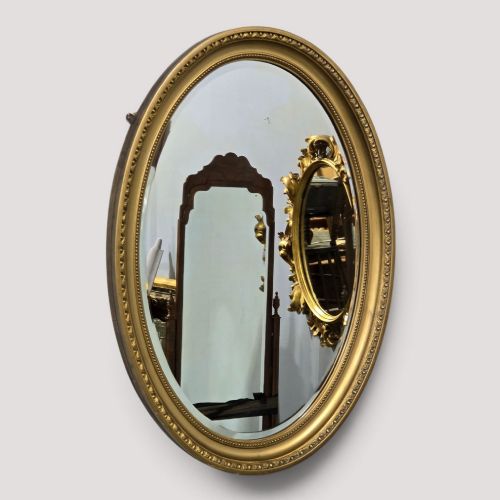
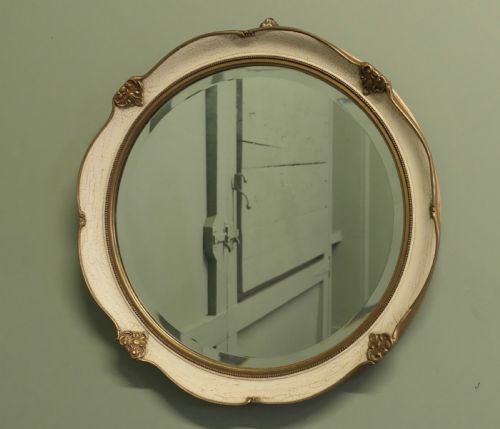
A gold gilt vanity mirror is a reflective glass piece designed for table use during personal grooming, though many wall-mounted variants also appear in the listings. These objects span several centuries, with pieces originating from the eighteenth, nineteenth, and early twentieth centuries.
The selection includes dressing table mirrors, toilet mirrors, and tabletop mirrors, alongside folding triple versions. Styles draw heavily from Rococo Revival and French Rococo traditions, complemented by occasional Chinoiserie and Neoclassical touches.
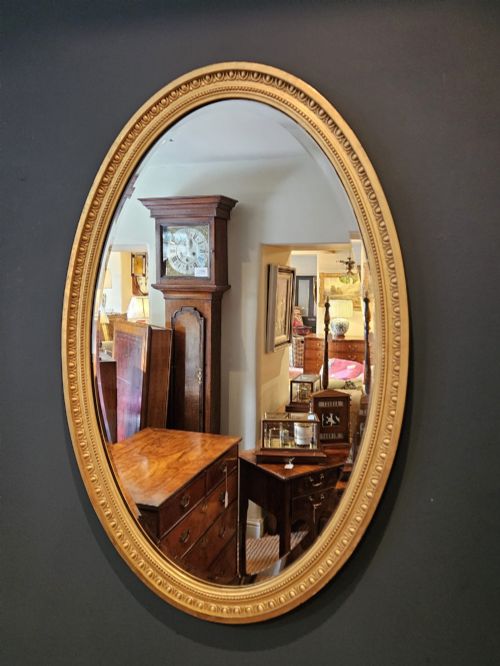
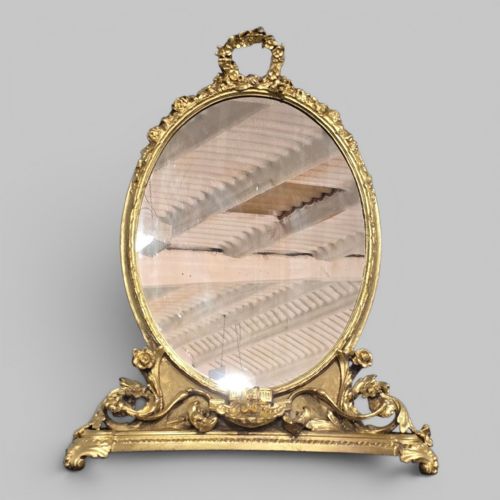
Victorian examples and pieces from around nineteen hundred dominate the available selection, often taking oval shapes framed in ornate woodwork. Buyers frequently encounter smaller English and French specimens alongside larger Italian giltwood and gesso pieces.
Materials and construction
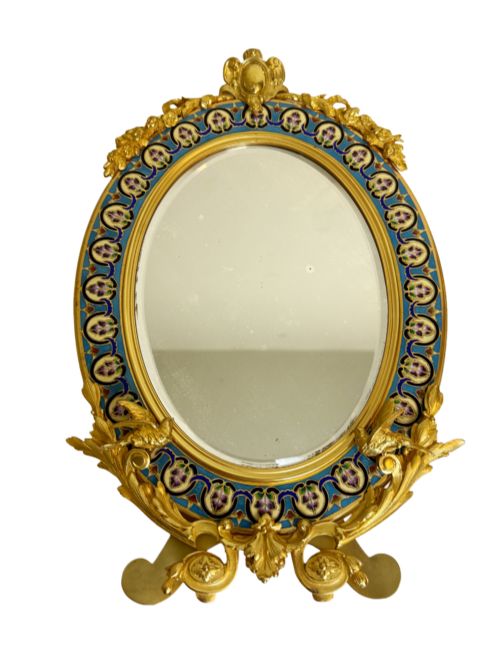
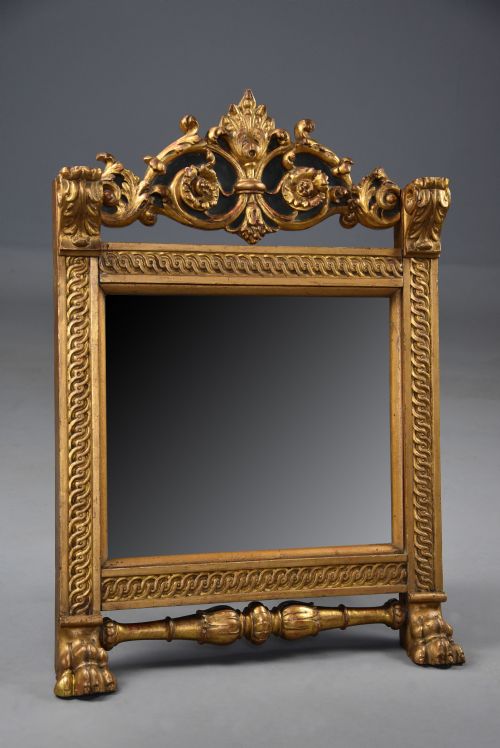
Craftsmen built the frames of these mirrors using wood, plaster, and gesso, applying gold leaf or liquid gilt to achieve a bright metallic surface. Gilt bronze and brass also appear in metal frames, sometimes paired with materials like walnut or mahogany.
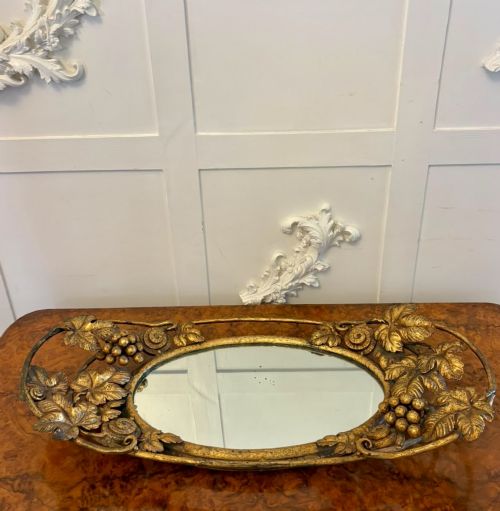
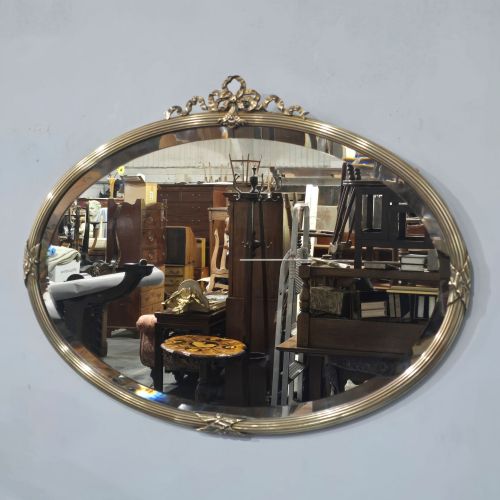
Carved giltwood frames often demonstrate intricate ornamentation such as ribbons, bows, and grape vines, whilst mirror glass is fitted into the central rebate. Easel backs and folding mechanisms allow the glass to tilt on a dressing table.
Grape vines and bows twine around these frames, proving that past generations took their breakfast table reflections very seriously.
Assessing quality
Quality rests upon the depth and crispness of the carving in the wood or gesso, where sharper detail separates superior frames from softer mouldings. The application of gold leaf shows greater handwork than simple painted gilding.
The condition and clarity of the mirror glass contribute significantly to the overall merit of the piece, alongside the stability of any easel stand or pivoting hinge. Heavier timber frames and intact micro mosaic or champleve bronze elements indicate higher original cost.
The Gold Gilt Vanity Mirror Glossary
- Gesso
- A plaster-like mixture applied to wood frames to create a smooth surface for gilding. Artisans carved intricate decorative motifs directly into this dried layer.
- Giltwood
- Timber that has been coated with gold leaf or gilt. It forms the primary structural material for most ornate antique frames.
- Toilet mirror
- A historical term for a small dressing table mirror used during personal grooming. These often sat upon miniature drawer bases.
- Rococo Revival
- A nineteenth-century design style mimicking the flowing asymmetry of eighteenth-century French decoration. It uses C-scrolls, foliage, and shell motifs.
- Parcel gilt
- Woodwork where only specific carved portions are gilded whilst the underlying wood remains visible. Walnut and mahogany frequently display this treatment.
Gold Gilt Vanity Mirror: Frequently Asked Questions
How do I date a mirror?
Dating relies on examining the frame construction, wood type, and the bevel or silvering of the glass behind the surface. Stylistic clues such as Rococo revival scrolls or Edwardian proportions also help narrow down the decade.
Makers often employed specific joining techniques and gesso recipes during distinct periods like the Victorian era or the eighteenth century. Comparing these physical traits to known examples provides a reliable chronology.
Where should I place a vanity mirror?
These mirrors sit naturally upon dressing tables, chest of tops, or console tables where they catch ambient light and assist with daily routines. Their pivoting frames allow adjustments to the angle of reflection.
Placement near a window maximises natural illumination, whilst positioning them against a painted wall highlights the gilt frame. Smaller tabletop versions move easily between rooms depending on need.
Are these mirrors meant for daily use?
Antique vanity mirrors function well for everyday grooming provided they are handled with care and placed on stable surfaces. The pivoting stands and folding panels remain operational on well-preserved examples.
Owners should protect the antique glass and delicate gilt surfaces from excessive moisture and frequent repositioning. Gentle dusting preserves the gold leaf over years of regular contact.
What is the difference between wall and table mirrors?
Wall mirrors feature hanging loops or brackets on the reverse to secure them permanently against vertical surfaces in a room. Vanity and dressing table mirrors rely instead on attached feet, easel backs, or heavy table bases.
Some smaller wall mirrors share the same ornate gilt frames and dimensions as tabletop pieces but lack the supporting hardware. Checking the reverse reveals whether the object was built to stand or hang.