



Gold Gilt Sofa
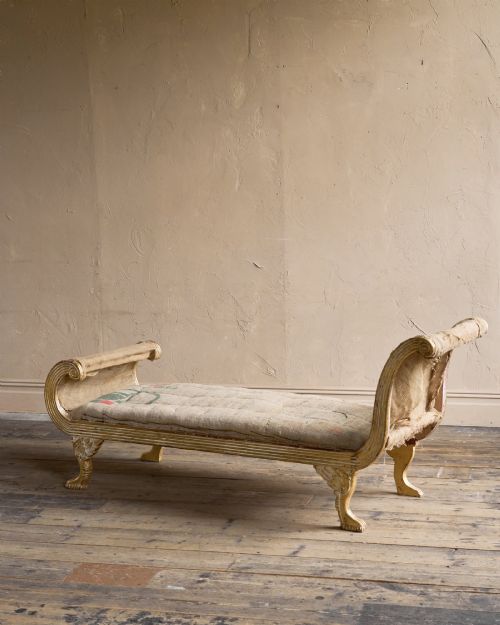
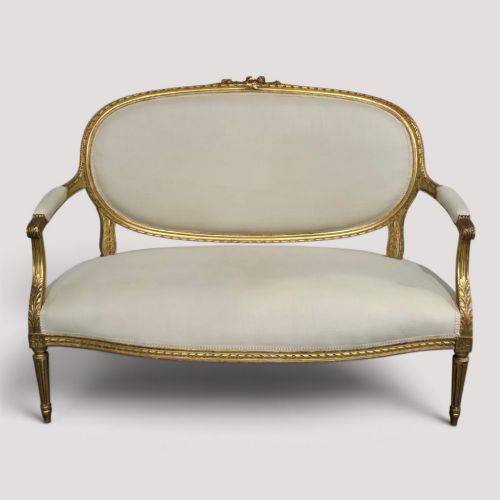
These gold gilt sofa examples bring gilded French and English seating into a room, offering carved wood frames and upholstered seats.
Gold Gilt Sofa
A gold gilt sofa encompasses seating designed for reception rooms and salons, ranging from compact window seats to large three-seater settees. Buyers seeking a gold gilt sofa will encounter pieces spanning the eighteenth, nineteenth and early twentieth centuries, with French and English origins predominating.
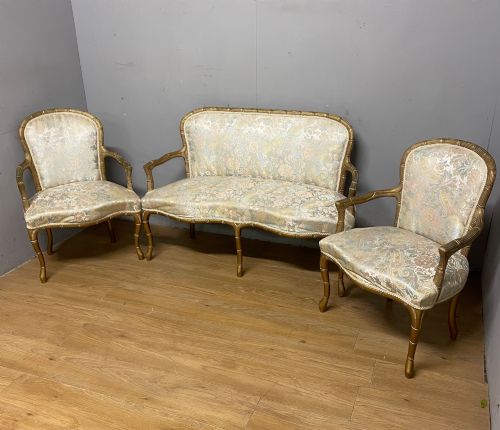
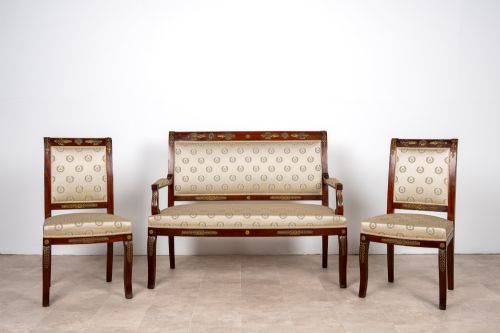
Alongside dedicated sofas and settees, the category occasionally incorporates salon suites and related seating arrangements. These pieces function as principal decorative seating within drawing rooms and formal boudoirs.
What varies in quality
The depth and crispness of hand-carved wooden ornament distinguish finer frames from simpler production pieces. Deeply undercut foliage, scrolls and figural details require substantial artisan skill compared to shallow or moulded decoration.
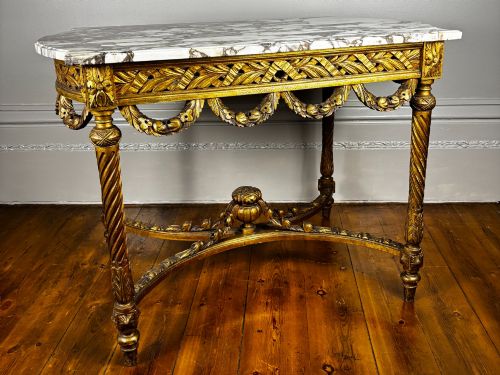
The integrity of the gilt surface and the quality of the underlying timber preparation dictate longevity. Thicker, well-applied gold leaf ages with a softer patina than flat metallic paints that wear away to expose bare wood.
Gold Gilt Sofa Retail Price Guide 2026
Typical asking prices for gold gilt sofa among the pieces listed under this phrase on Sellingantiques today, from the lower quarter to the upper quarter. They describe what is for sale here now, not the wider market.
Several listings specifically designate love seats and boudoir settees, built for intimate nineteenth-century conversations.
Giles Grendey·Holland + Son
The Gold Gilt Sofa Glossary
- Giltwood
- Timber coated with thin gold leaf over a prepared gesso ground. This finish provides the characteristic metallic sheen on formal period furniture.
- Canapé
- A traditional French ornamental sofa featuring an upholstered back and seat within a decorative wooden frame. These pieces often display exposed carved woodwork along the top rail and armrests.
- Salon suite
- A matched set of seating comprising a central settee or sofa accompanied by matching armchairs. Such suites were designed for coordinated entertaining in nineteenth-century reception rooms.
- Regency
- An English design period spanning the early nineteenth century marked by classical restraint and archaeological revival motifs. Furniture from this era often incorporates bold architectural lines alongside gilt framing.
- Rococo Revival
- A nineteenth-century design movement inspired by mid-eighteenth-century French styles. Pieces from this era display asymmetrical scrolling, floral carving and pronounced serpentine contours.
Gold Gilt Sofa: Frequently Asked Questions
Where should I place a gold gilt sofa?
These sofas suit formal drawing rooms, large bedrooms, or reception spaces where their gilded frames can serve as a focal point. They pair well with neutral walls that allow the carved woodwork to stand out.
Because of their decorative presence, they work effectively as standalone statement seating rather than tucked into casual corners.
How do I identify a French style sofa?
French style pieces typically feature exposed carved wooden frames in beech or giltwood with cabriole legs and floral motifs. Forms such as the Louis XV or Louis XVI style show distinct curving lines or straight fluted neoclassical supports.
Upholstery often includes silk damask or tapestry, reflecting the formal salon traditions of continental Europe.
What is the difference between a settee and a sofa?
In historical furniture terms, the words are often used interchangeably to describe upholstered seating for multiple people. Settees sometimes denote slightly lighter, more compact frames with exposed wooden structures.
Sofas in this category frequently span grander proportions, particularly when associated with nineteenth-century country house or salon suites.
Can I use antique silk upholstery daily?
Original antique silk and delicate fabrics require gentle treatment and are generally unsuited for heavy everyday family use. Many pieces feature later replacement upholstery that handles regular sitting more robustly while retaining period aesthetics.
Consider the fragility of the textile when deciding whether a piece belongs in a high-traffic room or a quiet sitting space.