

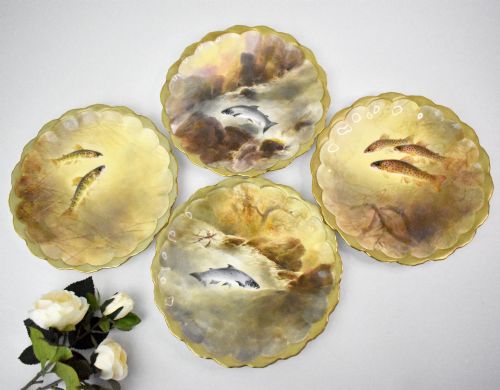


Gold Gilt Porcelain Set
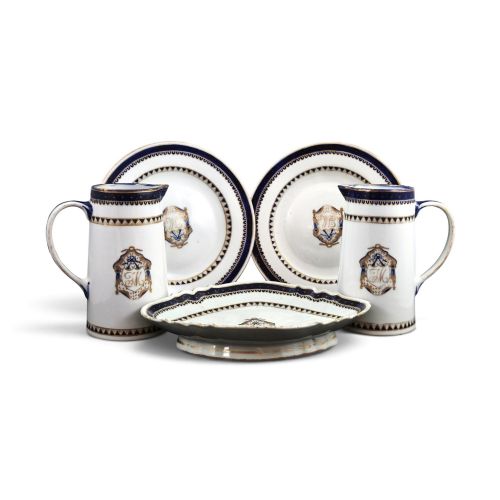
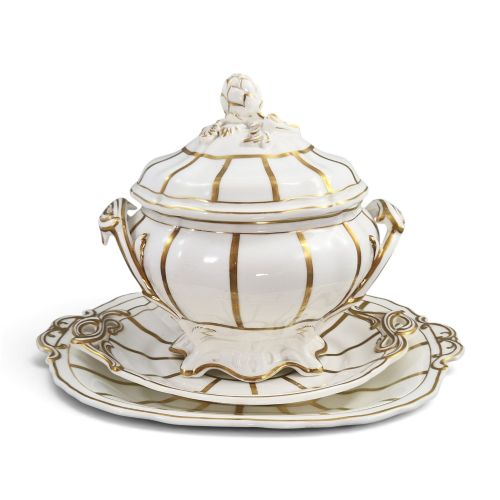
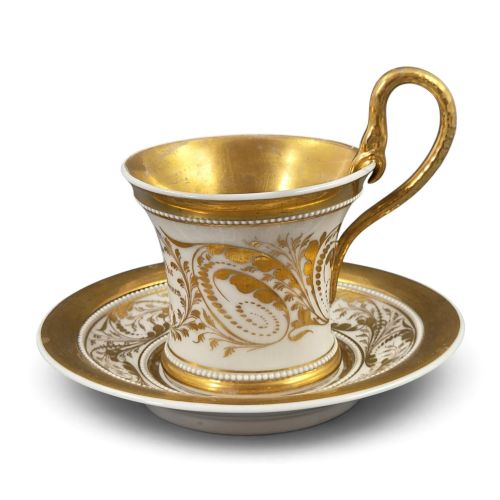
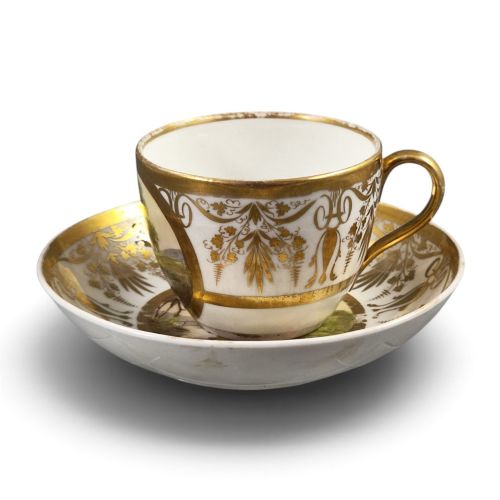
A gold gilt porcelain set brings together fine ceramic forms and metallic decoration, spanning Georgian tea wares to twentieth-century cabinet plates.
Gold Gilt Porcelain Set
A gold gilt porcelain set comprises matching or service groups designed for tea, coffee, dessert, or display, incorporating materials such as bone china, hard-paste porcelain, and earthenware alongside applied gold leaf and enamel. When buyers search for a gold gilt porcelain set, they encounter table wares and garnitures from Georgian, Regency, Victorian, and Edwardian eras, as well as continental and Asian origins.
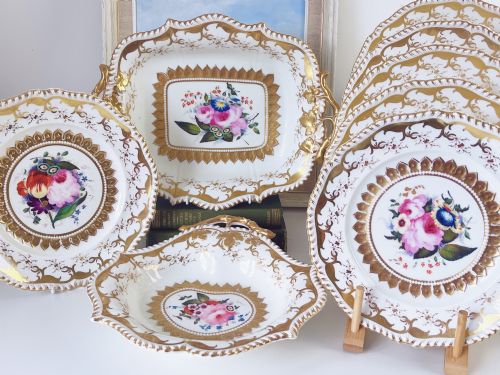
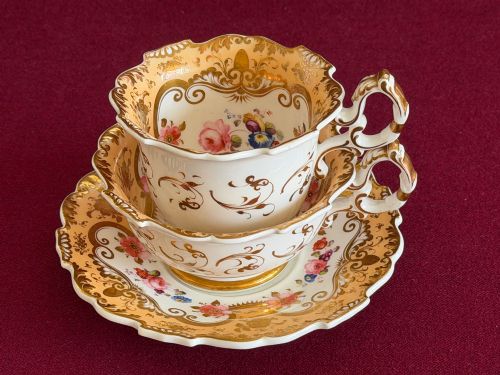
The most common configurations on this page include teacups and saucers, coffee services, dessert plates, and multi-piece garnitures. These items reflect stylistic shifts from Neoclassical and French Rococo Revival to Biedermeier and English Traditional aesthetics, often featuring handpainted landscapes, flowers, or figural scenes.
Materials and application
The physical basis of these items relies on porcelain, bone china, or hard-paste ceramic bodies shaped into vessels, plates, and figurines. Kiln firing hardens the clay body before glazes and painted enamel decorations are applied to the surface.
Gold leaf, gilding, and enamel provide the metallic ornamentation that defines the category. Artisans brush or apply gold leaf and liquid gilding by hand, fixing the metal through secondary firing processes to create contrasting highlights against white or coloured ceramic grounds.
Gold Gilt Porcelain Set Retail Price Guide 2026
Typical asking prices for gold gilt porcelain set among the pieces listed under this phrase on Sellingantiques today, from the lower quarter to the upper quarter. They describe what is for sale here now, not the wider market.
Materials recorded across the inventory include hard-paste porcelain, bone china, earthenware, gold leaf, and enamel.
Execution and preservation
Differentiation across the range rests on the precision of the handpainting and the purity of the gilding. Superior examples display crisp brushwork in floral or landscape panels and heavy, burnished gold work that retains its reflective lustre.
Integrity of the ceramic body and the preservation of the surface decoration dictate overall standard. Pieces with intact gilding, unblemished enamel colours, and sharp moulding details represent the higher tiers of production from established factories.
Spode Porcelain·Chelsea Derby Porcelain·Duesbury and Kean·Grainger Lee and Co·H and R Daniel·KPM Berlin·Davenport Bone China·Royal Doulton·Flight Barr and Barr·Royal Albert Crown China·Ahrenfeldt and Asalvary·Royal Worcester·Hutschenreuther
The Gold Gilt Porcelain Set Glossary
- Gilding
- The application of gold leaf or powdered gold mixture to the surface of ceramic wares. This technique creates decorative borders, highlights, and motifs.
- Garniture
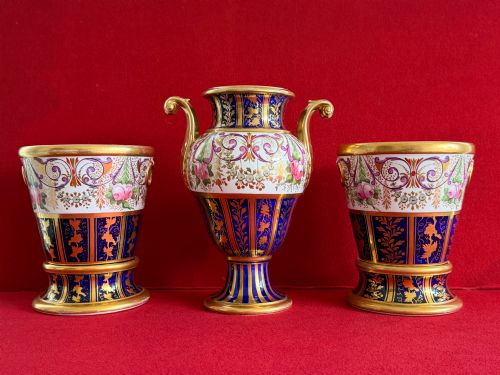
- A set of three or more ornamental vases or vessels designed to be displayed together on a mantelpiece or sideboard. They typically share matching decorative themes.
- Hard-paste porcelain
- A dense, durable ceramic material fired at high temperatures using kaolin and petuntse. It provides a bright white body suitable for detailed enamel painting.
- Trio
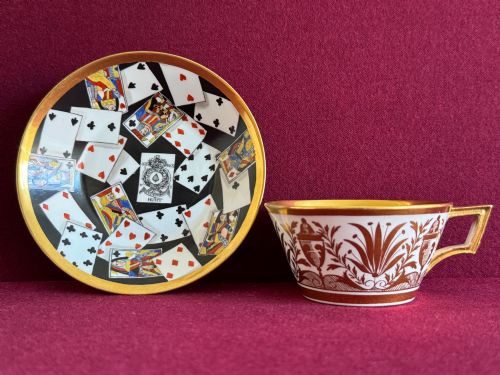
- A matched set consisting of a teacup, a coffee cup or saucers, and a matching plate. These served specific beverage and dining functions in nineteenth-century households.
- Bone china
- A type of soft-paste porcelain incorporating bone ash for increased strength and translucency. British potteries utilised this material extensively throughout the Victorian era.
Gold Gilt Porcelain Set: Frequently Asked Questions
How do I identify the period of a set?
Dating relies on factory marks, pattern numbers, and stylistic markers such as Regency neo-classical shapes or Victorian floral motifs. Comparing glaze types and handle forms against known factory timelines helps narrow the date of manufacture.
Secondary clues include the colour palette and the type of gilding used. Hand-applied burnished gold often points to earlier Georgian and Regency pieces, whereas later Victorian and Edwardian items may show mechanised transfer printing combined with gilding.
Were these sets used daily or displayed?
Many sets were intended for formal dining, afternoon tea, or social hosting within wealthy households. Fine porcelain tea and dessert services saw regular use during visits and special occasions.
Larger garnitures and cabinet plates served primarily decorative functions. Placed on mantelpieces or displayed in glass cabinets, these items demonstrated the status and taste of the owner rather than functioning as utility ware.
How should I care for gilded porcelain?
Cleaning requires gentle hand washing in lukewarm water with mild soap. Harsh detergents and abrasive sponges will wear away the delicate gold leaf and handpainted enamel details over time.
Storage and display demand stable environments away from direct sunlight and heavy foot traffic vibrations. Using padded plate stands protects the edges and prevents surface scratching on stacked items.
What is the difference between hard-paste and bone china?
Hard-paste porcelain contains natural kaolin clay and petuntse, fired at exceptionally high temperatures to produce a vitreous, highly durable body. It resists scratching and has a bright, cold white appearance.
Bone china incorporates animal bone ash into the paste, resulting in a warmer tone and notable translucency when held to the light. British kilns popularised this material for its combination of delicacy and structural strength.