


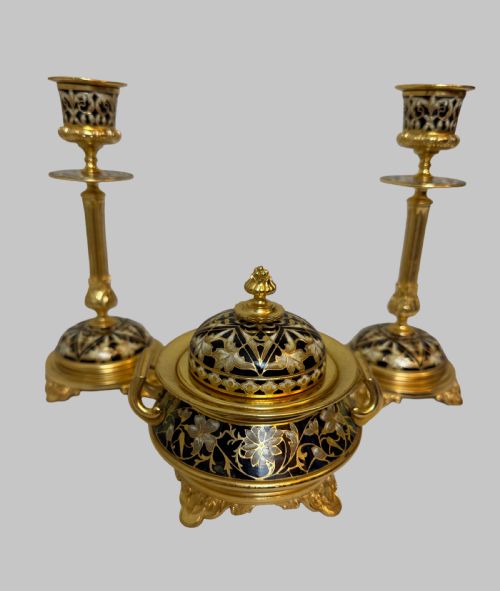


Gold Gilt Inkwell
A gold gilt inkwell brings the weight of the nineteenth-century writing desk into your room with a flash of polished metal.
Gold Gilt Inkwell
When you search for a gold gilt inkwell, you encounter desk accessories created during the nineteenth century, ranging from the Regency period through the Victorian era to the turn of the twentieth century. These pieces take the form of single inkwells, larger desk sets with candlestands or letter holders, and figural models depicting animals such as lions, stags, and foxes.
The materials span ormolu, gilded bronze, and silver gilt, frequently mounted on heavy marble bases or paired with glass inserts. French workshops dominate the selection alongside English makers, showing stylistic influences from the French Empire, Napoleon III, and Art Nouveau periods.
How they were made
Foundry workers cast bronze, brass, or ormolu into elaborate shapes, then applied mercury gilding or gold plating to achieve the characteristic luminous finish. Marble bases, such as Sienna marble, were cut and polished to provide a stable, weighty plinth for the metalwork.
Glassmakers blew and shaped the internal ink liners that sat within the metal housings to hold the liquid ink safely. Artisans added fine chased details by hand, finishing figural subjects with realistic textures and occasionally inset glass eyes.
Gold Gilt Inkwell Retail Price Guide 2026
Typical asking prices for gold gilt inkwell among the pieces listed under this phrase on Sellingantiques today, from the lower quarter to the upper quarter. They describe what is for sale here now, not the wider market.
One nineteenth-century bronze model depicts a fox wearing a nightgown.
What varies in quality
The crispness of the chasing separates standard production from exceptional pieces, as skilled hands brought out the fine fur of an animal or the sharp acanthus leaves of an Empire mount. Weight and substance also matter, with denser marble bases and heavier gauge bronze creating a more substantial object on the desk.
The survival of original components, such as matching glass liners and coordinated desk accessories in larger sets, elevates the standing of an individual piece. The depth and even tone of the gilding further distinguish superior examples from those with rubbed or thin metal surfaces.
Flight Barr And Barr·Marson And Jones·Robert Hennell·Albert Marionnet
The Gold Gilt Inkwell Glossary
- Ormolu
- Gilded bronze produced by applying a mercury and gold amalgam to the metal surface and heating it until the mercury vaporised. This technique creates a rich, matte gold finish characteristic of fine nineteenth-century desk objects.
- Champlevé
- An enamelling technique where troughs are dug into a metal surface, filled with enamel powder, and fired. It appears on nineteenth-century desk sets alongside gilt bronze mounts.
- Desk stand
- A fitted tray or stand holding one or more inkwells, often accompanied by matching items like candlesticks or letter racks. These larger pieces formed the centrepiece of a Victorian writing table.
- Silver gilt
- Silver that has been coated with a thin layer of gold through electroplating or chemical processes. It combines the cool gleam of silver with the warm tone of gold.
- Figural
- An object shaped to represent a human, animal, or narrative scene rather than abstract or geometric ornamentation. Nineteenth-century examples frequently depict domestic pets, wildlife, or figures in costume.
Gold Gilt Inkwell: Frequently Asked Questions
How do I clean a gilt inkwell?
Gilt surfaces require gentle dusting with a soft, dry brush to prevent the removal of the gold layer. Moisture and chemical cleaning agents can damage or strip mercury gilding and ormolu.
Marble bases can be wiped with a damp cloth, taking care to keep water away from any exposed metal joints or antique fabric linings.
Are these inkwells safe to use?
Most antique inkwells function mechanically but are best kept dry to preserve their interior components. Modern inks can stain or corrode historic glass liners and metal wells over time.
They serve primarily as decorative objects for modern desks rather than functional writing equipment.
How do I date a gilt inkwell?
Dating relies on stylistic clues, such as the classical motifs of the Regency period or the organic curves of Art Nouveau. Maker marks, registry stamps, and hallmarks on silver gilt pieces provide precise years of manufacture.
Materials also offer guidance, as heavier Sienna marble bases and specific casting methods point to distinct decades in the nineteenth century.