


Gold Gilt Crystal Glass
Gold gilt crystal glass brings together heavy gilded mounts and refractive glass to catch light across chandeliers, wall lights, and centrepieces.
Gold Gilt Crystal Glass
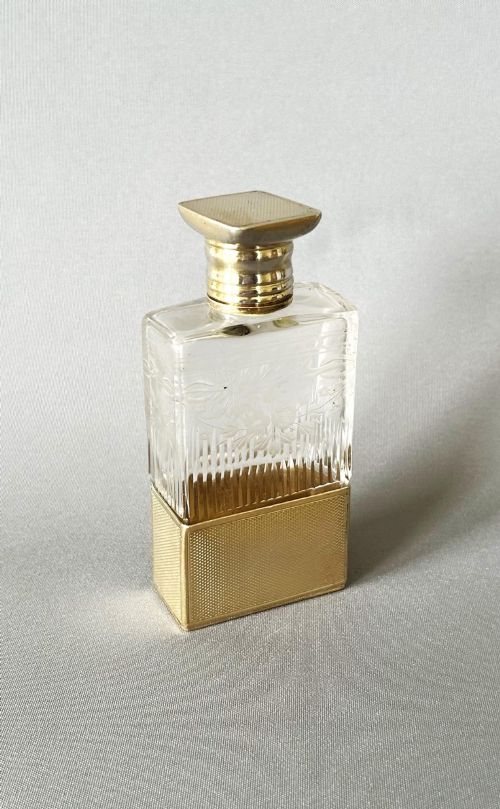
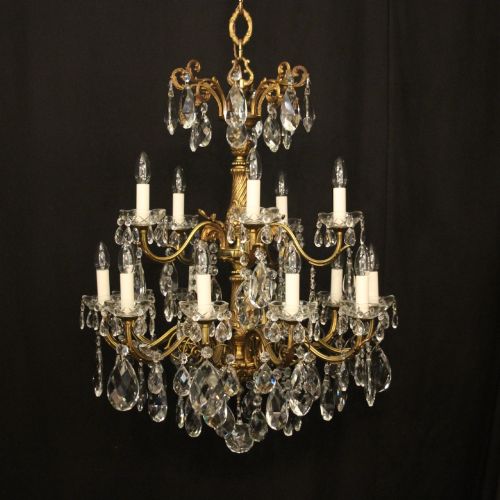
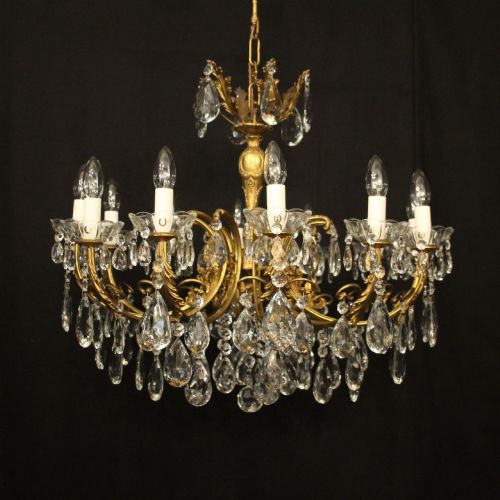
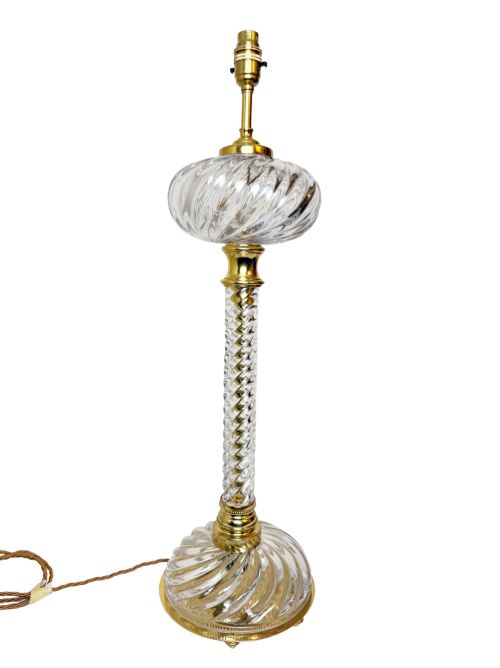
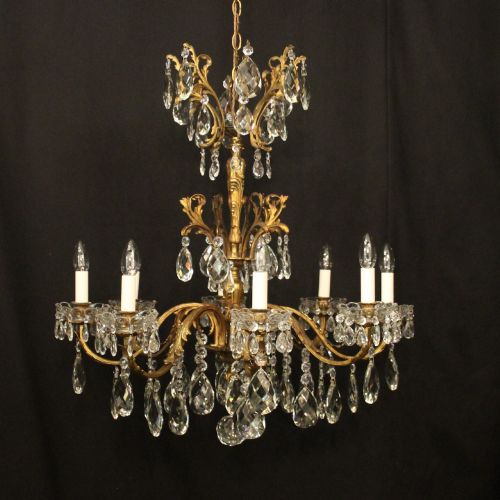
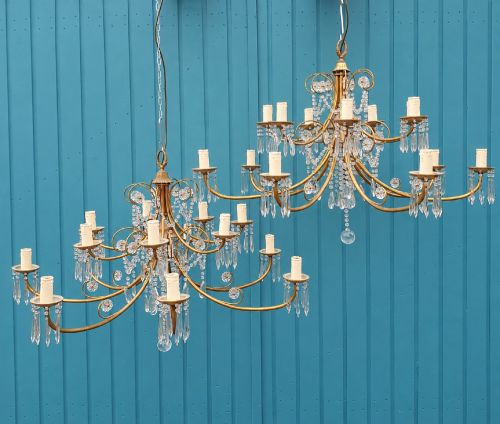
Gold gilt crystal glass unites items made primarily for illumination and display, spanning chandeliers, wall lights, candlesticks, centrepieces, mantel clocks, table lamps, and decorative bowls. When searching for gold gilt crystal glass, buyers encounter pieces originating largely from the nineteenth and early twentieth centuries, notably the Edwardian era and the decades around nineteen-thirty.
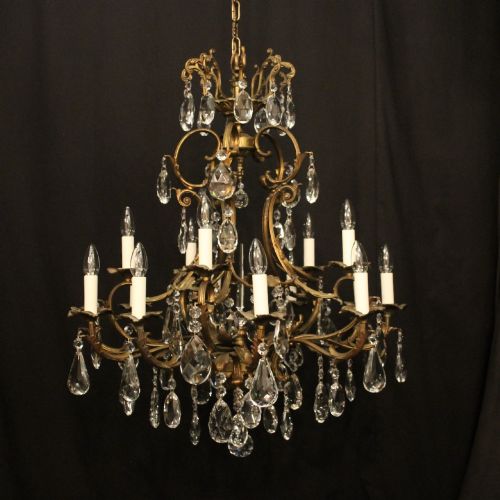
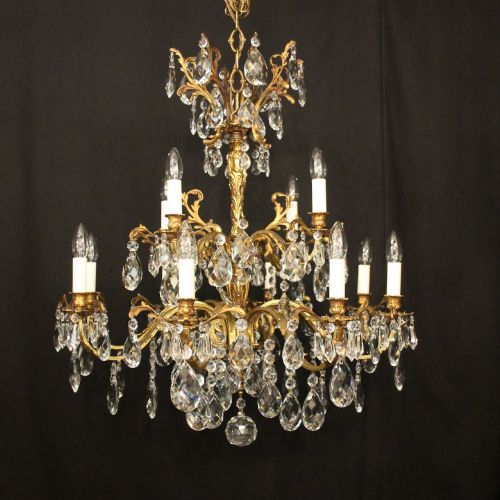
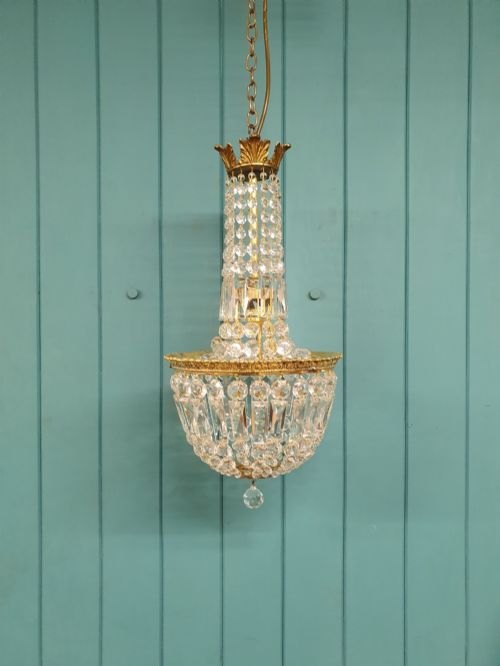
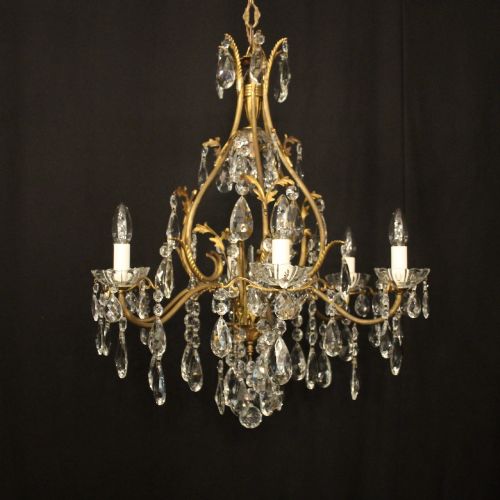
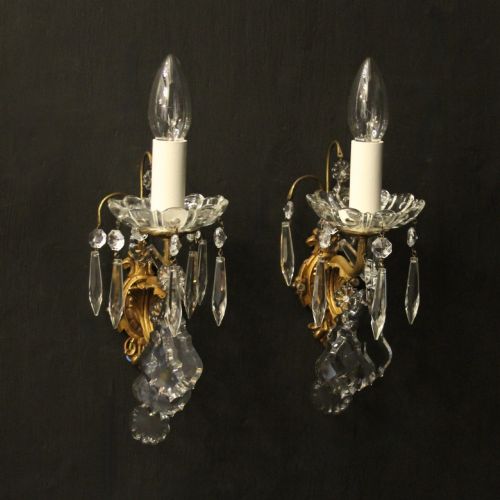
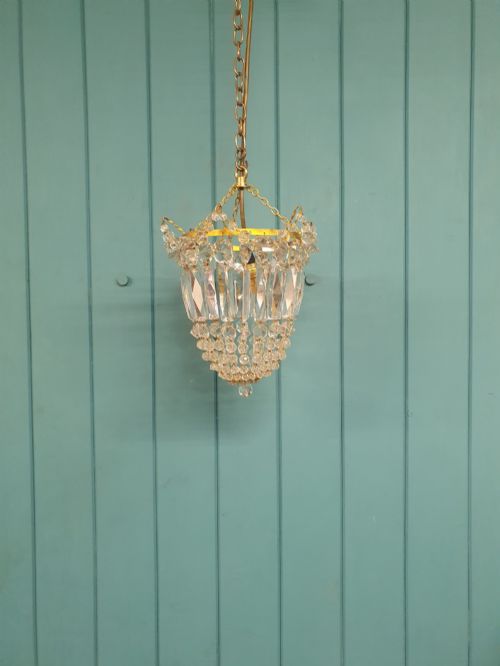
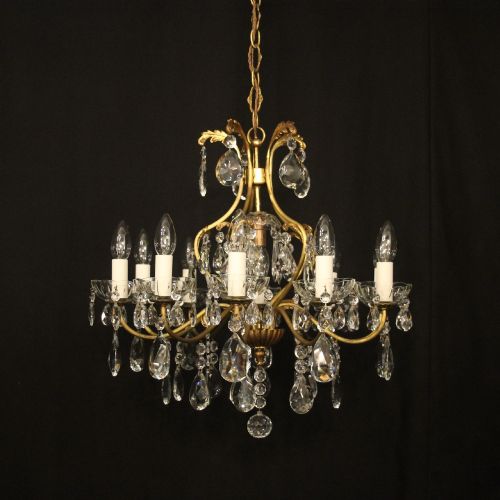
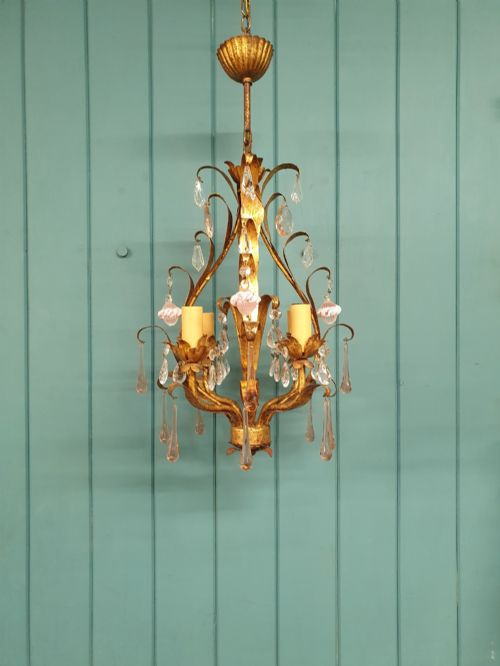
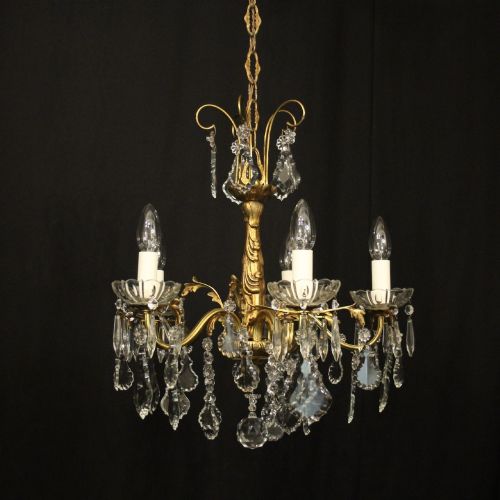
French designs dominate this category, expressed through styles such as French Rococo, Empire, Belle Epoque, and Florentine. The most common forms met on this page are multi-light cage, basket, and birdcage chandeliers, alongside paired wall lights and decorative centrepieces hung with cut crystal drops.
Materials and construction
The physical structure relies on cast metals, specifically brass, bronze, or ormolu, treated with a gold gilt finish to provide a metallic sheen. These frames support hand-cut crystal and glass elements, sometimes incorporating coloured glass drops in pink, amber, or turquoise alongside painted toleware.
Assembly involves mechanical joints holding metal armatures together while pierced or drilled glass and crystal components are suspended from the frame using wire pins. The combination of reflective cut glass with gilded metal creates the characteristic interplay of light seen across these nineteenth and twentieth-century objects.
Gold Gilt Crystal Glass Retail Price Guide 2026
Typical asking prices for gold gilt crystal glass among the pieces listed under this phrase on Sellingantiques today, from the lower quarter to the upper quarter. They describe what is for sale here now, not the wider market.
Materials recorded across these objects include cut crystal, ormolu, toleware, and coloured glass drops in pink, amber, and turquoise.
Assessing quality and execution
Quality rests upon the crispness of the metal casting and the depth of the gilding applied to the bronze, brass, or ormolu framework. Finer examples display detailed chasing on figural elements like cherubs, stags, or leaf decorations rather than flat, unadorned surfaces.
The clarity, weight, and precision-cutting of the crystal and glass pendants dictate the refractive brilliance of each piece. Superior items maintain integrity through original matching drops and substantial structural framing without replacement or composite parts.
Ansonia New York
The Gold Gilt Crystal Glass Glossary
- Ormolu
- Gilded bronze, where a layer of gold amalgam is applied to a bronze base. This technique was widely used in French decorative arts to create rich metallic highlights.
- Birdcage chandelier
- A lighting form where the upper metal framework curves inward to resemble the profile of an avian cage. Crystal strands drape over this open skeletal frame.
- Toleware
- Painted sheet metal objects, frequently integrated into lighting fixtures alongside glass drops. It adds opaque colour contrast to transparent crystal elements.
- Regulator clock
- A precision clock movement housed within a glazed case, often accented with gilt bronze mounts and crystal panels. These timepieces sat on mantels during the nineteenth century.
- Centrepiece
- A decorative table object intended for display in the middle of a dining or reception surface. Examples frequently combine cut crystal bowls with gilded bronze stands.
Gold Gilt Crystal Glass: Frequently Asked Questions
How do I clean gold gilt crystal glass?
Dust components gently with a soft brush to prevent scratching the fragile glass drops and gilded surfaces. Avoid harsh chemical cleaners that strip the gold gilt finish from the metal.
Support hanging crystals from underneath while wiping them individually with a damp cloth and mild soap. Dry each piece thoroughly before reattaching it to the frame.
Are these chandeliers wired for modern electricity?
Many antique lighting fixtures retain historical wiring or require rewiring to meet contemporary safety standards. Consult a qualified electrician to inspect and adapt the internal circuits before installation.
Conversion usually involves threading modern electrical flex through the existing central channel without altering the external antique brass or bronze structure.
How can I tell French Empire style from Rococo?
French Empire style relies on classical symmetry, military motifs, and restrained architectural lines inspired by antiquity. Gilt bronze mounts appear structured and formal.
French Rococo embraces asymmetrical C-scrolls, floral motifs, and organic leaf decoration. The metalwork flows with exuberant curves rather than rigid geometric balance.