

Gold Gilt Ceiling Light
A gold gilt ceiling light brings a warm, reflective glow and architectural presence to a room, spanning French chateau styles to Edwardian designs.
Gold Gilt Ceiling Light
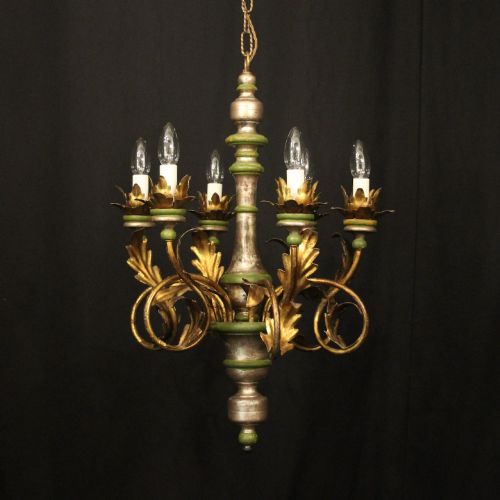
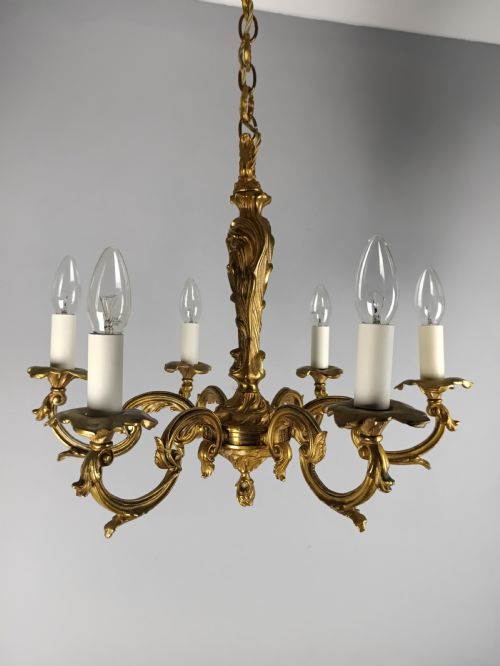
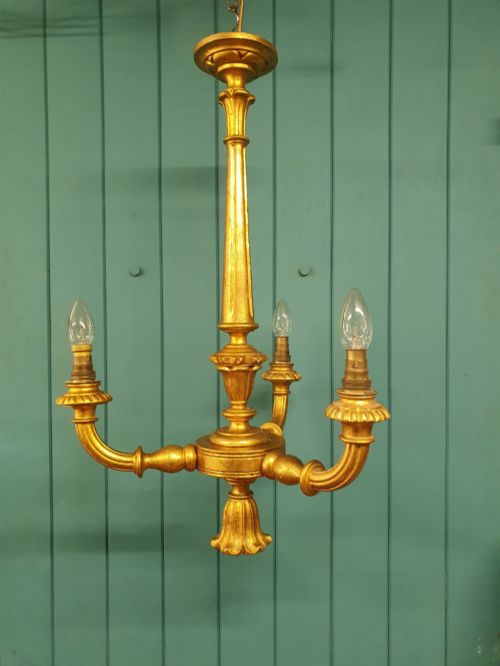
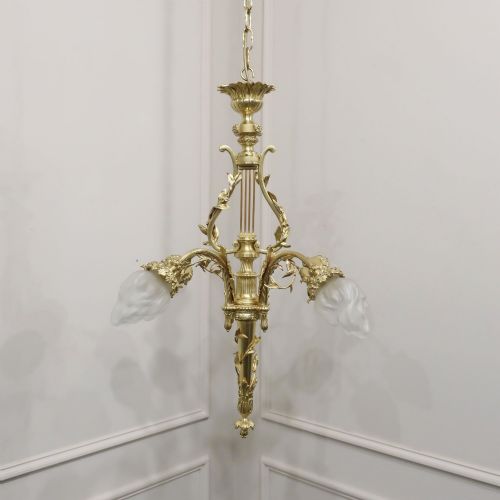
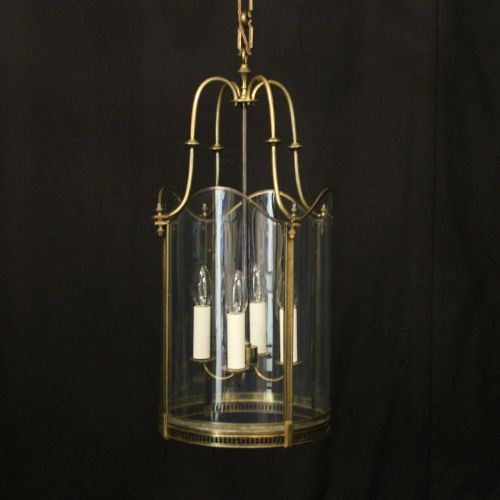
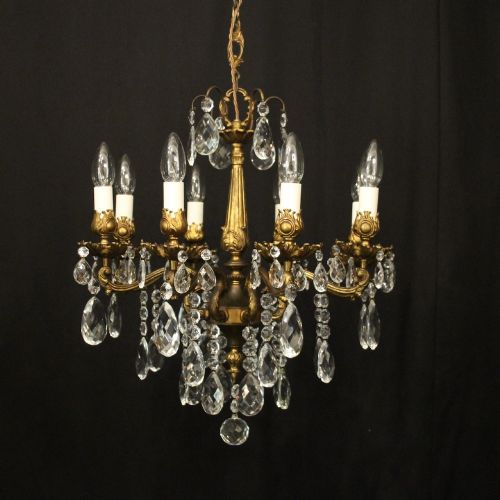
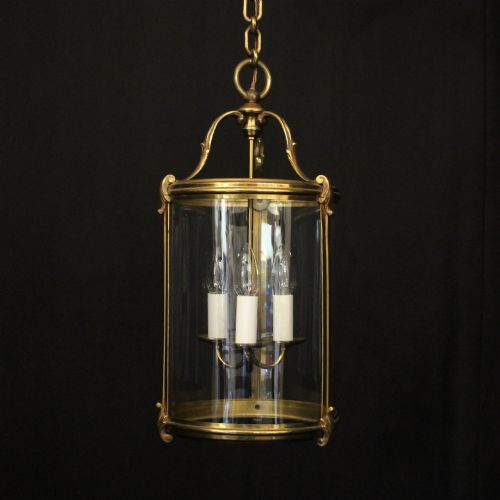
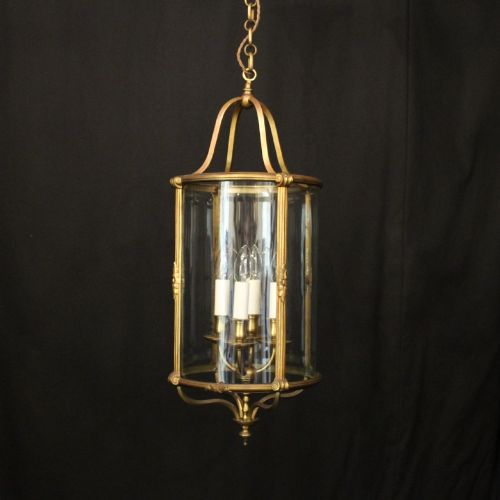
A gold gilt ceiling light encompasses a variety of hanging illumination forms, most commonly multi-arm chandeliers and enclosed hall lanterns originating from the nineteenth and early twentieth centuries. These fixtures draw heavily upon French aesthetics, including Rococo, Neoclassical, and Florentine styles, alongside Edwardian creations.
The pieces available on this page run from modest three-light fittings up to substantial ten-arm structures designed for principal rooms. Buyers regularly encounter variations featuring cage frames, tolewear foliage, and convex glass panels suspended within gilded metal frameworks.
Materials and construction methods
Makers utilised cast and forged base metals, predominantly bronze, brass, spelter, and iron, applying a layer of gold leaf, gesso, or surface gilding to achieve the characteristic metallic sheen. Structural frames were frequently assembled from shaped metal components or carved giltwood.
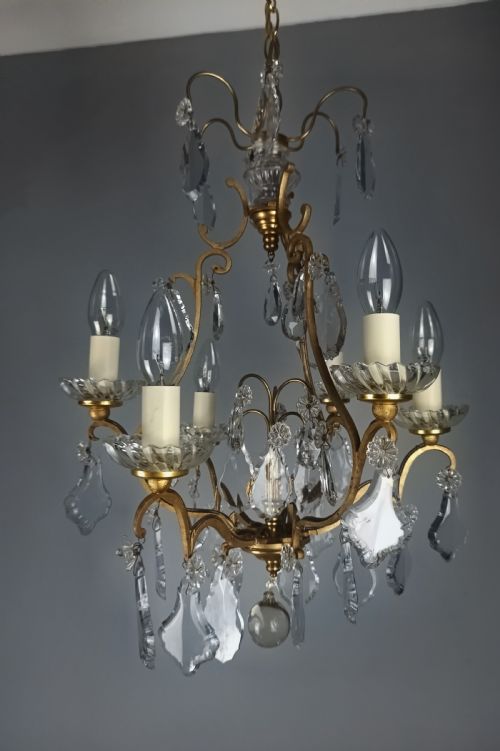
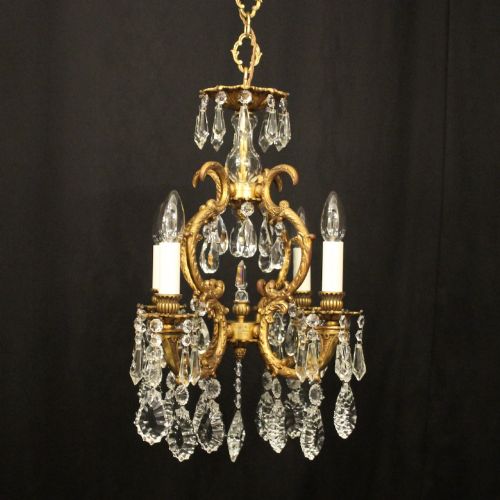
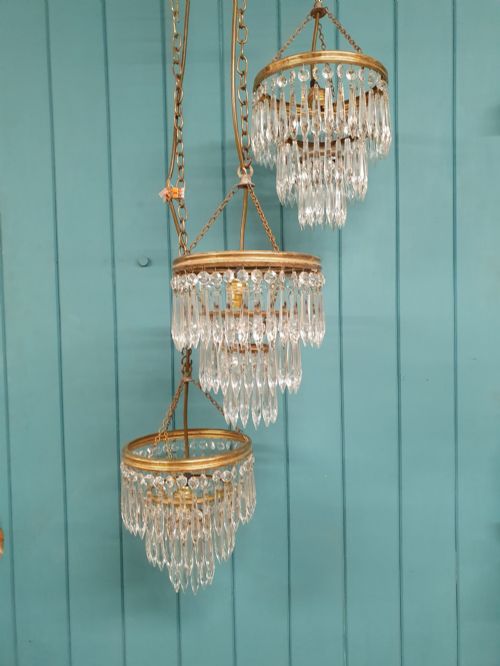
Lighting assemblies incorporate cut glass crystal drops, amber teardrops, etched glass panels, and occasionally ceramic floral elements. These decorative additions were wired or pinned directly into the metal armature to catch and refract the illumination.
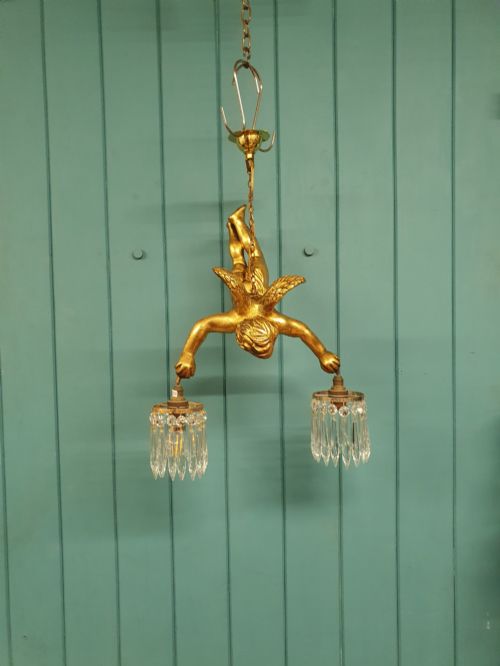
Several flying cherubs and winged cupids dangle persistently from eighteenth-century style frames, holding up lights with unwavering, gilded enthusiasm.
Factors determining quality
The refinement of the casting and carving dictates the standard of a piece, observable in the crispness of leaf decoration, winged cherubs, and lyre motifs. Heavier bronze frames and hand-carved giltwood exhibit greater durability and artisanal effort than lighter stamped brass or spelter alternatives.
The completeness and quality of the hanging crystals also influence the piece, with faceted cut glass and amber teardrops providing superior light dispersion compared to plain moulded glass. Original gilding intact beneath accumulated patination indicates a well-preserved survivor from the period.
The Gold Gilt Ceiling Light Glossary
- Gilt bronze
- A metal alloy treated with a fine layer of gold leaf or gold mercury amalgam, frequently termed ormolu in French pieces. This finish provides a resilient metallic warmth that resists tarnishing over decades.
- Hall lantern
- An enclosed ceiling fixture designed specifically for entranceways and corridors, often featuring convex glass panels set within a brass or gilded bronze frame. These items protect internal candle or bulb holders from drafts.
- Cage chandelier
- A style of hanging light featuring an open metal framework shaped like a birdcage, densely draped with crystal strands and drops. The central structure conceals the internal arms and wiring.
- Toleware
- Painted and lacquered sheet metal used to form decorative elements such as leaves and floral clusters on mid-period light fittings. It introduces polychrome colour and organic texture to the metallic framework.
- Spelter
- A zinc alloy utilised as a cost-effective alternative to bronze for cast decorative figures like cherubs and putti. It accepts gilding well while remaining lighter than solid bronze.
Gold Gilt Ceiling Light: Frequently Asked Questions
How should I clean fragile crystal drops?
Maintenance involves wiping individual glass components in situ using a mild solution of warm water and a touch of washing-up liquid on a soft cloth. Drying each piece immediately prevents water spots from forming on the glass.
Removal of every crystal is rarely necessary unless the fitting requires a complete restoration. Regular dusting with a feather duster keeps the reflective surfaces bright between deeper cleans.
Are these lights converted for modern electricity?
Most antique fixtures found on the market have been adapted with internal wiring to accept standard contemporary bulbs. Rewiring allows older frames to meet current safety standards while retaining their historical appearance.
Buyers should inspect the internal lamp holders and cables upon arrival to confirm their condition. An electrician can easily update older wiring if any portion appears worn.
What rooms suit a hall lantern?
Hall lanterns function effectively in narrow entrance spaces, stairwells, and high-ceilinged corridors where a compact yet decorative light source is required. Their enclosed glass sides diffuse light evenly in confined areas without obstructing movement.
These pieces also add architectural character when hung in small vestibules or landings. The vertical profile complements transitional spaces between larger rooms.