


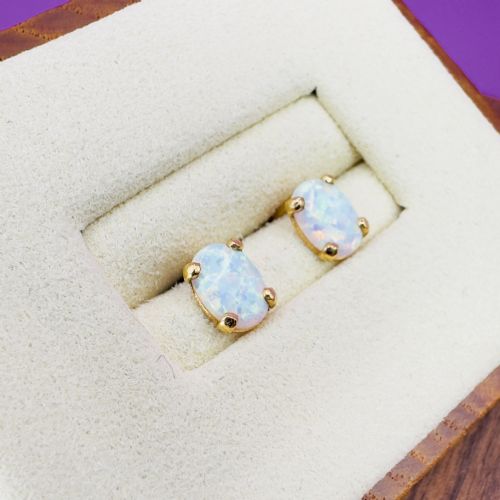
Gold Gemstone Studs
Gold gemstone studs are close-fitting earrings securing stones directly to the lobe, spanning Victorian to Mid-Century periods.
Gold Gemstone Studs
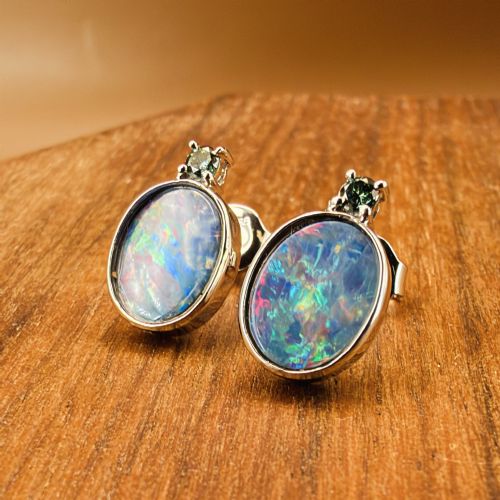
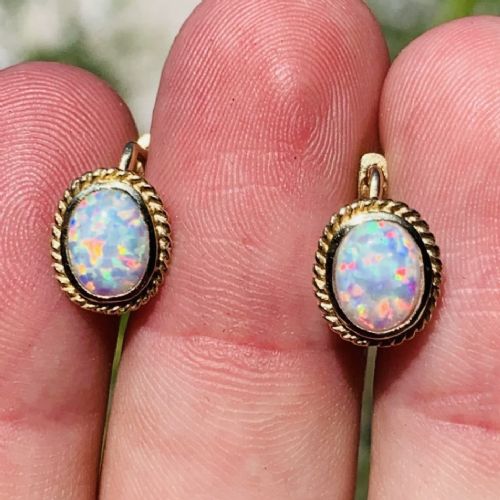
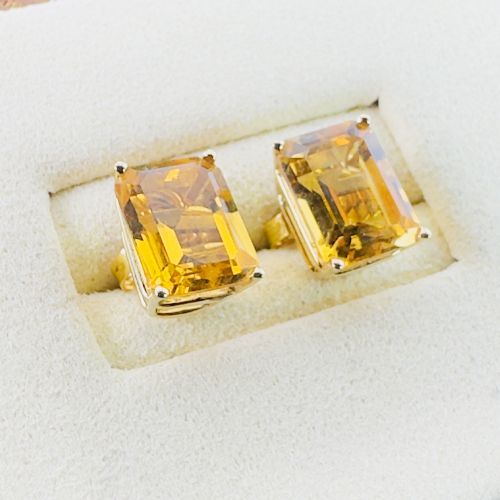
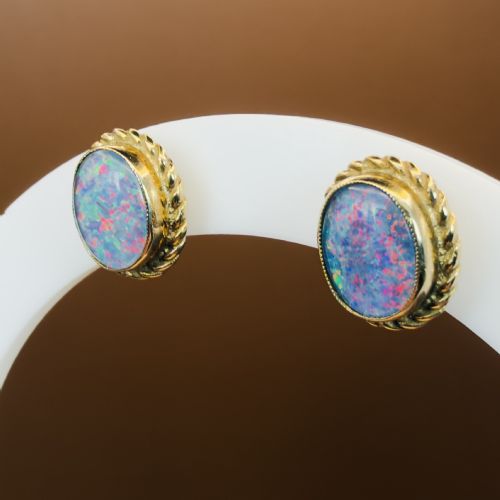
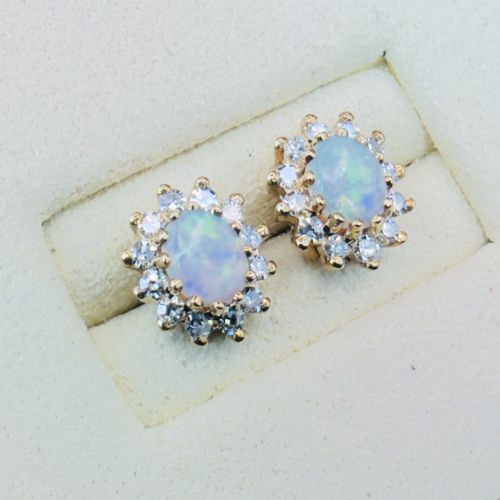
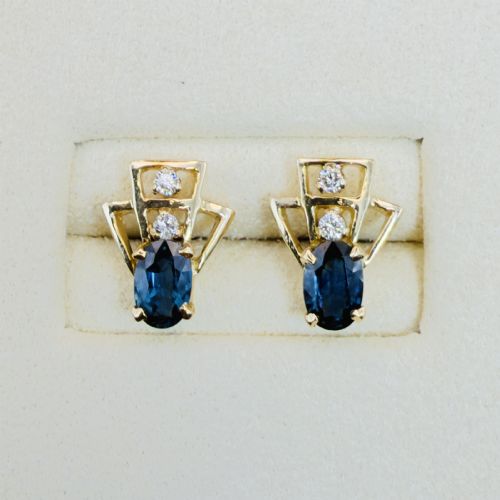
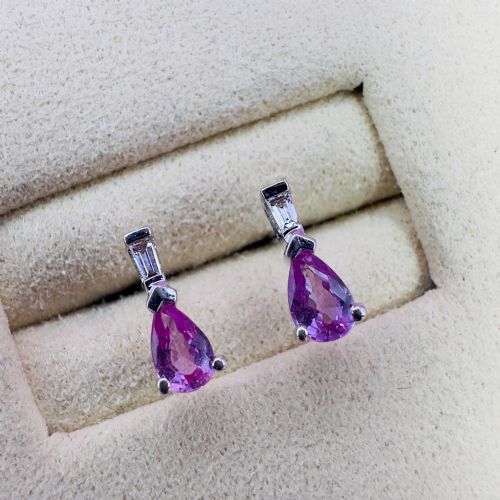
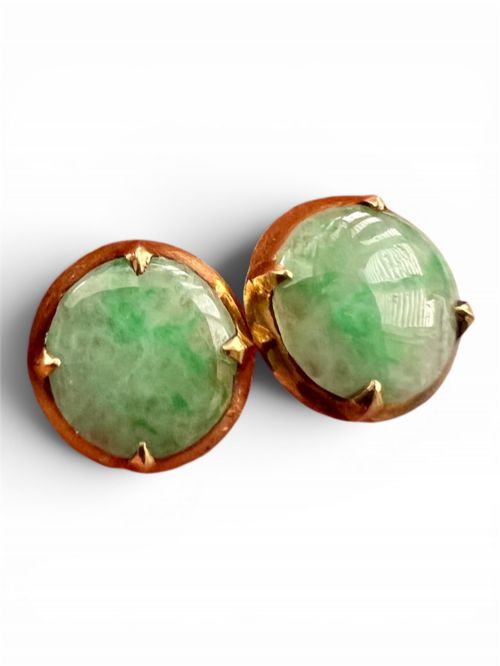
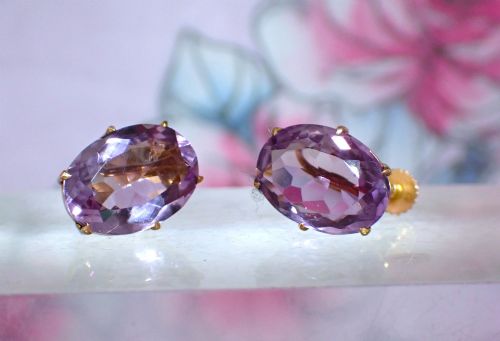
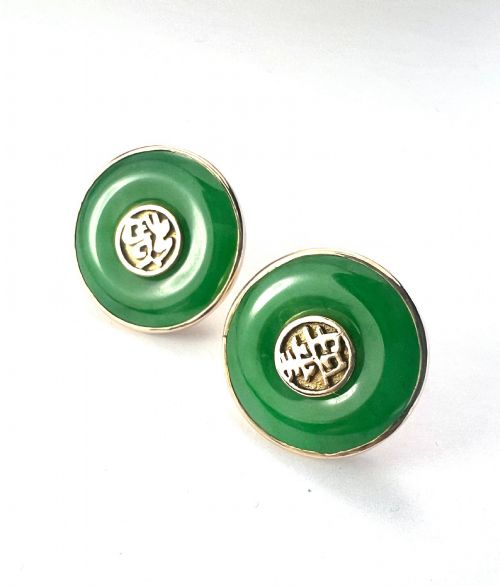
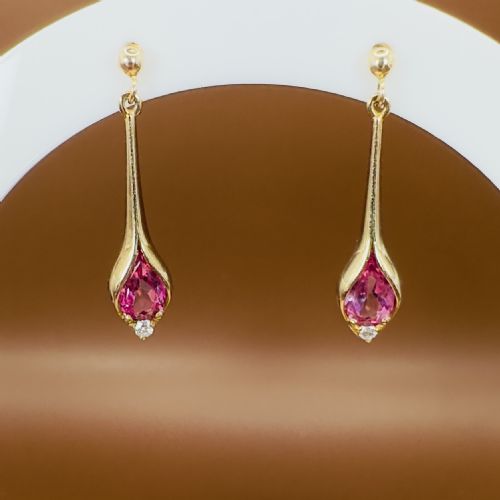
Gold gemstone studs take the form of compact earrings, cluster designs, and drop stud variants featuring stones mounted closely to the ear. Buyers searching for gold gemstone studs encounter pieces originating from the Victorian and Edwardian eras, through the 1920s Art Deco period and onwards to 1950s and 1960s mid-century designs.
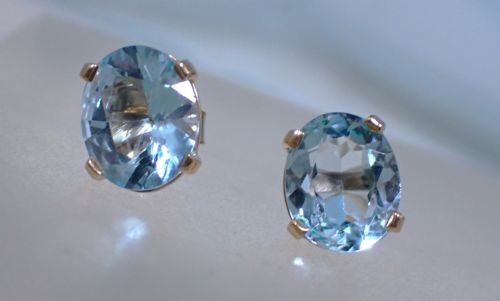
The selections span simple bezel and prong settings in 9ct and 14ct gold, alongside intricate white gold and platinum clusters. Stones range from vibrant garnets and opals to sapphires, emeralds, and aquamarines, often accompanied by accent diamonds.
Materials and Construction
Metals employed across these pieces include 9ct yellow gold, 14ct gold, and 18ct white or yellow gold, paired with platinum in specific Art Deco examples. Goldsmiths secured cabochon and faceted gemstones through claw settings, bezels, and delicate filigree work.
Gemstones such as opals, jade, garnets, and sapphires are matched with supporting diamonds or pearls in cluster configurations. Construction methods vary from screw-on backs on Edwardian pairs to standard post and butterfly fittings on later mid-century items.
Some Edwardian pairs required specialised screw-on backs, proving that our ancestors took fastening their sparkle very seriously indeed.
Assessing Quality and Execution
Quality rests in the precision of the stone cutting, whether an emerald cut, cabochon, or oval facet, and how securely the gem sits within its metal setting. Fine examples demonstrate clean metalwork, matched stone pairings in clusters, and well-preserved filigree or milgrain details.
The choice of gold purity, from 9ct up to 18ct white and yellow gold, combined with the natural quality and clarity of primary stones like sapphires, emeralds, and opals, defines the upper tier of these pieces.
The Gold Gemstone Studs Glossary
- Cabochon
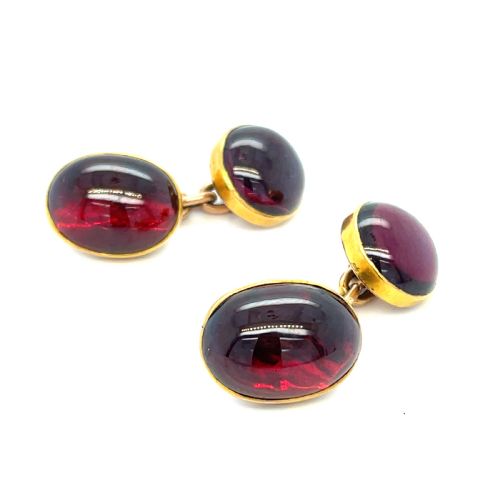
- A gemstone shaped and polished with a smooth, convex surface rather than faceted. This style highlights the natural optical phenomena in stones like opals, jade, and garnets.
- Doublet
- A composite gemstone comprising two joined sections, commonly seen in opal specimens where a thin slice of precious opal is backed by a darker material to enhance colour.
- Milgrain
- A decorative jewellery technique involving a line of small metal beads along the edges of a setting. It is frequently encountered on Art Deco and Edwardian mountings.
- Cluster
- An arrangement of smaller gemstones clustered tightly around a central stone. This layout maximises visual impact and light reflection on the earlobe.
Gold Gemstone Studs: Frequently Asked Questions
How do I clean antique gold gemstone studs?
Clean these earrings gently using a soft cloth and warm soapy water, avoiding harsh chemical dips that damage softer stones like opals, pearls, and jade.
Ensure delicate claw settings and screw-on mechanisms are not strained during wiping to preserve the structural integrity of the metal.
Are screw-on backs different from modern posts?
Edwardian and older pairs often utilise threaded screw-on backs designed for non-pierced or pierced ears, requiring a gentle twisting motion to secure.
Modern mid-century and later variants typically employ standard posts and butterfly clutches for everyday wear.
How do I identify an Art Deco pair?
Art Deco pairs from the 1920s and 1930s display geometric lines, platinum or 18ct white gold settings, and emerald or baguette cut stones. They frequently pair sapphires or aquamarines with structured diamond frames.
This aesthetic contrasts with the softer, organic floral motifs found in earlier Victorian and Edwardian examples.