


Gold Gemstone Necklet
A gold gemstone necklet brings together period metalwork and coloured stones, offering wearable history that sits close to the collarbone.
Gold Gemstone Necklet
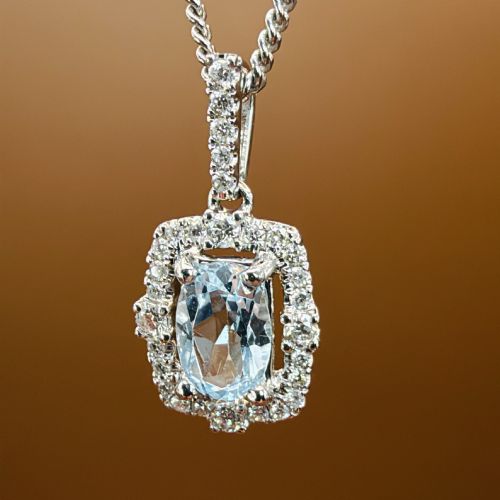
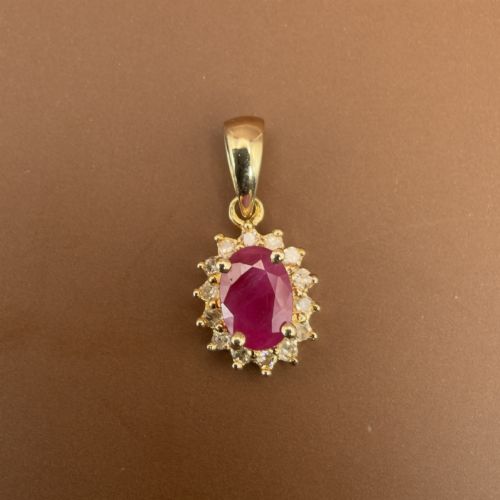
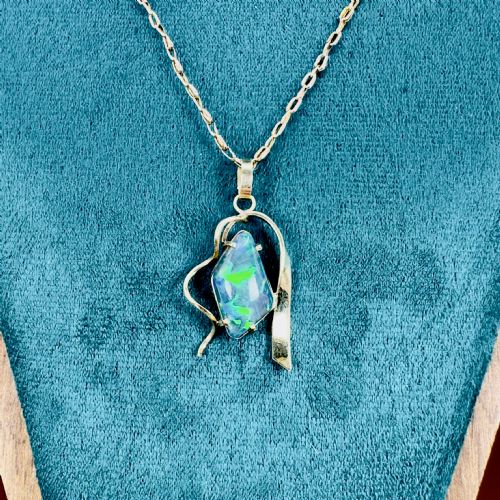
A gold gemstone necklet spans eras from the Victorian period through to the 1960s, taking the form of lavaliers, cluster pendants, garland necklaces, and delicate chains. The pieces found here showcase varied configurations of gold paired with stones such as aquamarine, amethyst, ruby, garnet, opal, peridot, and topaz.
The most common examples on this page are mid-century pieces set in nine-carat gold alongside earlier Edwardian and 1920s designs utilising higher carat weights like fifteen-carat and eighteen-carat gold. These range from simple gemstone drops to complex multi-stone clusters incorporating diamonds and seed pearls.
Materials and construction methods
Makers shaped these necklets using gold alloys including nine-carat, fourteen-carat, fifteen-carat, and eighteen-carat variations, alongside platinum settings in select twentieth-century examples. Metalwork techniques involved delicate wire twisting, cluster mounting, and garland construction to support central gems.
Gems were secured via claw settings, bezel mounts, and bead settings, often complemented by seed pearls threaded or pinned into place. Stones like aquamarine, amethyst, and ruby were cut into oval, pear, and cabochon shapes to catch the light from various angles.
Current listings feature gold gemstone necklets spanning the Victorian era through to the 1960s, incorporating amethysts, opals, aquamarines, and diamonds.
Quality factors in period necklets
The standard of a piece depends heavily on the integration between the metal mount and the selected stones, with finer examples showing precise stone matching and secure, balanced settings. The choice of gold carat and the presence of supporting diamonds or natural pearls elevate the complexity of the design.
Design execution separates standard production from exceptional artistry, particularly in Edwardian garland work and Art Deco geometric arrangements where hand-finishing defines the profile. The depth of colour and clarity in the primary gemstones further distinguish individual items within the range.
The Gold Gemstone Necklet Glossary
- Lavalier
- A pendant necklace featuring a central dangling gemstone or drop suspended from a fine chain, popular during the Edwardian era.
- Garland necklace
- An intricate ornamental style typical of the early twentieth century, mimicking looped fabric, swags, and ribbons using gold and small gems.
- Cluster pendant
- A central stone surrounded by a tighter ring of smaller stones, frequently diamonds or seed pearls, mounted on a gold chain.
- Seed pearl
- A very small, naturally formed or cultured pearl used extensively in Victorian and Edwardian jewellery for delicate decorative borders.
- Doublet
- A composite gem made by fusing two sections together, often combining a thin slice of opal with a base material for enhanced stability and appearance.
Gold Gemstone Necklet: Frequently Asked Questions
How do I date a gold gemstone necklet?
Dating relies on examining the style of the mount, the cut of the gemstones, and any metal purity hallmarks present on the clasp or reverse. Edwardian pieces often utilise garland motifs and fifteen-carat gold, whereas 1950s and 1960s items frequently employ nine-carat gold and cluster configurations.
Consulting the specific design characteristics helps place the piece within a broad historical decade or stylistic movement.
How were these necklaces worn?
These necklets were designed to sit visibly on the upper chest, often coordinated with evening wear or formal day attire depending on the size of the pendant. Shorter chains kept cluster pendants close to the collar, while lavaliers and garland designs hung lower.
Their placement allowed the central aquamarines, amethysts, or opals to catch the light directly against fabric or skin.
Are seed pearls durable?
Seed pearls are delicate organic gems that require careful handling and protection from moisture, perfumes, and cosmetics. Because they are often held by fine wire or thread in antique pieces, avoiding rough contact helps preserve their setting.
Storing them separately from harder gemstones prevents surface scratching and maintains the integrity of the vintage mount.