





Gold Gemstone Clasp
These gold gemstone clasp pieces unite functional fastenings and decorative stones, offering collectors a wearable piece of period craftsmanship.
Gold Gemstone Clasp
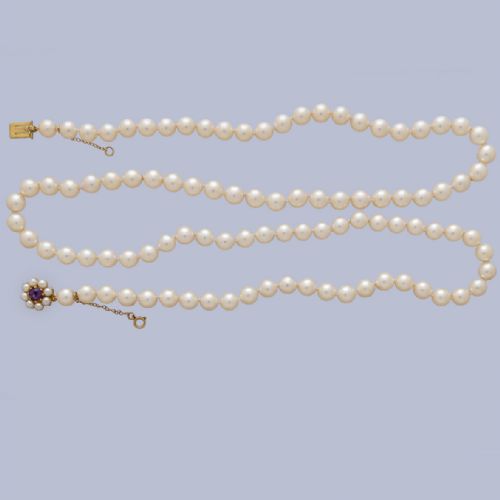
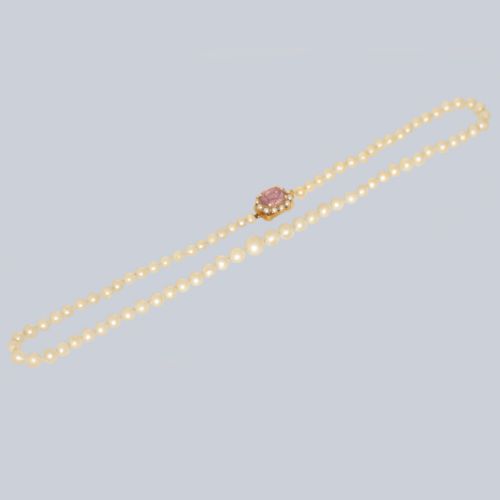
A gold gemstone clasp functions primarily as a decorative fastening for multi-strand pearl necklaces and heavy link bracelets. When collectors search for a gold gemstone clasp, they generally encounter vintage and antique jewellery where the securing mechanism holds as much visual weight as the main strand.
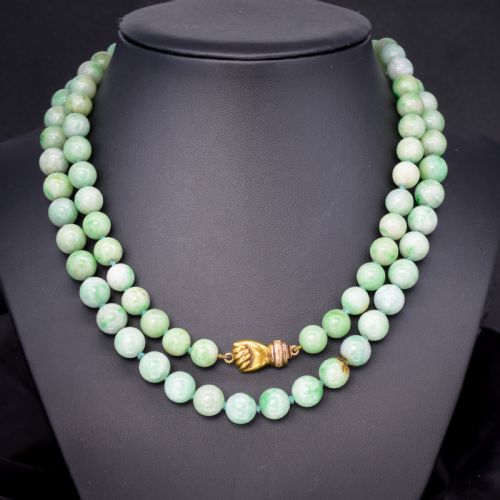
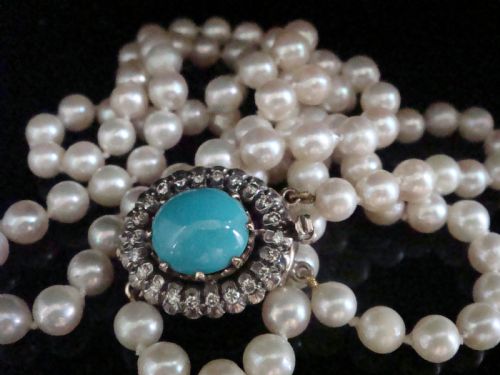
The pieces appearing on this page span from Victorian padlock designs to mid-century multi-strand creations. Pearls dominate the main body of the necklaces, paired with gemstones such as amethyst, garnet, tourmaline, emerald, ruby, sapphire, turquoise, jade and diamond.
Origin points include specific period hallmarks such as London 1966 and French manufacture circa 1920. Buyers will find single, double, and six-strand configurations alongside elaborate heart padlock bracelets.
Materials and construction
Makers constructed these clasps using 9ct gold, 14ct gold, 18ct gold, and platinum. Precious and semi-precious stones are set directly into the gold framework to form floral, geometric, or figural motifs.
Pearls and cultured pearls are strung in single, double, or multiple strands leading directly into the central clasp mechanism. Workmanship spans Victorian knot and curb links through to mid-century diamond daisy configurations.
Gold Gemstone Clasp Retail Price Guide 2026
Typical asking prices for gold gemstone clasp among the pieces listed under this phrase on Sellingantiques today, from the lower quarter to the upper quarter. They describe what is for sale here now, not the wider market.
Listings feature items spanning the Victorian era, Edwardian period, 1920s, 1950s, and 1960s, constructed in 9ct, 14ct, and 18ct gold.
Judging the quality
Quality rests upon the integration between the gemstone clasp and the surrounding strand of pearls or beads. Finer examples feature substantial gold weight, secure stone settings, and balanced gemstone arrangements that complement the primary necklace or bracelet.
The distinction between ordinary and exceptional pieces lies in the complexity of the clasp design, such as carved figa hands, multi-gemstone clusters, and verified period hallmarks.
The Gold Gemstone Clasp Glossary
- Clasp
- The mechanical fastening device securing a necklace or bracelet. In these pieces, the clasp doubles as a focal gemstone ornament.
- Cultured pearl
- An oyster-produced pearl grown with human intervention rather than purely by chance. These form the primary strand material for many mid-century pieces.
- Padlock
- A secure clasp shaped like a miniature padlock, frequently seen on Victorian bracelets. They combine heavy gold links with rubies and pearls.
- Hallmark
- An official stamp indicating metal purity and origin year. Examples include London assays and specific 20th-century date letters.
- Daisy cluster
- A gemstone arrangement featuring a central stone surrounded by a ring of smaller stones. This motif often forms the face of a clasp.
Gold Gemstone Clasp: Frequently Asked Questions
How do I secure a gold gemstone clasp?
Most of these clasps utilise a tongue-in-box mechanism or a secure box catch hidden beneath the gemstone cluster. Push the tongue firmly into the housing until it clicks into place.
Many period clasps also include a secondary safety chain to prevent loss if the primary catch releases during wear.
Can I wear these necklaces every day?
Pearl necklaces with gemstone clasps require careful handling due to the organic nature of pearls and the softer minerals used in the clasps. Pearls can absorb skin oils and cosmetics over time.
Limit daily wear for delicate multi-strand pieces and store them flat to maintain tension on the original silk or cord stringing.
How do I tell Victorian clasps apart from mid-century ones?
Victorian pieces tend to feature heavier yellow gold links, sentimental motifs like hearts and padlocks, and hand-carved elements such as figa hands. Gemstones like garnets and turquoise are typical of this period.
Mid-century pieces often incorporate structured diamond daisy clusters, platinum settings, and precise hallmarking indicating dates in the 1950s and 1960s.
What metals are used in these clasps?
Makers utilised 9ct, 14ct, and 18ct yellow gold alongside platinum for mounting the gemstones. The metal purity often matches the period standards of the manufacturing country.
French pieces from the early twentieth century frequently combine platinum with 18ct yellow gold to support heavier emerald and diamond clusters.