


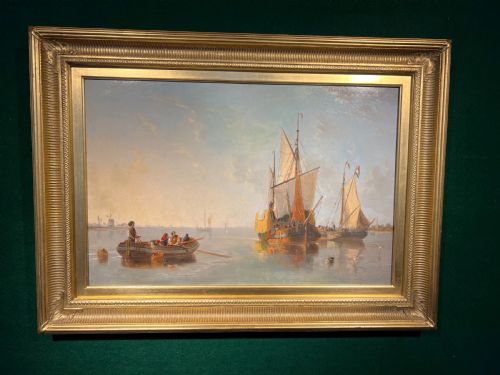
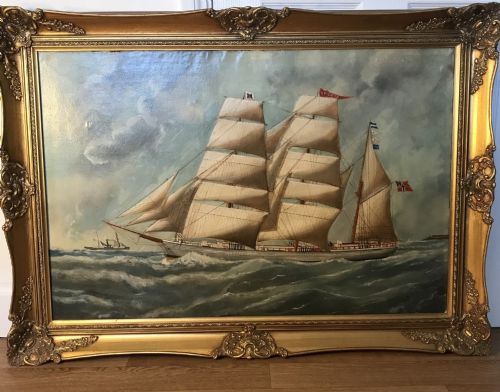
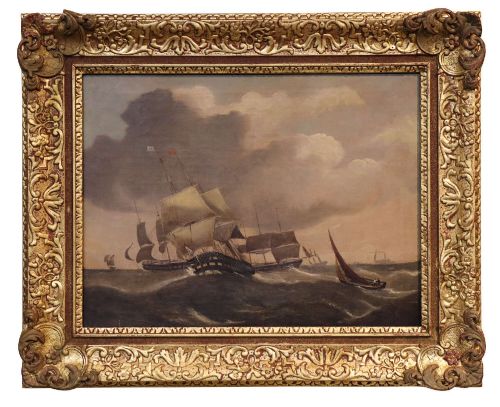
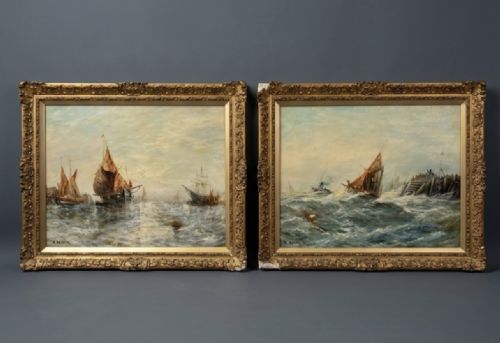
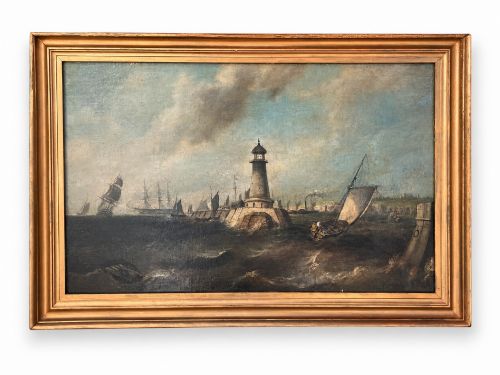
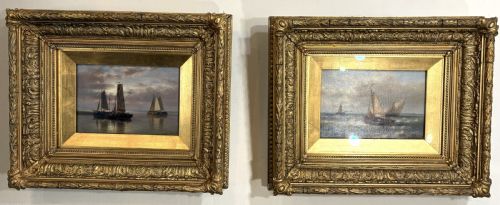
Gold Framed Ship Painting
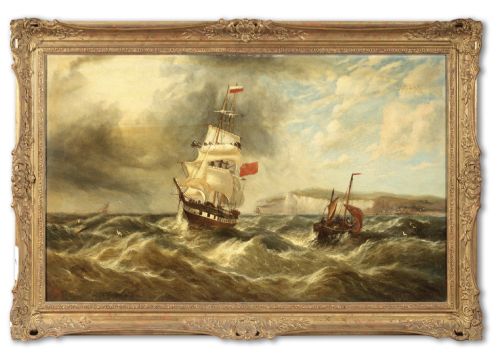
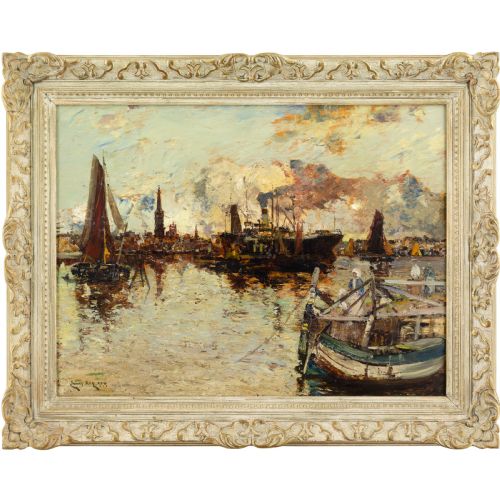
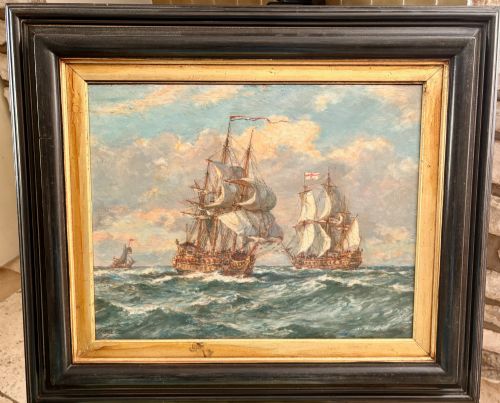
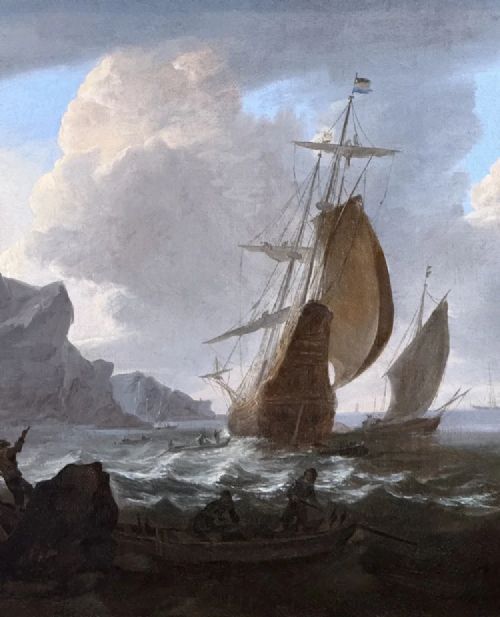
A gold framed ship painting brings the drama of the open sea into a room through historic maritime oil paintings.
Gold Framed Ship Painting
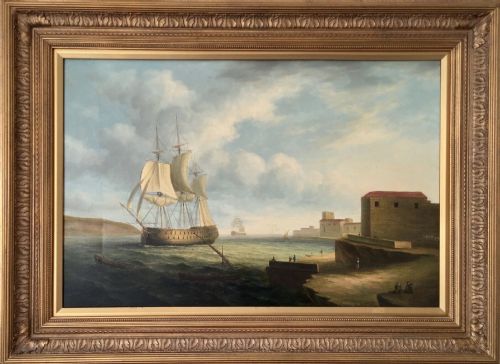
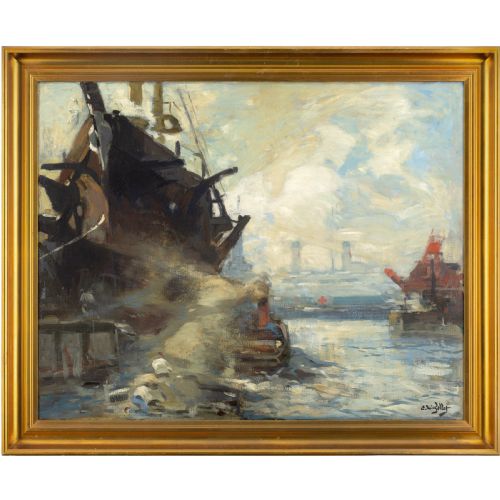
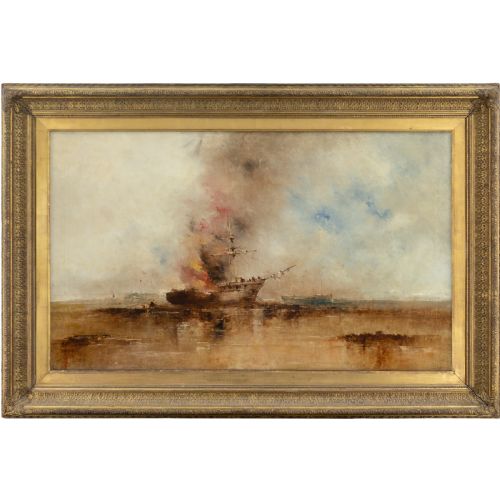
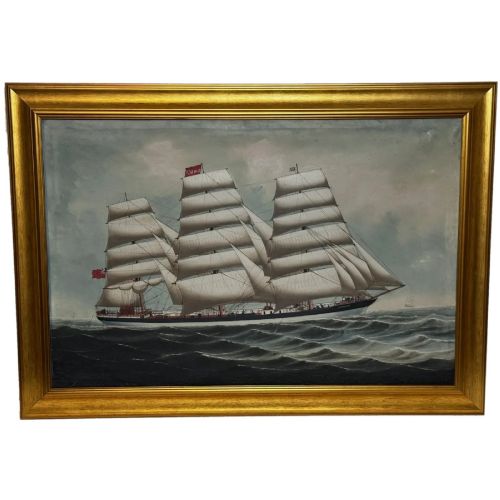
A gold framed ship painting encompasses historical maritime art depicting vessels ranging from war-torn galleons to merchant sailing ships. The selection leans heavily toward nineteenth-century Victorian and Edwardian works, capturing rough seas, coastal harbours and naval engagements.
Most examples appear as oil paintings on canvas or board, set within decorative giltwood or gold leaf frames. Subjects span British merchant vessels, royal yachts and dramatic shipwrecks documented by period artists.
Buyers encounter everything from intimate coastal scenes to large-scale depictions of historical vessels off foreign ports. The framing provides a traditional finish that complements the maritime subject matter.
How they were made
Artists utilised oil paint applied to canvas, wood panels or board to build up atmospheric seascapes and detailed rigging. Canvas supports required careful stretching over wooden frames before receiving layers of pigment.
Frames consist of wood moulded and finished with giltwood, gold leaf or gilded surfaces to catch the light. Glass sometimes protected works executed on paper or delicate card supports.
Recorded periods span from the seventeenth century through to the Edwardian era and mid-twentieth century.
What varies in quality
The sophistication of the vessel's rigging and hull perspective dictates the artistic merit of the work. Master painters rendered maritime architecture with anatomical accuracy, whereas lesser hands relied on formulaic waves and generic hulls.
The substance of the frame contributes significantly to the overall presence of the piece. Deeply moulded giltwood or genuine gold leaf surrounds elevate the presentation compared to plain modern wooden mouldings.
Eugène-Louis Gillot·William McAlpine·Bernard Gribble·Bonaventura Peeters·Bernard Benedict Hemy·John Wilson Carmichael·Nicholas Condy·Abraham Hulk I·Charles William Wyllie·Daniel Sherrin·Charles Sim Mottram·Hendrik Willebrord Jansen·George Stanfield Walters·John Callow·Thomas Bush Hardy·Richard Brydges Beechey
The Gold Framed Ship Painting Glossary
- Giltwood
- Wood carved and coated with gold leaf or metallic paint to create a lustrous decorative finish. This technique was standard for traditional picture frames.
- Maritime art
- Artwork focusing on ships, harbours, sea battles and coastal views. It forms the primary category for nineteenth-century marine paintings.
- Galleon
- A large sailing ship with three or more masts used by European nations from the fifteenth to eighteenth centuries. These vessels frequently appear in historical battle scenes.
- Oil on canvas
- Pigment mixed with drying oils applied to a woven fabric stretched over a wooden frame. This method allows for rich colour blending and texture.
- Barque
- A sailing vessel with three or more masts having the fore and mainmasts square-rigged and the mizzenmast fore-and-aft rigged. Such ships feature prominently in commercial shipping records.
Gold Framed Ship Painting: Frequently Asked Questions
What periods do these paintings cover?
The works span several centuries, with a strong concentration of pieces originating in the nineteenth and early twentieth centuries.
Collectors will also encounter earlier seventeenth-century interpretations alongside mid-twentieth-century depictions.
Are the frames original to the paintings?
Many retain their period giltwood or gold leaf surrounds, which were chosen to complement the dark tones of the marine scenes.
Some pieces have been reframed over time to suit changing domestic interiors while preserving the canvas.
What subjects are most common?
Ships in rough seas, merchant vessels off foreign ports and historical naval engagements dominate the selection.
Lighthouses, coastal fishing boats and royal yachts also appear frequently across the Victorian and Edwardian periods.
How do I identify the medium?
Most listings feature oil paint applied to canvas, wood panels or rigid board supports.
A smaller number of works utilise watercolour on paper protected beneath glass.