


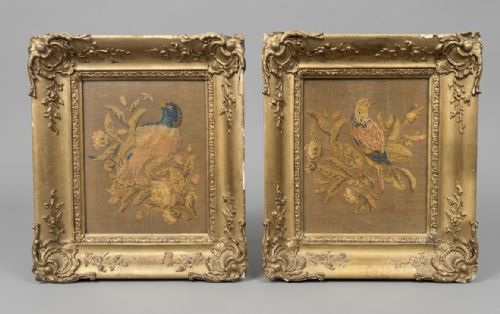


Gold Framed Needlepoint
Gold framed needlepoint brings together historic hand-stitched textiles and gilded surrounds, offering collectors a rich slice of domestic and decorative art.
Gold Framed Needlepoint
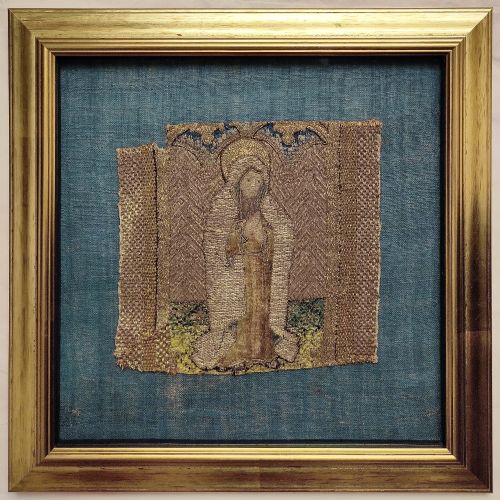
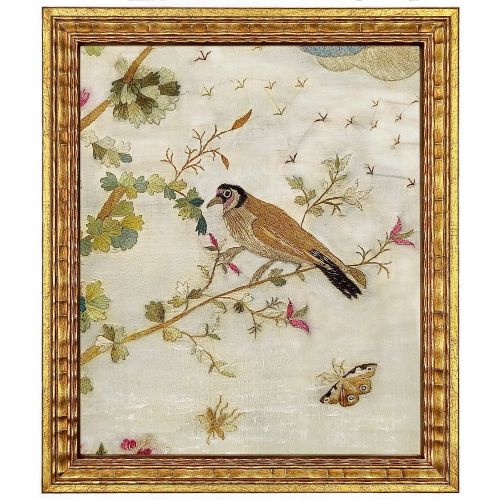
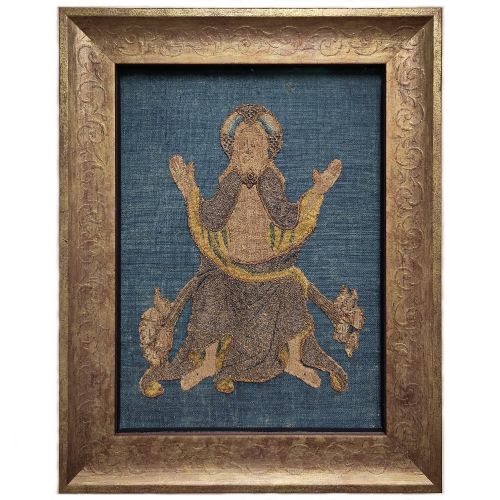
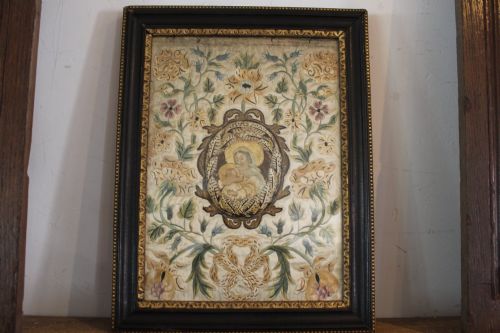
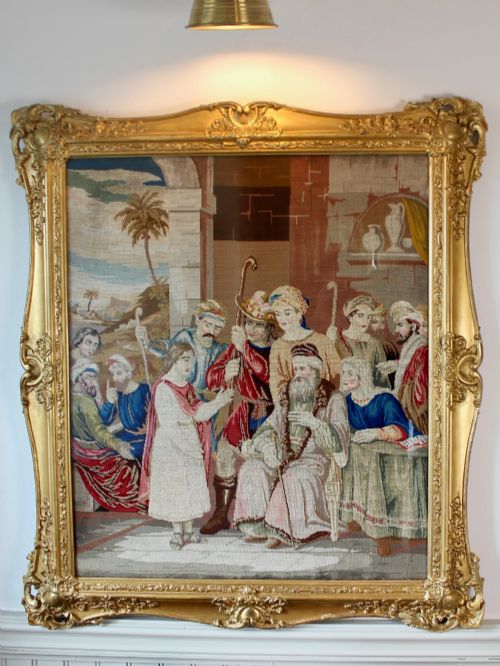
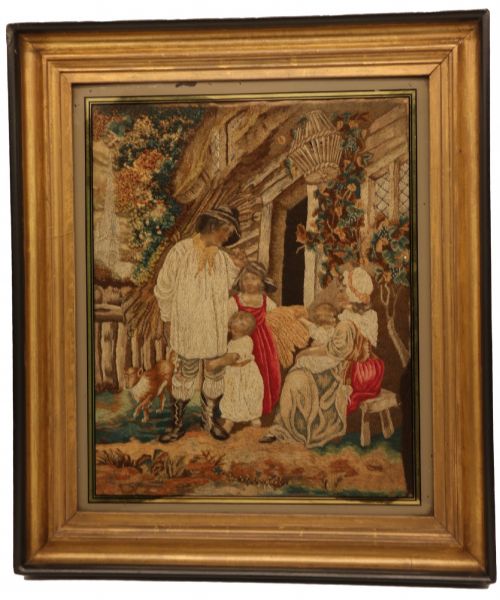
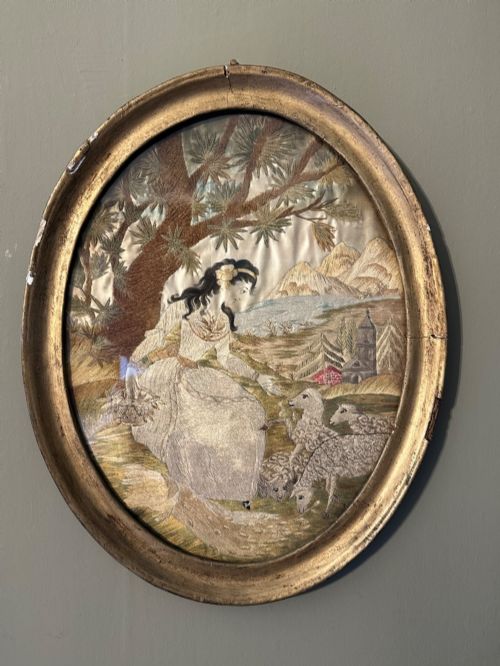
Gold framed needlepoint pieces encompass historic textile art, silkwork, and tapestry framed within gilded wood or metal. When seeking gold framed needlepoint, buyers encounter works ranging from intimate Georgian silk pictures to large Victorian woolwork scenes.
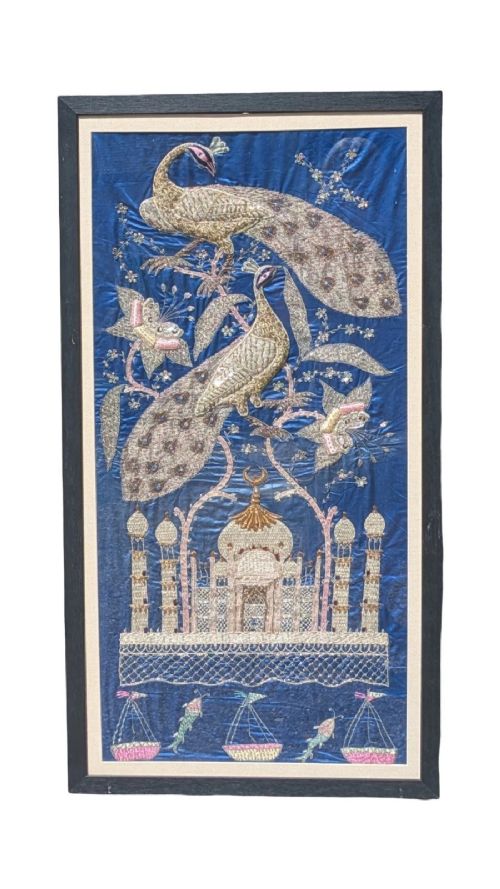
The selection includes English, Dutch, Italian, and French origins, spanning periods from the seventeenth century through to the early twentieth century. Common subjects include landscape views, historical portraits, architectural landmarks like the Taj Mahal, and classical figurative compositions.
Forms vary from oval wall art and rectangular framed panels to specialised items combining embroidery with watercolour or incorporating wall mirrors. Pieces frequently display specific regional characteristics, such as Scottish mourning tapestries or Anglo-Indian silk embroidery.
Materials and construction techniques
Maker construction relies on textiles such as silk, wool, canvas, and metallic thread stitched by hand using techniques like crewel work, long stitch, and Berlin woolwork. Some works combine these needlework methods with hand-painted silk or watercolour details.
Frames are constructed from wood and finished with gold leaf or water gilding, occasionally paired with mezzotint black glass surrounds. These framing materials protect the fragile textile panels while adding structural rigidity and a decorative finish.
Gold Framed Needlepoint Retail Price Guide 2026
Typical asking prices for gold framed needlepoint among the pieces listed under this phrase on Sellingantiques today, from the lower quarter to the upper quarter. They describe what is for sale here now, not the wider market.
Napoleon Bonaparte rubs shoulders with royal mistresses and Tuscan noblemen, all preserved forever in stitched silk and gleaming gold leaf.
Assessing quality in needlework and frames
The integrity and originality of the surrounding giltwood frame heavily influence the piece, particularly where water gilded surfaces or specialised glass mounts remain intact. Harmonious proportion between the textile panel and its gilded enclosure marks the higher tier of these works.
The Gold Framed Needlepoint Glossary
- Berlin woolwork
- A type of counted-thread embroidery popular during the nineteenth century, worked in wool on canvas from printed gridded patterns. It allowed makers to create brightly coloured, highly detailed pictorial scenes.
- Crewel work
- Embroidery executed using wool yarn on a plain-weave fabric ground, often employing traditional crewel stitches. This technique produces textured, flowing surface designs seen in early nineteenth-century panels.
- Giltwood
- Wood carved and coated with gold leaf, metal powder, or liquid gilding to create a shiny metallic surface. It forms the primary framing material for many historic needlework pictures.
- Mezzotint glass
- Darkened or tinted glass used in historic framing to enhance contrast and depth around the mounted artwork. It frequently appears alongside Regency silk embroideries.
- Stumpwork
- A raised embroidery style popular in the seventeenth century, utilising padding, wire supports, and wrapped stitches to create three-dimensional figures. King Charles II and court scenes are typical subjects for this technique.
Gold Framed Needlepoint: Frequently Asked Questions
What is gold framed needlepoint?
Gold framed needlepoint consists of historic hand-stitched textiles, embroideries, and tapestries housed within gilded wooden frames. These pieces incorporate materials like silk, wool, and metallic thread on canvas or fabric grounds.
Originating across multiple centuries, they function primarily as wall art and decorative panels representing landscapes, portraits, and historical events.
How do I date a needlework picture?
Dating relies upon stylistic clues within the stitching, the choice of subject matter, and the construction of the frame. Seventeenth-century examples often feature raised stumpwork, whilst Regency and Victorian pieces favour smooth silkwork or Berlin woolwork.
Frame construction and materials also provide chronological markers, as water-gilded oval frames and black glass mounts correspond to specific periods.
Where were these textile pictures made?
These pieces originate from various European countries, primarily England, France, Italy, and the Netherlands, alongside international workshops such as Anglo-Indian centres. Each region developed distinct stylistic preferences in subject matter and framing.
English works frequently depict local landmarks and sporting scenes, whereas continental pieces lean towards classical portraits and allegorical subjects.
How should I care for historic needlework?
Historic textiles require protection from direct sunlight to prevent the fading of silk, wool, and painted details. Keeping them in stable indoor environments away from excessive moisture preserves the delicate fibres.
Frames should be dusted gently with a dry cloth, avoiding liquid cleaners that could damage the gold leaf or seep into the textile behind the glass.