
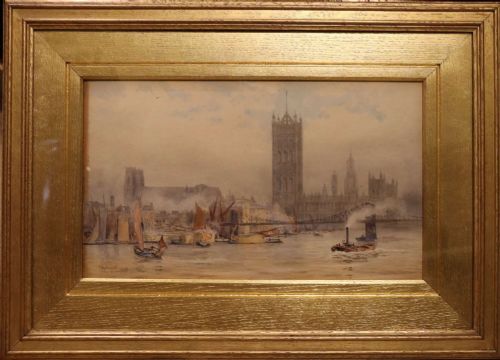
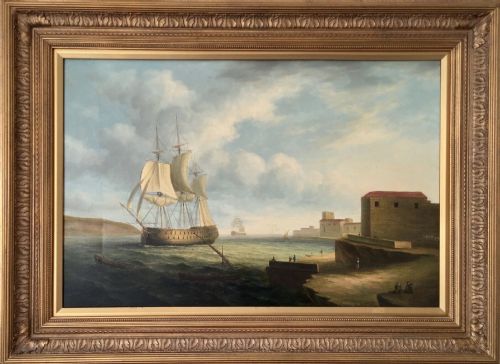

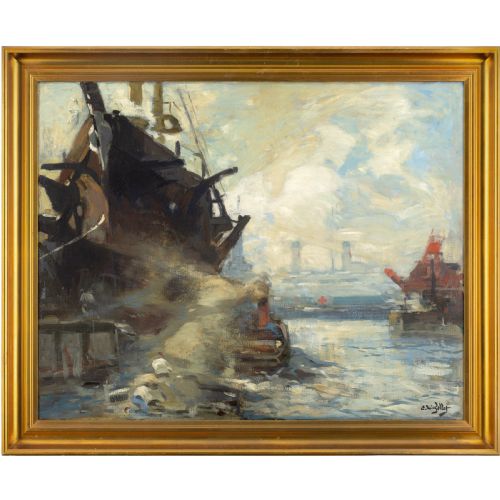
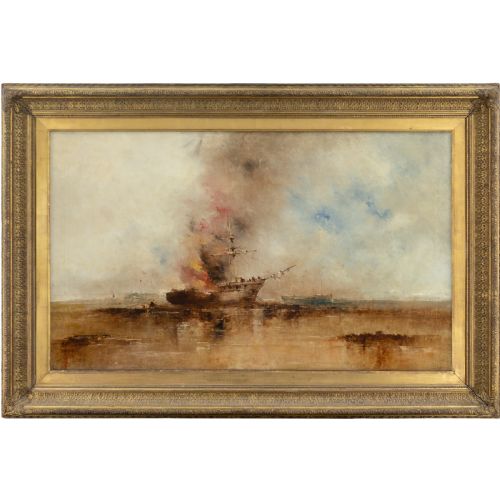
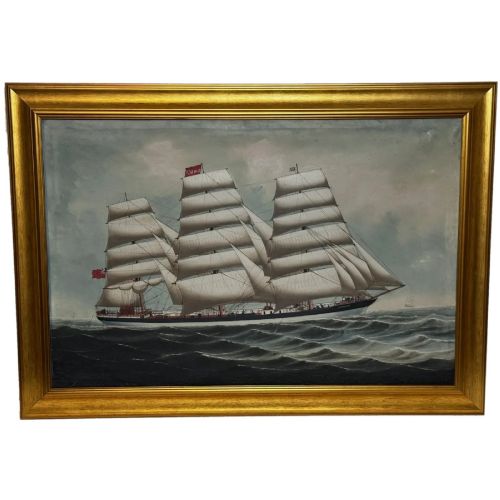
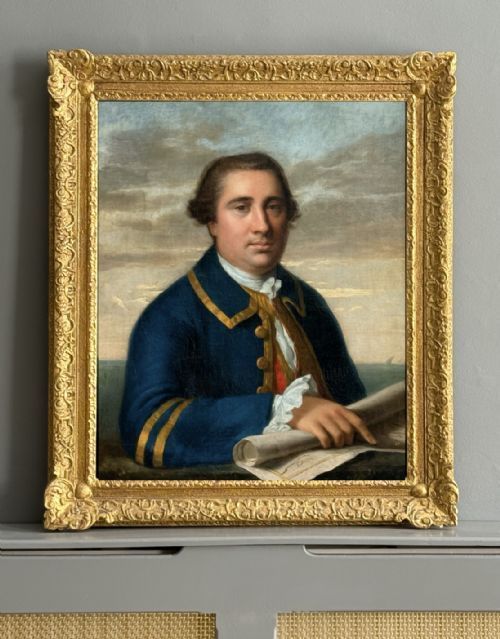
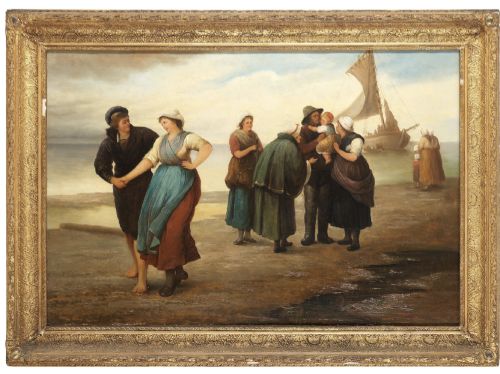
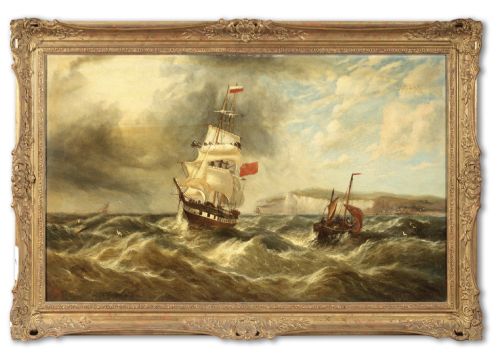
Gold Framed Nautical Art
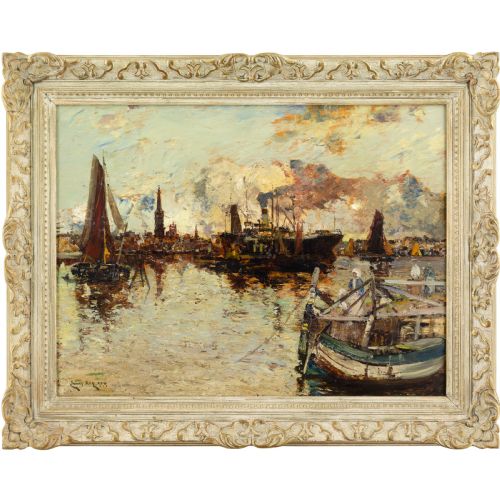
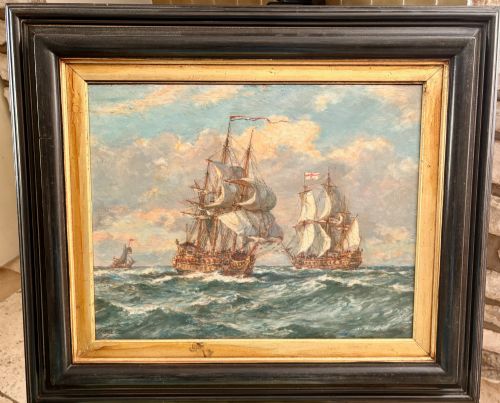
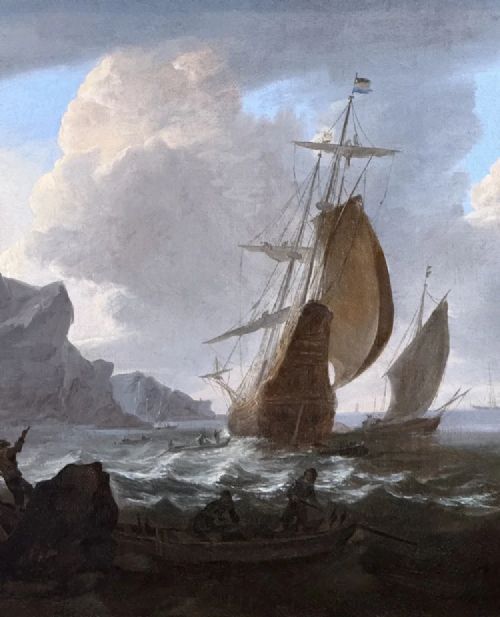
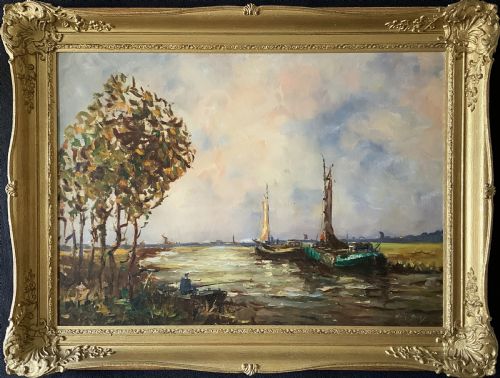
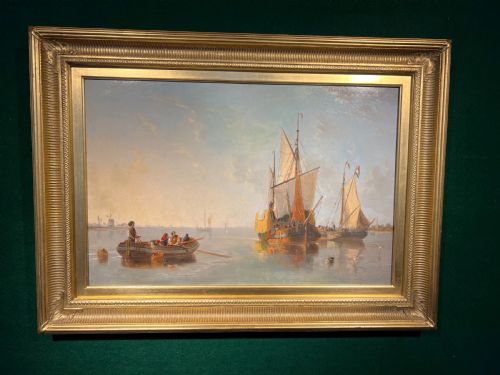
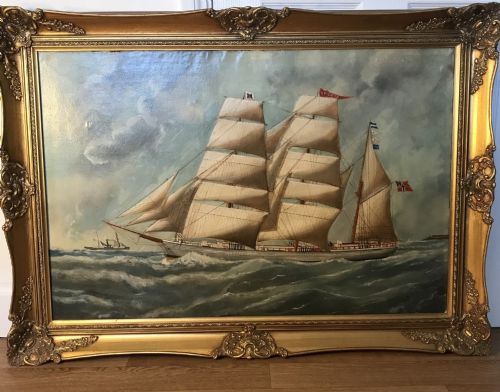
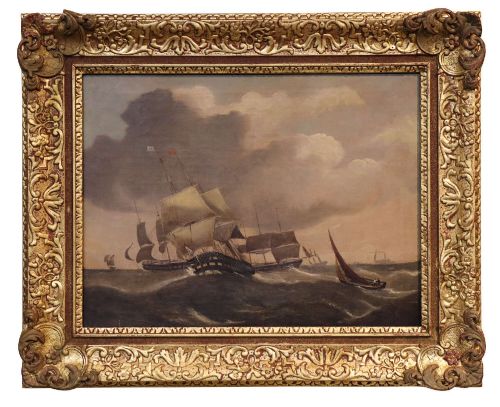
Gold framed nautical art captures the drama of the open sea and historic vessels through oil paintings and watercolours housed in gilded wooden surrounds.
Gold Framed Nautical Art
Gold framed nautical art brings historic maritime scenes into interior spaces, focusing primarily on oil paintings and watercolours depicting ships, harbours, and coastal views. Buyers seeking these works will encounter pieces originating largely from the nineteenth century and the Edwardian era, alongside occasional twentieth-century interpretations.
The subjects range from calm river and canal scenes to dramatic depictions of sailing vessels, warrens of harbour activity, and ships battling heavy seas. Most examples present these maritime narratives enclosed in traditional gilt wood frames that complement the tones of the canvas or paper within.
Materials and construction methods
The physical objects rely on traditional artist materials, predominantly oil paint applied to canvas, wood panels, or card, alongside watercolour on paper. Canvases and panels are mounted securely within wooden mouldings finished with gilt layers, creating the distinctive metallic surround characteristic of the style.
Makers utilised rich oil pigments to capture the variable moods of the water, the texture of billowing sails, and the atmospheric light of coastal skies. The supporting frames combine carved or moulded wood surfaces with gold leaf or metallic paint finishes designed to highlight the painted imagery.
Many a Victorian captain surely stared at calmer painted seas than he ever encountered on the rolling deck of a merchant barque.
Distinctions in quality and execution
Quality in these maritime works rests upon the artist's command of marine perspective, atmospheric depth, and the convincing movement of water and vessels. Superior examples demonstrate a precise understanding of rigging, hull construction, and the play of light across restless seas.
The craftsmanship of the surrounding gilt frame also contributes significantly to the overall merit of the piece, with hand-carved wooden mouldings and deep gilding distinguishing finer antique mountings from simpler later replacements.
Eugène-Louis Gillot·William McAlpine·James Kay·Bernard Gribble·Bonaventura Peeters·Willem Bos·John Wilson Carmichael·William Henry Williamson·Bernard Benedict Hemy·George Stanfield Walters·Abraham Hulk·Charles Napier Hemy·Gustave De Bréanski·Pieter Cornelis Dommersen·Daniel Sherrin·Charles Sim Mottram
The Gold Framed Nautical Art Glossary
- Gilt wood
- Wood coated with a thin layer of gold leaf or metallic gilt paint to create a lustrous decorative surface. This material forms the characteristic bright borders surrounding many historic marine paintings.
- Maritime realism
- An artistic style focused on the accurate and detailed depiction of ships, seascapes, and coastal topography. Artists working in this manner paid close attention to nautical architecture and meteorological accuracy.
- Watercolour
- A painting method in which the pigments are suspended in a water-based solution, typically applied to paper. These works offer a lighter, more translucent alternative to heavy oil paintings.
- Barque
- A sailing vessel with three or more masts having the fore and main masts square-rigged and the mizzenmast fore-and-aft rigged. This ship type frequently appears in nineteenth-century maritime compositions.
Gold Framed Nautical Art: Frequently Asked Questions
What periods do these pieces come from?
The selections span primarily the nineteenth century, the Edwardian period, and early twentieth-century workshops. Artists from these eras captured the height of the age of sail through detailed marine painting.
Later mid-century twentieth-century interpretations also appear, offering varied perspectives on coastal scenes and shipping subjects.
How should I care for oil paintings in gilt frames?
Keep the artworks away from direct sunlight and fluctuating humidity to protect both the canvas and the wooden support. Gentle dusting with a soft, dry brush preserves the surface of the gilt frame without damaging the metallic finish.
Avoid using liquid cleaners or abrasive cloths on the gold surfaces, as these can strip the delicate finish.
What subjects are most common in maritime art?
Common subjects include merchant vessels navigating rough seas, historic war-ships at anchor, and peaceful harbour views around British and European coasts. Lighthouses, fishing boats, and coastal towns also feature frequently in these compositions.
Artists often focused on specific nautical events, dramatic shipwrecks, or quiet estuary scenes reflecting local maritime trades.
Are watercolours framed differently from oil paintings?
Watercolours on paper generally require glass protection and mounts to keep the delicate medium away from the interior of the frame. Oil paintings on canvas or panel are typically framed openly without glass to allow the paint surface to breathe.
Both presentation styles utilise gilt wooden surrounds to enhance the visual impact of the artwork.