
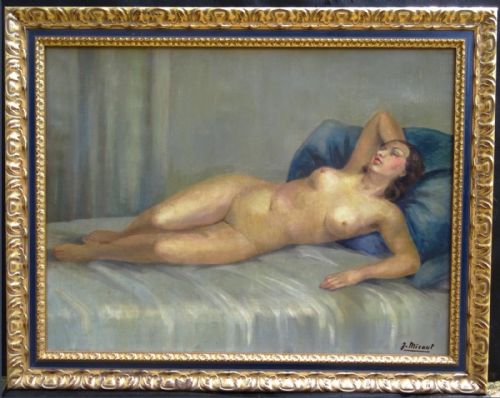
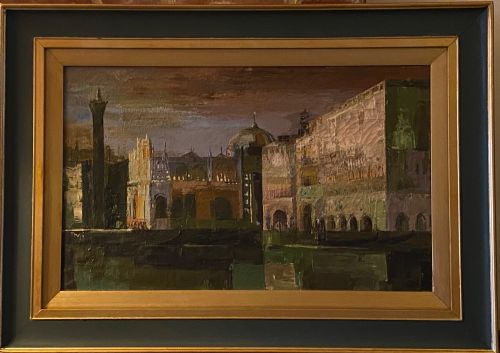
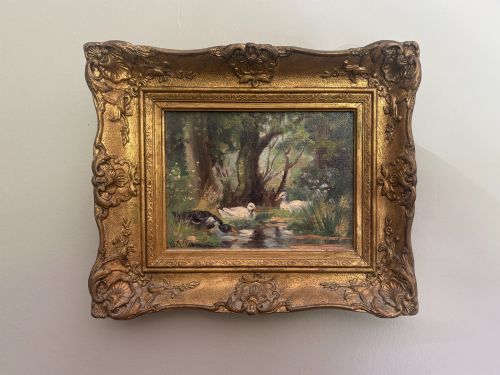
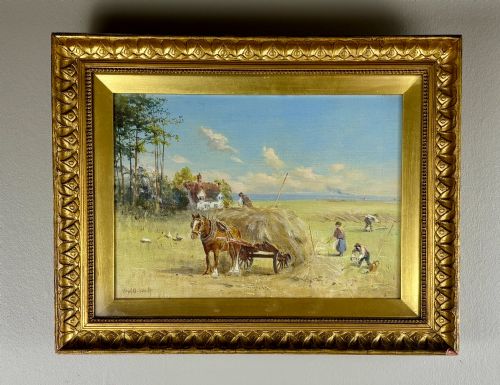
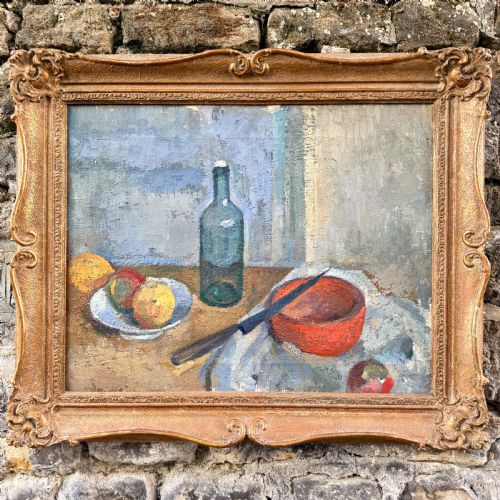
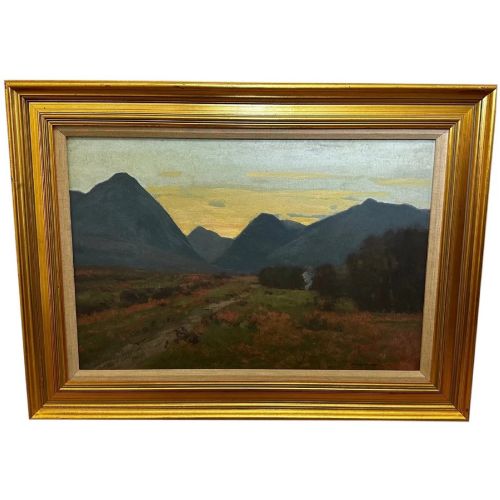

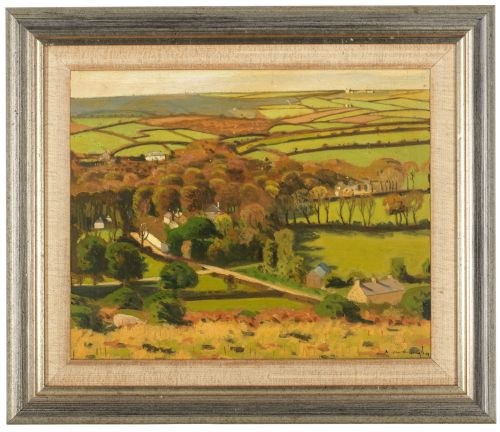
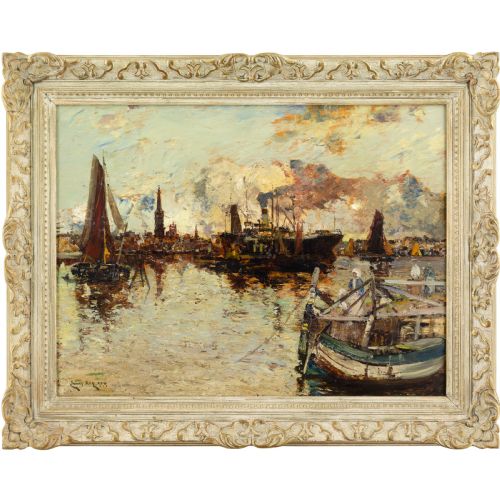
Gold Framed Impressionist Art
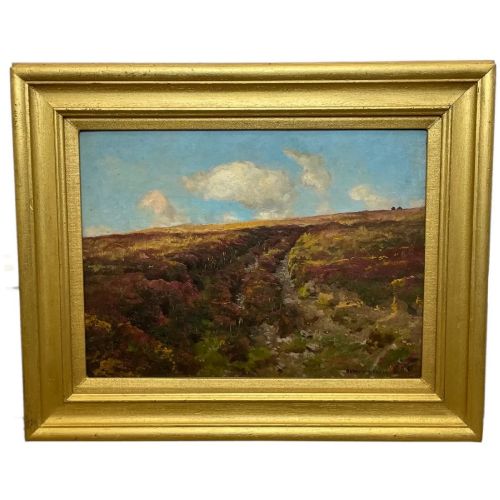
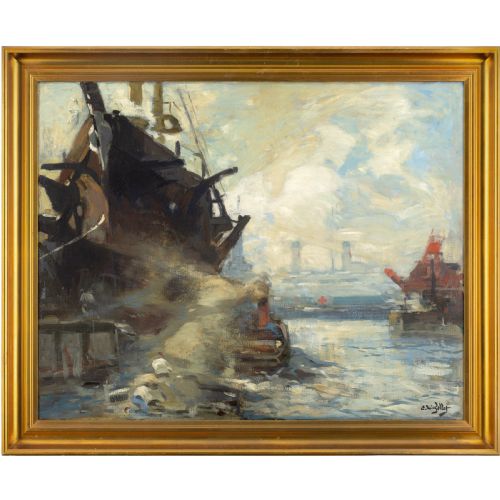
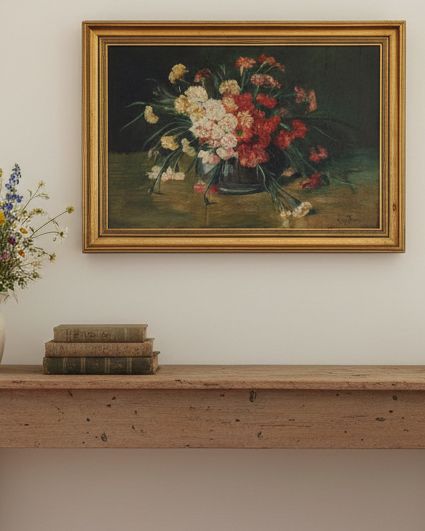
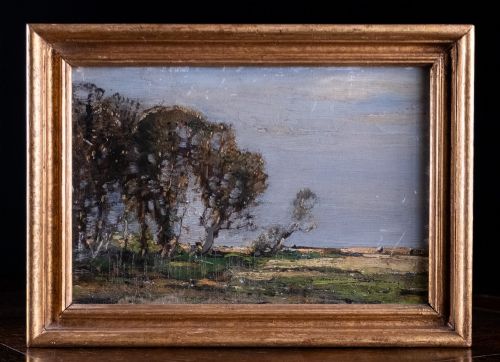
Gold framed impressionist art brings together expressive brushwork and luminous palettes held within ornate gilt mouldings for any room.
Gold Framed Impressionist Art
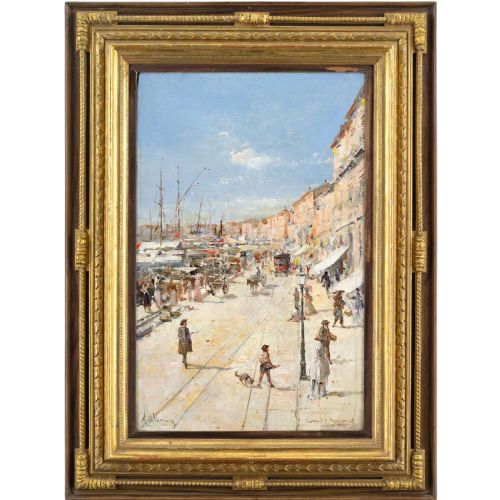
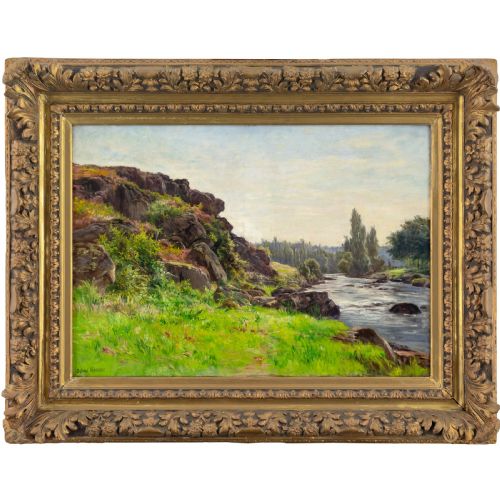
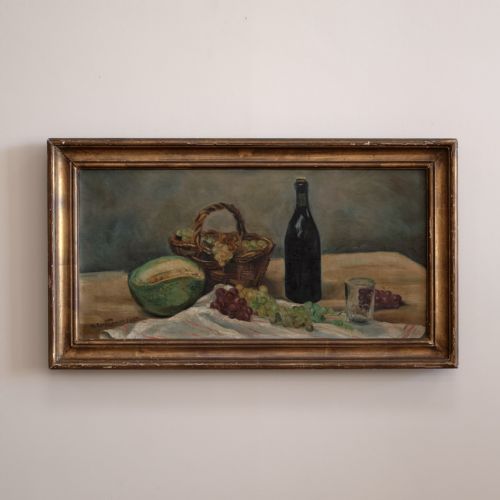
When you search for gold framed impressionist art, you encounter oil paintings, watercolours and prints created across the nineteenth and twentieth centuries. These works range from French and British landscapes to Venetian canal scenes and intimate domestic interiors.
The selection on this page draws heavily from early twentieth-century production, incorporating Edwardian and mid-century interpretations of impressionism. You will find original paintings on canvas, board and panel alongside selected signed lithographs.
The unifying characteristic across these pieces is the presence of a decorative metallic housing. Whether styled in ornate Victorian giltwood or simpler mid-century frames, the metallic border complements the loose brushwork typical of the movement.
How they were made
Artists typically applied oil paint to stretched canvas or wooden board using visible, rapid brushstrokes to capture fleeting effects of light and atmosphere. Gesso and gold leaf or metallic paint were then applied to wooden mouldings to construct the encompassing frames.
Makers shaped wooden strips into profiles before applying layers of gesso to create a smooth surface for gilding. Some pieces utilise textured printed bases finished with hand-applied oil embellishments to mimic traditional canvas depth.
Materials recorded across these listings include oil paint, canvas, gesso, gold leaf, watercolour and wood.
What varies in quality
The distinction between tiers rests upon the confidence of the brushwork and the harmony between the painted surface and its housing. Superior examples demonstrate a sure handling of light and pigment that defines the impressionist approach.
Framing execution also determines the hierarchy, distinguishing hand-carved and gilded wooden mouldings from mass-produced substitutes. The preservation of the original gilt surface against the canvas adds considerable merit to the piece.
Arthur Wardle·George Houston·Robert Morson Hughes·James Kay·Augusto Alberici·Gabriel Mathieu·John Lübschitz·Antonio DeVity·Emma Fordyce MacRae·Willem Bos·John Hodgson Lobley·Harry Kluge·Sir Alfred East·Cecil Allan Mould·Manuela Bonati·Erich Mercker·Bernard De Hoog·Paul Désiré Trouillebert·Pablo Picasso·Umberto Volpato·Henry Yeen King·Thomas Hodgson Liddell·Ronald Ossory Dunlop
The Gold Framed Impressionist Art Glossary
- Impressionism
- A nineteenth-century painting style focusing on accurate depiction of light in its changing qualities.
- Gilt
- Covered thinly with gold leaf or gold paint.
- Gesso
- A plaster mix used as a base for wood or canvas before painting or gilding.
- Post-Impressionism
- A predominantly French art movement that developed from impressionism while extending its limits.
- Provenance
- The chronology of the ownership of a work of art.
Gold Framed Impressionist Art: Frequently Asked Questions
How do I hang these safely?
Support heavy gilt frames using appropriate wall fixings matched to your plaster type. Ensure the hanging wire and D-rings securely bear the weight of the wooden structure.
Position the artwork away from direct sunlight and moisture fluctuations to protect both the canvas and the gilded wood over time.
Can frames be cleaned safely?
Dust gilt wooden mouldings gently with a soft, dry brush to prevent accumulation in the carved recesses. Avoid liquid cleaners or solvents which can strip the metallic leaf.
Consult a professional conservator if the frame shows signs of flaking gesso or structural separation at the corners.
What subjects are most common?
Landscapes, coastal scenes and townscapes dominate the selection, capturing rural views and urban waterways. Floral still lifes and figurative interior studies also appear frequently across the periods.
Artists favoured locations offering strong natural light, such as Venetian canals, seaside gatherings and country riverbanks.
How do I date the framing?
Examine the construction of the wooden corners, the composition of the gesso layer and the fastening methods at the reverse. Older frames often utilise mitred joints secured with wooden splines or hand-cut nails.
Patina on the metallic leaf and minor shrinkage cracks in the gesso typically indicate greater age.