

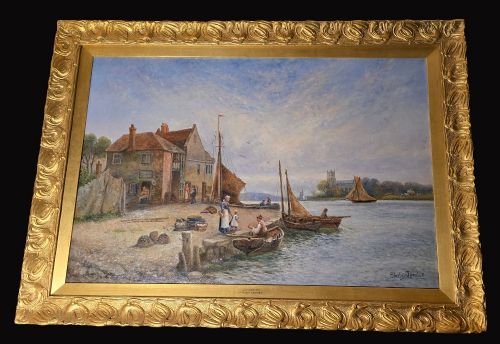
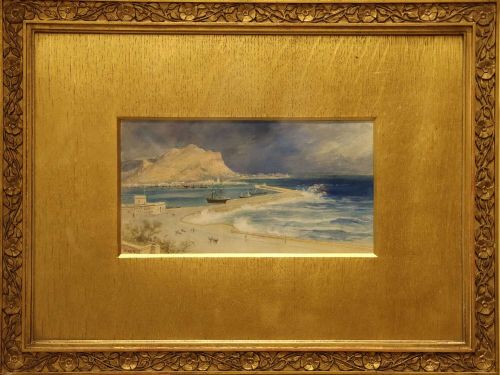
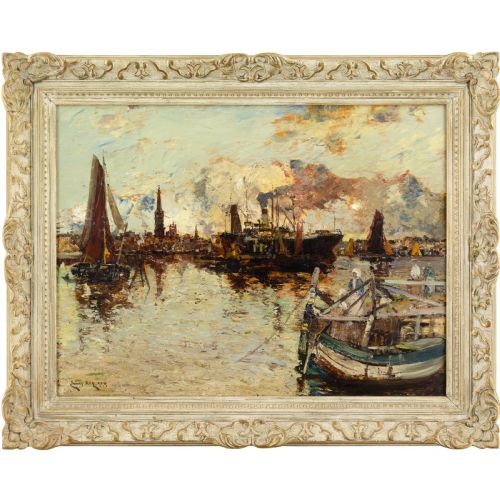
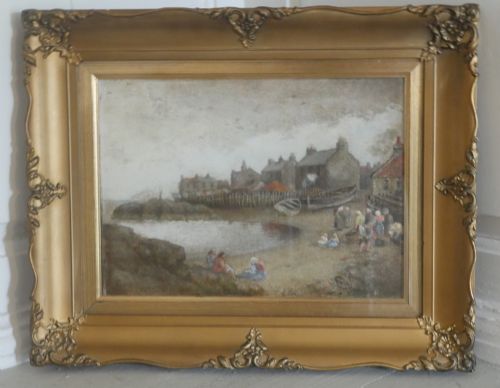

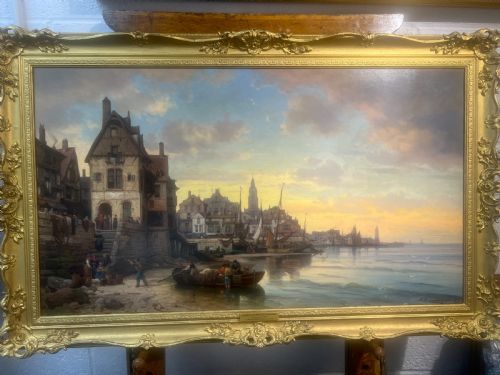
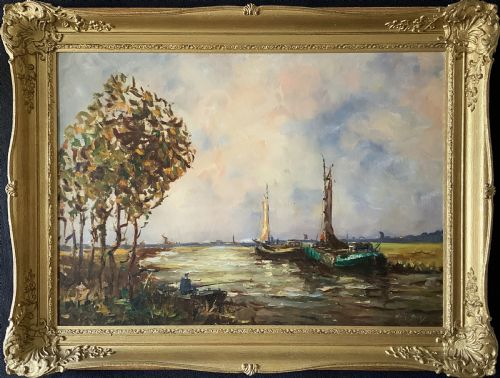
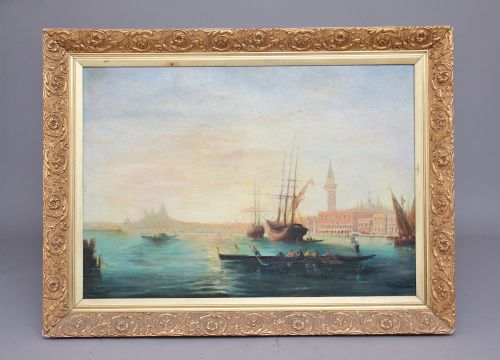
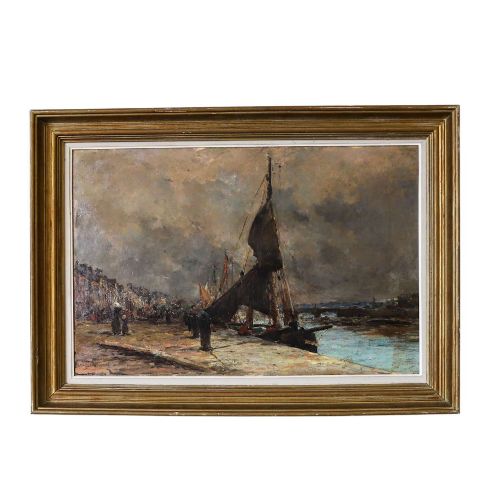
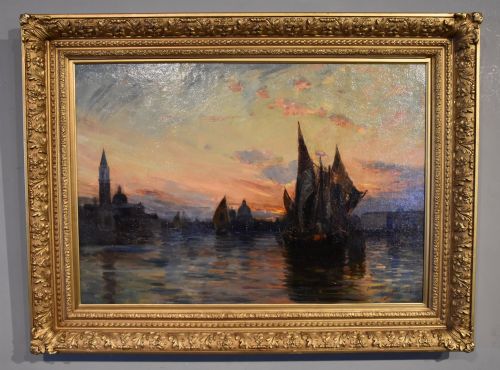


Gold Framed Harbour Landscape
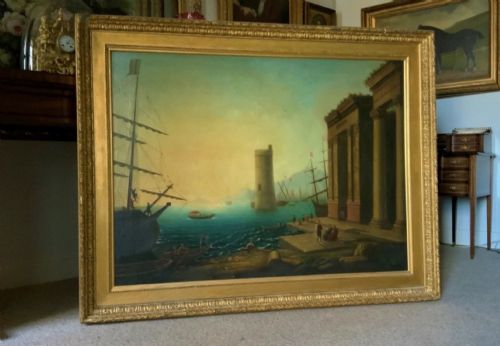
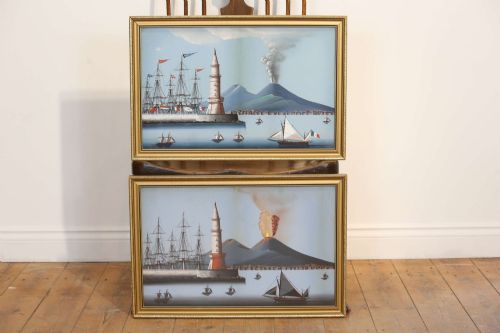
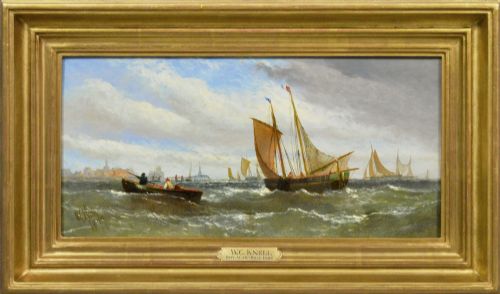
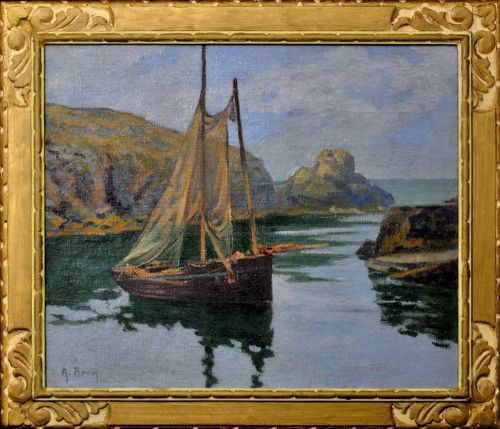
A gold framed harbour landscape brings maritime activity and coastal light directly into a room through oil paint and canvas.
Gold Framed Harbour Landscape
A gold framed harbour landscape captures coastal views, marine vessels, and busy ports through painted canvases housed in decorative surrounds. These works range from late Victorian English scenes to early twentieth century continental vistas.
Buyers meet works originating from British, French, Dutch, and Italian locations, showing settings from Cornish fishing ports to Venetian lagoons. The framing typically utilises giltwood, gesso, or gold leaf to complement the painted coastal light.
Materials and construction methods
Artists painted primarily with oil paint upon stretched canvas or wooden board, occasionally employing watercolour on paper for coastal sketches. Canvases received layers of pigment to capture the atmospheric conditions of sea and sky.
Enclosing these paintings involved wooden frames finished with gesso and gold leaf or giltwood mouldings. These enclosures frequently feature decorative ornamentation appropriate to the Victorian or Edwardian periods of their creation.
Gold Framed Harbour Landscape Retail Price Guide 2026
Typical asking prices for gold framed harbour landscape among the pieces listed under this phrase on Sellingantiques today, from the lower quarter to the upper quarter. They describe what is for sale here now, not the wider market.
Listings include oil on canvas, giltwood, and gesso from the nineteenth and twentieth centuries.
Distinguishing quality across pieces
Mastery of maritime atmosphere and the interaction of coastal light separates accomplished works from simpler depictions. Stronger paintings convey depth in water and movement in shipping vessels through confident brushwork.
The preservation of the original gilt surround contributes significantly to the overall integrity of the piece. Frames with undamaged gesso mouldings and stable gold leaf retain their intended visual harmony with the canvas.
Edward Mills·William Banks Fortescue·James Kay·Augusto Alberici·Willem Bos·Charles Euphraisie Kuasseg·Thomas Hodgson Liddell·Charles William Wyllie·William Edward Webb·George Turland Goosey·Adrian Van Porten·Stanley Leader·Claude Lorrain·Fred Waugh·T.S. Wallis·James Webb·Alfred Henry Vickers·John Bell·Antonio Godoy·Edward Henry Holder·Owen Bowen·William Langley·Jane Vivian·Lennard Lewis·Hubert Thornley
The Gold Framed Harbour Landscape Glossary
- Giltwood
- Wood carved and covered with a thin layer of gold leaf or metallic gilt. This material provides the primary decorative border for traditional maritime oil paintings.
- Gesso
- A paint mixture consisting of a neutral binder mixed with chalk, gypsum, or pigment. Artisans apply this substance to wooden frames before gilding to create raised ornamentation.
- Seascape
- A type of artwork depicting the sea, coastal views, ships, or harbour scenes. These compositions focus heavily on maritime elements and coastal topography.
- Impressionism
- An art style characterised by relatively small, thin, yet visible brush strokes and accurate depiction of light. Works in this manner often capture transient moments in busy ports.
Gold Framed Harbour Landscape: Frequently Asked Questions
What periods do these paintings represent?
The selection spans from the mid eighteenth century through the Victorian and Edwardian eras into the mid twentieth century. Many examples date specifically from the nineteenth century.
Specific decades represented include the 1880s, 1890s, and early 1900s, reflecting various maritime painting schools across Europe.
Where were these harbour scenes painted?
Locations feature British coastal spots such as St Ives, Whitby, and the River Thames, alongside continental harbours in France, Italy, and the Netherlands.
Artists frequently recorded busy trading ports, Venetian lagoons, and quiet fishing villages during their travels.
How should I hang a framed oil painting?
Ensure the wall fixings match the weight of the wooden frame and canvas. Use sturdy picture wire attached securely to the frame's original D-rings.
Keep the artwork away from direct sunlight and excessive humidity to protect both the oil paint and the gilded wooden surround.
Are watercolours common alongside oil paintings?
While oil on canvas forms the majority of the works, select pieces utilise watercolour on paper. These works are similarly framed behind glass to protect the paper medium.
Both mediums document maritime life with considerable detail, though oil paintings offer heavier pigment texture.