
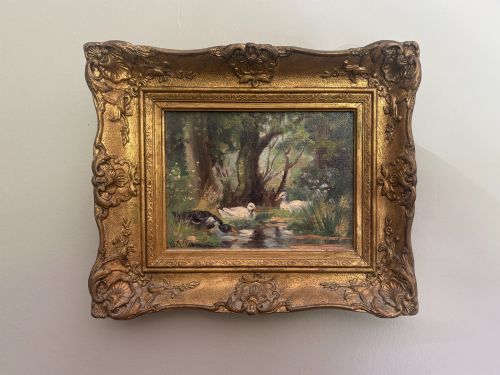
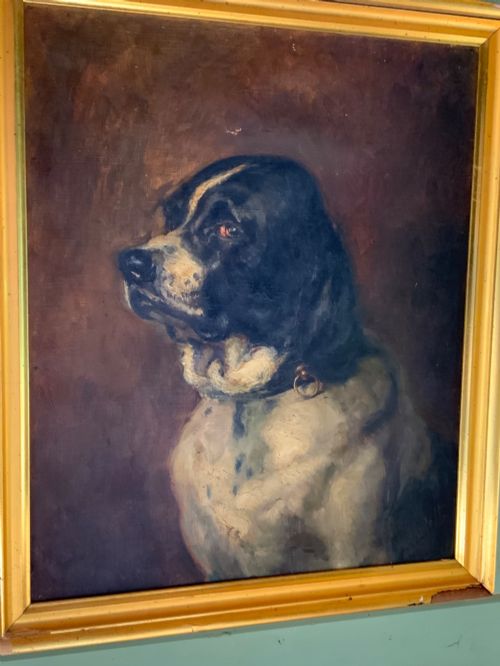
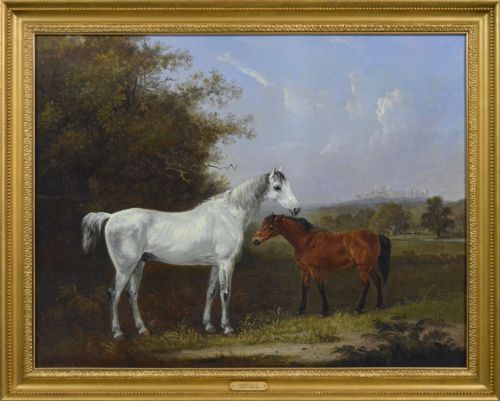
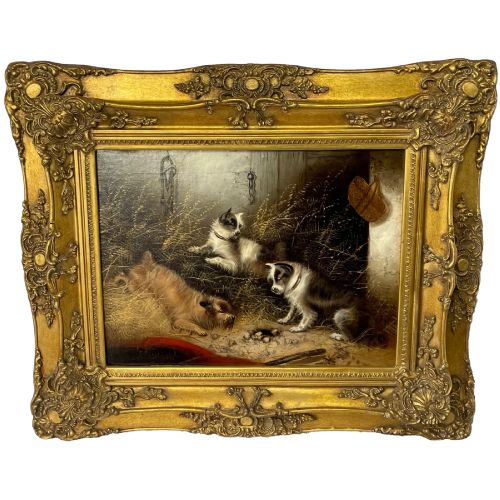

Gold Framed Animal Painting
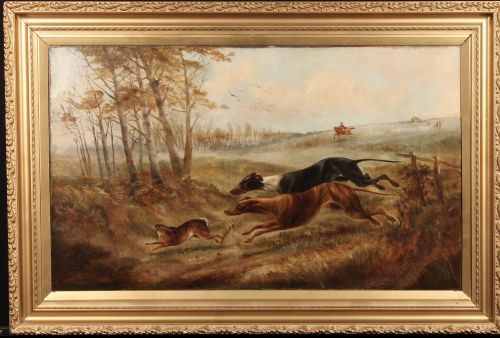
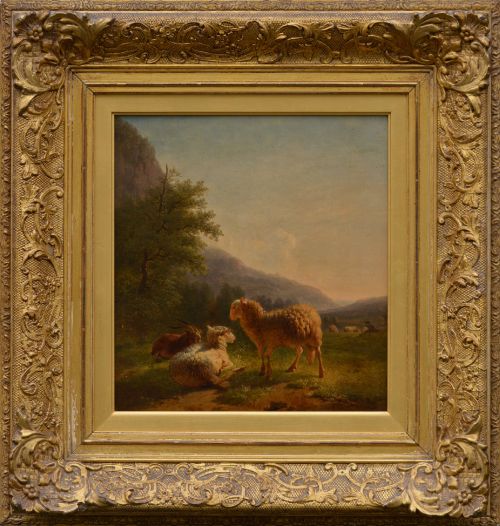
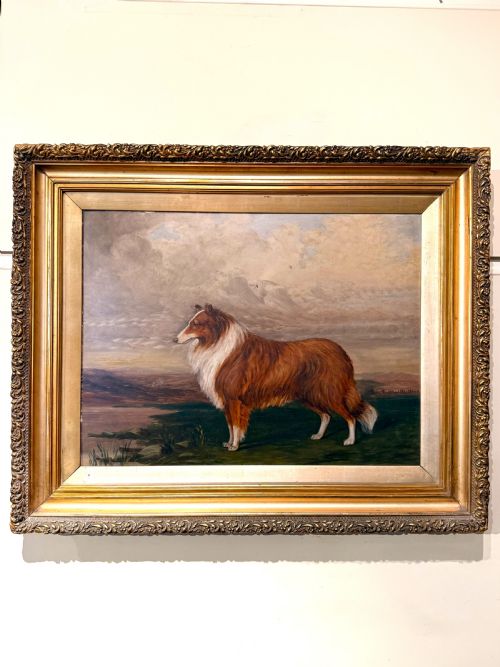
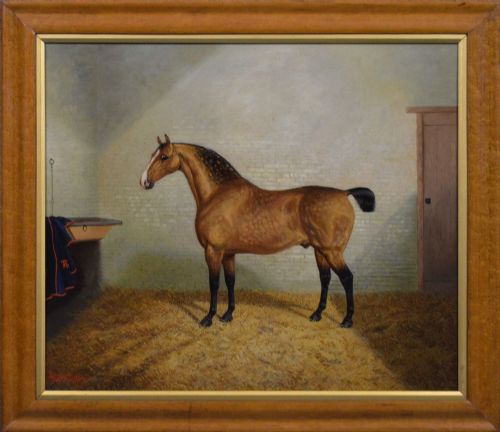
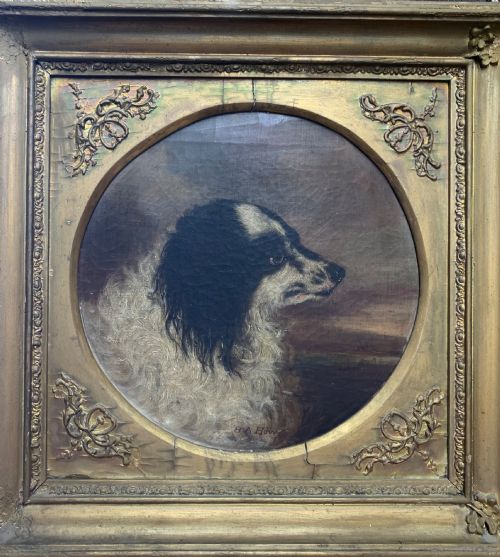
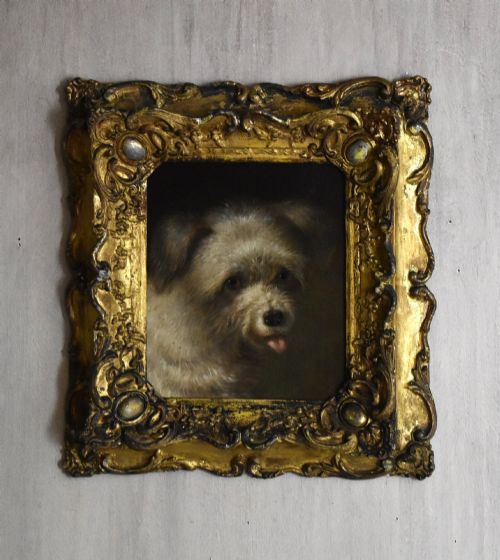
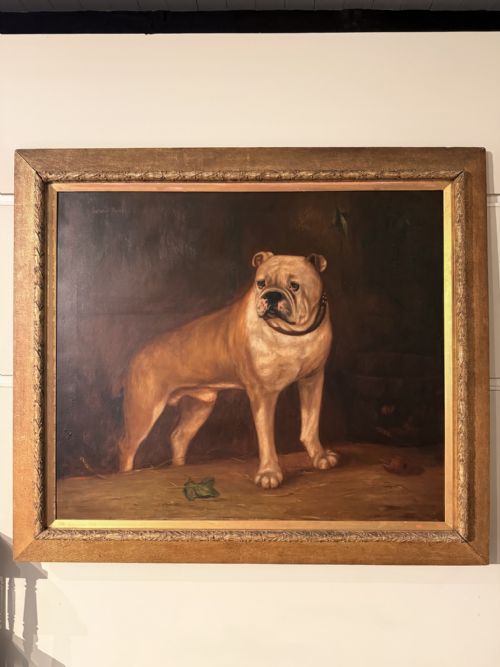
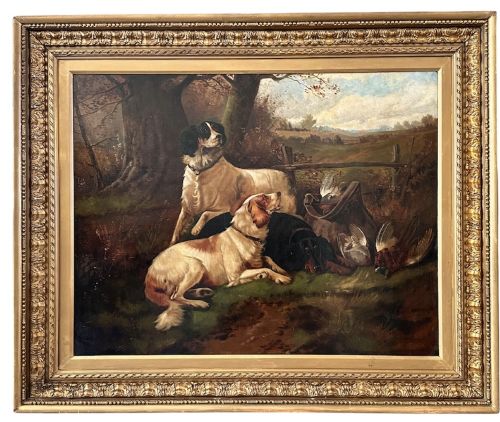
When seeking a gold framed animal painting, you are looking for oil works on canvas or board depicting dogs, cattle, and horses held within giltwood or gesso surrounds.
Gold Framed Animal Painting
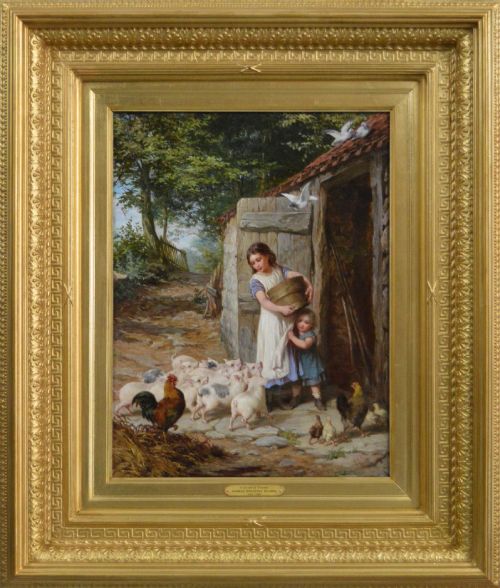
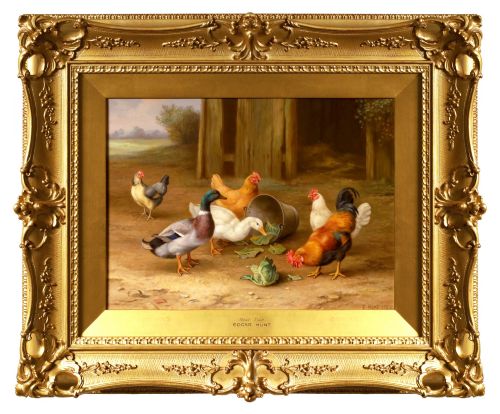
A gold framed animal painting encompasses portraits and pastoral scenes featuring domestic creatures, working dogs, and livestock set within ornate wooden surrounds covered in gold leaf or gesso. These works originate predominantly from the nineteenth century, spanning Victorian realists and sporting artists who recorded prize bulls, spaniels, and farmyard animals.
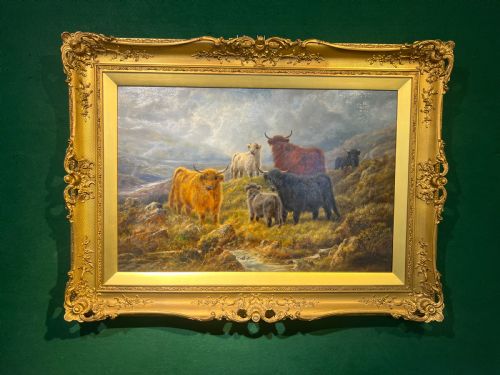
Buyers will encounter oil on canvas and oil on panel formats most frequently on this page, often bearing the signatures or attributions of period British and European painters. The subjects range from individual equine portraits and terrier studies to sweeping landscapes populated by Highland cattle and sheep flocks.
The enclosing frames form an integral part of these pieces, utilising traditional gilding techniques that complement the warm tones of the painted oils within. Many bear the distinct patination and corner moulding styles characteristic of the Georgian, Victorian, and Edwardian eras.
How they were made
Artists applied oil paint to stretched canvas, wooden panels, or board preparations, building up layers of pigment to capture the texture of animal coats and the play of light in rural landscapes. Canvases were secured within timber stretchers before insertion into heavy wooden frames finished with layers of gesso and gold leaf.
Gilders prepared frames by applying multiple coats of fine plaster to carved timber mouldings, smoothing the surface before laying down thin sheets of gold leaf. Hand-applied gesso ornamentation provided the intricate corner scrolls and relief patterns typical of the period housings.
The available selection spans the Georgian, Victorian, and Edwardian periods, alongside mid-century interpretations of animal subjects.
What varies in quality
The anatomical precision of the subject and the psychological depth in the animal's expression separate master works from studio copies. Superior paintings capture bone structure, muscle movement, and light accurately without stiffness.
The integrity and originality of the surrounding frame alter the overall standing of the piece. Period frames retaining their original gold leaf and gesso mouldings without heavy modern restoration hold greater material authenticity.
George Armfield·Eugène Verboeckhoven·Albert Clark·Martin Theodore Ward·George Augustus Holmes·John Sargent Noble·Edgar Hunt·Robert Watson·Sir Edwin Henry Landseer·Fred Fitzpatrick·William Watson Jnr·Alfred Arthur Brunel de Neuville·Henry Schouten·Claude Cardon·Frans Snyders·LM Webb·Margaret Maitland Howard·Henry Robinson Hall·Arthur Wardle·William Henry Mander·Thomas Sidney Cooper·Franz van Severdonck·George Lance·Marc Chagall·Rosa di Tivoli
The Gold Framed Animal Painting Glossary
- Giltwood
- Wood that has been coated with gold leaf or gold paint. This finish creates a reflective, metallic border designed to enhance the tones of the oil painting within.
- Gesso
- A plaster mixture applied to wooden frames as a base for gilding. It allows craftsmen to carve intricate relief details before the application of gold leaf.
- Canvas
- A heavy woven fabric stretched across a wooden frame to serve as a support for oil paintings. It provides a textured surface that holds thick pigment layers securely.
- Sporting Art
- Genre of painting dedicated to documenting hunting, shooting, racing, and prized livestock. These works celebrate specific animals and rural pursuits with anatomical accuracy.
- Panel
- A flat piece of wood used as a rigid support for oil paintings instead of canvas. Panels were frequently utilised during earlier periods to prevent fabric sagging.
Gold Framed Animal Painting: Frequently Asked Questions
How do I identify a Victorian animal painting?
Victorian works often display a high degree of realism in the depiction of livestock, pets, or working dogs, frequently set against moody rural backgrounds or within stable interiors. The accompanying frames usually feature heavy gesso mouldings finished in gold leaf.
Brushwork tends to be controlled and detailed, capturing the texture of fur and feather with precision. Signatures, artist plaques, and period framing construction methods offer further clues to the date of origin.
What subjects are most common in these paintings?
Dogs, horses, cattle, and sheep dominate these canvases, reflecting the agrarian and sporting interests of nineteenth-century collectors. You will frequently find individual portraits of prize bulls or named terriers alongside broader farmyard scenes with poultry.
Artists also placed animals within landscapes, such as Highland cattle resting near lochs or sheep flocks tended by shepherds. Wild animals and mythological creatures appear less frequently compared to domesticated species.
Are the frames original to the paintings?
Many pieces retain their period frames, though replacement housing occurred frequently over the centuries as tastes shifted or frames suffered damage. Inspecting the fit of the canvas within the rebate and checking for matching signs of age helps determine originality.
Original giltwood frames show consistent wear patterns and crackle in the gesso that align with the age of the canvas. Alterations to the backing boards or mismatched sizing can indicate a later pairing.
How should I care for an oil painting on canvas?
Keep oil paintings away from direct sunlight and fluctuating humidity levels to prevent the canvas from slackening and the paint layers from cracking. Dust the surface and the gilded frame gently with a soft, dry brush without applying pressure.
Avoid using water, chemical cleaners, or damp cloths on the canvas or the gold leaf frame. Professional conservators should handle any cleaning or structural repairs to the paint surface.