


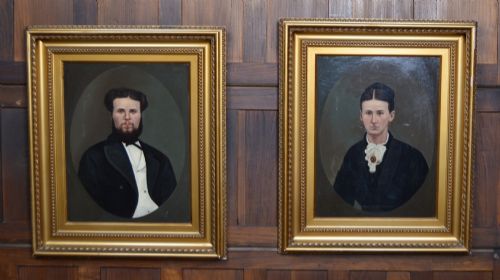
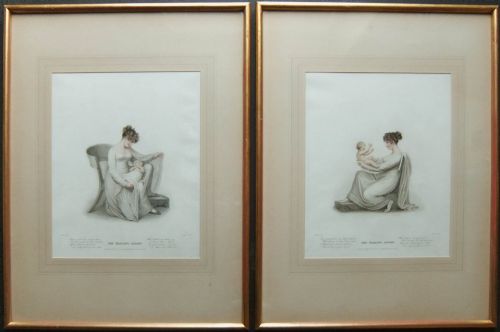
Gold Frame Portrait Pair
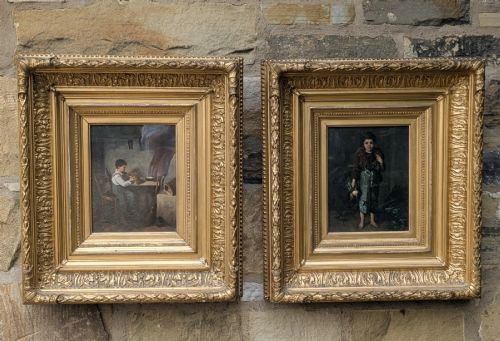
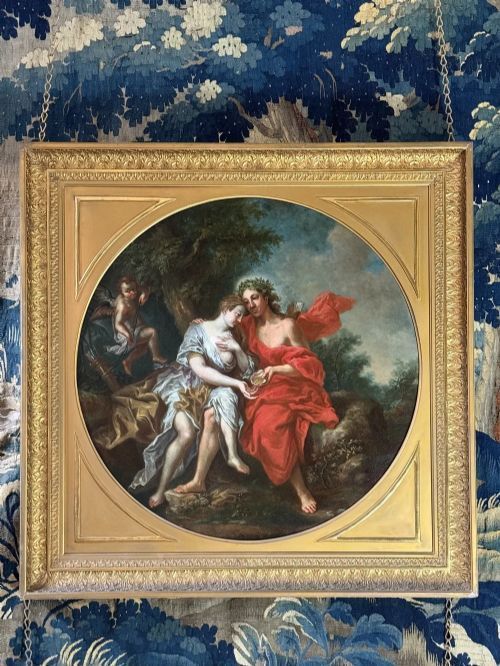
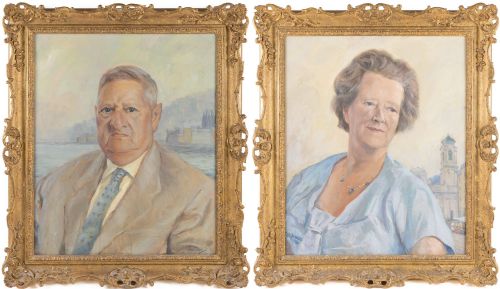
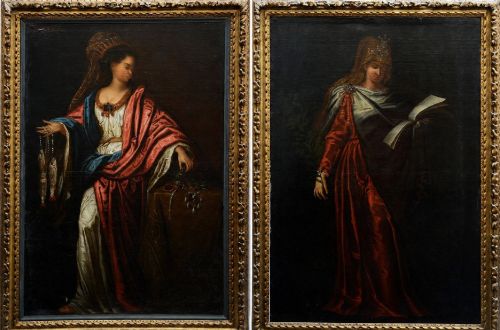
A gold frame portrait pair brings matching faces and period presence to a wall, offering a balanced display of historical likenesses.
Gold Frame Portrait Pair
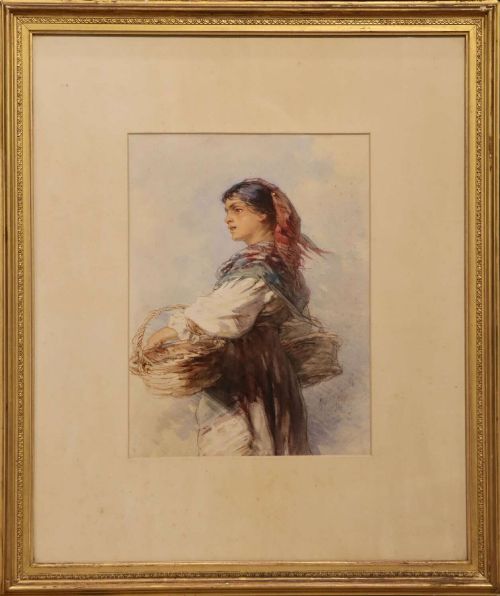
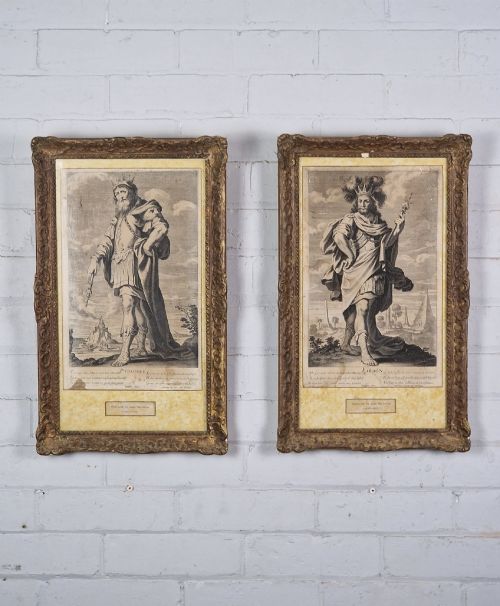
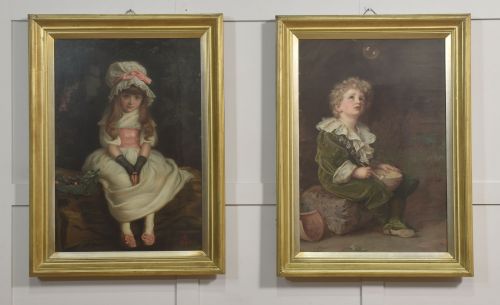
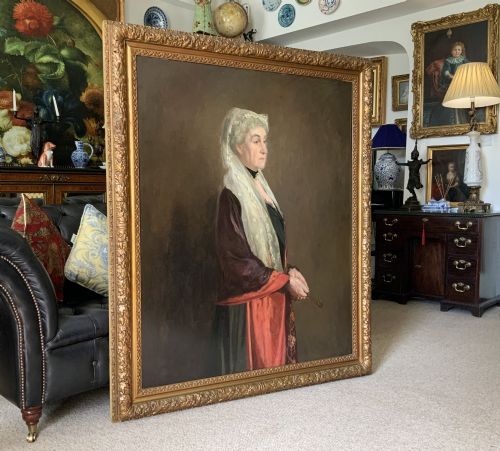
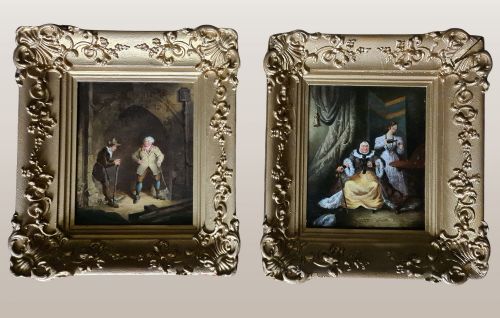
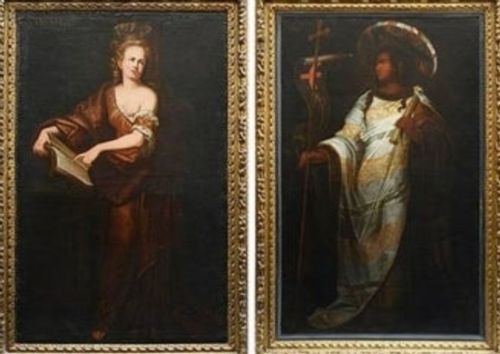
A gold frame portrait pair consists of two matching likenesses, often depicting companions, family members, or allegorical figures housed in matching metallic or gilt surrounds. These duos span from the Georgian and Regency eras through the Victorian and Edwardian periods, capturing sitters in mediums ranging from oil on canvas to delicate watercolours and pastels.
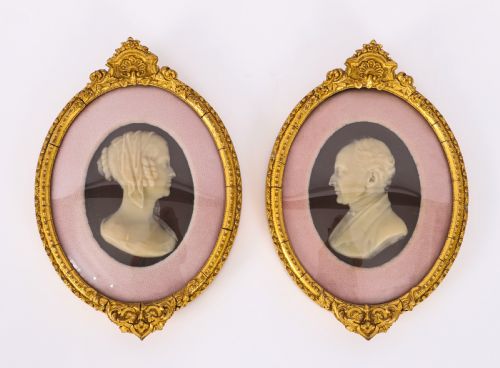
Buyers seeking a gold frame portrait pair will encounter works executed by named artists as well as provincial English and European schools. The formats vary from intimate miniature paintings and wax reliefs to large-scale oil canvases intended for prominent placement in period interiors.
The pairings often reflect specific historical aesthetics, incorporating framing styles such as French Baroque, Rococo, or swept gilt designs that complement the psychological depth of the sitters. Matching sets provide a sense of symmetry and formal balance highly prized in traditional wall arrangements.
Materials and construction
The construction of these works relies on traditional supports such as canvas, wood panels, paper, and silk, upon which artists applied oil, watercolour, pastel, or ink. Giltwood, gold leaf, brass, and carved wood form the heavy frames that protect and elevate the imagery, often finished with applied ornamentation or gesso mouldings.
Makers utilised techniques standard to their respective centuries, preparing canvases with chalk or gesso grounds before building up oil pigments with fine brushwork. Frames were constructed by joiners who carved or moulded the timber before applying thin layers of gold leaf or metallic paint to achieve a brilliant reflective surface.
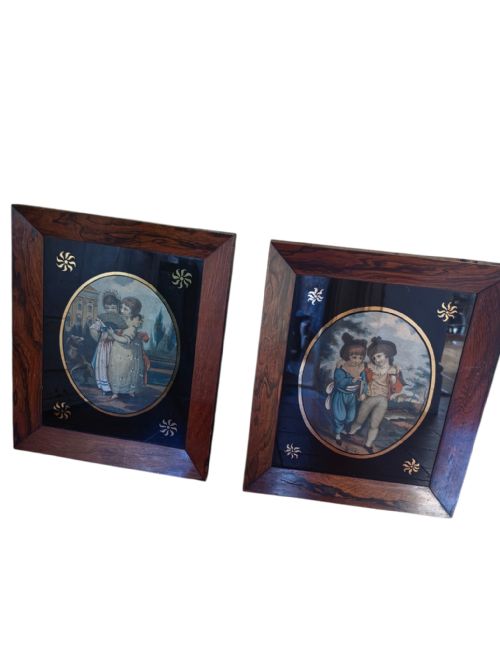
Listings feature oil on canvas, watercolours, pastels, and engravings housed in giltwood, rosewood, and brass frames across Georgian, Victorian, and Edwardian periods.
Factors determining quality
Quality in these works is determined by the skill of the draughtsmanship and the psychological nuance captured in the faces of the sitters. Finer examples display confident brushwork, expressive anatomy, and original pigments that retain their vibrancy over centuries.
The integrity of the frame holds equal weight, where crisp moulding, original gilding, and period-appropriate joinery elevate the overall piece. Mismatched later pairings differ fundamentally from works conceived, painted, and framed together as a unified set from the outset.
Guido Bach·Jean Mariette·James Sharples·Emily Eyres·Charles Antoine Coypel·Adam Buck·Robert Sayer·Theodore Jensen·Ferruccio Vitale·Hermann Armin Kern·George Hargreaves·Thomas Woolnoth·Del Buono·Colin Graeme Roe
The Gold Frame Portrait Pair Glossary
- Giltwood
- Wood that has been coated with gold leaf or gold powder applied over a prepared gesso ground. This finish provides the characteristic metallic sheen seen on period frames.
- Portrait Miniature
- A small, highly detailed painting executed on vellum, ivory, card, or copper. These intimate works were frequently housed in pairs within protective cases or hinged frames.
- Mezzotint
- A printmaking process of the printmaker's art belonging to the intaglio family, enabling halftone gradients. It allowed for subtle tonal variations ideal for reproducing oil paintings.
- Pastel
- A dry medium composed of powdered pigment and a binder, producing velvety surfaces. Works on paper in this medium require glass protection to prevent the pigment from shifting.
- Regency
- A British design period spanning the early nineteenth century characterised by neoclassical restraint and influences from French and classical antiquity.
Gold Frame Portrait Pair: Frequently Asked Questions
How were portrait pairs displayed?
Historically, matching portraits were hung symmetrically on either side of a fireplace, doorway, or piece of furniture to create visual balance in a room. They often represented husband and wife or family members, serving as a focal point for domestic interior decoration.
Today, hanging them at eye level in complementary spaces preserves their intended visual harmony. Ensuring the lighting does not damage sensitive mediums like paper or watercolour remains essential for long-term preservation.
Are original frames important?
Original frames contribute significantly to the historical integrity and visual appeal of antique artwork. A frame made specifically for the canvas ensures a correct proportional relationship and verifies that the pairing has remained intact over centuries.
Replacing a missing surround requires sourcing a period-appropriate alternative matching the style and gilding technique of the era. Buyers should examine the back of the frame for construction clues and evidence of age.
How do I identify the period?
Dating relies on examining the costume, hairstyle, and framing style of the sitters, alongside physical evidence on the reverse of the canvas or panel. Handwritten inscriptions, artist signatures, and old labels often provide definitive dates or geographical origins.
Materials such as hand-beaten brass, old pine stretchers, and handmade nails offer further clues to the century of manufacture. Comparing the stylistic execution with known dated works helps narrow down the decade.
Can I separate a pair?
Splitting a matched set diminishes its historical context and visual purpose. These artworks were composed as a dialogue between two subjects, and keeping them together preserves their narrative integrity.
Keeping the pieces side by side maintains their value as a matched set of historical artefacts. Collectors generally seek out complete pairs rather than single orphaned portraits.