


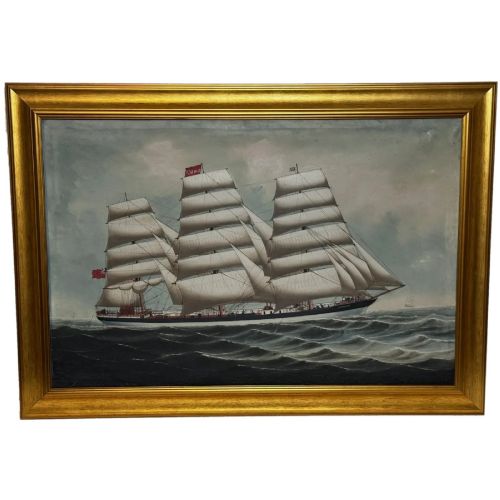
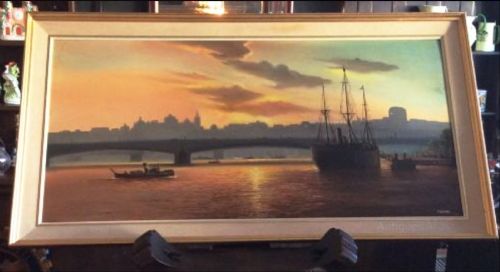
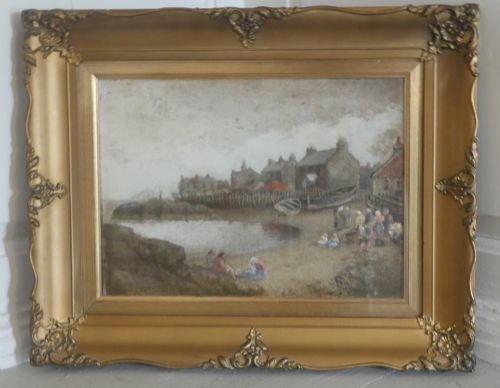

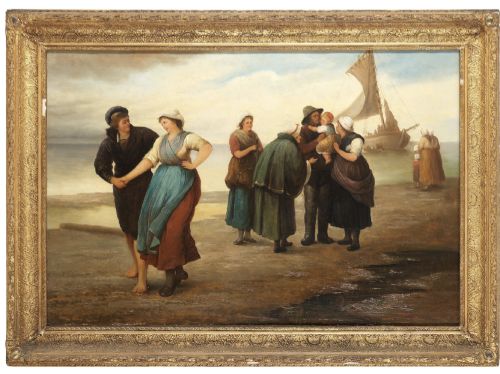
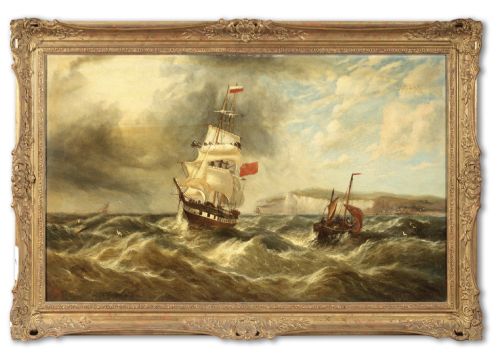
Gold Frame Marine Painting
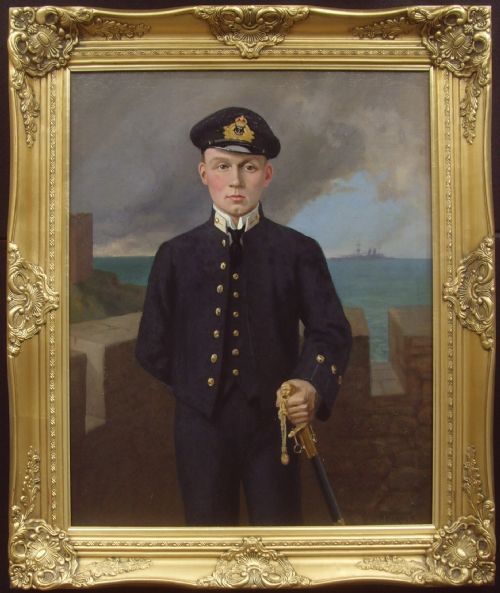
When you search for a gold frame marine painting, you are looking for historical waterborne scenes and coastal views preserved in gilded surrounds.
Gold Frame Marine Painting
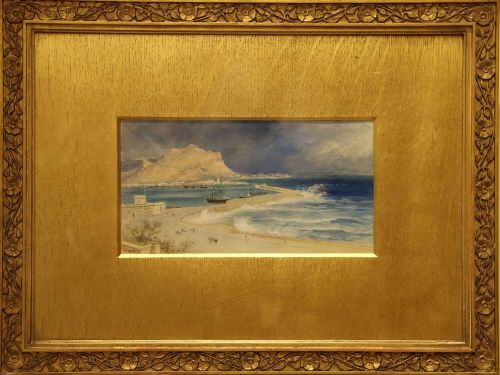
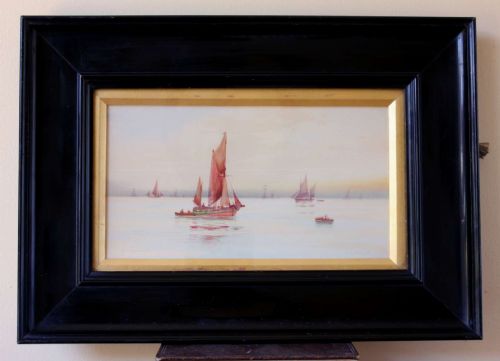
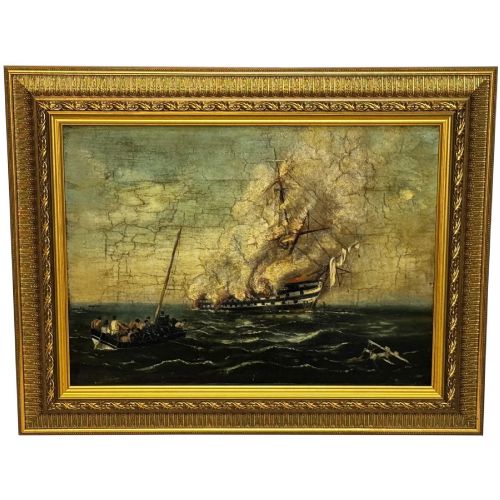
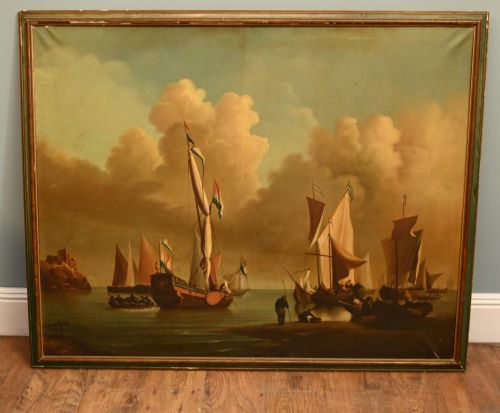
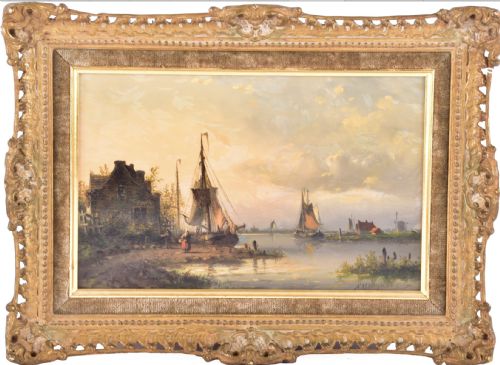
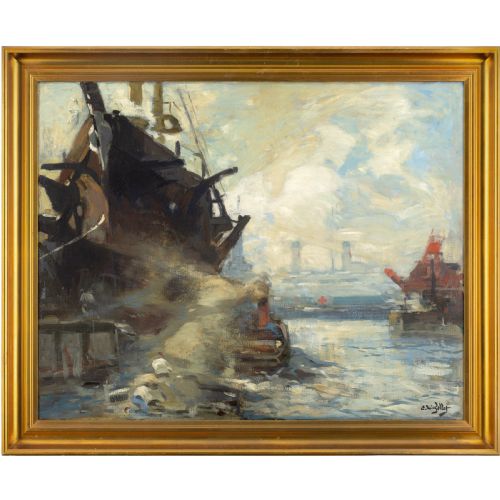
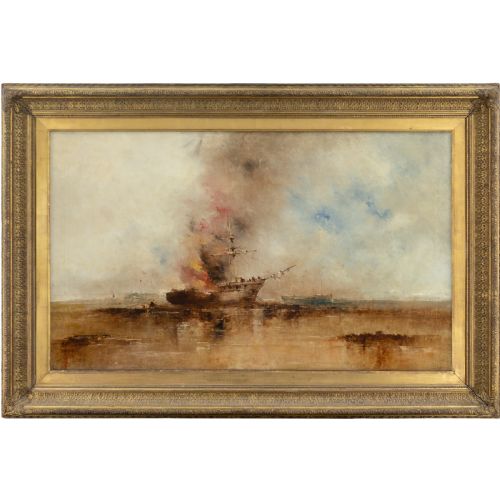
A gold frame marine painting captures ships, harbours, estuaries, and coastal life across various historical periods, predominantly originating from the nineteenth century and the Edwardian era. These works range from dramatic depictions of vessels in heavy seas and wartime engagements to tranquil watercolours of local fishing ports and river scenes.
The most common formats on this page are oil paintings on canvas or board and watercolours on paper, often housed in traditional wooden and giltwood mouldings. Subjects frequently record specific British and European locations, including the River Thames, St Ives, and various coastal ports.
How they were made
Artists built these maritime works using oil paint on stretched canvas or wooden panels, alongside watercolour on paper for lighter coastal views. Pigments were applied to capture the interplay of light and water, often depicting detailed rigging on three-masted schooners, merchant ships, and naval vessels.
The surrounding frames consist of wood finished with gesso and gold leaf or giltwood, creating an ornamental border that complements the maritime subject matter. These frames vary from simple wooden profiles to heavily decorated nineteenth-century mouldings designed to enhance the depth of the seascape.
Several artists captured busy shipping lanes on the Thames, proving that even historical painters enjoyed a good riverside view.
What varies in quality
Quality in a gold frame marine painting lies in the artist's ability to render the movement of water, the atmospheric conditions of the sky, and the accurate rigging of vessels. Superior examples demonstrate a confident handling of light and shadow, particularly in depictions of stormy gales or tranquil river sunsets.
The craftsmanship of the gilt frame also influences the overall piece, with hand-carved wooden mouldings and deep gilding representing higher standards of period framing. Works attributed to documented artists or established schools generally exhibit greater refinement in both the canvas and the housing.
Eugène-Louis Gillot·William McAlpine·Reginald Arthur Borstel·William Banks Fortescue·Francis Moltino·Bernard Benedict Hemy·Willem Bos·John Wilson Carmichael·William Henry Williamson·John Holland·George Stanfield Walters·Abraham Hulk I·John Moxon·Charles William Wyllie·John Bedloe Goddard·William Edward Webb
The Gold Frame Marine Painting Glossary
- Giltwood
- Wood that has been coated with gold leaf or a gold-coloured finish. This material is standard for the ornate frames enclosing nineteenth-century maritime artworks.
- Marine art
- Artistic representation of ships, shipping, coastal views, and naval battles. This genre encompasses both calm harbour watercolours and dramatic oil paintings of vessels in rough seas.
- Gesso
- A plaster-like mixture applied to wooden frame bases to provide a smooth surface for gilding. It allows for intricate relief ornamentation on period frames.
- Schooner
- A type of sailing vessel characterised by fore-and-aft rigs on two or more masts. These ships frequently appear as focal subjects in historical maritime oil paintings.
Gold Frame Marine Painting: Frequently Asked Questions
What periods do these paintings come from?
The listings span the nineteenth century, the Victorian period, the Edwardian era, and into the mid-twentieth century. Most examples date from the Victorian and late nineteenth-century eras.
Earlier works from the seventeenth century occasionally appear, alongside watercolours and oils produced up to the 1960s.
Are all the frames original to the paintings?
Many works retain their period gilt frames, which are typically made of wood and giltwood matching the era of the artwork. Some pieces have been paired with complementary frames over time.
The materials note standard use of wood and giltwood across these surrounds.
What subjects are most common in marine paintings?
Common subjects include merchant ships, warship galleons, local fishing boats in harbours, and panoramic river scenes such as the River Thames. Artists frequently depicted specific locations like St Ives, Plymouth, and various coastal ports.
Depictions range from peaceful coastal views to vessels navigating heavy seas.
How do I care for an antique oil painting?
Antique oil paintings require stable indoor humidity and protection from direct sunlight to prevent the canvas and paint layers from cracking. Gilt frames should be dusted gently with a soft, dry brush.
Avoiding moisture and extreme temperature fluctuations preserves both the canvas and the wooden frame.