
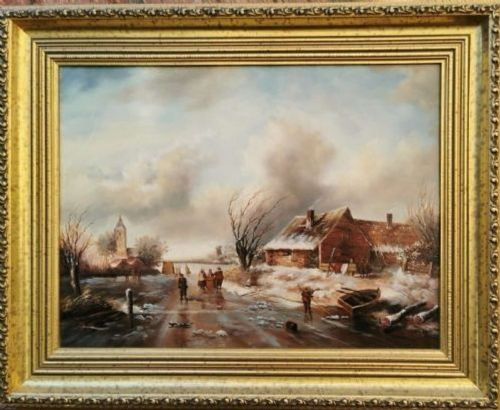
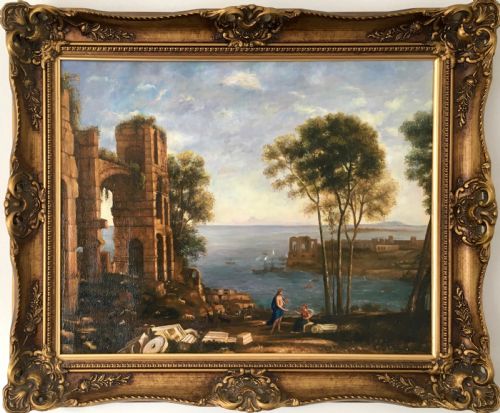
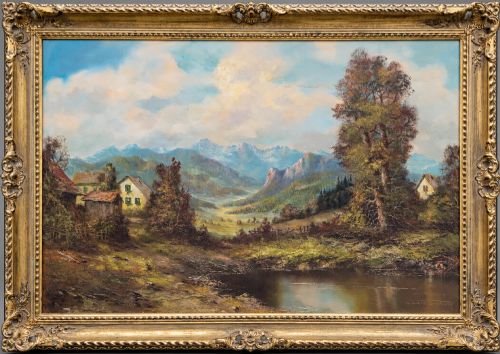
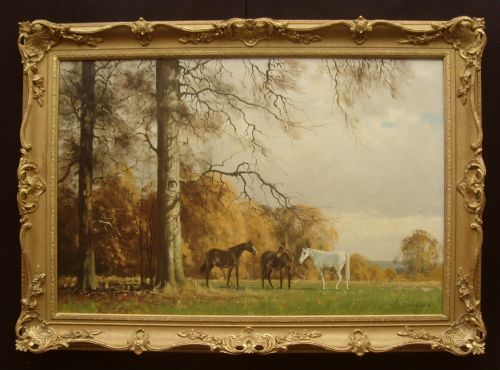
Gold Frame Landscape Canvas
These gold frame landscape canvas works bring the open country, rugged coasts and bustling waterways of past centuries directly into a room.
Gold Frame Landscape Canvas
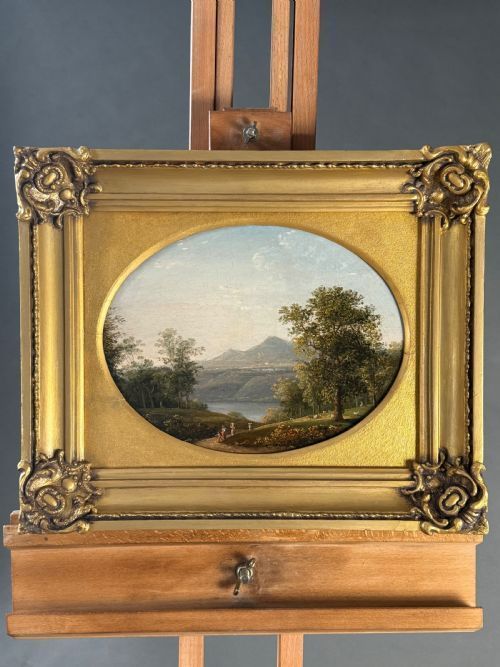
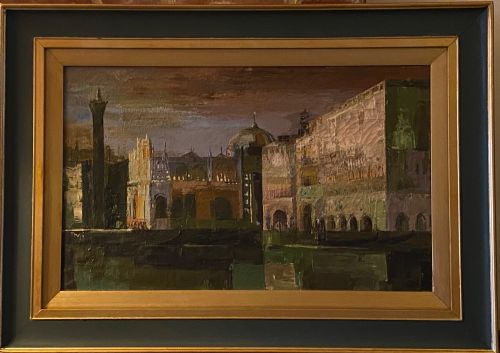
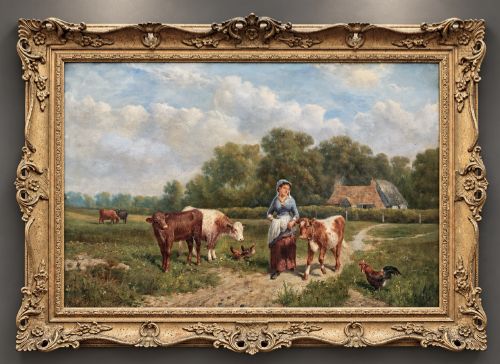
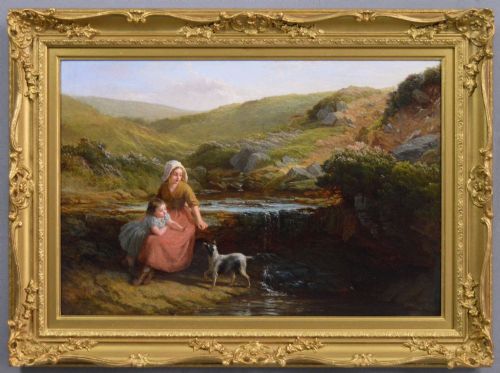
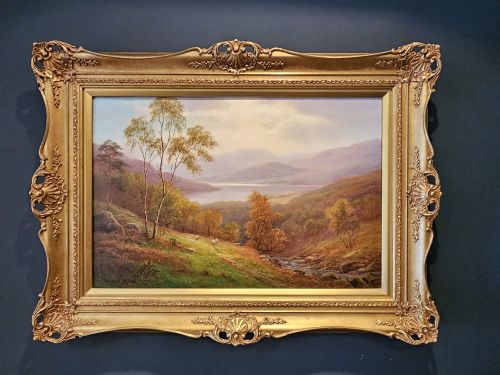
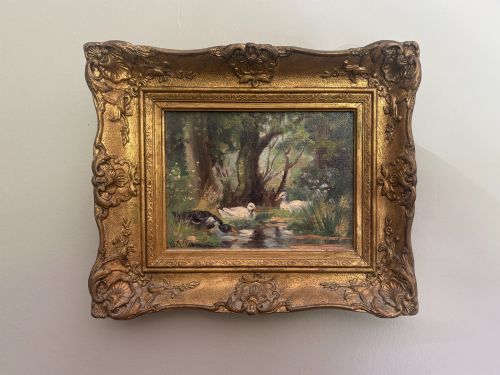
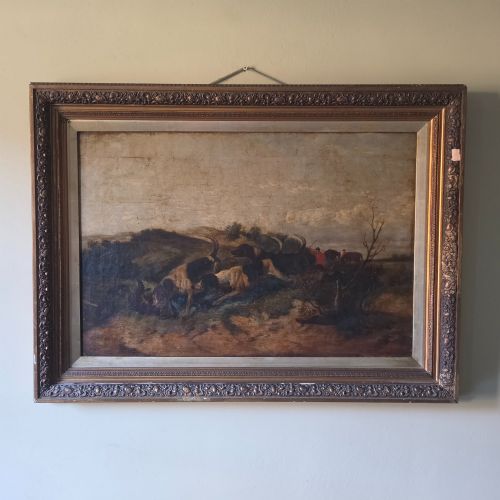
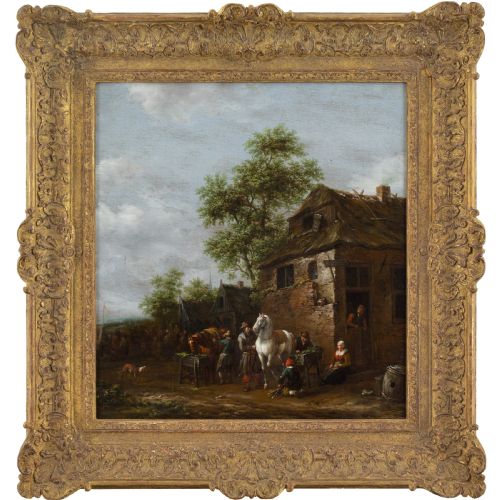
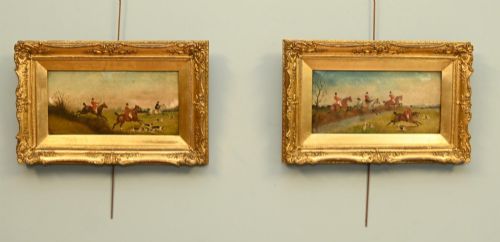
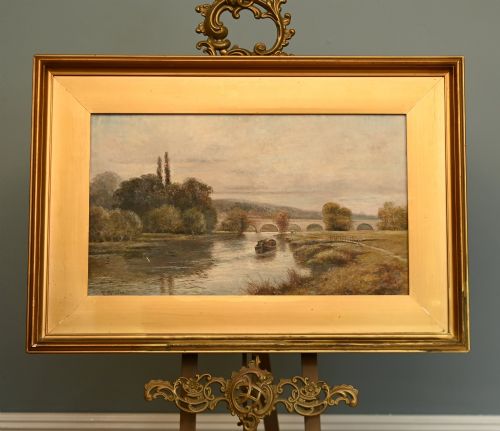
A gold frame landscape canvas combines oil paint on woven fabric with a gilded wooden surround, capturing pastoral scenes, rural paths, and coastal views. These artworks span several eras, recording how artists interpreted natural vistas from quiet woodlands to dramatic seascapes.
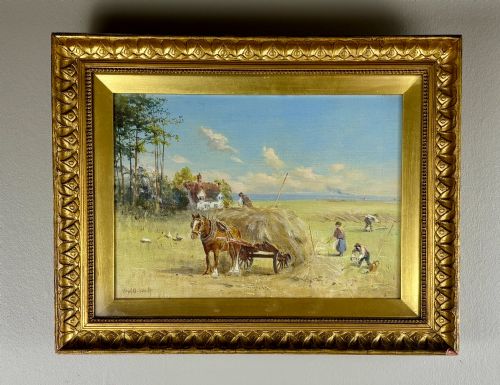
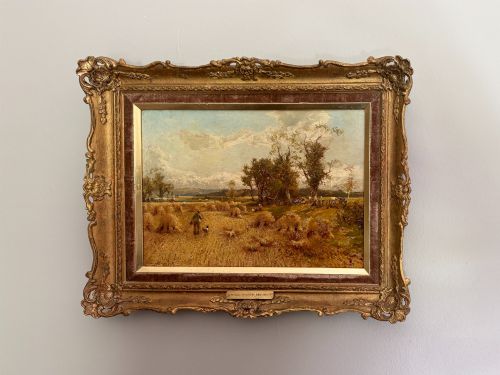
The version most commonly met on this page is the nineteenth-century oil painting housed in a carved or moulded wood frame finished in gilt or gesso. Such pieces often depict British or European rural life, marine views, and architectural townscapes rendered with oil paint.
Makers and painters range from named regional artists to French schools and British Impressionists working across the Victorian era and into the twentieth century. Each canvas preserves a specific topography, whether an Alpine pass, a Venetian canal, or a quiet riverbank.
Materials and construction methods
Painters applied oil paint to stretched canvas, building up layers of pigment to create depth in skies, water, and foliage. The flexibility of canvas allowed artists to work on large panoramic scales as well as intimate portable formats.
Surrounding the canvas is wood, frequently layered with gesso and gold leaf or giltwood to form ornamental borders. Artisans carved or moulded these frames to reflect the aesthetic tastes of periods from the Georgian era through to the mid-twentieth century.
Several canvases record stubborn livestock, capturing prized shorthorn bulls, grazing sheep, and working shire horses pausing mid-plough.
Assessing quality in paintings and frames
The strength of the brushwork and the precision of the composition dictate the artistic merit of the canvas. Finer works display careful handling of light and shadow, particularly in skies and reflective water surfaces.
The integrity and ornamentation of the wooden frame contribute substantially to the piece. Hand-carved gesso details and original gilding indicate higher craftsmanship than later replacements or simplified mouldings.
Eugène Verboeckhoven·William Beattie-Brown·Arthur Wardle·George Houston·Thomas W Lascelles·David Bates·Alfred Pollentine
The Gold Frame Landscape Canvas Glossary
- Giltwood
- Wood that has been coated with a thin layer of gold leaf. It provides the bright, reflective border characteristic of traditional picture framing.
- Gesso
- A plaster-like mixture applied to wood frames as a base for gilding. Artisans carved intricate patterns into this layer before applying gold leaf.
- Oil on Canvas
- Pigments bound in an oil medium applied to a woven fabric support. This combination offers rich colour saturation and longevity.
- Barbizon School
- A nineteenth-century French art movement focused on real-life pastoral landscapes. Painters associated with this group worked directly from nature, prioritising atmospheric light.
Gold Frame Landscape Canvas: Frequently Asked Questions
How do I clean a giltwood frame?
Dust the surface gently with a soft, dry brush to remove particles without disturbing the delicate gold leaf.
Avoid using water, chemical solvents, or abrasive cloths, as these will strip the metallic finish from the wood beneath.
Were these paintings always framed in gold?
Most nineteenth-century oil paintings were paired with gilded wooden surrounds designed to complement the tones within the canvas.
Frames were occasionally replaced later in a painting's history to match changing interior design preferences.
How do I identify the date of a canvas?
Examine the stretcher bars, canvas texture, and framing style for clues consistent with specific nineteenth or twentieth-century manufacturing techniques.
Artist signatures, inscriptions on the reverse, and stylistic markers in the brushwork also help narrow down the period.
Can I hang an oil painting in direct sunlight?
Direct sunlight causes pigments in oil paint to fade and accelerates the degradation of canvas and wooden framing materials.
Position the artwork on an interior wall away from strong windows to preserve the colours and structural integrity.