
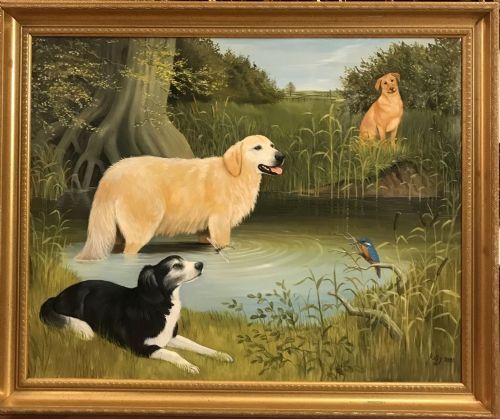


Gold Frame Canine Picture
A gold frame canine picture brings character to a room through traditional depictions of hounds, terriers and sporting dogs.
Gold Frame Canine Picture
A gold frame canine picture encompasses oil paintings, watercolours, pastels and engravings depicting dogs, mounted within gilt or gold leaf surrounds. These works range from Georgian and Victorian sporting art to mid twentieth century studies.
The most common examples encountered are nineteenth century oil paintings on canvas or board, often portraying specific breeds like terriers, spaniels and hounds in realistic or pastoral settings. Many pieces echo the grand animalier style of Edwin Landseer, focusing on the loyalty and physique of prized dogs.
Subjects stretch from working farm dogs and hunting packs to cherished pets portrayed in domestic interiors or landscapes. The surrounding frames typically utilise period gilt wood, enhancing the warmth of the artwork within.
Materials and construction
These works rely on traditional media such as oil on canvas, oil on board, watercolour and pastel on paper, applied by artists using fine bristle brushes to capture animal textures. Canvases are stretched over wooden frames before insertion into decorative outer surrounds.
Frames are constructed from carved wood finished with gold leaf or gilt surface treatments, sometimes featuring moulded plaster ornamentation. Glazing is occasionally present on works executed on paper or delicate pastel drawings.
Listings span the nineteenth and twentieth centuries, featuring oil on canvas, pastel drawing, watercolour and engraved paper formats.
Assessing quality and execution
Quality rests upon the anatomical accuracy of the animal, the expressiveness in the eyes and the fluidity of brushwork in the fur and surrounding landscape. Finer pieces demonstrate an artist's deep understanding of canine bone structure and deportment rather than generic rendering.
The craftsmanship of the accompanying frame contributes significantly to the piece, with hand carved wooden moulding and genuine gold leaf marking out superior examples. Period frames that maintain their original gilding elevate the integrity of the overall object.
Arthur Wardle·Samuel Raven·Colin Graeme Roe·Alfred Duke·John Emms·Samuel Fulton·John Parry
The Gold Frame Canine Picture Glossary
- Gilt
- A thin layer of gold applied to wood or metal surfaces to create a lustrous golden finish. This technique appears extensively on nineteenth century picture frames.
- Oil on Canvas
- Pigment mixed with drying oils applied to a woven fabric support stretched across a wooden frame. It remains the primary medium for durable, rich canine portraiture.
- Pastel Drawing
- Artwork created using powdered pigment sticks bound together with gum, offering soft textures and blended colour. These works require glass protection to prevent smudging.
- Sporting Art
- Genre of fine art depicting hunting, shooting, fishing and associated animals. Works in this category frequently feature hounds and gundogs in active field settings.
- Engraving
- A printmaking method where an image is incised into a metal plate, inked and transferred to paper. These monochrome or hand coloured plates offer detailed reproduction of dog portraits.
Gold Frame Canine Picture: Frequently Asked Questions
How do I date a canine painting?
Dating relies on stylistic clues within the painting, the clothing of any human figures, the canvas preparation and the construction methods of the wooden frame. Inscriptions on the reverse or period framing materials often provide reliable chronological anchors.
Changes in artistic fashion from Georgian realism through Victorian sentimentality to twentieth century modernism also help narrow the decade of creation.
Where should I hang these pictures?
These works suit traditional reception rooms, studies or hallways where the warm tones of gilt frames complement wood panelling or patterned wallpaper. Grouping smaller canine portraits together creates a striking gallery wall effect.
Keep them away from direct sunlight and damp conditions to protect the canvas, paper supports and delicate gilt surfaces from deterioration.
Are watercolours as durable as oils?
Watercolours and pastel drawings use paper supports that are inherently more sensitive to light and moisture than oil on canvas. They require protective glass framing and stable indoor environments to survive in pristine condition.
Oil paintings tolerate ambient indoor conditions better but still benefit from avoidance of extreme temperature fluctuations.
What is the significance of Landseer styles?
Sir Edwin Landseer popularised a dramatic, empathetic approach to painting animals that influenced generations of British artists. Paintings executed after Landseer borrow his grand scale and emotional depth, treating dogs with noble individuality.
This aesthetic defines much of the Victorian sporting art market, elevating working animals to heroic subjects.