



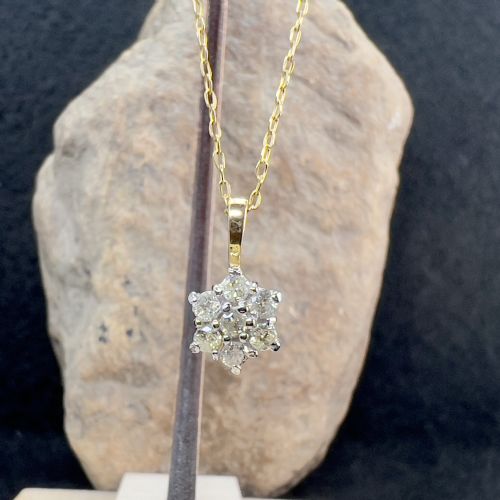


Gold Flower Necklace
A gold flower necklace brings together bright precious metals and floral motifs, offering a wearable piece of botanical history.
Gold Flower Necklace
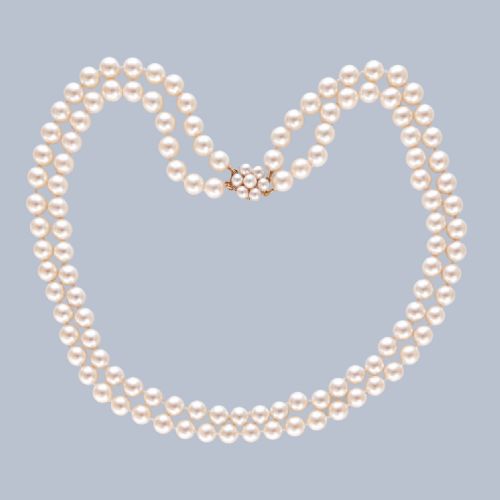
A gold flower necklace encompasses pendant necklaces, cluster designs, and pearl strands featuring floral centrepieces. Buyers seeking this phrase encounter pieces spanning the Victorian era through the mid-century period.
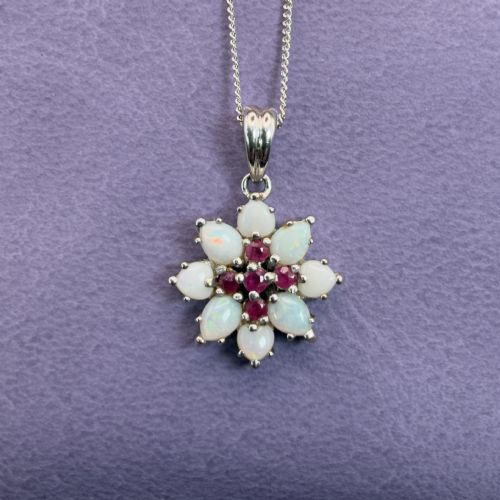
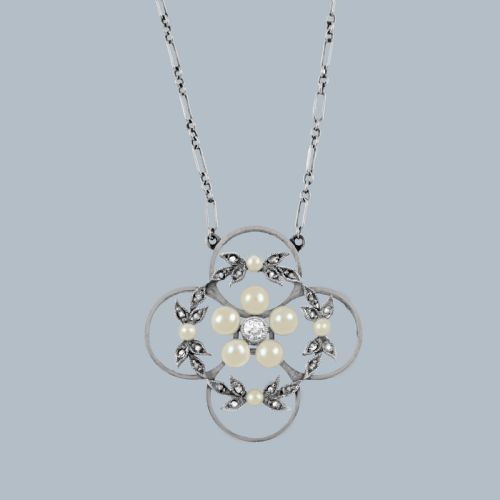
The selections on this page range from late Victorian diamond and pearl flower pendants to 1960s daisy clasps and gem-set clusters. The variety reflects changing goldsmithing styles across several decades.
Materials and construction
Goldsmiths utilised 9ct, 14ct, 15ct, and 18ct gold alongside platinum to form the structural mounts and chains. Gemstones such as diamonds, rubies, opals, sapphires, turquoises, and peridots are set alongside cultured and seed pearls.
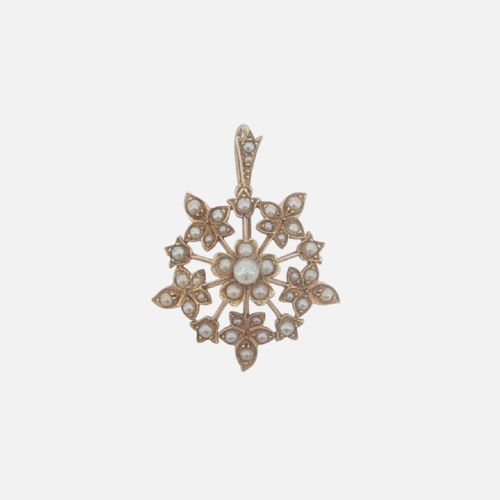
Construction techniques combine traditional claw settings for stones with delicate seed pearl work and detailed gold carving. Many items incorporate multi-part clusters or convert between pendants and brooches.
Gold Flower Necklace Retail Price Guide 2026
Typical asking prices for gold flower necklace among the pieces listed under this phrase on Sellingantiques today, from the lower quarter to the upper quarter. They describe what is for sale here now, not the wider market.
The inventory spans Victorian, Edwardian, Art Nouveau, and mid-century aesthetic periods.
Assessing quality and craftsmanship
Quality reveals itself in the precision of the stone setting and the integrity of the gold work. Higher standard pieces demonstrate careful matching of pearls and gemstones within the floral design.
The refinement of the petal shaping and the weight of the gold mount distinguish finer examples. Maker marks, hallmarks, and the balance of the overall composition further influence the standing of an item.
Merrin
The Gold Flower Necklace Glossary
- Seed pearl
- Very small, natural or cultured pearls often used in tight clusters or strung in rows. They define much of the delicate work seen in Edwardian and late Victorian pieces.
- Cluster pendant
- A central gemstone surrounded by a border of smaller stones, frequently arranged to resemble a flower head. This setting style dominates the multi-gem pieces in the collection.
- Old cut diamond
- A hand-cut diamond shape common in antique jewellery before the standardisation of modern brilliant cuts. These stones exhibit smaller tables and deeper pavilions.
- Hallmark
- Official stamps applied to precious metals indicating purity, origin, and assay office. They provide the primary evidence for dating gold and platinum items.
Gold Flower Necklace: Frequently Asked Questions
What periods do these necklaces come from?
The pieces span from the mid-nineteenth century through the Victorian and Edwardian eras into the mid-twentieth century. This timeline covers diverse aesthetic movements including Art Nouveau and mid-century modern design.
Each era contributes distinct metal colours and gemstone combinations to the overall selection.
How do I care for pearl components?
Pearls require gentle handling because organic nacre scratches easily and reacts adversely to harsh chemicals and perfumes. Wipe them softly with a clean, damp cloth after wearing.
Store pearl necklaces flat to prevent stretching the silk threads over time.
Can these pendants be worn as brooches?
Certain antique examples feature integrated fittings allowing them to function as both pendants and brooches. This dual purpose was common in Victorian and Edwardian jewellery manufacturing.
Inspect the reverse side of a piece to identify hinged pin mechanisms alongside suspension loops.
What gold purities should I expect?
Items utilise a range of gold purities including 9ct, 14ct, 15ct, and 18ct yellow, white, and rose gold. The higher 15ct standard appears frequently in pieces from the Victorian and Edwardian periods.
Platinum is also utilised as a bright mounting material for diamonds in turn-of-the-century items.