
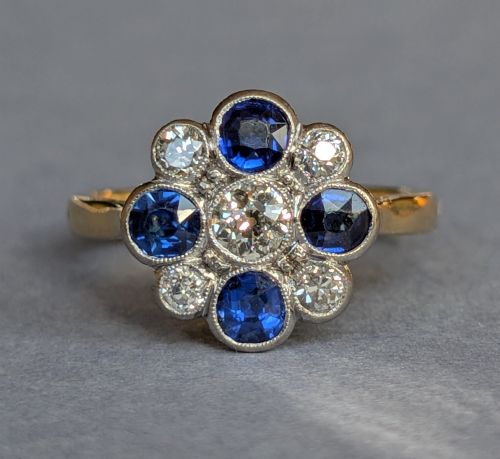
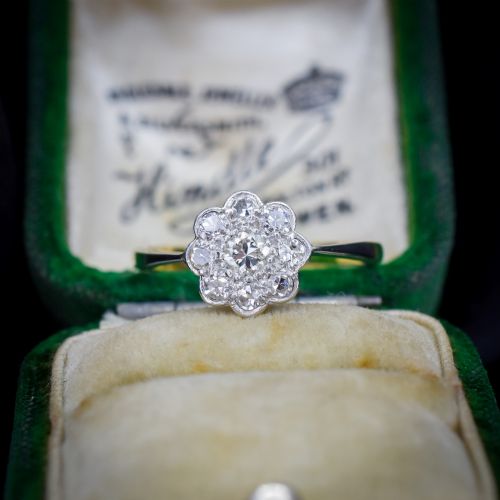
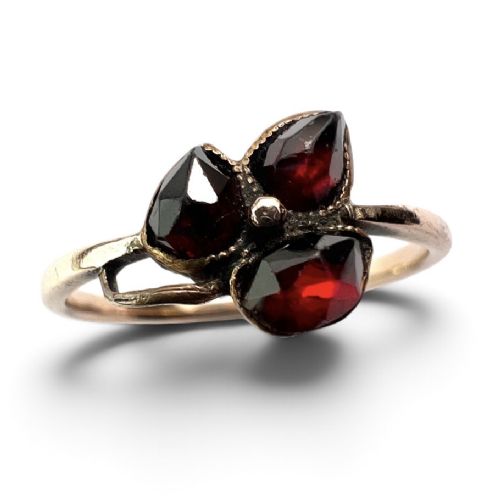
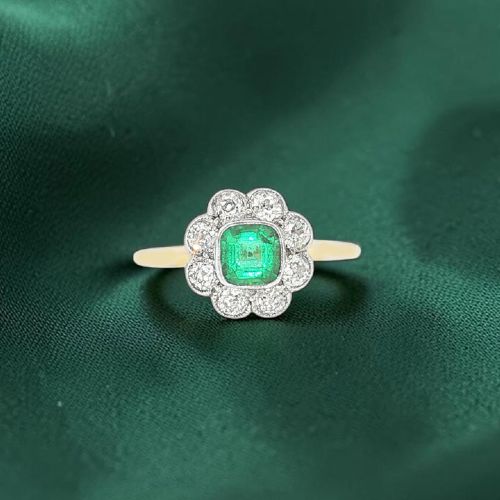
Gold Flower Dress Ring
A gold flower dress ring brings together floral motifs and precious gems, offering a decorative statement piece from past decades.
Gold Flower Dress Ring
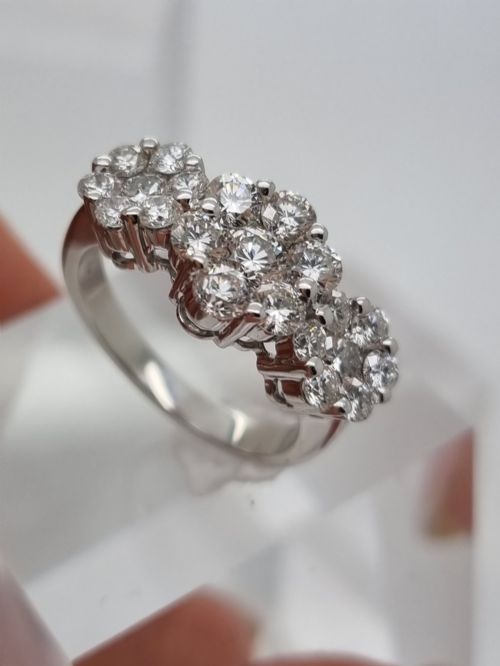
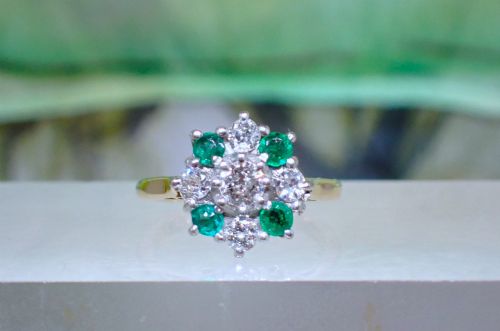
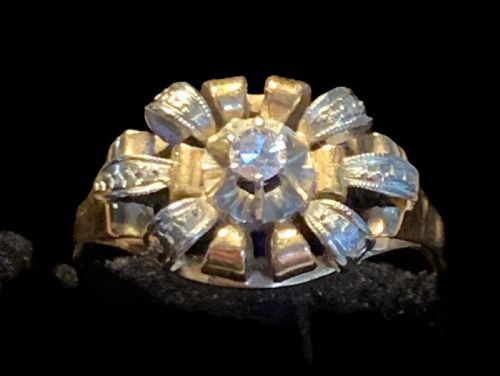
A gold flower dress ring displays a floral or cluster arrangement designed to draw the eye with concentric stones or petal shapes. These rings appear in various forms across periods from the Georgian era through to the mid-twentieth century.
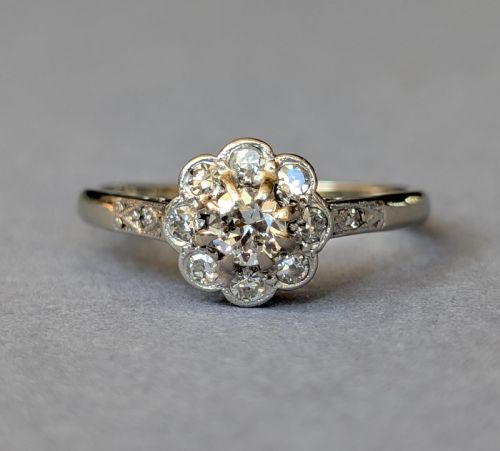
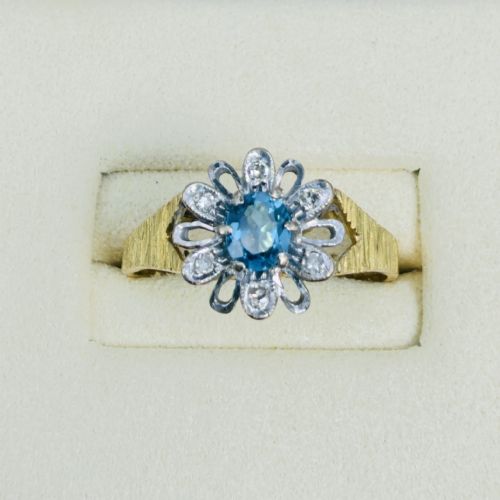
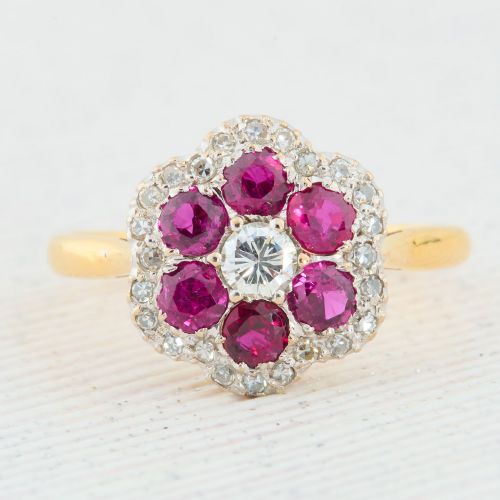
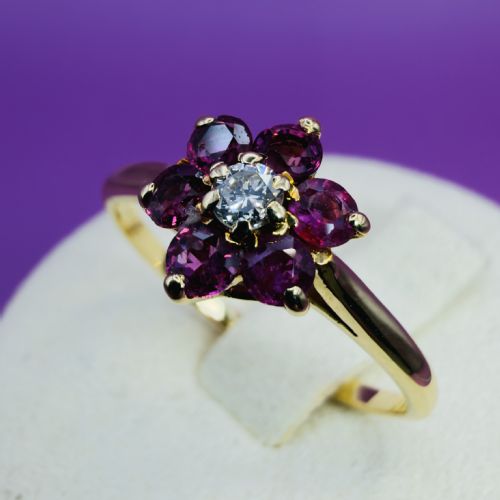
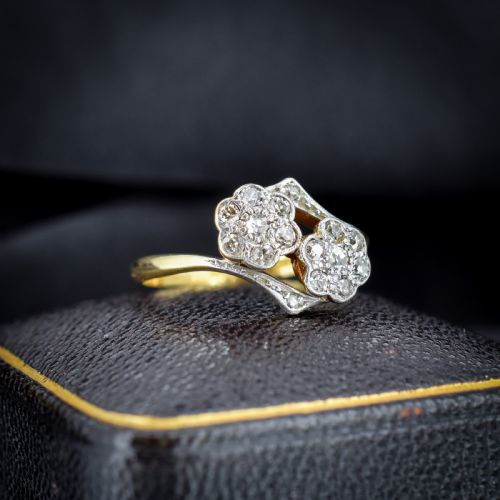
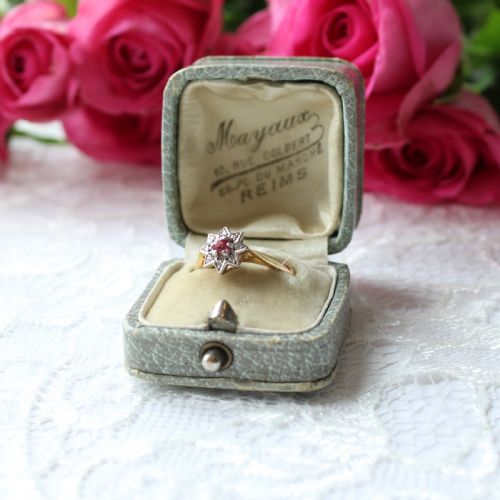
The version most commonly met on this page is the daisy cluster or floral ring configured in 18ct yellow or white gold, often paired with platinum settings. Stones such as diamonds, sapphires, rubies and emeralds form the petals and central stamen.
Examples span the Victorian, Edwardian and Art Deco periods, alongside mid-century vintage pieces. Each era brings distinct proportions and gemstone pairings to the basic floral silhouette.
Materials and construction
Goldsmiths utilised 18ct yellow gold, 18ct white gold and 9ct gold alongside platinum to form the bands and settings of these floral rings. Platinum frequently appears in Edwardian and Art Deco pieces to hold diamonds securely in delicate claw or millgrain settings.
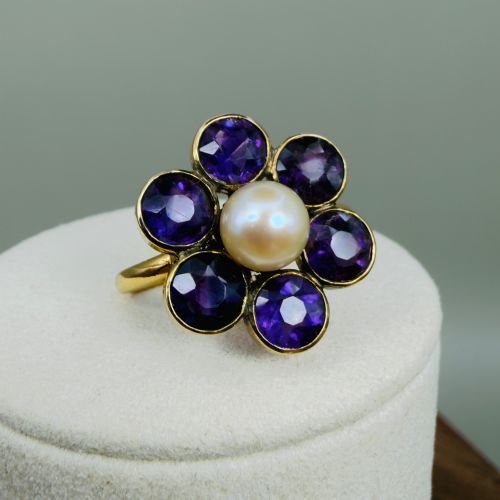
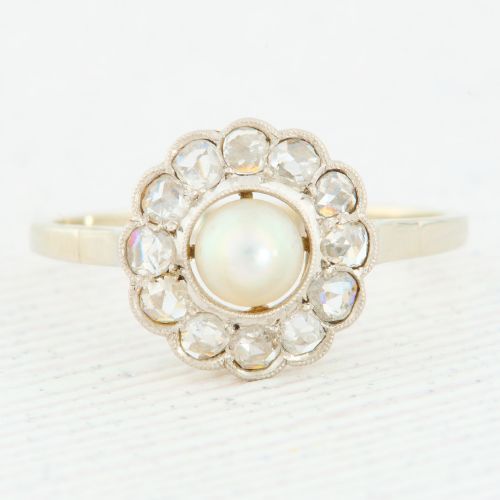
Gemstones including rubies, sapphires, emeralds, garnets, turquoise and pearls are arranged around central diamonds to create the flower heads. Techniques such as silver-topping on gold and intricate double twist shanks also occur in earlier Victorian and Georgian specimens.
Listings feature floral cluster rings spanning the Victorian, Edwardian, Art Deco and mid-century periods in yellow gold, white gold and platinum.
Distinctions in execution
The calibre of the goldsmith's work determines the refinement of the petal settings and the symmetry of the cluster. Superior pieces demonstrate precise stone matching and secure, well-finished metalwork that integrates the floral motif seamlessly into the shank.
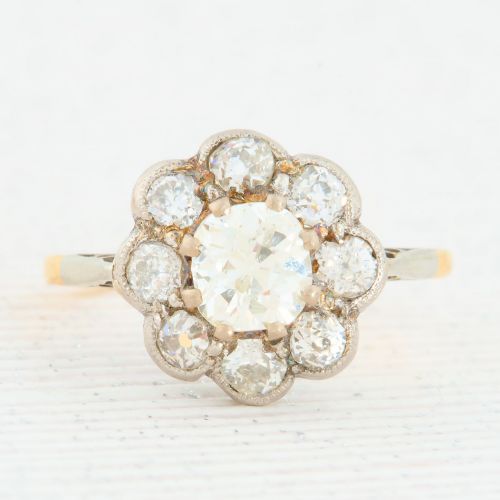
The choice and cut of the gemstones dictate the visual impact of the ring. Graduated stones, well-matched colour saturations and lively old-cut diamonds elevate a piece above standard mass-produced cluster rings of the same period.
Kutchinsky
The Gold Flower Dress Ring Glossary
- Daisy cluster
- A ring design featuring a central gemstone surrounded by a ring of contrasting stones, resembling a flower head. This configuration forms the basis of many antique floral rings.
- Millgrain
- A decorative border of tiny raised metal beads along the edge of a setting. This technique is common in Edwardian and Art Deco jewellery.
- Old-cut diamond
- A diamond cut by hand before modern machinery standardised facet proportions. These stones display smaller tables and broader facets that catch candlelight effectively.
- Cluster ring
- A ring set with a group of closely spaced gemstones rather than a single dominant stone. They are frequently arranged in geometric or floral patterns.
Gold Flower Dress Ring: Frequently Asked Questions
What is a gold flower dress ring?
A gold flower dress ring is a finger ornament shaped like a floral cluster, combining precious metal with coloured gemstones and diamonds.
These pieces were worn for social occasions and fashion rather than as formal betrothal jewellery, though some antique examples served as engagement rings.
How do I identify an Edwardian floral ring?
Edwardian rings often feature platinum-topped yellow gold settings with delicate millgrain edges and old-cut diamonds arranged in daisy motifs.
The overall aesthetic prioritises light, airy filigree work and symmetrical floral grace typical of the early twentieth century.
Are these rings suitable for daily wear?
Many of these pieces are robust enough for everyday use provided they are checked periodically by a professional jeweller.
Victorian and Edwardian settings with delicate claws or softer stones like pearls and turquoise require more careful handling than sturdy mid-century platinum designs.
How can I tell different periods apart?
Periods are distinguished by mounting styles, metal combinations and gemstone cuts, such as heavy yellow gold in Victorian pieces versus platinum in Edwardian designs.
Art Deco examples introduce geometric precision, while mid-century rings often showcase bolder yellow gold work and distinct cluster proportions.