


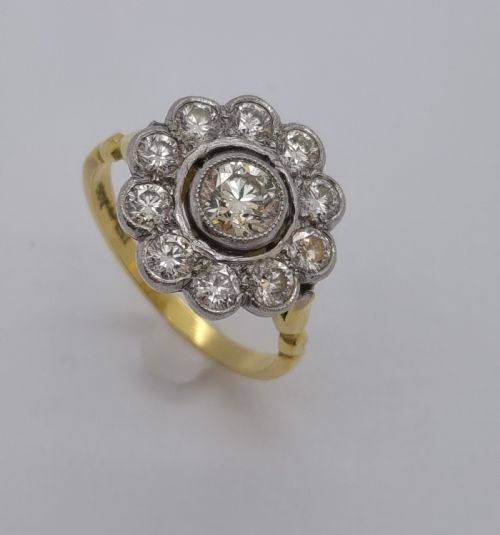


Diamond Halo Floral Ring
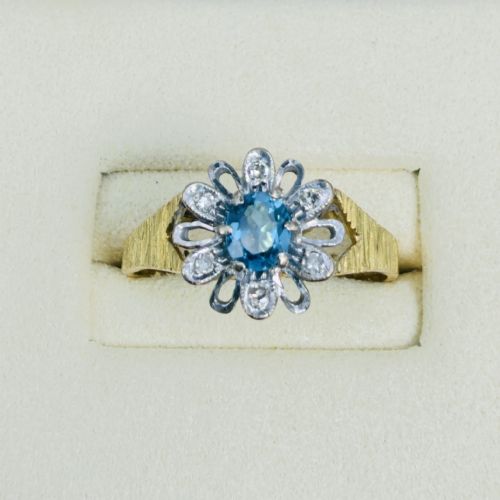
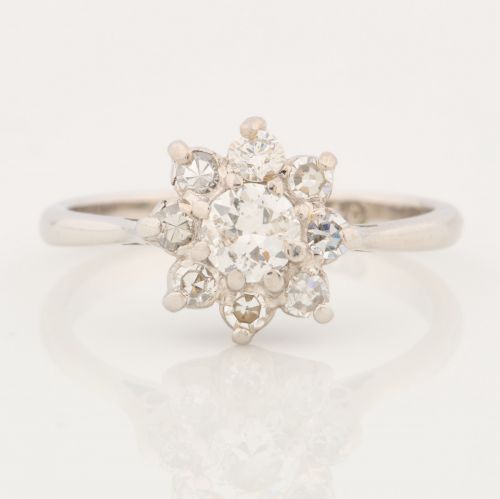
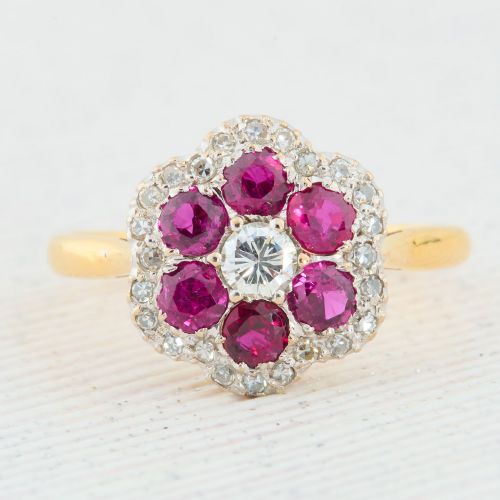
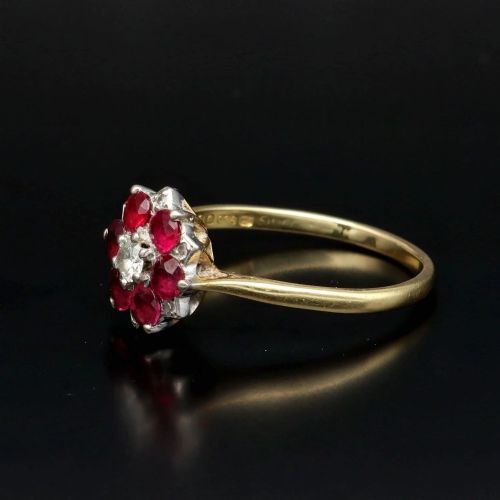
These diamond halo floral ring examples present delicate cluster settings shaped like blossoms, offering timeless finger coverage that buyers choose for distinctive vintage charm.
Diamond Halo Floral Ring
A diamond halo floral ring brings together a central gemstone surrounded by smaller accent stones, creating a distinct blossom silhouette that sits flat against the hand. This page presents pieces spanning the Victorian, Edwardian, and mid-century periods, capturing styles from traditional fine jewellery to retro cluster arrangements.
Most examples adopt classic daisy or floral cluster configurations, utilising sapphire, ruby, pearl, or aquamarine at the centre alongside brilliant or old-cut diamonds. The selection ranges from platinum mountings to 18ct yellow and white gold bands produced across the 1900s to the 1960s.
Materials and Construction
Craftsmen built these rings using durable precious metals, mounting stones securely in platinum or 18ct gold settings that highlight the central gem. Yellow gold and white gold provide contrasting backdrops, while platinum is utilised for its strength in fine wirework and claw settings.
Gemstones are shaped into brilliant cuts, old cuts, or rounded configurations to form the petals of each floral motif. Diamonds and coloured stones including sapphires, rubies, and opals are arranged tightly in clusters to maximise light reflection across the face of the ring.
Materials utilised across the selection include platinum, 18ct yellow gold, 18ct white gold, and multiple gemstone varieties.
Assessing Quality and Design
Quality in a diamond halo floral ring rests on the harmony of proportions between the central stone and the surrounding petal arrangement. Superior pieces demonstrate balanced stone sizing, secure claw work, and meticulous metal finishing that complements the floral theme without overwhelming the hand.
The selection of centre stones, from natural unheated rubies to fine sapphires and bright diamonds, dictates the visual depth of the piece. Better examples maintain crisp geometric or organic contours that reflect the specific design ethos of their period, whether Victorian, Edwardian, or mid-century.
The Diamond Halo Floral Ring Glossary
- Cluster ring
- A ring featuring a central gemstone surrounded by a group of smaller stones. This layout forms the foundational design for floral and daisy motifs.
- Old cut
- A diamond facet style popular in earlier periods, featuring a smaller table and a high crown that catches candlelight effectively. These cuts give vintage floral clusters a softer visual warmth.
- Daisy ring
- A specific cluster design where round white stones surround a darker centre, closely mimicking the petals of a flower. This style appears frequently across mid-century and Edwardian examples.
- Platinum
- A dense, strong white metal prized for holding fine gemstone settings securely. It provides a durable framework for delicate floral clusters.
Diamond Halo Floral Ring: Frequently Asked Questions
How do I wear a floral cluster ring daily?
These rings suit everyday wear provided you consider the height of the setting and the durability of any softer centre stones like opals or pearls. Pairing them thoughtfully or removing them during heavy manual tasks preserves the delicate claw work.
Their flat cluster profiles generally sit comfortably on the hand, making them practical choices for engagement or dress rings alike. Regular gentle cleaning keeps the surrounding diamond halo bright.
What periods do these rings come from?
The pieces seen here span from the Victorian era and the 1900s through Edwardian designs up to mid-century 1950s and 1960s creations. Each decade brought subtle shifts in metal choice, from platinum mountings to yellow and white gold.
Stylistic shifts reflect changing tastes, moving from ornate Victorian enamel and pearl work to clean mid-century daisy clusters. Dating a ring involves examining both the cut of the diamonds and the construction of the metal basket.
Are coloured stones common in floral rings?
Coloured gemstones frequently occupy the centre of these floral arrangements, paired with white diamond halos to create contrast. Sapphires, rubies, aquamarines, and opals appear regularly as the focal point of the blossom.
These coloured gems define the personality of each ring, shifting the visual weight from traditional diamond sparkle to vibrant botanical colour. The surrounding diamond halo enhances the saturation of the central stone.
How do I identify an Edwardian floral ring?
Edwardian examples often feature airy, lace-like platinum settings that maximise light around the central diamond or coloured gemstone. The metalwork mimics delicate garlands and floral motifs typical of the period's fine jewellery.
Lighter construction techniques and intricate piercing distinguish these pieces from the bolder, heavier profiles seen in later mid-century designs. Examining the underside of the cluster reveals the characteristic hand-worked framework.