

Gold Enamel Jewellery
Gold enamel jewellery combines rich coloured vitreous glass with precious metal to create pendants, brooches, and rings spanning Victorian, Edwardian, and Art Nouveau periods.
Gold Enamel Jewellery
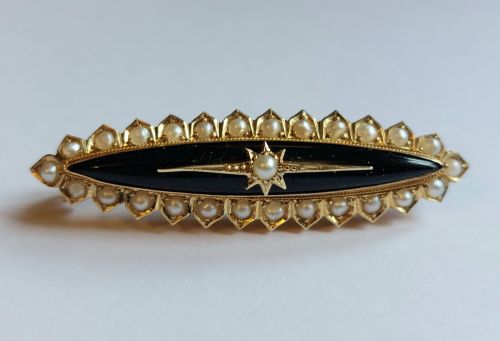
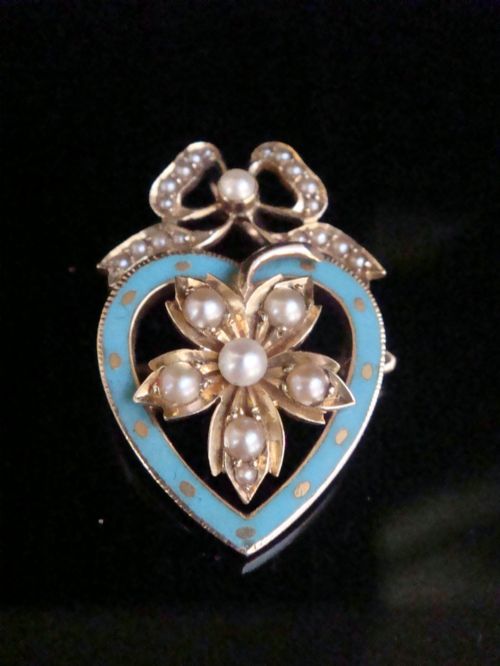
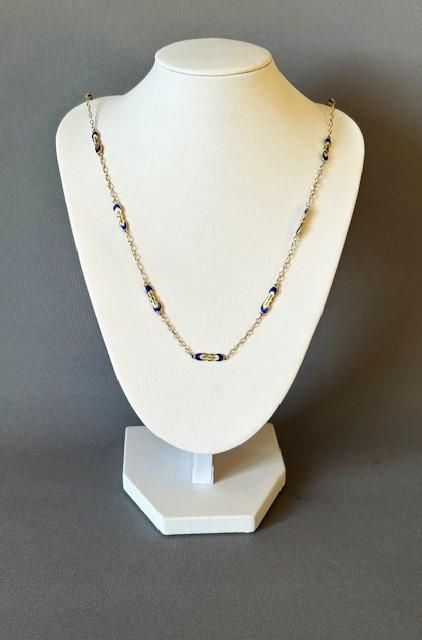
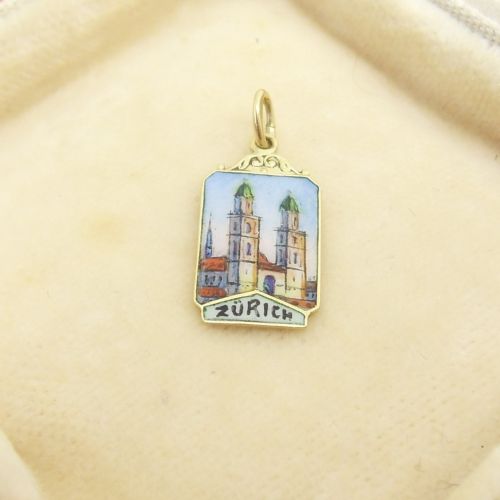
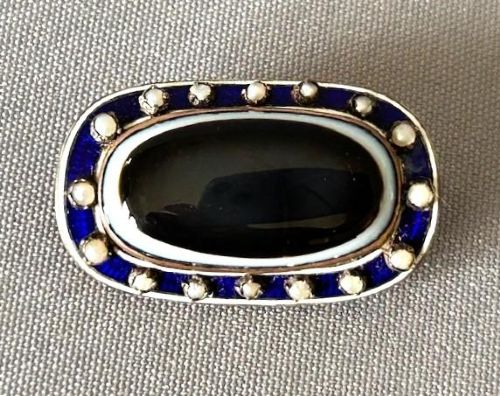
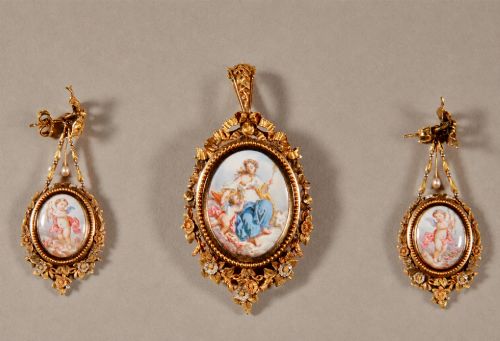
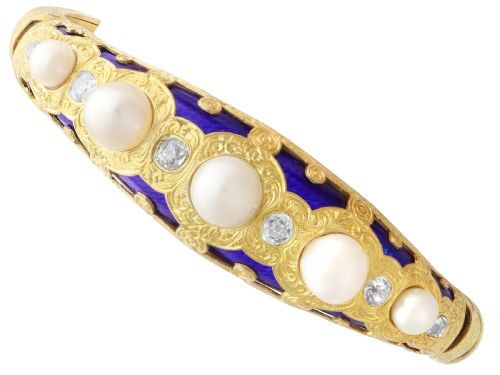
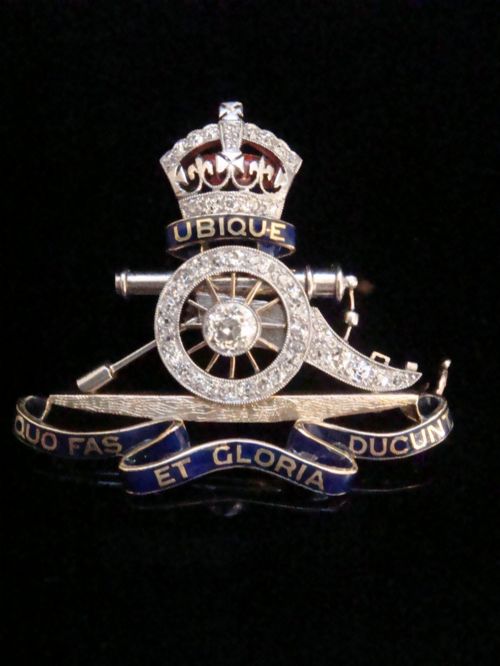
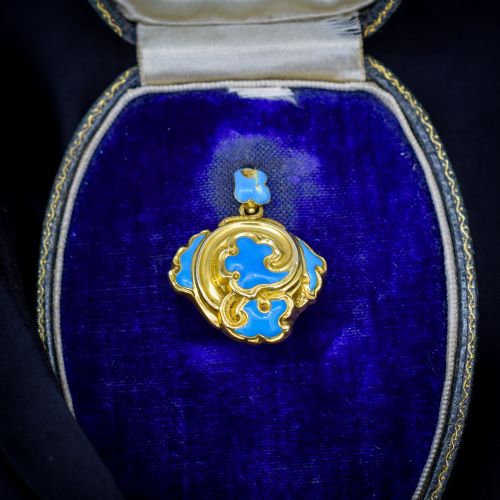
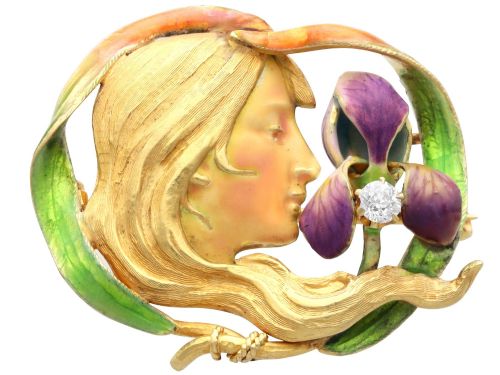
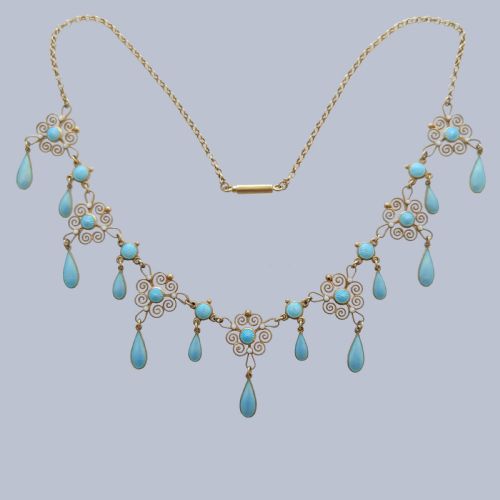
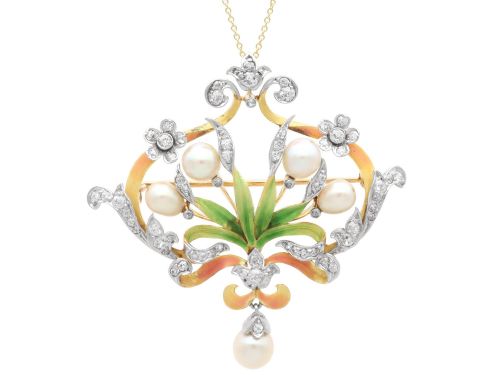
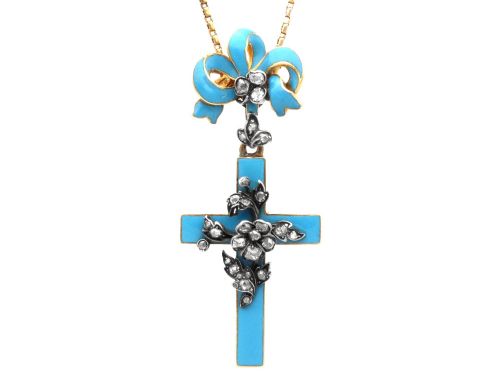
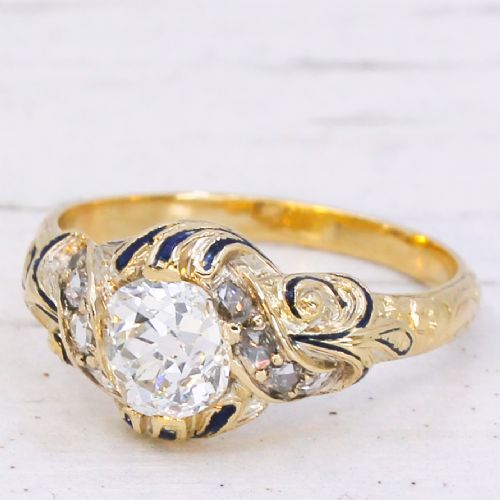
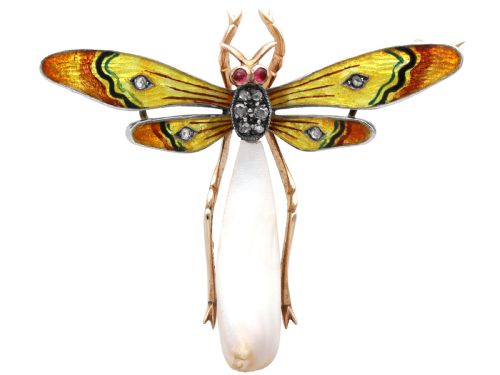
Gold enamel jewellery encompasses wearable pieces fashioned from gold or silver gilt set with coloured vitreous enamel, frequently accented by diamonds, pearls, garnets, or turquoise. The selections span from Georgian portrait pendants and Victorian mourning lockets to intricate Edwardian and Art Nouveau brooches, necklaces, and charms.
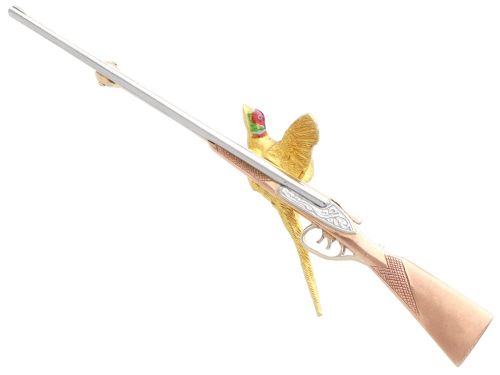
Buyers browsing this category will most commonly encounter brooches, pendants, and lockets originating from the nineteenth and early twentieth centuries. These items often incorporate specific motifs such as floral patterns, snakes, insects, and religious medallions.
The objects cross multiple stylistic movements including Art Deco, Egyptian Revival, and French vintage designs. Pieces range in origin from British workshops to Scandinavian silversmiths and continental European makers.
How they were made
Goldsmiths fused powdered glass onto metal bases through high-temperature firing to produce durable coloured surfaces known as vitreous enamel. Techniques such as guilloché involved machine-engraving geometric patterns beneath translucent enamel, while plique-à-jour created translucent windows of enamel without a backing metal.
Craftsmen mounted these enamelled components into various grades of yellow gold, platinum-topped gold, and silver gilt. Settings were frequently hand-finished to incorporate old-cut diamonds, natural pearls, and gemstones secured by collet or prong mountings.
Gold Enamel Jewellery Retail Price Guide 2026
Typical asking prices for gold enamel jewellery among the pieces listed under this phrase on Sellingantiques today, from the lower quarter to the upper quarter. They describe what is for sale here now, not the wider market.
Among the offerings sits a tiny enamelled Toby jug charm from nineteen fifty-nine, proving that historical porcelain characters found miniature life in gold.
What varies in quality
Quality in gold enamel jewellery depends upon the precision of the metalwork and the execution of the enamelling technique. Pieces featuring complex guilloché engraving or delicate plique-à-jour demonstrate superior technical mastery compared to simpler flat enamel applications.
The integration of high-grade materials such as certified old-cut diamonds, natural pearls, and higher karat yellow gold elevates the standing of a piece. Furthermore, attribution to documented makers or retailers influences the distinction of specific items within the range.
Marius Hammer·Garrard and Co·Solomon Blanckensee Son·Aksel Holmsen·Christian Friedrich Zincke
The Gold Enamel Jewellery Glossary
- Vitreous enamel
- A material made by fusing powdered glass to a metallic substrate at high temperatures. This glass coating provides durable, vibrant colour to pendants, brooches, and rings.
- Guilloché
- A decorative technique in which a mechanical tool etches a precise, intricate geometric pattern into metal. Translucent enamel is then applied over the engraving to catch the light.
- Plique-à-jour
- An enamelling technique resembling stained glass where the enamel is fired in open cells without a backing. This allows light to pass directly through the translucent coloured glass.
- Silver gilt
- Sterling silver that has been coated with a thin layer of gold. This metal combination appeared frequently in European decorative necklaces and brooches.
- Old-cut diamond
- A diamond cut by hand before modern machinery standardised facet geometry. These stones display smaller tables and deeper pavilions characteristic of antique jewellery.
Gold Enamel Jewellery: Frequently Asked Questions
How do I care for antique enamel jewellery?
Clean pieces gently using a soft cloth dampened with lukewarm water, avoiding harsh chemical dips or ultrasonic cleaners that can damage the glass surface. Store each item separately in a lined box to prevent scratches from neighbouring gems or metals.
Protect the enamel from impact against hard surfaces and remove jewellery before swimming, bathing, or applying cosmetics.
What periods do these pieces come from?
The inventory spans multiple eras, beginning with Georgian and Victorian items from the nineteenth century. You will also find Edwardian, Art Nouveau, and mid-twentieth-century examples.
Each period introduced distinct stylistic shifts, moving from sentimental motifs to the geometric lines of later decades.
Were these items worn daily or kept as keepsakes?
Many items served dual purposes as fashion accessories and personal mementos, such as mourning lockets containing hair or love token brooches. Other pieces like portrait miniatures and religious medals held deep sentimental or devotional significance for their original owners.
Precious metals and durable vitreous enamel ensured these objects survived generations of wear.