
Gold Diamond Halo Ring
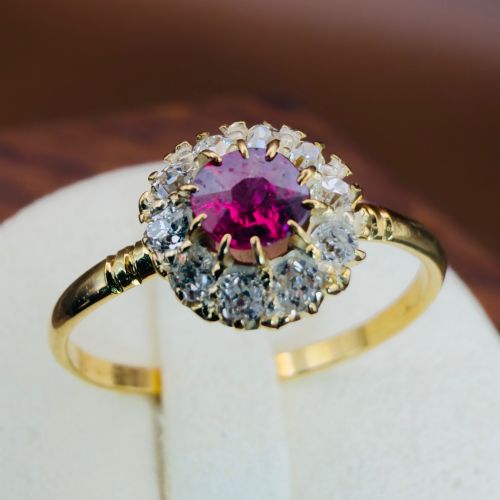
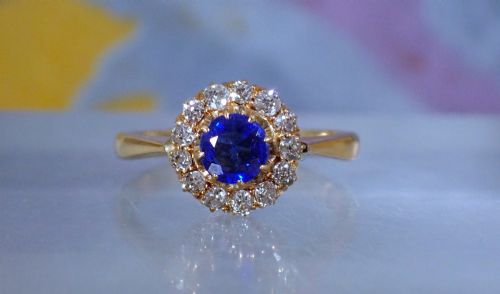
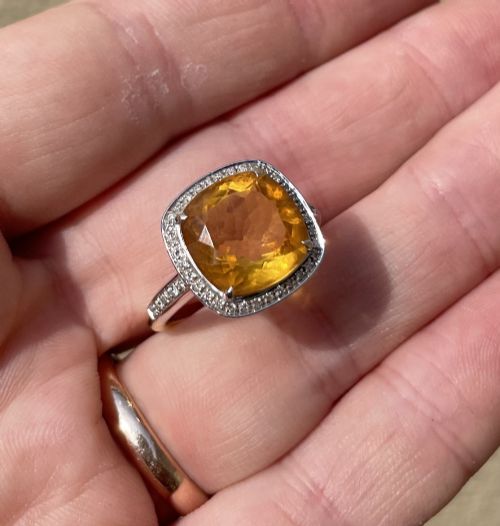
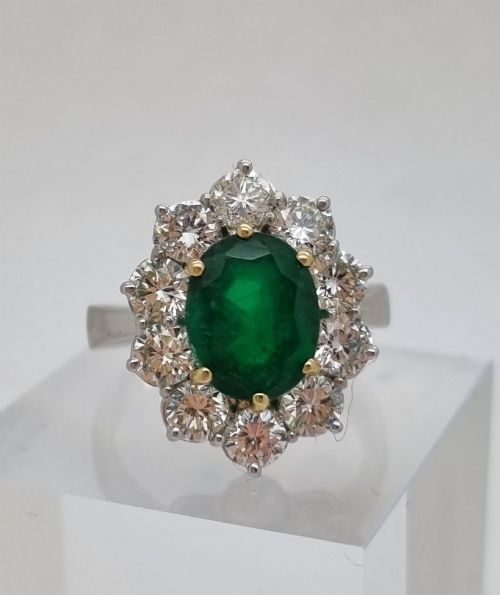
Discover a gold diamond halo ring, where a central gemstone or diamond is encircled by smaller diamonds, creating a brilliant focal point suited for daily wear.
Gold Diamond Halo Ring
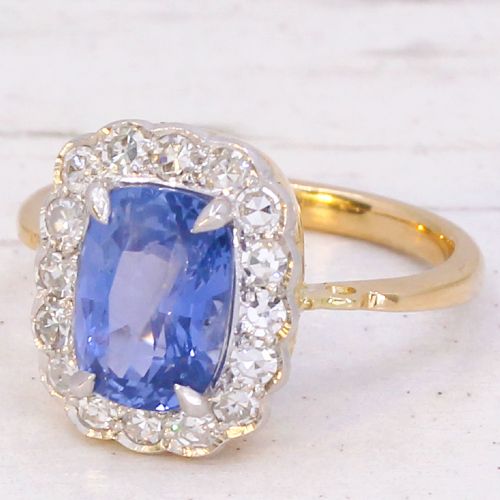
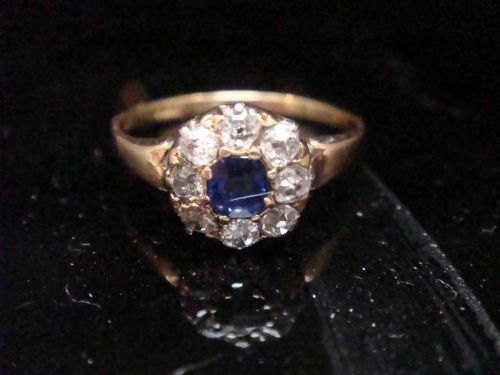
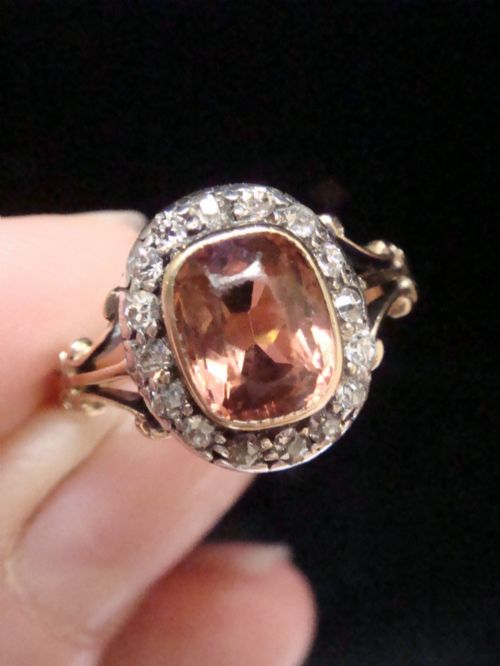
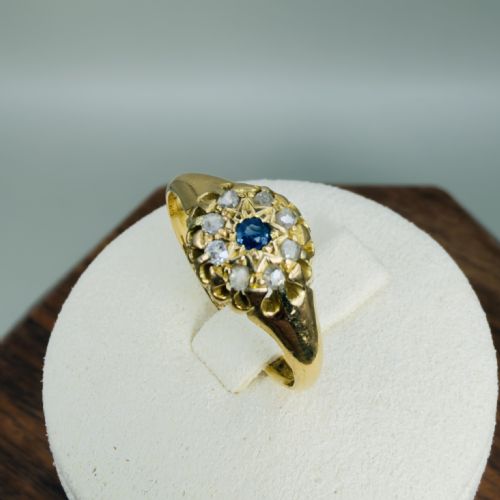
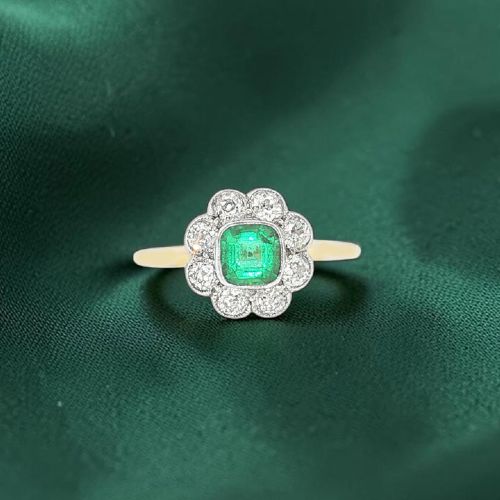
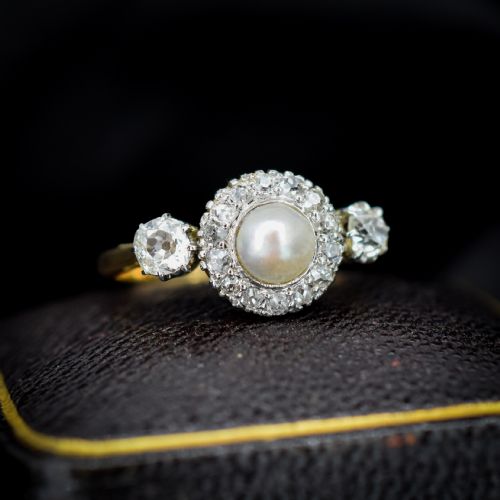
A gold diamond halo ring pairs a central coloured gemstone or diamond with a surrounding border of smaller diamonds. This design configuration maximises light reflection and visual presence upon the hand.
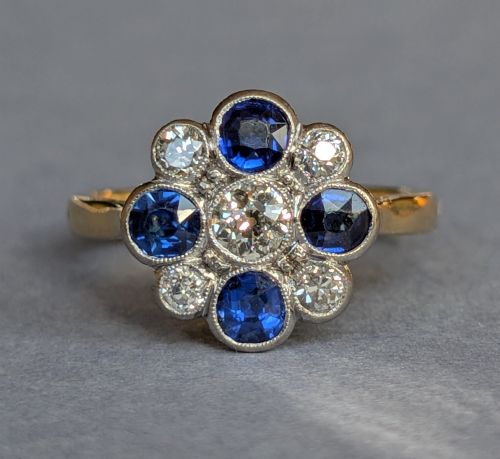
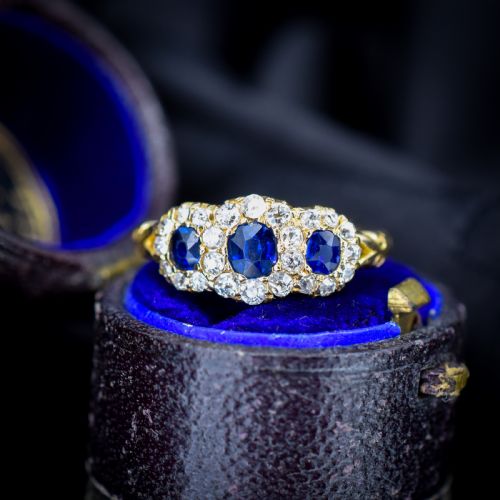
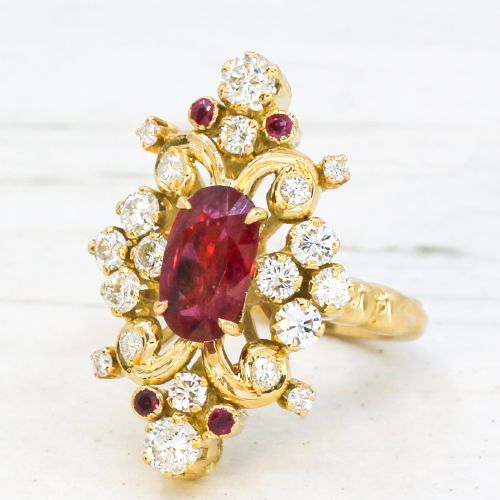
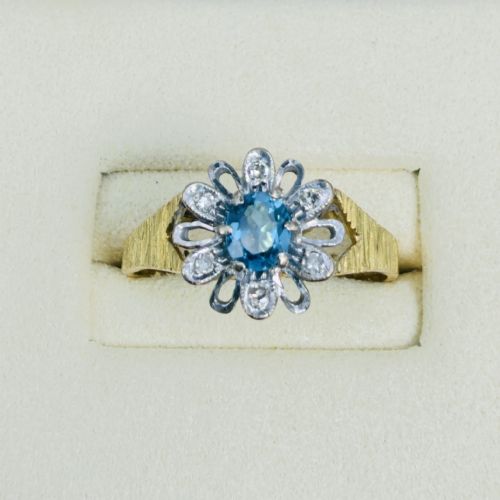
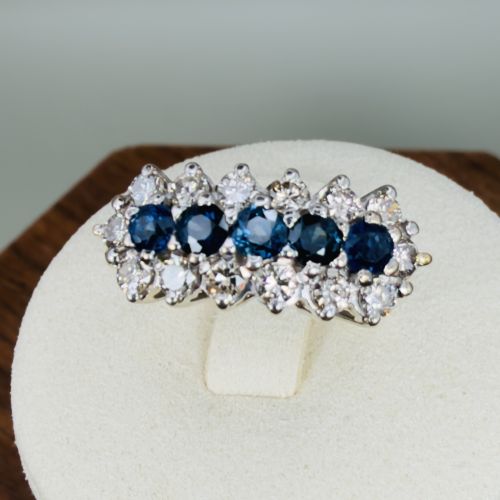
Examples on this page span the Victorian, Edwardian, Art Deco, and Mid-Century periods. Forms range from traditional cluster configurations and daisy motifs to navette, floral, and geometric snowflake patterns.
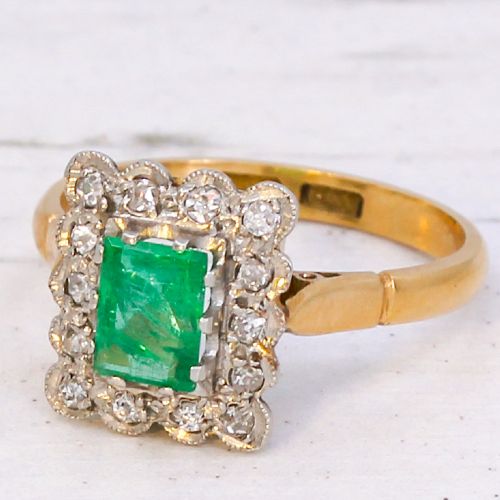
Materials commonly include 18ct yellow gold, 18ct white gold, and platinum mounts set alongside sapphires, emeralds, rubies, opals, and pearls.
How They Were Made
Goldsmiths utilised 18ct yellow gold, 18ct white gold, and platinum to forge the structural mounts and intricate settings. Metals were cast or fabricated by hand to support multi-stone layouts securely.
Gemstones such as old cut diamonds, old mined cut diamonds, and rose cut diamonds were paired with rubies, sapphires, and emeralds. Stones were secured using close-set claw, grain, or bezel techniques to form the characteristic concentric frame.
Gold Diamond Halo Ring Retail Price Guide 2026
Typical asking prices for gold diamond halo ring among the pieces listed under this phrase on Sellingantiques today, from the lower quarter to the upper quarter. They describe what is for sale here now, not the wider market.
Listings feature periods from the Victorian era through the 1950s and 1960s, employing 18ct gold, platinum, and various coloured gemstones.
What Varies in Quality
The standard of a gold diamond halo ring depends upon the clarity, colour, and origin of the central gemstone, alongside the matching uniformity of the surrounding diamond border. Superior examples exhibit balanced proportions between the central stone and the framing elements.
Craftsmanship in metalwork distinguishes finer pieces, evident in the delicacy of the claw setting and the precision of the gallery work beneath the stones. Hallmarking detail and structural preservation across Victorian, Edwardian, and Art Deco examples further influence the overall calibre.
The Gold Diamond Halo Ring Glossary
- Halo
- A concentric arrangement of smaller diamonds encircling a larger central gemstone. This arrangement enhances the apparent size and brilliance of the primary stone.
- Cluster
- A design grouping multiple gemstones tightly together to form a singular visual unit. Often seen in floral or geometric layouts.
- Old Cut
- A historic diamond cutting style characterised by a high crown, small table, and deep pavilion. These cuts were shaped by hand before modern symmetrical standards.
- Navette
- A boat-shaped or marquise-like silhouette that extends along the finger. The pointed ends create an elongated profile.
- Cabochon
- A gemstone shaped and polished with a smooth, rounded domed surface rather than faceted. Commonly utilised for opals, emeralds, and sapphires.
Gold Diamond Halo Ring: Frequently Asked Questions
How do I identify the period?
Dating relies upon stylistic markers, gemstone cuts, and metal types. Edwardian and Victorian examples often incorporate old cut diamonds in yellow gold or platinum-topped settings.
Art Deco and Mid-Century pieces tend towards geometric symmetry, sharp cluster designs, and increasing use of white gold.
Can these rings be worn daily?
Many examples are robust enough for daily wear, provided the setting metal and gemstone hardness suit regular activity. Harder stones like diamonds, rubies, and sapphires endure routine use well.
Fragile gems or antique mountings require periodic inspection by a jeweller to ensure stone security.
What gemstones accompany the diamonds?
Blue, pink, and yellow sapphires, emeralds, rubies, opals, pearls, and aquamarines frequently occupy the centre of these rings. These coloured stones provide contrast against the surrounding diamond border.
Origins span Burma, Ceylon, and Colombia, alongside various historical European sources.