




Gold Diamond Daisy Ring
A gold diamond daisy ring groups stones into a floral motif that has charmed collectors across Victorian, Edwardian, and Art Deco eras.
Gold Diamond Daisy Ring
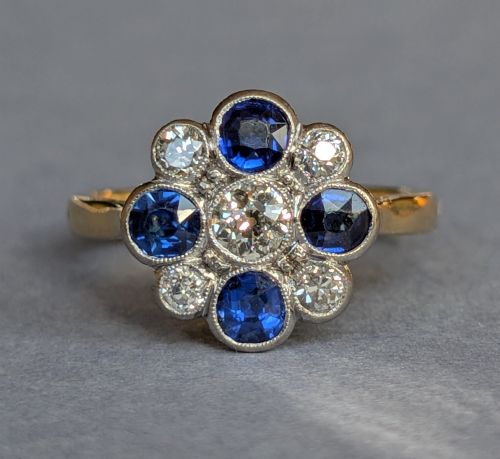
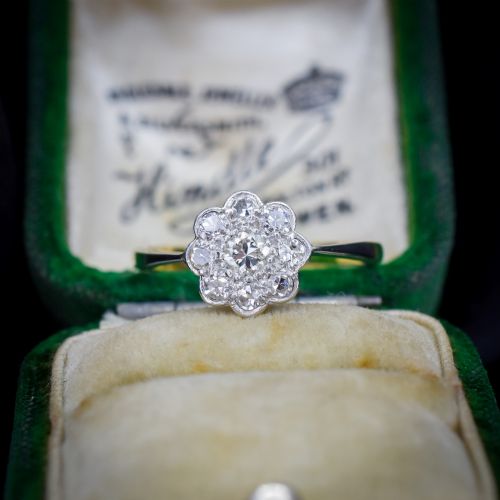
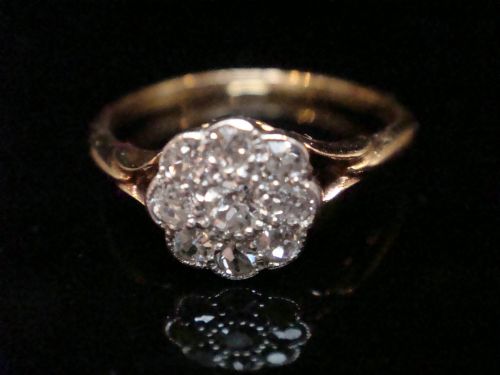
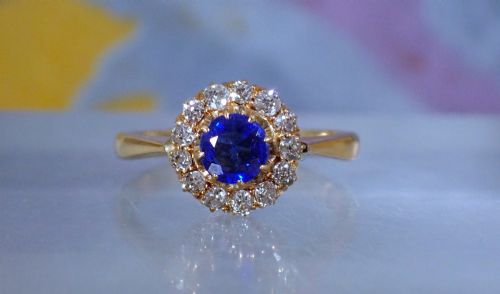
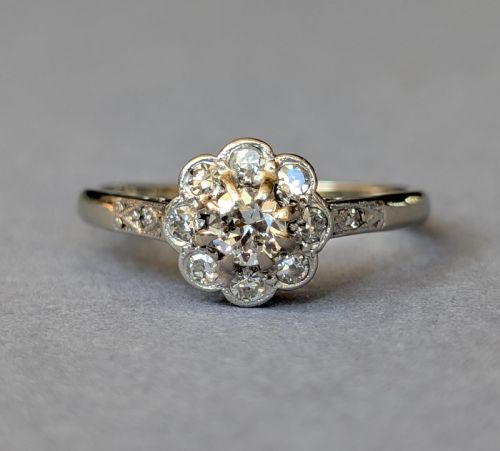
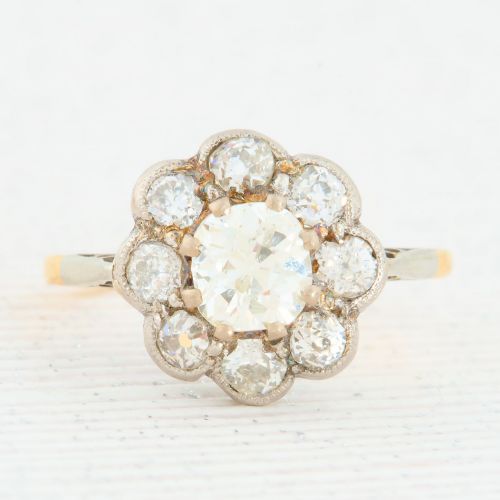
A gold diamond daisy ring centres on a central stone surrounded by a ring of smaller gems, creating a distinct floral outline. The form appears frequently from the late Victorian period through the Edwardian years and into the Art Deco era.
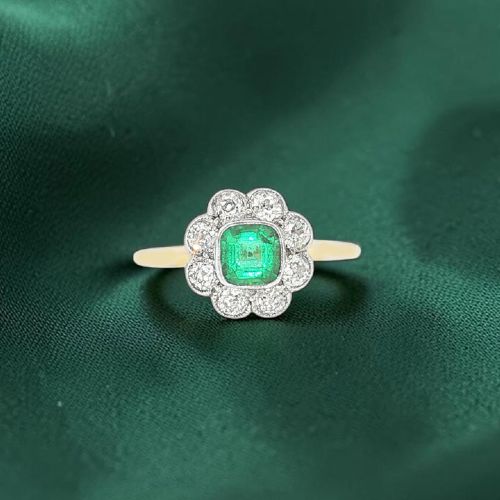
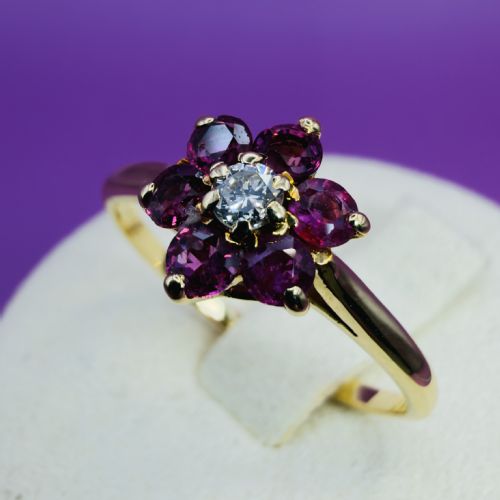
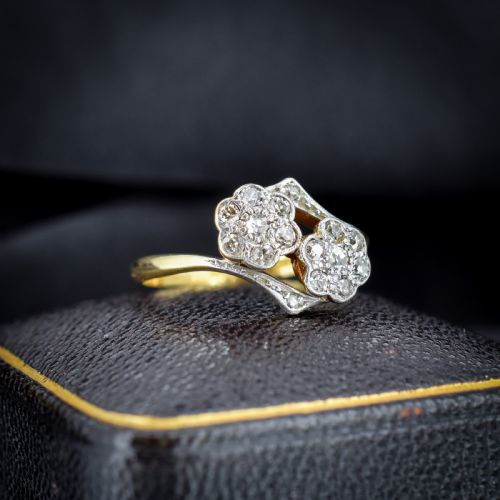
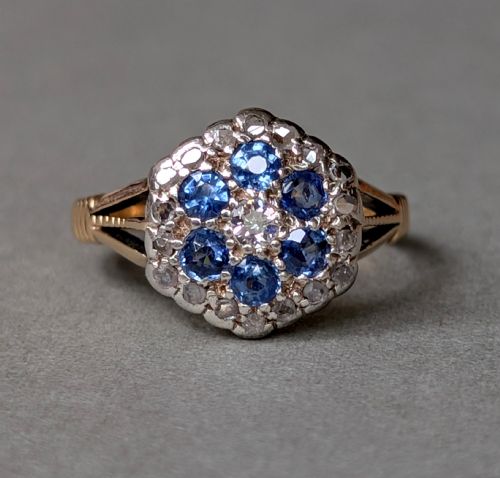
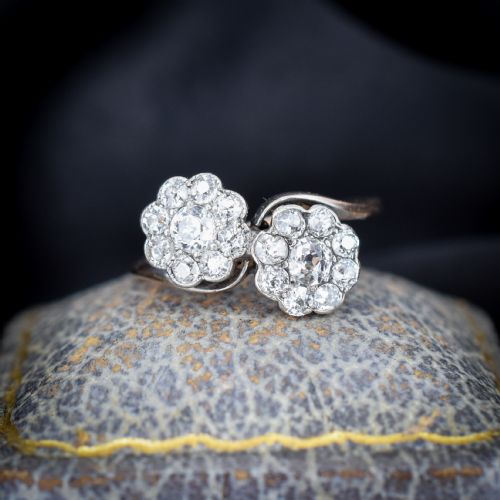
Most examples found in these records combine a central diamond with surrounding diamonds, while others incorporate sapphires, rubies, emeralds, or pearls into the cluster. Shank designs vary from plain 18ct yellow gold bands to double twist styles and platinum-topped shoulders.
Materials and construction
Goldsmiths predominantly utilised 18ct yellow gold and 18ct white gold, frequently pairing yellow shanks with platinum settings to enhance the brightness of the stones. Certain pieces also incorporate lower gold purities or 22ct gold alongside platinum elements.
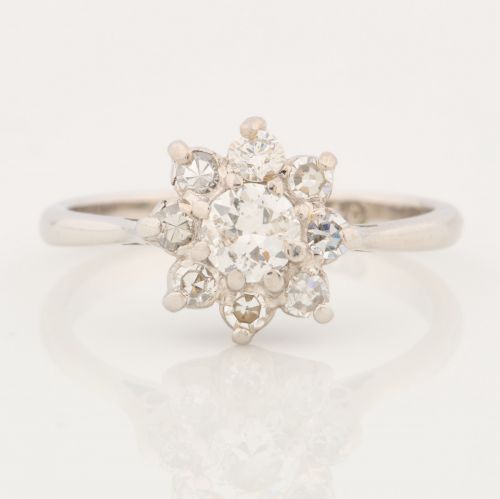
Diamonds in these clusters are typically old-cut, old European cut, or brilliant-cut stones secured by traditional claw settings or flush mountings within the floral face.
Listings feature pieces spanning the Victorian, Edwardian, Art Deco, and Mid-Century periods, constructed in yellow gold, white gold, and platinum.
Assessing quality in floral clusters
Quality rests on the symmetry of the stone arrangement and the secure integration of the central gem with the surrounding border. Proportional balance between the central stone and the outer petals dictates the visual harmony of the cluster.
The precision of the metalwork, particularly where platinum meets gold on the head of the ring, distinguishes finer examples from standard production.
The Gold Diamond Daisy Ring Glossary
- Daisy cluster
- A ring design featuring a central gemstone encircled by a ring of smaller stones resembling flower petals. This configuration defines the primary aesthetic of the search phrase.
- Old-cut diamond
- A hand-cut diamond shape common in antique jewellery featuring a small table, high crown, and large culet. These stones display distinctive light dispersion under candlelight.
- Toi et moi
- A ring style featuring two main gemstones sitting side by side or in a twist formation, sometimes integrated into cluster designs. The term translates from French as you and me.
- Platinum topping
- A technique where a thin layer of platinum is applied over gold settings to provide a bright white surface for diamond mounting. This method is prevalent in Edwardian pieces.
- Cluster ring
- A jewellery configuration where multiple smaller stones group closely together to create the visual impact of a larger single gemstone. They appear frequently with floral or geometric outlines.
Gold Diamond Daisy Ring: Frequently Asked Questions
How do I date a daisy ring?
Dating relies on stylistic clues, mounting techniques, and the cut of the diamonds. Edwardian examples often pair yellow gold with platinum-topped settings, while Art Deco pieces incorporate geometric symmetry.
Victorian iterations tend to feature heavier yellow gold bands and old-cut stones. Hallmarks, where present, provide further chronological confirmation.
Were these rings used for engagements?
Historical records show that these floral cluster rings served frequently as engagement rings from the late nineteenth century through the mid-twentieth century. Their distinct profile made them a fashionable alternative to solitaire stones.
Buyers today continue to seek them out for contemporary engagements due to their historical character and distinctive craftsmanship.
What gemstones accompany diamonds in these rings?
Sapphires, rubies, emeralds, and pearls frequently appear alongside diamonds in these floral configurations. Sapphires are the most common alternative centre or border stone found in the listings.
Combinations vary from all-diamond clusters to coloured stones encircled by diamond petals or vice versa.