


Gold Curb Chain Bracelet
These gold curb chain bracelet pieces span the late Victorian and Edwardian periods, offering substantial links and secure clasps that collectors prize.
Gold Curb Chain Bracelet
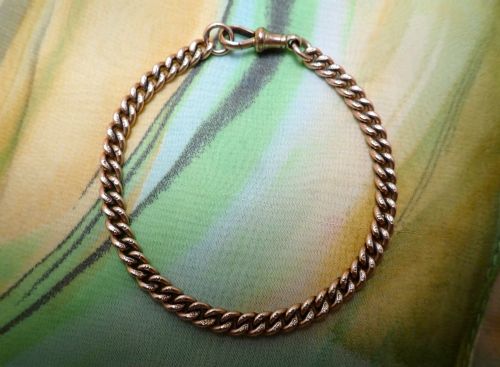
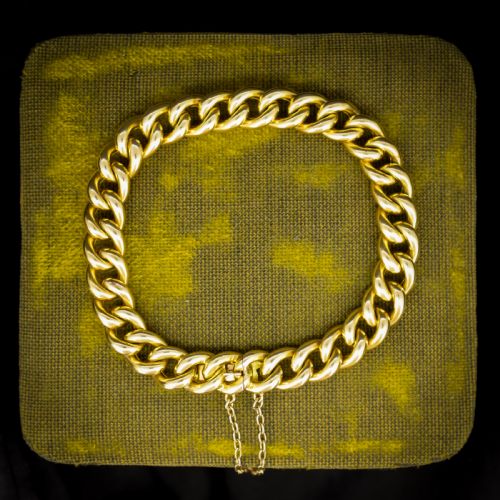
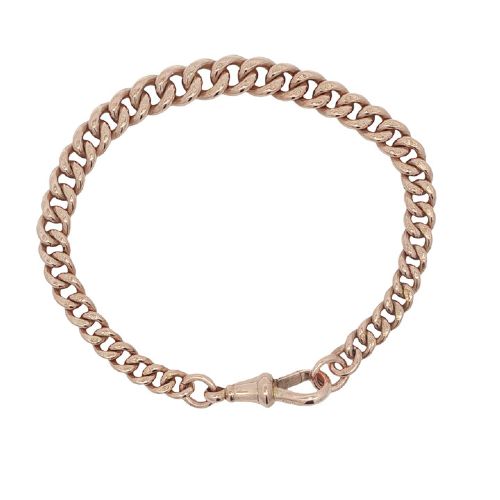
A gold curb chain bracelet is a classic piece of historical jewellery defined by interlocking, flattened links that lie flat against the wrist. The selections span the late Victorian and Edwardian eras, running from the 1880s through to the early 1910s.
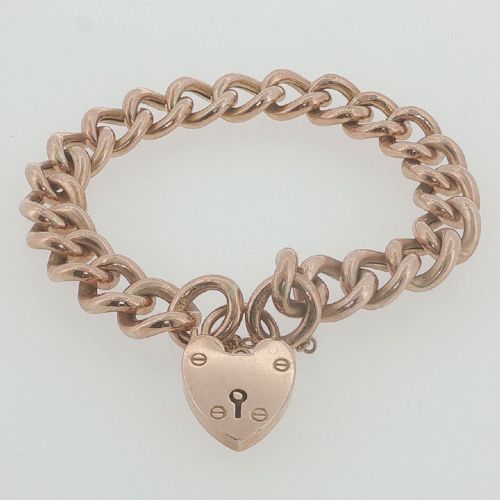
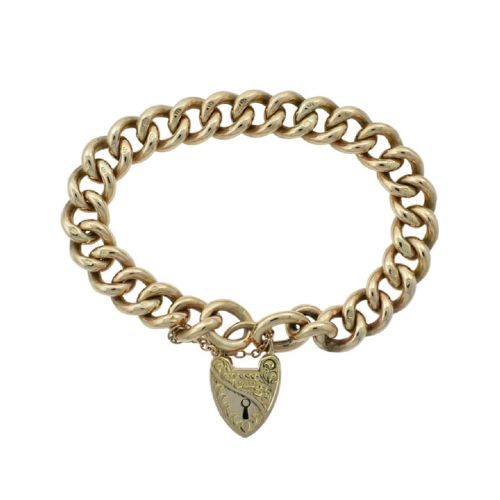
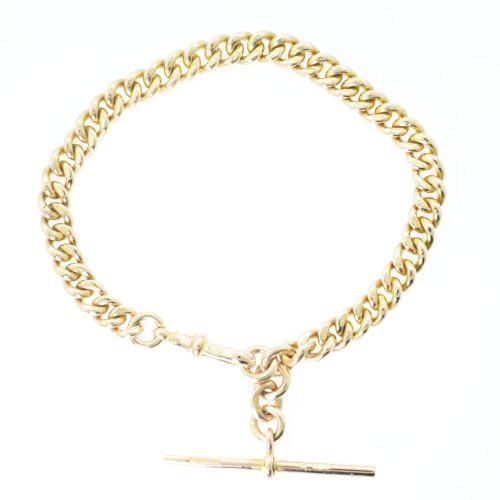
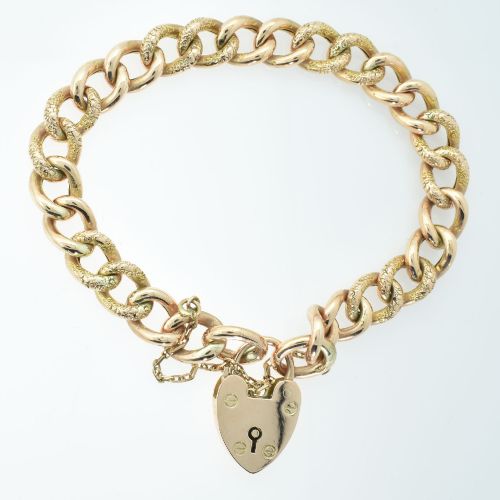
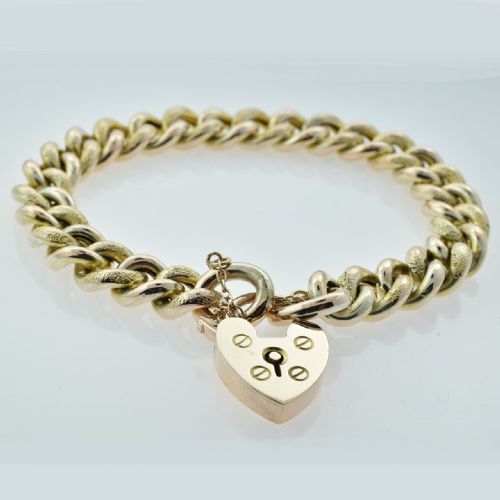
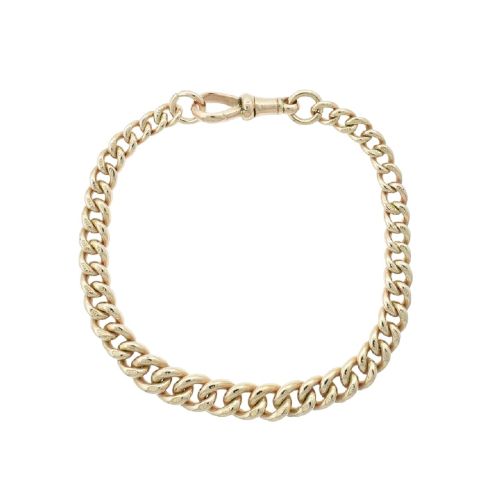
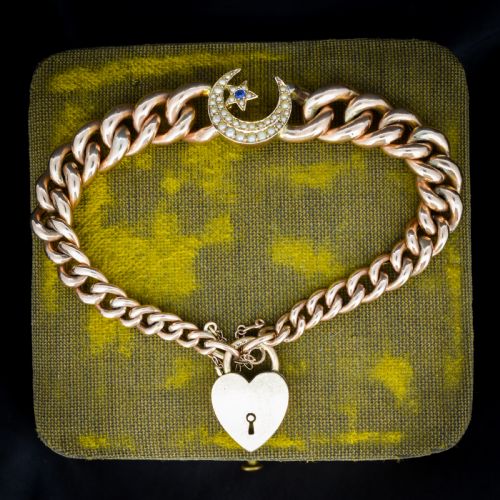
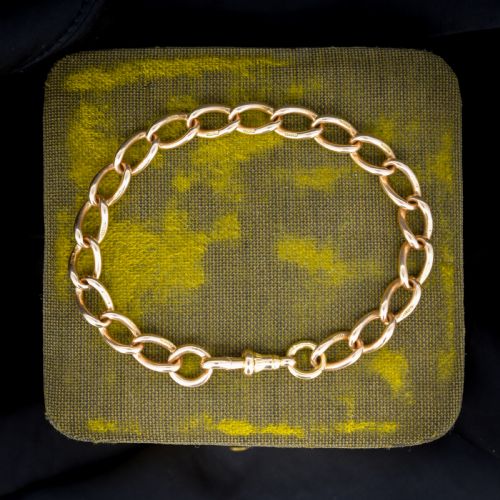
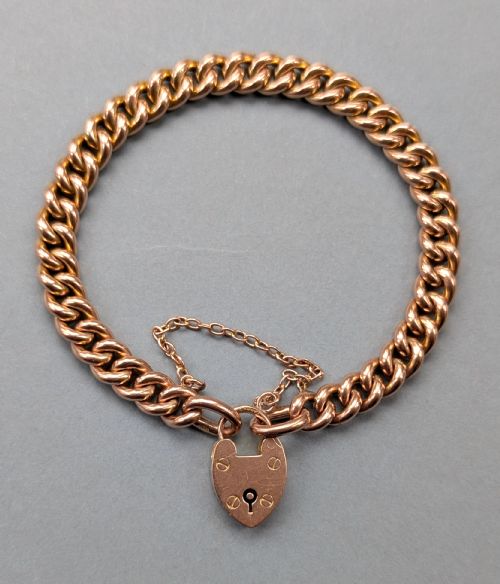
Most examples found on this page consist of 9ct rose gold or yellow gold, alongside occasional pieces in 15ct and 18ct gold. Many incorporate distinct fastenings such as heart padlocks, dog clips, or concealed clasps.
Buyers also encounter variations featuring decorative elements like half-engraved patterns, T-bars, safety chains, and gemstone accents including turquoise, seed pearls, and sapphires.
How they were made
Goldsmiths constructed these bracelets using various gold purities, predominantly 9ct rose and yellow gold, alongside higher purities like 15ct and 18ct gold. Individual links were shaped, interlocked, and soldered to form continuous, flexible chains designed for daily wear.
Decoration relied on hand-engraving techniques, visible in the half-engraved patterns on individual links. Master jewellers also integrated functional components such as heart padlocks, dog clips, and T-bars into the overall design.
Gemstone settings utilised pearls, turquoise, sapphires, and diamonds, secured directly into gold mounts or integrated alongside central knots and padlock clasps.
Listings feature 9ct rose gold, 9ct yellow gold, 15ct gold, and 18ct yellow gold pieces originating from the Victorian and Edwardian periods.
What varies in quality
The fineness of hand-engraving separates standard links from superior examples, where crisp patterns remain sharp despite decades of wear. Additionally, the inclusion and condition of original gem set elements, such as turquoise and seed pearls, elevate the character of the design.
The Gold Curb Chain Bracelet Glossary
- Curb link
- A type of chain link that has been twisted and flattened so that it lies uniform and flat against the skin. This design provides both flexibility and durability for everyday adornment.
- Heart padlock
- A heart-shaped clasp commonly used as a functional lock on Victorian and Edwardian bracelets. Many examples are hinged and open via a small pin mechanism.
- Albert bracelet
- A sturdy chain style originally adapted from pocket watch chains, frequently finished with a T-bar and a padlock or dog clip. They often feature graduated links that decrease in size toward the clasp.
- Dog clip
- A spring-loaded swivel fastening utilised to secure antique bracelets to a ring or loop. It provides a reliable alternative to traditional spring ring clasps.
- T-bar
- A short metal bar attached to a chain, historically designed to slip through a waistcoat buttonhole. On bracelets, it serves as a decorative dangling element or an alternate toggle fastening.
Gold Curb Chain Bracelet: Frequently Asked Questions
How do I fasten a heart padlock bracelet?
Heart padlocks on these bracelets generally operate via a small internal spring mechanism opened by pressing a tiny protruding pin or lever. Once depressed, the hinged bail swings open to hook onto a designated jump ring or safety chain.
Securing the clasp requires reversing the action until the spring clicks firmly into place. Checking that the lock engages properly ensures the bracelet remains safely on the wrist.
What is an Albert bracelet?
An Albert bracelet originates from Victorian watch chains designed to hold pocket watches. These pieces utilise heavy, interlocking curb links that often graduate in size toward the centre.
Jewellery historians note that these adaptations frequently retain their original T-bars and dog clips. They provide a heavier, more substantial wrist presence than standard decorative chains.
How can I date my gold curb chain bracelet?
Dating relies heavily on hallmarks stamped into the metal, which indicate the assay office, metal purity, and year of manufacture. Stylistic clues such as engraved patterns, the presence of safety chains, and clasp types also point toward the Victorian or Edwardian eras.
Consulting a specialist or referencing known hallmarks helps narrow down the production decade. Pieces from this period frequently display distinct regional assay marks from cities like London or Chester.
Are these bracelets suitable for daily wear?
Solid gold curb chains from the Victorian and Edwardian periods offer remarkable durability due to their robust link construction. Their flat profile helps prevent snagging on clothing during routine activities.
Owners should nonetheless inspect clasps, safety chains, and gemstone settings periodically. Proper care ensures these historical pieces withstand regular use without compromising their structural integrity.