




Gold Crystal Lustres
Gold crystal lustres bring shimmering refractive light and classical form to a room, catching the eye with their cut glass drops and gilded mounts.
Gold Crystal Lustres
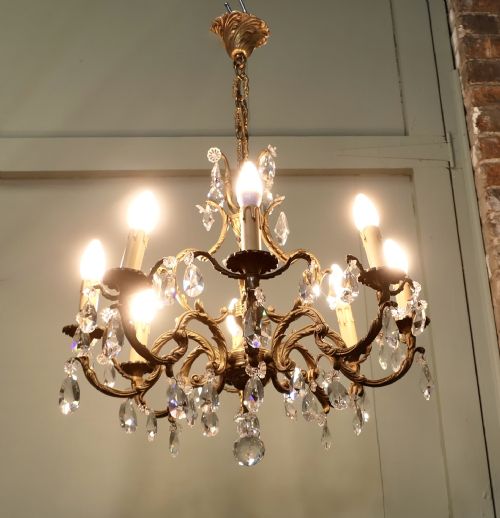
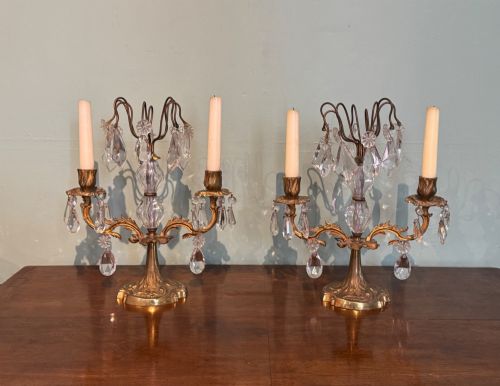
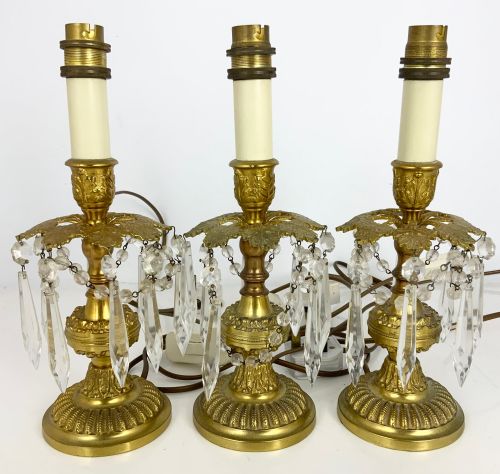
Gold crystal lustres encompass ornamental tabletop candlesticks, candelabras, mantel garnitures, and overhead chandeliers designed to reflect ambient and candle light through suspended glass prisms. When you search for gold crystal lustres, you encounter decorative lighting and mantel ornaments that combine metal frames with sparkling glass components.
The selections span diverse eras from the Regency period and the Victorian age through to the early twentieth century, including nineteen-thirty pieces. Common formats range from matched pairs of table candlesticks set with pendant drops to multi-light chandeliers embellished with beads and crystal pendants.
Origins vary across French Empire, French Rococo Revival, and Italian Florentine styles, alongside English Victorian examples. Buyers frequently find pieces featuring gilt brass, ormolu, or gilt bronze foundations paired with ruby glass or clear cut crystal.
How they were made
The physical construction relies on the union of cast or chased metal frames with hand-cut glass and crystal elements. Artisans utilised brass, bronze, and ormolu for structural components such as candle nozzles, arms, and figurative mounts.
Pendant drops and prisms were individually hand-cut and polished to maximise light refraction before being suspended from the metal armature with wire loops or pins. Glass components additionally include blown ruby glass bodies and moulded hurricane or storm shades.
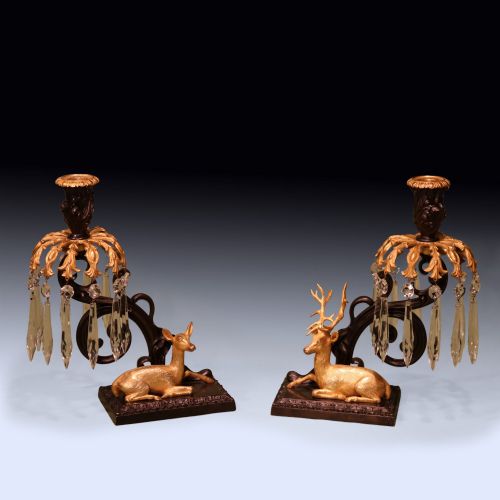
A stag, a doe, and a griffin stand ready to hold your candles.
What varies in quality
The standard of execution in the metalwork sets finer examples apart, particularly in the crispness of chasing on ormolu and gilt bronze figural mounts like stags, does, or griffins. Superior pieces exhibit deeply articulated cast details rather than soft or plain metal surfaces.
The clarity and depth of the glass or crystal components also distinguish finer items, alongside the complexity of the hand-cut facets on the hanging lustres. Better constructed examples maintain a secure, balanced integration between the heavy metal base and the suspended glass drops.
The Gold Crystal Lustres Glossary
- Lustre
- An ornamental candlestick, candelabrum, or chandelier hung with cut glass pendants designed to refract light. They often sit on mantelpieces or dining tables.
- Ormolu
- Finely ground high-carat gold mercury-gilded onto a bronze base. This technique creates a rich, durable golden surface on decorative mounts.
- Candelabra
- A branched candlestick holding multiple candles. These frequently incorporate crystal drops and gilt metal bases.
- Regency
- An architectural and decorative style spanning the early nineteenth century in Britain. It draws heavily on classical Greek and Roman motifs.
- Rococo Revival
- A nineteenth-century design movement favouring asymmetrical scrollwork, naturalistic shell motifs, and exuberant curves.
Gold Crystal Lustres: Frequently Asked Questions
Where should I place a pair of lustres?
These pieces traditionally sit upon a mantelpiece, sideboard, or console table where ambient light can catch the hanging crystal drops.
Pairs also work effectively on either end of a dining table or flanking a mirror to double the visual impact of the flickering light.
How do I clean crystal lustres safely?
Dust the metal frames and glass pendants regularly with a soft, dry brush to prevent grime accumulation.
For deeper cleaning, remove the crystal drops individually and wash them in lukewarm soapy water before drying them thoroughly with a lint-free cloth.
What is the difference between a lustre and a chandelier?
Lustres typically refer to tabletop candlesticks, mantel ornaments, or small candelabras fitted with hanging glass prisms.
Chandeliers are larger lighting fixtures suspended from the ceiling, though they share the same vocabulary of cut crystal drops and gilt frames.
How can I tell a Regency lustre from a Victorian one?
Regency examples generally display restrained neoclassical lines, classical patinated bronze figures, and crisp ormolu mounts influenced by French Empire design.
Victorian and later nineteenth-century pieces often embrace more exuberant revival styles, including Rococo curves and coloured glass bodies such as ruby red.